Love this? Save it for later!
Share the inspiration with your friends
The power went out halfway through my Tuesday dinner prep, and I was left standing in the dark with a cutting board and a panicked heart. My neighbor, Mrs. Gable, who lives next door and has lived there for forty years, didn’t even flinch. She just leaned over the fence, lit a candle, and told me to stop worrying about the stove. She said the air fryer doesn’t care about the grid, and neither does dinner. I had forgotten that she was the one who introduced me to the magic of quick, crispy proteins years ago, back when I was still struggling to get fish to stay together on the grill.
She watched me attempting to chop the salmon into uniform cubes and didn’t say anything at first. Then she pointed to the small, humming appliance on my counter and said, “That thing is your new best friend, love.” I honestly didn’t believe her at first. I thought salmon bites would just dry out into little rubbery bricks. But she insisted that the hot air circulation seals in the moisture while crisping the outside, creating this perfect contrast that a pan just can’t match.
That night, we ate those honey garlic salmon bites by candlelight, laughing about the storm and the weird taste of the tap water. It wasn’t fancy, but it was the best meal I’d had in months. The recipe arrived through that relationship, not through a transaction. I adapted it slightly, adding a bit more ginger because I like a little kick, but the core method remains exactly what she taught me. It respects the simplicity of the original while making it my own quick weeknight staple.
Let me tell you, there is something magical about that first bite. The crunch, the sticky sweet-savory glaze, the flaky fish inside. I keep making it because it reminds me that good food doesn’t need a complicated setup or a perfect kitchen. Sometimes it just needs a neighbor, a backup plan, and a little bit of honey. You know that feeling when you think dinner is ruined, and then it turns into the best part of your day? That’s this recipe. It’s reliable, it’s fast, and it tastes like comfort, even on the darkest nights.
Why You’ll Love This Recipe
I have spent years testing salmon recipes, from slow-roasted fillets to pan-seared steaks, but this method keeps coming back to the top of my list. Honestly, it’s not just about the speed, though that helps when you are tired after work. It’s about the texture. Getting that crispy exterior on delicate salmon is usually a gamble. You either burn the garlic or undercook the fish. This recipe solves that problem beautifully.
- Quick & Easy: This comes together in under 15 minutes, which is perfect for busy weeknights or those last-minute cravings when you don’t want to order takeout. The air fryer does the heavy lifting while you chop veggies.
- Simple Ingredients: No fancy grocery trips needed. You likely already have soy sauce, honey, garlic, and ginger in your kitchen. It’s pantry-friendly cooking at its finest.
- Perfect for Meal Prep: These bites store well and reheat nicely. I often make a double batch on Sunday to have a high-protein lunch option ready to go.
- Crowd-Pleaser: Always gets rave reviews from kids and adults alike. The sweet and savory flavor profile is a universal hit, even for picky eaters.
- Unbelievably Delicious: The texture and flavor combo is next-level comfort food. The glaze caramelizes slightly, creating little crispy bits that are addictive.
What makes this recipe different from the rest is the specific balance of the glaze. Most recipes use too much sugar, which burns in the air fryer. I use a ratio that ensures the honey caramelizes without charring the garlic too quickly. Whether it is a special technique like shaking the bites halfway through, or a perfectly balanced seasoning profile, make it clear this isn’t just another version—it’s your best version. It’s the kind of dish that makes you close your eyes after the first bite. It’s comfort food reimagined—healthier, faster, but with the same soul-soothing satisfaction.
What Ingredients You Will Need
This recipe uses simple, wholesome ingredients to deliver bold flavor and satisfying texture without the fuss. The magic here is in the synergy between the protein and the glaze. You don’t need expensive, hard-to-find items. In fact, the best results come from basic, high-quality staples you probably already have. I like to keep things flexible, so if you run out of one thing, another usually works just as well.
- Salmon Fillets: Use fresh or frozen (thawed) salmon fillets. Wild-caught Alaskan salmon is my top recommendation for its firm texture and rich color. Look for fillets that are pink and smell fresh, not fishy. Cut them into 1-inch cubes.
- Avocado Oil or Olive Oil: You need a bit of fat to help the glaze stick and to promote crisping. Avocado oil has a higher smoke point, which is great for the air fryer, but extra virgin olive oil works too if you are careful not to overheat it.
- Soy Sauce: Provides the salty, umami base. I prefer low-sodium soy sauce so you can control the salt level. For a gluten-free option, use tamari.
- Honey: The star of the show. It provides sweetness and helps create that sticky glaze. Raw honey adds a floral note, but regular honey works fine. Warm it slightly if it’s too thick to mix.
- Minced Garlic: Fresh garlic is non-negotiable here. Jarred garlic can sometimes taste metallic or bitter when cooked at high heat. Use about 3-4 cloves, minced finely so they distribute evenly.
- Fresh Ginger: Grated fresh ginger adds a bright, spicy kick that cuts through the richness of the fish. Pre-grated ginger in a tube can work in a pinch, but fresh is better.
- Cornstarch: This is the secret weapon. A light dusting of cornstarch on the salmon cubes helps the glaze adhere and creates that desirable crispy exterior. It’s optional but highly recommended.
- Green Onions: Chopped for garnish. They add a fresh, oniony crunch and a pop of color. Scallions work too.
- Sesame Seeds: Toasted sesame seeds add nuttiness and visual appeal. Black sesame seeds look dramatic, but white are traditional.
- Red Pepper Flakes: A pinch for heat. If you like it spicy, add more. If not, skip it. It balances the sweetness of the honey.
I personally recommend using a good quality honey, like the kind from a local apiary if you can find it. The flavor difference is noticeable. Also, look for firm, small-curd salmon pieces to ensure they cook evenly. In summer, you might swap the green onions for fresh cilantro for a different flavor profile.
Do I need to marinate the salmon?
Unlike some recipes, you don’t need to marinate this for hours. The cornstarch and the quick toss in the glaze before cooking is enough. Marinating in soy sauce for too long can start to “cook” the fish, changing the texture. A quick toss is best.
Equipment Needed
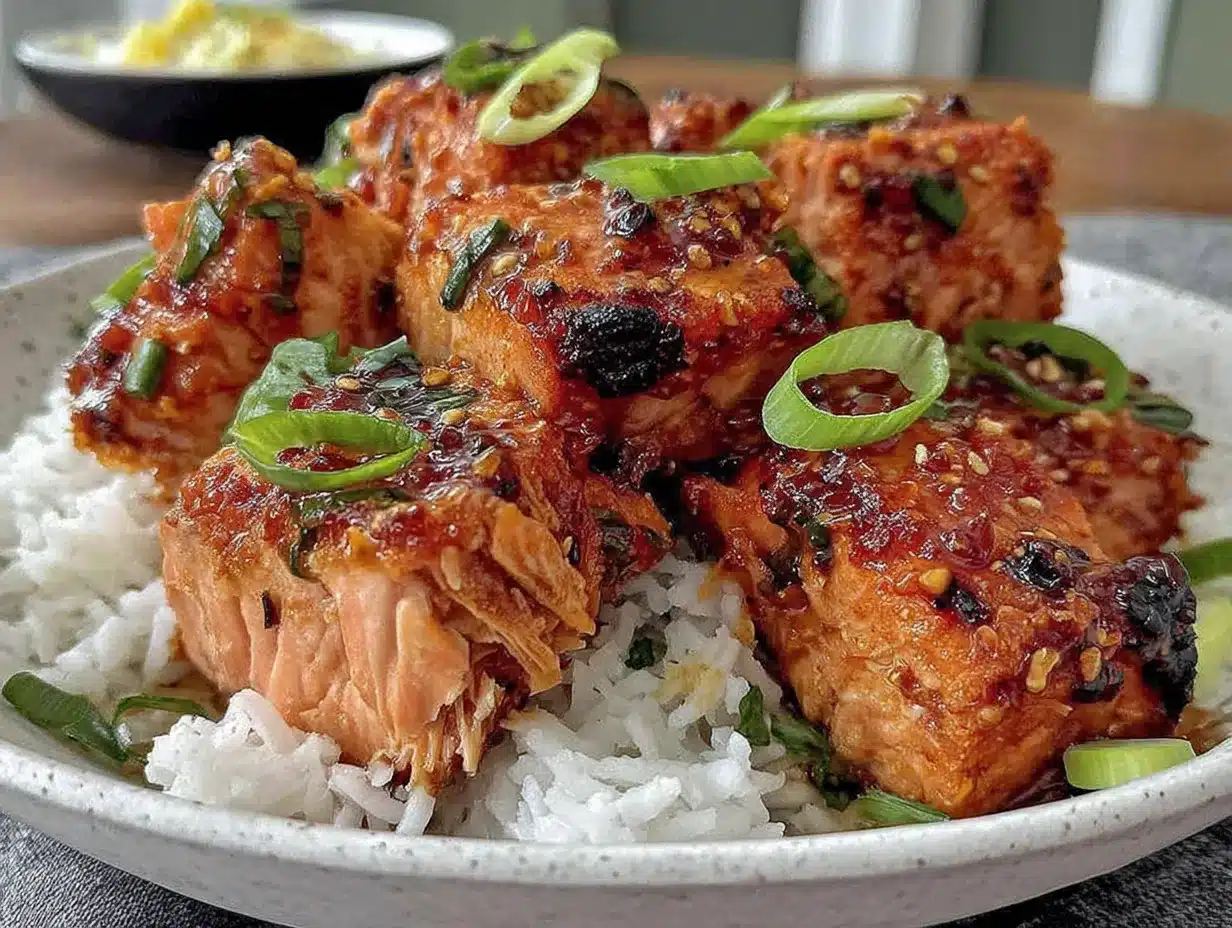
You don’t need a fancy kitchen to make this dish. The star of the show is, of course, the air fryer. I use a basket-style air fryer because it allows for better air circulation around the salmon cubes. If you have a dual-zone air fryer, you can cook the salmon and a side of vegetables at the same time, which saves even more time.
I also recommend a medium-sized mixing bowl for tossing the salmon in the cornstarch and glaze. A silicone spatula is helpful for scraping the bowl clean so you don’t waste any of that delicious sauce. For chopping, a sharp chef’s knife and a cutting board are essential. I like to use a separate board for fish to avoid cross-contamination, though that’s a personal hygiene habit.
If you don’t have an air fryer, you can use a conventional oven with a wire rack, but the cook time will be slightly longer, and the crispiness won’t be quite the same. You can also use a skillet, but you’ll need to watch it closely to prevent burning the garlic. Budget-friendly options include a simple toaster oven with an air fry function, which many people already own. Just make sure to clean your air fryer basket regularly to prevent any leftover glaze from burning and smoking on subsequent uses.
Can I use a different type of fish?
Yes, you can use cod, tilapia, or shrimp. Keep in mind that white fish like cod is more delicate and may break apart if you are not gentle. Shrimp will cook much faster, so check them after 6-7 minutes.
Preparation Method
Getting started on this recipe is straightforward, but precision matters. The goal is uniform cubes that cook at the same rate. If some pieces are huge and others are tiny, you’ll end up with overcooked dry bits and undercooked raw centers. Let’s walk through it step by step.
- Prep the Salmon (5 minutes): Take your salmon fillets and pat them dry with paper towels. Moisture is the enemy of crispiness. Using a sharp knife, cut the fillets into 1-inch cubes. Try to keep them as uniform as possible. Discard any pin bones you might find. Place the cubes in a large mixing bowl.
- Dust with Cornstarch (2 minutes): Sprinkle 1 tablespoon of cornstarch over the salmon cubes. Toss gently with your hands or a spatula until every piece is lightly coated. This step is crucial for the texture. It creates a thin shell that crisps up in the air fryer.
- Mix the Glaze (2 minutes): In a small bowl, whisk together 3 tablespoons of honey, 2 tablespoons of soy sauce, 2 cloves of minced garlic, 1 teaspoon of grated ginger, and 1 teaspoon of avocado oil. Whisk until the honey is fully incorporated and the mixture looks smooth. Taste it—if you want it saltier, add a splash more soy sauce. If you want it sweeter, add a bit more honey.
- Combine (1 minute): Pour half of the glaze over the cornstarch-dusted salmon cubes. Toss gently to coat. Reserve the other half of the glaze for later. Be careful not to break the fish apart. You just want a light coating.
- Preheat the Air Fryer (3 minutes): While you are mixing, preheat your air fryer to 400°F (200°C). Most air fryers take about 3 minutes to reach this temperature. If your model doesn’t have a preheat function, just run it empty for 2-3 minutes.
- Arrange in Basket (1 minute): Lightly spray the air fryer basket with oil. Arrange the salmon cubes in a single layer. Do not overcrowd the basket. If you have too many, cook in batches. Overcrowding leads to steaming instead of frying, and you won’t get that crispy texture. Leave a little space between each piece.
- Air Fry (8-10 minutes): Cook at 400°F (200°C) for 8 minutes. At the 4-minute mark, open the basket and shake it gently or use tongs to turn the cubes. This ensures even cooking and browning. The salmon should start to look opaque and slightly golden.
- Add Glaze and Finish (2-3 minutes): After 8 minutes, open the basket and brush the reserved glaze over the salmon cubes. Return to the air fryer and cook for another 2-3 minutes. Watch closely! The honey can burn quickly. The salmon is done when it is opaque throughout and flakes easily with a fork. The glaze should be sticky and caramelized.
- Garnish and Serve: Transfer to a plate. Sprinkle with chopped green onions and toasted sesame seeds. Serve immediately while hot and crispy.
A quick note on timing: Every air fryer is slightly different. My old one ran hot, so I had to watch it closely. My new one is a bit slower. Start checking at 8 minutes. The internal temperature should reach 145°F (63°C) for safe consumption, but I prefer pulling it at 140°F as it will carry over cook slightly.
Why do I need to preheat the air fryer?
Preheating ensures that the salmon starts cooking immediately upon contact with the hot air. If you put cold salmon into a cold basket, it sits in the cooling zone too long and loses moisture. A hot basket seals the outside faster.
Cooking Tips & Techniques
I’ve made this recipe enough times to have learned a few hard lessons. The biggest mistake people make is overcrowding the basket. I know it’s tempting to fit everything in at once, but if the pieces are touching, they steam. Steam is the opposite of crisp. You want dry, hot air circulating around each cube. If you have a small air fryer, cook in two batches. It takes an extra five minutes, but the result is worth it.
Another tip is about the garlic. Fresh garlic burns at high temperatures. That’s why I add half the glaze before cooking and the rest after. The initial glaze helps caramelize the surface, and the final brush adds fresh flavor without the risk of bitter, burnt bits. If you love garlic, you can mince it even finer so it distributes more evenly and burns less.
Don’t skip the cornstarch. I tried this recipe once without it, and the glaze just slid off the fish. It ended up looking wet and unappetizing. The cornstarch acts as a binder and a crisping agent. It’s a tiny step that makes a huge difference. Also, pat the salmon dry before cutting. Wet salmon steams. Dry salmon crisps.
Multitasking is key here. While the air fryer is running, you can quickly steam some broccoli or prepare rice. The salmon cooks so fast that you don’t want to be stuck in the kitchen watching it. Set a timer. Trust the timer. And when in doubt, check the texture. Salmon continues to cook slightly after you take it out, so pull it when it looks just shy of done.
What if my glaze is too thin?
If your glaze looks watery, it might be due to the honey quality. Try simmering the reserved glaze in a small saucepan for a minute to reduce it slightly before brushing it on. This creates a thicker, stickier coating.
Variations & Adaptations
One of the best things about this recipe is how adaptable it is. You can tweak it to fit your dietary needs or taste preferences without losing the core flavor profile.
- Gluten-Free: Simply swap the soy sauce for tamari or coconut aminos. The rest of the ingredients are naturally gluten-free. This is a great option for those with celiac disease or gluten sensitivity.
- Dairy-Free: This recipe is already dairy-free, so no changes needed. It’s naturally friendly for those avoiding milk products.
- Spicy Kick: If you like heat, add 1 teaspoon of sriracha or chili garlic sauce to the glaze. You can also increase the red pepper flakes. This pairs well with the sweetness of the honey.
- Teriyaki Twist: Swap the honey for brown sugar and add a splash of rice vinegar for a more traditional teriyaki flavor. The result is slightly darker and more savory.
- Vegetarian Option: You can substitute the salmon with firm tofu. Press the tofu, cut into cubes, and follow the same steps. Tofu benefits even more from the cornstarch coating, becoming incredibly crispy.
I once tried this with shrimp, and it was a hit. The cooking time dropped to about 6 minutes total. The glaze clings beautifully to the shrimp. It’s a quick switch for variety. I also tried adding a bit of lime juice to the glaze for a citrusy twist, which was refreshing and light.
Can I use frozen salmon?
Yes, but you must thaw it completely and pat it very dry before cutting. Frozen salmon releases a lot of water, which can make the dish soggy if not handled properly. Thawing in the fridge overnight is the safest method.
Serving & Storage Suggestions
These salmon bites are best served immediately while they are hot and crispy. I like to serve them over a bed of fluffy white rice or quinoa. The glaze soaks into the grains, making every bite flavorful. Steamed broccoli or asparagus makes a perfect side dish. The crunch of the vegetables contrasts nicely with the tender fish.
For drinks, a crisp white wine like a Sauvignon Blanc or a light lager pairs well. If you prefer non-alcoholic options, iced green tea or sparkling water with lemon is refreshing and cuts through the richness of the dish.
If you have leftovers (which is rare), store them in an airtight container in the refrigerator for up to 3 days. To reheat, use the air fryer at 350°F for 3-4 minutes. This helps restore the crispiness. The microwave will make the salmon soft and chewy, so avoid it if you can. The flavors actually develop a bit more over the first day, becoming slightly more melded and savory.
How do I reheat without drying it out?
Reheating in the air fryer is the best method. It restores the texture. Avoid the microwave, which introduces steam and makes the fish rubbery. If you must use a microwave, do it for short bursts and let it rest.
Nutritional Information & Benefits
Salmon is a nutritional powerhouse. It is rich in omega-3 fatty acids, which are essential for heart health and brain function. These healthy fats help reduce inflammation in the body. Salmon is also a great source of high-quality protein, which helps with muscle repair and satiety. The honey provides quick energy, though it is high in sugar, so use it in moderation. The garlic and ginger have anti-inflammatory properties, adding extra health benefits to the dish.
This recipe is naturally gluten-free and dairy-free, making it suitable for many dietary restrictions. It is also low-carb if you skip the rice and serve it with cauliflower rice. The cornstarch adds a small amount of carbohydrates, but the overall glycemic load is manageable. I enjoy this meal as a balanced, nutrient-dense option that supports my wellness goals without feeling restrictive. It’s proof that healthy food can be indulgent and delicious.
Is this recipe keto-friendly?
It can be. The salmon and vegetables are keto-friendly. However, the honey adds sugar. You can substitute the honey with a keto-friendly sweetener like erythritol or monk fruit, though the texture will be slightly different. Use it in moderation.
Conclusion
This Crispy Air Fryer Honey Garlic Salmon Bites recipe is a game-changer for weeknight dinners. It’s fast, it’s flavorful, and it’s surprisingly easy to make. I hope you try it and enjoy it as much as I do. Don’t be afraid to customize it to your taste. Add more ginger if you like it spicy, or less honey if you prefer savory. Make it your own.
I love this recipe because it brings back that memory of a candlelit dinner with a neighbor. It reminds me that cooking can be simple and joyful. If you make this, please leave a comment below and let me know how it turned out. Did you add extra garlic? Did you serve it with rice or quinoa? I’d love to hear your adaptations. Share this recipe with friends who need a quick, healthy dinner idea. Happy cooking, and enjoy every bite!
FAQs
How do I know when the salmon bites are done?
The salmon is done when it is opaque throughout and flakes easily with a fork. The internal temperature should reach 145°F (63°C). The exterior should be golden and crispy.
Can I use fresh ginger instead of powder?
Yes, fresh ginger is preferred for its bright flavor. Use about 1 teaspoon of grated fresh ginger for every 1/2 teaspoon of ground ginger if substituting.
Why is my glaze not sticking to the salmon?
Make sure you are using cornstarch to dust the salmon first. It helps the glaze adhere. Also, ensure the salmon is not too wet before adding the cornstarch.
Can I make this in the oven?
Yes, bake at 400°F (200°C) on a wire rack for 10-12 minutes. The texture won’t be as crispy as air frying, but it will still be delicious.
What sides go well with honey garlic salmon?
Steamed broccoli, quinoa, white rice, or roasted asparagus are excellent side dishes. They complement the sweet and savory flavor of the salmon.
Pin This Recipe!
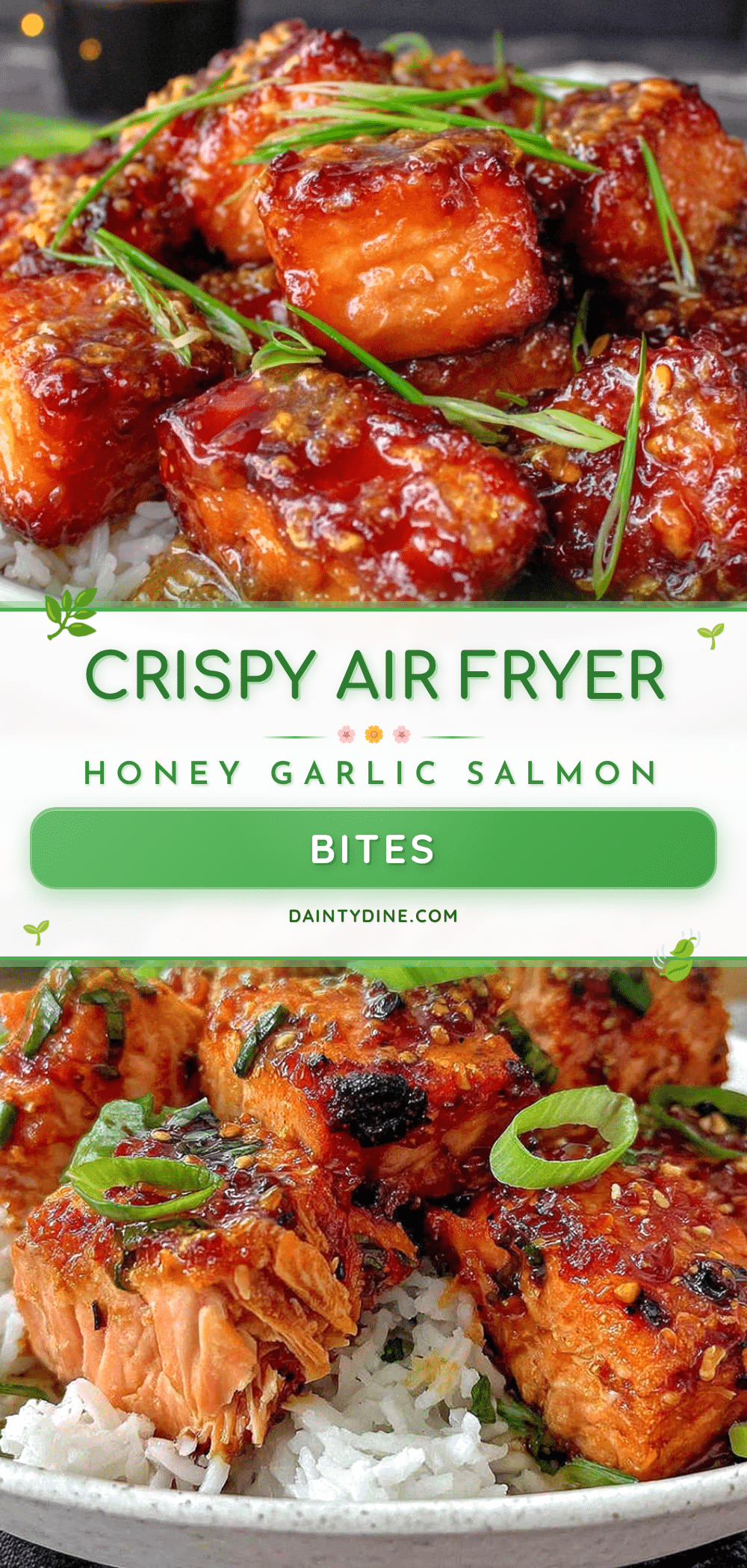
Crispy Air Fryer Honey Garlic Salmon Bites

A quick and easy 10-minute meal featuring crispy salmon cubes tossed in a sweet and savory honey garlic glaze, cooked to perfection in an air fryer.
- Prep Time: 10 minutes
- Cook Time: 10 minutes
- Total Time: 20 minutes
- Yield: 4 servings 1x
- Category: Main Course
- Cuisine: Asian Fusion
Ingredients
- 1 lb salmon fillets, cut into 1-inch cubes
- 1 tablespoon cornstarch
- 3 tablespoons honey
- 2 tablespoons soy sauce (or tamari for gluten-free)
- 2 cloves garlic, minced
- 1 teaspoon fresh ginger, grated
- 1 teaspoon avocado oil or olive oil
- Green onions, chopped (for garnish)
- Sesame seeds, toasted (for garnish)
- Red pepper flakes (optional, for heat)
- Avocado oil spray (for air fryer basket)
Instructions
- Pat salmon cubes dry with paper towels and place in a large mixing bowl.
- Sprinkle cornstarch over the salmon and toss gently until lightly coated.
- In a small bowl, whisk together honey, soy sauce, minced garlic, grated ginger, and avocado oil until smooth.
- Pour half of the glaze over the salmon cubes and toss to coat. Reserve the remaining glaze.
- Preheat air fryer to 400°F (200°C).
- Lightly spray the air fryer basket with oil and arrange salmon cubes in a single layer, ensuring they are not overcrowded.
- Air fry at 400°F (200°C) for 8 minutes, shaking the basket or turning cubes halfway through.
- Remove basket, brush reserved glaze over the salmon, and return to air fryer for 2-3 minutes until glaze is sticky and salmon is opaque.
- Garnish with green onions and sesame seeds. Serve immediately.
Notes
Ensure salmon cubes are uniform in size for even cooking. Do not overcrowd the air fryer basket to maintain crispiness. If using frozen salmon, thaw completely and pat very dry before cooking. Internal temperature should reach 145°F (63°C).
Nutrition
- Serving Size: Approximately 1 cup
- Calories: 280
- Sugar: 16
- Sodium: 450
- Fat: 12
- Saturated Fat: 2
- Carbohydrates: 18
- Protein: 24
Keywords: air fryer salmon, honey garlic salmon, quick dinner, healthy seafood, crispy salmon bites, weeknight meals, gluten-free recipes