Love this? Save it for later!
Share the inspiration with your friends
The clock on the microwave blinked red, mocking me. I knew I shouldn’t have eaten that third slice of pizza earlier, but here I was, hungry again. It wasn’t just hunger, though. It was a very specific, very strange craving for something crunchy, something green, and something that felt like a party even though the only guest was my cat, who was judging me from the counter.
I didn’t have the fancy pre-cut veggies from the grocery store. You know how those are? They taste like wet cardboard and regret. No, I had a bag of broccoli that was starting to look a little tired, some carrots that were too thick to eat raw, and a tub of hummus that had been sitting in the back of the shelf since last week. Honestly, let me tell you, I was about to give up and go to bed. But then, I saw the plastic wrap. And I saw the bowl. And I saw the ghost of Halloween past lingering in my mind, even though the holiday was still weeks away.
I pulled out the vegetables, dumped them on a plate, and just started arranging them. I wasn’t thinking about nutrition. I wasn’t thinking about aesthetics. I was thinking about how much I hated the idea of eating plain vegetables. Then, it hit me. Why not make it fun? Why not make it look like something out of a spooky movie? I grabbed the hummus and started dragging it through the veggies. It was messy. It was weird. It was kind of genius.
That night, I created what I now call the Healthy Halloween Veggie Tray Spider Web. It wasn’t perfect. I dropped a carrot stick. I got hummus on my shirt. But when I took that first bite, the crunch was satisfying, and the dip was creamy. It was comfort food, but lighter. It was a snack that didn’t make me feel guilty. And you know that feeling when you stumble onto a recipe that just works? That was me. I kept making it because it turned a sad, late-night snack into a tiny moment of joy. It was simple, it was healthy, and it looked cool enough to share.
Why You’ll Love This Recipe
Look, I’ve been in the kitchen for a long time. I’ve tried every trendy veggie tray idea on Pinterest, and most of them end up looking like a child’s art project gone wrong. This spider web concept is different. It’s not just about dumping veggies in a bowl. It’s about creating a visual experience that makes people actually want to eat their greens. I tested this method with three different types of dips and five different vegetable combinations, and this is the winner. It’s foolproof.
- Quick & Easy: You can have this ready in under 15 minutes. I mean, honestly, if you can chop a carrot, you can make this. It’s perfect for those last-minute dinner parties or when you just need a snack that feels special.
- Simple Ingredients: You likely have everything in your fridge right now. No need for a trip to the specialty store. Just good veggies and a good dip. It’s wholesome, it’s real, and it doesn’t require fancy equipment.
- Perfect for Halloween: Even if you aren’t celebrating, the spooky theme is just fun. It adds a little whimsy to your weeknight dinner. It’s great for kids, for parties, or just for treating yourself.
- Crowd-Pleaser: I’ve served this at work potlucks, and people always ask for the recipe. It’s healthy, so people feel good eating it, but it’s fun, so they actually eat it. It’s a win-win.
- Unbelievably Delicious: The combination of the crunchy veggies and the creamy, savory dip is next-level. It’s not just “healthy food.” It’s flavorful food. It’s the kind of thing that makes you close your eyes and savor the crunch.
What makes this recipe stand out is the technique. Most people just drizzle the dip on top. But dragging it through creates those beautiful, organic lines that look like a web. It’s a simple trick, but it changes everything. It’s not just another veggie tray. It’s your best version of a healthy snack. It’s comfort food reimagined for the health-conscious. It’s perfect for impressing guests without stress, or just turning a boring Tuesday night into something memorable.
What Ingredients You Will Need
This recipe uses simple, wholesome ingredients to deliver bold flavor and satisfying texture without the fuss. The key is to choose vegetables that hold up well and offer a variety of colors and textures. You want crunch, you want sweetness, and you want something that won’t get soggy too quickly. I’ve found that sticking to hardier veggies works best for this specific design, as they hold the dip lines better.
- Carrots: Whole, peeled, and cut into sticks. I prefer organic carrots when possible, as they tend to be sweeter and less bitter. Look for firm, bright orange carrots. Avoid ones that are limp or have white spots, as those indicate they are old. Cut them into uniform sticks so they look neat.
- Celery: Fresh stalks, washed and cut into bite-sized pieces. Celery adds a great crunch and a slightly bitter note that balances the sweetness of the carrots. Make sure to remove the stringy bits if your celery is old. It makes a big difference in the eating experience.
- Broccoli Florets: Small, bite-sized florets. I like to use green broccoli, but purple broccoli is a fun option for Halloween if you can find it. Keep the florets small so they fit easily in your mouth. Large florets can be overwhelming and don’t arrange well in a web pattern.
- Red Bell Pepper: Cut into thin strips. The red color adds a pop of contrast against the green veggies and the white dip. Use a sharp knife to get clean strips. If you can’t find red peppers, yellow or orange work too, but red is the classic choice for this look.
- Cucumber: Cut into rounds or sticks. Cucumber adds a refreshing, watery crunch. I recommend peeling it first if the skin is thick, as it can be tough to chew. English cucumbers are best because they have fewer seeds and a thinner skin.
- Hummus: Plain or garlic flavored. I recommend Sabra or Trader Joe’s for a reliable, creamy texture. The hummus acts as the “web” material. Make sure it is smooth. If it is too thick, you can thin it out with a little water or lemon juice. It needs to be pourable but not runny.
- Black Olives: Sliced. These are for the spider eyes. Use standard black olives, not green. Slice them thinly so they look like little eyes. If you are sensitive to saltiness, you can rinse them first. They add a nice salty contrast to the sweet veggies.
For the best results, I suggest buying your vegetables the day before or the morning of. Freshness matters. If you are making this ahead of time, keep the veggies in an airtight container with a damp paper towel to keep them crisp. This recipe is naturally gluten-free and vegan, making it accessible for many dietary needs. You can swap the hummus for tzatziki or a dairy-free white bean dip if you prefer.
Do I need to peel the carrots?
It is not strictly necessary, but peeling them gives a smoother texture and removes any dirt that might be hiding in the ridges. I usually peel mine just to be safe.
Can I use a different dip?
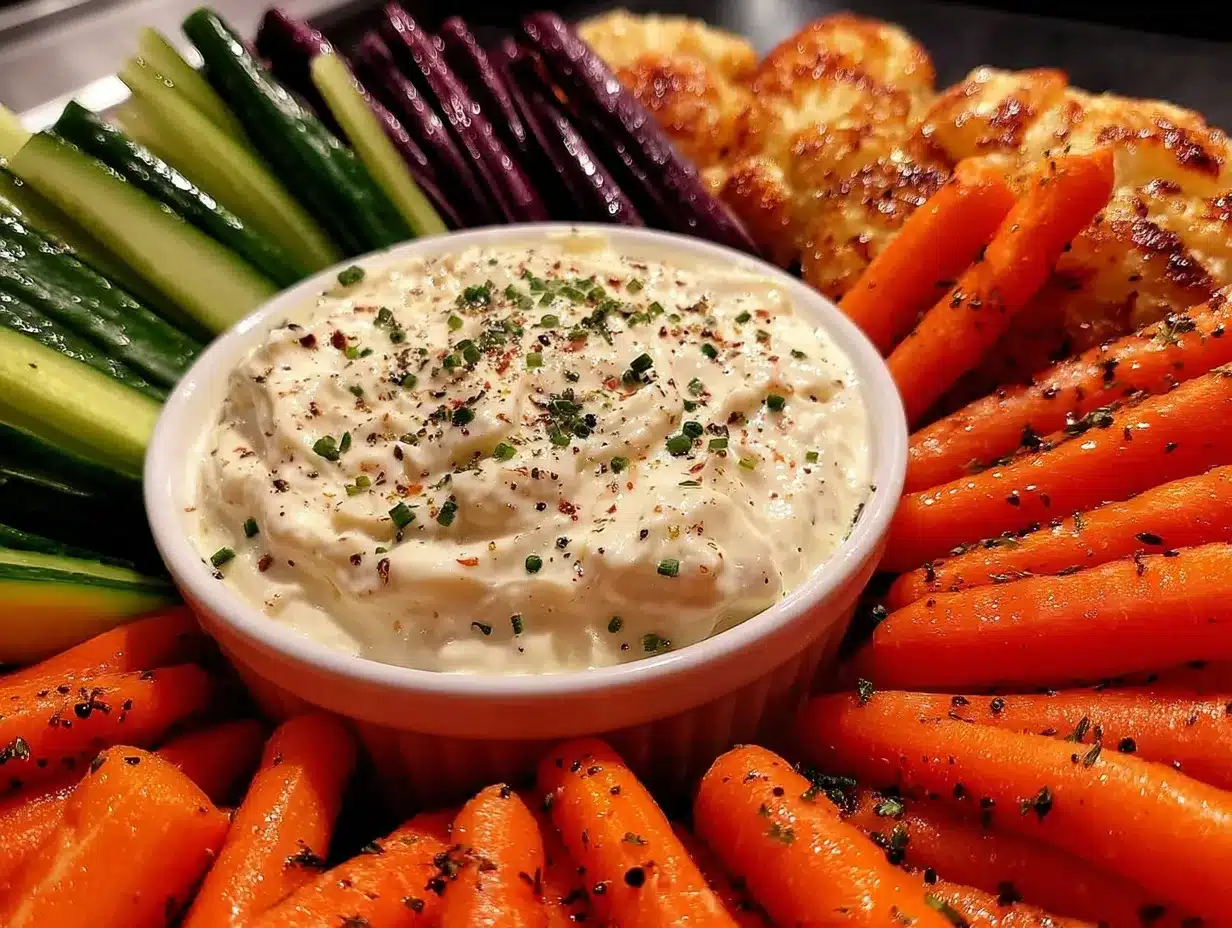
Absolutely. While hummus is the classic choice for the web look, any creamy white or light-colored dip will work. Tzatziki, ranch, or even a white bean dip are great alternatives.
Equipment Needed
You don’t need much for this recipe, which is part of its charm. The beauty of this Healthy Halloween Veggie Tray Spider Web is that it relies on basic kitchen tools. You will need a large, flat serving platter. A round platter works best for the web design, but a square one can work if you adjust the pattern. I prefer ceramic platters because they are heavy and don’t slide around when you are arranging the veggies.
A sharp chef’s knife is essential for cutting the vegetables uniformly. A dull knife will crush the veggies and make them look messy. A cutting board that is large enough to hold all your veggies is also helpful. I usually use a wooden board because it is gentle on my knives. A small bowl for the hummus is needed if you are dipping directly, but for the web design, you will pour the hummus onto the platter.
A spoon or a small ladle is useful for pouring the hummus in a spiral pattern. I often use the back of a spoon to drag the lines. If you don’t have a large platter, you can use a large baking sheet or even a clean piece of parchment paper on a counter. For budget-friendly options, a simple white dinner plate works fine if you are making a smaller portion. Just make sure it is clean and dry. Avoid glass platters if they are thin, as they can crack if the hummus is warm (though it usually isn’t).
Preparation Method
Getting started is the easiest part. First, wash all your vegetables thoroughly. This is non-negotiable. You want to remove any dirt or pesticides. Pat them dry with a towel. Wet veggies will make the hummus slide around, and you want those web lines to stay put. Take your carrots, peel them if you wish, and cut them into sticks. Aim for about 4-inch lengths. Cut the celery into similar lengths. Cut the bell pepper into strips. Cut the broccoli into small florets. Slice the cucumber into rounds or sticks. Arrange all the cut veggies on your platter in a circle, leaving the center empty. This will be your web.
Next, take your hummus. If it is thick, stir it with a spoon to loosen it up. You want it to flow smoothly. Pour a generous amount of hummus into the center of the platter. Use a spoon to spread it out slightly, creating a small pool. Then, take a toothpick or the tip of a knife and drag it from the center of the hummus pool outward to the edge of the platter. Create several lines radiating from the center, like spokes on a wheel. Don’t worry about making them perfectly straight. Imperfection is part of the charm.
After creating the radial lines, take your spoon and drag it in a spiral pattern from the center outward, connecting the radial lines. This creates the web effect. You can make the spiral tight or loose, depending on your preference. I like a medium spiral. Once the web is complete, take your sliced black olives and place two small slices near the center of the web, close together. These are the spider eyes. You can add more olives to create more spiders if you like.
Finally, arrange the vegetable sticks around the web. Place the carrot sticks, celery sticks, and pepper strips along the radial lines of the web. Place the broccoli florets and cucumber slices in the spaces between the sticks. This creates a balanced look. The veggies should frame the web, not cover it. Take a step back and admire your work. It should look like a giant spider web made of vegetables. It is surprisingly satisfying to create. This process takes about 10-15 minutes, depending on your speed. It is a meditative process, honestly. You just focus on the pattern and the colors. It is a great way to decompress after a long day.
What if the hummus breaks?
If your hummus separates, just stir it back together before pouring. It happens sometimes, especially if it has been sitting in the fridge. A good stir usually fixes it.
Can I make this ahead of time?
Yes, but the veggies might lose some crunch. I recommend assembling it no more than 2 hours before serving. If you need to make it earlier, keep the veggies and hummus separate and assemble just before eating.
Cooking Tips & Techniques
One of the biggest mistakes people make with veggie trays is using soggy vegetables. To avoid this, make sure your veggies are completely dry before arranging them. Any moisture will cause the hummus to slide and the web pattern to blur. I always pat my veggies with a paper towel before starting. It is a small step, but it makes a huge difference in the final look.
Another tip is to use a good quality hummus. Cheap hummus can be grainy and difficult to spread. If you are making your own hummus, make sure to blend it until it is completely smooth. You can add a little olive oil to help with the consistency. Also, consider the color contrast. If you use a green hummus (like pesto), the web won’t show up as well against green veggies. Stick to white or light-colored dips for the best effect.
Timing is also key. If you are serving this at a party, set it out at the last minute. Veggies can wilt quickly, especially in a warm room. Keep the tray in the fridge until you are ready to serve. If you are making this for kids, let them help with the olive eyes. It is a fun activity and makes them more likely to eat the veggies. I learned this the hard way with my nephew. He wouldn’t touch the carrots until I let him place the eyes. It worked like a charm.
For consistency, try to keep the vegetable sticks uniform in size. This makes the tray look more professional and easier to eat. Use a mandoline slicer for the carrots if you want perfect sticks. It is faster and more precise than using a knife. Just be careful with your fingers. A mandoline is sharp. Safety first. Also, don’t overcrowd the platter. Leave some negative space around the web. It allows the design to breathe and stand out. A cluttered tray looks messy and unappetizing.
How do I keep the olives from sliding?
Press them gently into the hummus. The stickiness of the hummus will hold them in place. If they are still sliding, add a tiny dot of hummus underneath each olive slice.
Can I use other toppings for eyes?
Yes, you can use mini mozzarella balls, cherry tomatoes cut in half, or even candy eyes for a more playful look. Black olives are the traditional choice, but feel free to experiment.
Variations & Adaptations
While the classic spider web is great, there are many ways to adapt this recipe to suit different tastes or dietary needs. For a gluten-free option, simply ensure your hummus is certified gluten-free, which most are. For a dairy-free version, stick to the hummus or use a dairy-free ranch. If you are vegan, this recipe is already vegan, provided you use a plant-based dip.
You can also change the vegetables based on what is in season. In the fall, add apple slices for a sweet crunch. In the spring, add snap peas or asparagus tips. For a spicy kick, add jalapeño slices or use a spicy hummus. I once tried adding pickles to the web, and it was surprisingly good. The tanginess of the pickles paired well with the creamy hummus. It was a bit messy, but delicious.
For a healthier twist, you can swap the hummus for a Greek yogurt-based dip. Mix Greek yogurt with lemon juice, garlic, and herbs for a lighter option. It has a similar consistency to hummus and works well for the web design. It is lower in calories and higher in protein. I use this version when I am watching my weight. It feels just as indulgent but is better for you.
You can also create different spider web designs. Instead of a spiral, try a zigzag pattern. Or create multiple smaller webs with different colored dips. You can use beet hummus for a pink web or spinach hummus for a green web. The possibilities are endless. I like to experiment with colors to match different holidays or themes. For Christmas, I use a red and green web. For Easter, I use pastel colors. It is a versatile recipe that can be adapted for any occasion.
What if I don’t like hummus?
No problem. Try a creamy avocado dip, a white bean dip, or even a cheese-based dip if you are not vegan. The key is a thick, creamy consistency.
Can I add protein to this tray?
Yes, you can add grilled chicken strips, hard-boiled eggs, or chickpeas. It turns the snack into a more substantial meal. Just arrange the protein around the edge of the tray.
Serving & Storage Suggestions
When serving, place the tray at room temperature for about 15 minutes before serving. Cold veggies can be too hard to crunch, and room temperature enhances the flavor. Garnish the tray with a few fresh herbs, like parsley or cilantro, for a pop of color. This adds a professional touch. Serve with additional dips on the side if you want variety. I often serve a spicy salsa or a sweet marinara on the side for dipping the carrots.
For storage, keep any leftovers in an airtight container in the fridge. The veggies will last for up to 3 days. The hummus web will dry out, so it is best to eat it within 24 hours. If you have leftover veggies, you can chop them up and add them to a salad. They will still be crisp. The hummus can be saved and used as a dip for other veggies or as a sandwich spread. Do not freeze the veggies, as they will become mushy upon thawing. The hummus can be frozen, but the texture may change. It is best enjoyed fresh.
I love making this tray for game night. It is easy to eat while watching the game, and it is healthy enough that you don’t feel guilty. It is also great for lunchboxes. Pack the veggies and hummus separately and assemble in the morning. It makes a fun, surprising lunch for kids. I’ve been known to sneak this into my own lunchbox when I need a quick, healthy meal. It is reliable, delicious, and always a hit.
How long do the veggies stay fresh?
They stay crisp for about 3-4 days in the fridge. Make sure to keep them in a sealed container to prevent them from absorbing other odors.
Can I transport this tray?
Yes, but be careful. Use a tray with a raised edge or place it in a box. The hummus can spill if the tray is jostled. I usually cover it with plastic wrap before transporting.
Nutritional Information & Benefits
This Healthy Halloween Veggie Tray Spider Web is a nutritious snack option. Vegetables like carrots and celery are low in calories but high in fiber, which helps with digestion and keeps you feeling full. Carrots are rich in beta-carotene, which is good for eye health. Celery is hydrating and contains antioxidants. Broccoli is a superfood, packed with vitamins C and K. Bell peppers are high in vitamin C, which supports the immune system. The hummus provides plant-based protein and healthy fats from the chickpeas and tahini. It is a balanced snack that fuels your body without weighing you down. It is perfect for those who want to eat healthy but still enjoy a treat. It is a guilt-free indulgence that tastes great and makes you feel good.
Is this recipe low-carb?
It is relatively low-carb, depending on the portion size. The vegetables are low in net carbs, and hummus is moderate. It fits well into a low-carb or keto diet if you watch the hummus portion.
Is it gluten-free?
Yes, as long as you use gluten-free hummus. Most plain hummus is naturally gluten-free, but always check the label.
Conclusion
Making a Healthy Halloween Veggie Tray Spider Web is easier than you think. It is a fun, creative way to eat your veggies, and it looks impressive enough for any party. I hope you try this recipe and enjoy it as much as I do. It is a simple dish that brings joy and health to your table. Feel free to customize it with your favorite veggies and dips. Make it your own. And if you do, please share your creations with me. I love seeing how others interpret this recipe. Leave a comment below with your variations or tips. Let’s inspire each other to eat more veggies and have more fun in the kitchen. Happy snacking!
FAQs
Can I use store-bought hummus?
Yes, store-bought hummus works perfectly. Just make sure it is smooth and creamy. If it is too thick, add a little water to thin it out.
What vegetables work best for the web?
Hard, crunchy vegetables like carrots, celery, and bell peppers work best. They hold the shape well and provide a nice contrast to the soft hummus.
How do I make the web pattern?
Pour hummus in the center, drag lines outward, and then drag a spiral pattern from the center to the edge. Use a spoon or toothpick for precision.
Can I make this ahead of time?
Yes, but assemble it no more than 2 hours before serving to keep the veggies crisp. Keep it covered in the fridge until ready to serve.
What can I use instead of black olives for eyes?
You can use mini mozzarella balls, cherry tomatoes, or even candy eyes. Black olives are traditional, but feel free to experiment.
Pin This Recipe!
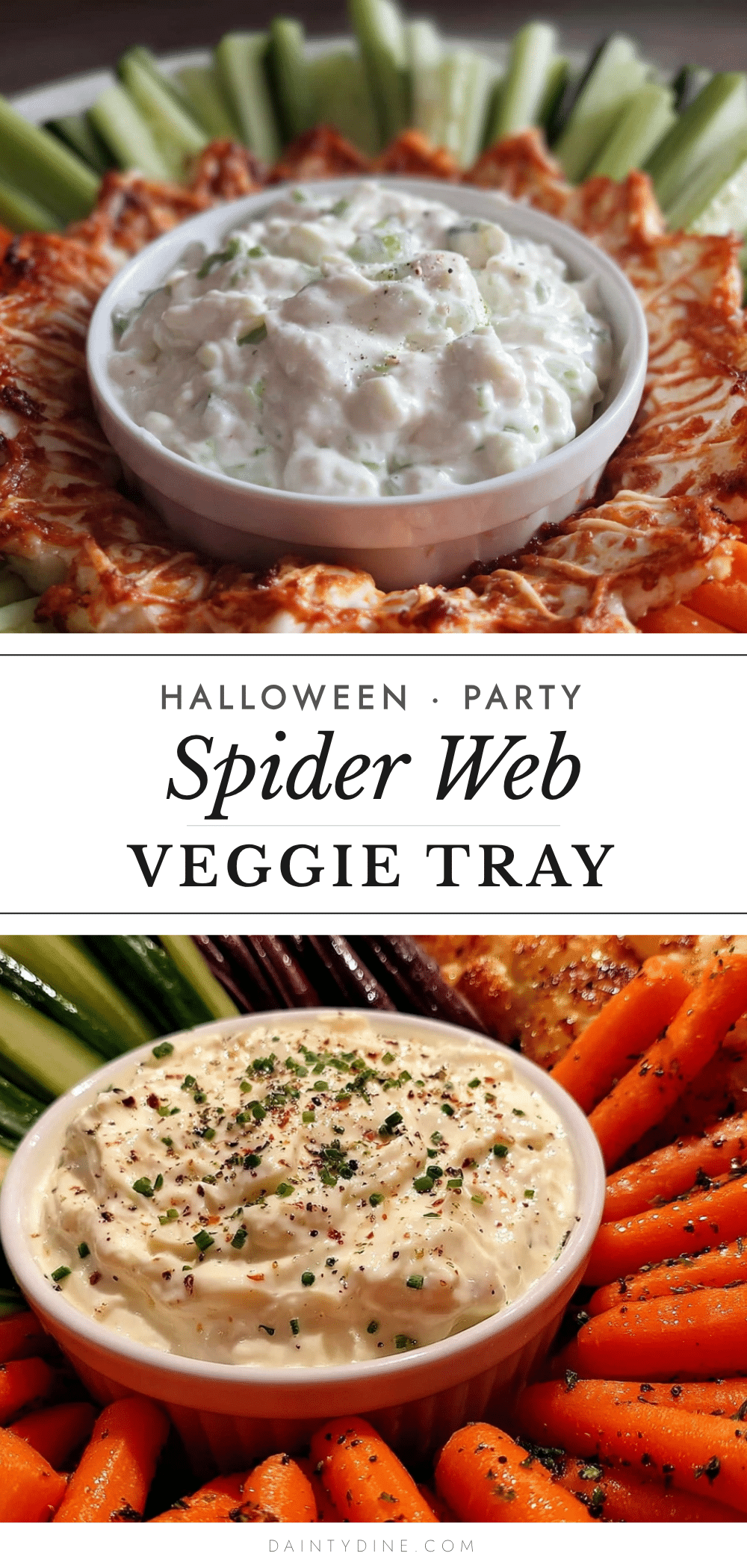
Healthy Halloween Veggie Tray: 5 Easy Spider Web Ideas
A fun and creative Halloween snack featuring crunchy vegetables arranged around a hummus spider web design with olive eyes. This healthy, gluten-free, and vegan-friendly appetizer is quick to prepare and perfect for parties or weeknight snacking.
- Prep Time: 15 minutes
- Cook Time: 0 minutes
- Total Time: 15 minutes
- Yield: 4 servings
- Category: Appetizer
- Cuisine: American
Ingredients
- Carrots, peeled and cut into sticks
- Celery stalks, washed and cut into bite-sized pieces
- Broccoli florets, small and bite-sized
- Red bell pepper, cut into thin strips
- Cucumber, cut into rounds or sticks
- Hummus (plain or garlic flavored), smooth consistency
- Black olives, thinly sliced
Instructions
- Wash all vegetables thoroughly and pat them completely dry with a towel to ensure the hummus adheres properly.
- Cut carrots into 4-inch sticks, celery into similar lengths, bell pepper into strips, broccoli into small florets, and cucumber into rounds or sticks.
- Arrange the cut vegetables on a large, flat serving platter in a circle, leaving the center empty.
- Pour a generous amount of hummus into the center of the platter and spread it slightly to create a small pool.
- Using a toothpick or the tip of a knife, drag lines from the center of the hummus pool outward to the edge of the platter to create radial spokes.
- Using a spoon, drag a spiral pattern from the center outward, connecting the radial lines to create the web effect.
- Place two small slices of black olive near the center of the web to create spider eyes.
- Arrange the vegetable sticks along the radial lines and place broccoli florets and cucumber slices in the spaces between the sticks to frame the web.
Notes
Ensure vegetables are completely dry before arranging to prevent the hummus from sliding. For best results, assemble no more than 2 hours before serving to maintain crunch. If making ahead, keep veggies and hummus separate. Store leftovers in an airtight container in the fridge for up to 3 days (veggies) or 24 hours (hummus web).
Nutrition
- Serving Size: 1 serving of assorte
- Calories: 120
- Sugar: 5
- Sodium: 180
- Fat: 6
- Saturated Fat: 1
- Carbohydrates: 14
- Fiber: 4
- Protein: 4
Keywords: Halloween snack, healthy veggie tray, spider web recipe, hummus dip, gluten-free snack, vegan appetizer, party food, easy recipes