Love this? Save it for later!
Share the inspiration with your friends
My friend Jen asked me last week why I couldn’t just throw everything on one pan and call it dinner. She’d just gotten home from a double shift at the clinic, her kids were hungry, and she was staring at a bag of pork chops in her fridge with absolutely no plan. I started to explain why that wouldn’t work—something about cooking times being different, about pork drying out, about the need for proper searing. Then I stopped. Honestly? I had no good reason. I’d just been making things harder than they needed to be.
So I went over to her place that Tuesday night, determined to prove my point about proper technique. I brought my favorite sheet pan, some bell peppers, and a bottle of olive oil. She handed me the pork chops—thin-cut, nothing fancy—and said, “Just season them and throw them on.” I wanted to argue. I wanted to tell her about resting times and temperature zones. But I kept my mouth shut and did what she said. And you know what? Those were the best pork chops I’d made in months.
The vegetables got all caramelized from the pork juices. The meat stayed surprisingly tender. And the clean-up took maybe four minutes. I stood there at her kitchen sink, scrubbing a single pan, feeling a little humbled and a lot grateful. Jen was already on the couch, half-asleep, and she just mumbled, “Told you.” She was right. Sometimes the simplest approach wins, and this sheet pan pork chops recipe is proof of that.
I’ve been making this version ever since, tweaking the seasoning and the veggie combinations, but the core idea is still hers: one pan, minimal fuss, maximum flavor. It’s the kind of meal that saves your night when you’re running on empty. And honestly? It tastes better than most of the complicated stuff I used to swear by. So here it is—my easy sheet pan pork chops with roasted vegetables, inspired by a friend who knew better than I did.
Why You’ll Love This Recipe
This isn’t just another pork chop recipe that leaves you with a sink full of dishes and a so-so dinner. This is the one that changes how you think about weeknight cooking. Let me tell you why this version stands apart from the rest.
- Quick & Easy : From fridge to table in about 35 minutes. No marinating overnight, no complicated steps. Just season, arrange, and roast.
- Simple Ingredients : You probably have most of this in your kitchen right now. Pork chops, potatoes, carrots, olive oil, and basic seasonings. That’s it.
- Perfect for Busy Weeknights : This is the meal you make when you have zero energy but still want something that feels like a real dinner. It’s also great for meal prep on Sundays.
- Crowd-Pleaser : My kids actually ask for seconds when I make this. My husband packs the leftovers for lunch. Even picky eaters tend to love the roasted veggies.
- Unbelievably Delicious : The pork chops come out juicy and golden, and the vegetables soak up all those savory drippings. It’s comfort food that doesn’t weigh you down.
What makes this recipe different from the hundreds of other sheet pan dinners out there? The timing, honestly. Most recipes tell you to add everything at once, which means either overcooked pork or undercooked potatoes. I figured out the exact moment to add each component so everything finishes together. The pork stays tender, the potatoes get crispy edges, and the carrots turn sweet and caramelized. It’s a small adjustment that makes a huge difference.
This recipe is the kind that makes you close your eyes after the first bite. It’s comfort food reimagined—healthier, faster, but with the same soul-soothing satisfaction. Perfect for impressing guests without stress, or turning a simple Tuesday into something memorable.
What Ingredients You Will Need
This recipe uses simple, wholesome ingredients to deliver bold flavor and satisfying texture without the fuss. Most of these are pantry staples, which makes this dish perfect for those nights when you don’t want to make a special trip to the store.
For the Pork Chops
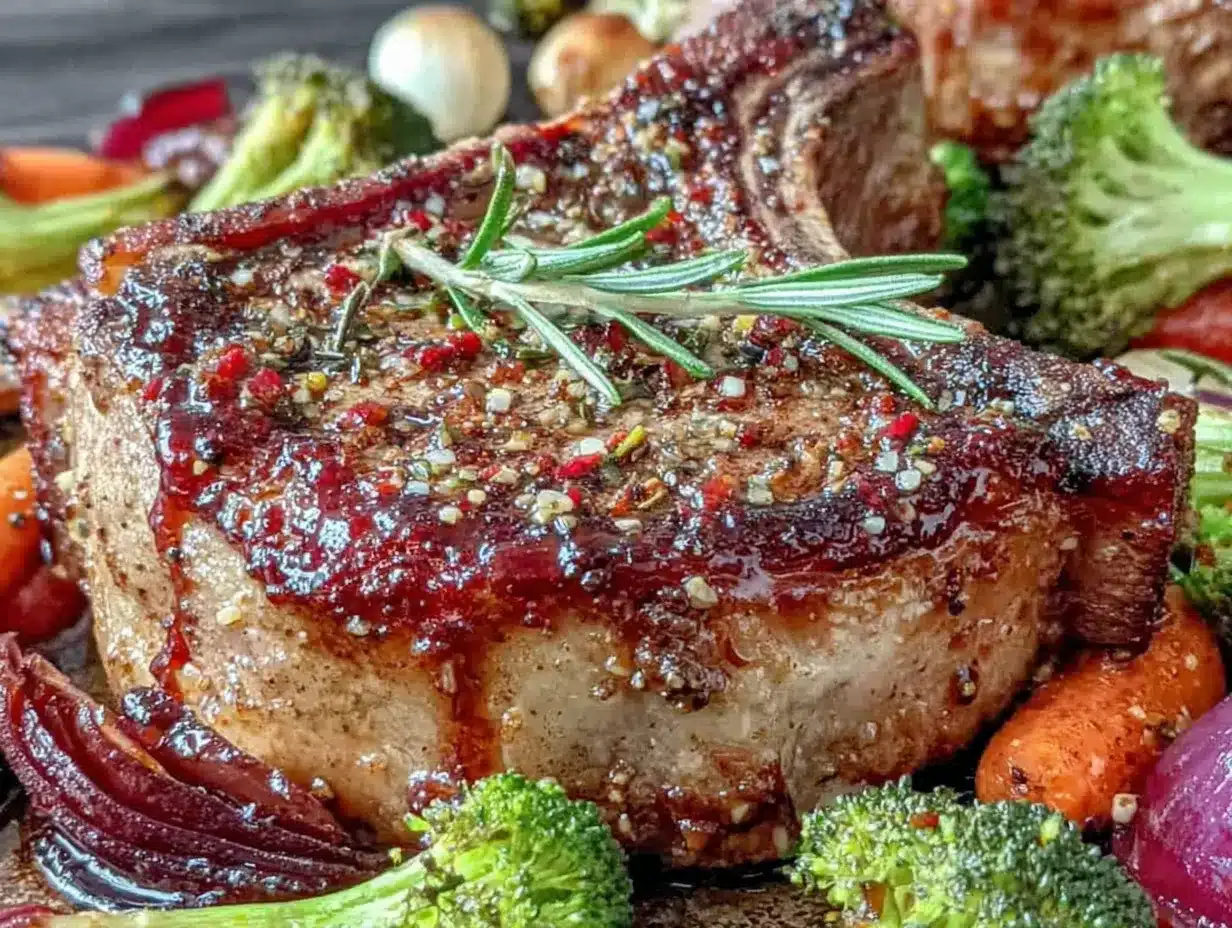
- 4 bone-in pork chops, about 1-inch thick (look for chops with good marbling for the juiciest results)
- 2 tablespoons olive oil (I prefer extra-virgin for flavor, but regular works fine)
- 1 teaspoon garlic powder
- 1 teaspoon smoked paprika (adds that lovely smoky depth)
- 1/2 teaspoon dried thyme
- 1/2 teaspoon salt (adjust to taste)
- 1/4 teaspoon black pepper
For the Roasted Vegetables
- 3 medium Yukon Gold potatoes, cut into 1-inch cubes (they hold their shape better than russets)
- 3 large carrots, peeled and cut into 1-inch chunks
- 1 red bell pepper, cut into 1-inch pieces
- 1 yellow onion, cut into wedges
- 2 tablespoons olive oil
- 1 teaspoon dried rosemary
- 1/2 teaspoon salt
- 1/4 teaspoon black pepper
For the pork chops, I recommend buying bone-in cuts that are at least an inch thick. Boneless chops work too, but they cook faster and can dry out more easily. If you’re using boneless, just reduce the cooking time by about 5 minutes. I’ve tried this with both, and honestly, the bone-in version is noticeably more flavorful and tender.
The vegetables are flexible based on what you have. Broccoli, cauliflower, or sweet potatoes all work beautifully here. In summer, I swap the carrots for zucchini and add cherry tomatoes in the last 10 minutes of roasting. Just keep the pieces roughly the same size so they cook evenly.
For the olive oil, I use a decent quality extra-virgin for the vegetables because you can taste it. For the pork, any olive oil works since it’s mostly there to help the seasoning stick and promote browning.
One ingredient tip I learned the hard way: don’t skip the smoked paprika. Regular paprika is fine, but the smoked version adds this subtle warmth that makes the whole dish feel more complex. It’s worth picking up a jar if you don’t have it—it’ll change your roasted chicken and fish recipes too.
Equipment Needed
The beauty of this recipe is that you don’t need much. Here’s what you’ll need to pull it off:
- Large sheet pan (half-sheet size, about 18×13 inches) – This is non-negotiable. A smaller pan means overcrowding, which leads to steaming instead of roasting. I use a heavy-duty aluminum pan from Nordic Ware, and it’s held up for years.
- Chef’s knife – For cutting the vegetables into even pieces. A sharp knife makes this step feel effortless.
- Cutting board – Preferably a large one so you have room to work.
- Mixing bowls – Two small bowls for the seasoning mixes, or you can just use a plate.
- Measuring spoons – For the seasonings. I’ve gotten good at eyeballing it, but measuring helps with consistency.
- Tongs – For flipping the pork chops halfway through. A spatula works too, but tongs give you more control.
- Instant-read thermometer – This is optional but highly recommended if you’re nervous about overcooking pork. The USDA says 145°F is safe, and that’s where the meat stays juicy.
If you don’t have a large sheet pan, you can use two smaller ones. Just rotate them halfway through cooking so everything browns evenly. And if you don’t have an instant-read thermometer, don’t stress—you can check doneness by cutting into the thickest chop. The juices should run clear, and the meat should be just slightly pink in the center.
Preparation Method
Let me walk you through this step by step. I’ve made this recipe dozens of times, and these are the exact steps that give you the best results every time.
- Preheat your oven to 425°F (220°C). This high temperature is key for getting those beautiful golden-brown edges on both the pork and the vegetables. Give your oven a full 15-20 minutes to come to temperature before you put the pan in.
- Prepare the vegetables. Wash and cut your potatoes into 1-inch cubes. Peel the carrots and cut them into similar-sized chunks. Cut the bell pepper into 1-inch pieces and the onion into wedges. Try to keep everything roughly the same size—this is the secret to even cooking. I usually aim for pieces that are about the size of a golf ball, maybe a bit smaller.
- Season the vegetables. In a large bowl, toss the cut vegetables with 2 tablespoons of olive oil, 1 teaspoon dried rosemary, 1/2 teaspoon salt, and 1/4 teaspoon black pepper. Make sure everything is well-coated. Spread the vegetables in a single layer on your sheet pan, leaving space in the center for the pork chops.
- Pre-roast the vegetables. Place the sheet pan in the oven and roast the vegetables for 10 minutes. This head start ensures the potatoes get tender before the pork goes in. I learned this the hard way—the first time I made this, I added everything at once, and the potatoes were still crunchy when the pork was done. This extra step fixes that completely.
- Prepare the pork chops. While the vegetables are pre-roasting, pat the pork chops dry with paper towels. This is important—moisture is the enemy of browning. In a small bowl, mix 2 tablespoons olive oil, 1 teaspoon garlic powder, 1 teaspoon smoked paprika, 1/2 teaspoon dried thyme, 1/2 teaspoon salt, and 1/4 teaspoon black pepper. Rub this mixture all over both sides of each pork chop.
- Add the pork to the pan. After 10 minutes, remove the sheet pan from the oven. Use tongs to place the seasoned pork chops in the center of the pan, nestled among the vegetables. Don’t worry if they’re touching the veggies a bit—that’s actually good, because the pork juices will flavor everything.
- Roast everything together. Return the pan to the oven and roast for 18-22 minutes, depending on the thickness of your chops. For 1-inch thick bone-in chops, 20 minutes is usually perfect. Halfway through (at the 10-minute mark), flip the pork chops and give the vegetables a quick stir so they brown evenly.
- Check for doneness. The pork is done when it reaches an internal temperature of 145°F (63°C) in the thickest part. If you don’t have a thermometer, cut into the thickest chop—the juices should run clear, and the meat should be just slightly pink in the center. The vegetables should be tender and golden-brown, with crispy edges on the potatoes.
- Rest before serving. This is the step people skip, and it makes a difference. Let the pork chops rest on the pan for 5 minutes before serving. This allows the juices to redistribute throughout the meat, so every bite is tender and flavorful. I usually set a timer because I’m impatient, and I’ve definitely cut into them too early before. Trust me, the wait is worth it.
- Serve and enjoy. Transfer the pork chops and vegetables to plates or a platter. Spoon any pan juices over the top—that’s liquid gold right there. Serve immediately while everything is hot.
Sensory cues to watch for: The vegetables should look caramelized around the edges, not just pale and steamed. The pork should have a nice golden-brown crust. You should be able to smell the smoked paprika and rosemary filling your kitchen—that’s how you know it’s working.
Cooking Tips & Techniques
Over the years, I’ve made every mistake you can imagine with this recipe. Here’s what I’ve learned so you don’t have to repeat my failures.
Don’t crowd the pan. This is the number one mistake people make with sheet pan dinners. If everything is crammed together, the vegetables steam instead of roast. You want that beautiful caramelization, and that only happens when there’s space between pieces. If your pan is too small, use two pans or halve the recipe.
Pat the pork dry. I know it seems fussy, but this step matters. Wet pork chops won’t brown properly—they’ll just steam and turn gray. Take the extra 30 seconds to pat them dry with paper towels before seasoning. Your taste buds will thank you.
Cut vegetables uniformly. I learned this one the hard way when I made a batch with wildly different-sized potato chunks. The small ones burned while the big ones were still raw. Now I take the time to cut everything to roughly the same size, and it makes a world of difference.
Use a thermometer for perfect pork. The old rule about cooking pork until it’s well-done is outdated. The USDA now says 145°F is safe, and that’s the sweet spot for juicy, tender meat. I keep an instant-read thermometer in my utensil drawer and use it every time. It takes the guesswork out completely.
Let the pan preheat with the vegetables. This is my favorite trick. By pre-roasting the vegetables for 10 minutes before adding the pork, you’re essentially giving them a head start. The hot pan also helps sear the pork when you add it, which means better browning.
Season generously. Don’t be shy with the seasonings. The vegetables need enough salt to bring out their natural sweetness, and the pork needs a good coating of the spice mixture. I’ve found that people tend to under-season sheet pan dinners, and the result is bland. Taste your seasoning mix before applying it—it should taste slightly salty on its own.
One more thing: If your pork chops are thin (less than 3/4 inch), reduce the cooking time to about 12-15 minutes total. Check them early to avoid overcooking. Thin chops cook fast and dry out quickly, so keep an eye on them.
Variations & Adaptations
This recipe is incredibly flexible. Here are some of my favorite ways to change it up depending on what I have on hand or what I’m craving.
Vegetable Swaps: The vegetable combination I’ve given you is just a starting point. Sweet potatoes, parsnips, Brussels sprouts, broccoli, cauliflower, and butternut squash all work beautifully. Just adjust the pre-roasting time based on the density of the vegetable. Dense vegetables like sweet potatoes benefit from the full 10-minute head start, while tender vegetables like broccoli only need about 5 minutes.
Seasoning Variations: The smoked paprika and rosemary combo is my go-to, but I’ve made this with Italian seasoning and garlic for a Mediterranean twist. A mix of cumin, chili powder, and lime zest gives it a Southwestern vibe. And for a simple lemon-herb version, swap the paprika for dried oregano and add the zest of one lemon to the pork seasoning.
Dietary Adaptations: This recipe is naturally gluten-free and dairy-free. For a low-carb version, swap the potatoes for cauliflower florets or radishes. The radishes lose their peppery bite when roasted and become surprisingly mild and potato-like. For a paleo-friendly version, use ghee or avocado oil instead of olive oil.
Different Proteins: The same technique works beautifully with chicken thighs, bone-in chicken breasts, or even salmon fillets. Adjust the cooking time accordingly—chicken thighs need about 25-30 minutes, while salmon is done in about 12-15 minutes. Just make sure to check the internal temperature.
One variation I tried last fall: I added sliced apples and a sprinkle of cinnamon to the vegetables during the last 10 minutes of roasting. The apples caramelized and the sweetness paired perfectly with the smoky pork. It was a happy accident that I’ve repeated several times since. Don’t be afraid to experiment—sometimes the best versions come from trying something random.
Serving & Storage Suggestions
This dish is best served hot, straight from the oven. I like to plate everything on a large platter, arranging the pork chops in the center and the vegetables around them. Spoon any pan juices over the top—that’s where all the concentrated flavor lives.
What to serve with it: This is a complete meal on its own, but if you want to stretch it further, a simple green salad with a lemon vinaigrette is a lovely addition. Crusty bread for soaking up the pan juices is never a bad idea either. And if you’re feeling fancy, a sprinkle of fresh parsley or thyme adds a nice pop of color.
Storage: Leftovers keep well in an airtight container in the refrigerator for up to 4 days. The vegetables might soften a bit, but the flavor actually gets better as everything melds together. I often make a double batch on Sunday and use the leftovers for lunch throughout the week.
Reheating: The best way to reheat this is in a 350°F oven for about 10 minutes, or until everything is heated through. The microwave works in a pinch, but it can make the pork a bit tough and the vegetables soggy. If you’re using the microwave, cover the plate with a damp paper towel to add some moisture.
Freezing: You can freeze the cooked pork chops and vegetables in a freezer-safe container for up to 3 months. Thaw overnight in the refrigerator and reheat in the oven. I’ve done this several times, and while the vegetables lose a bit of their texture, the flavor is still excellent. It’s a great option for meal prep.
One note on flavor development: This dish tastes even better the next day. The pork absorbs more of the seasoning, and the vegetables continue to soak up those delicious pan juices. So if you’re planning ahead, making this a day in advance is actually a smart move.
Nutritional Information & Benefits
This recipe is a balanced meal that fits well into a health-conscious lifestyle. Here’s an approximate breakdown per serving (one pork chop with vegetables):
| Nutrient | Amount per Serving |
|---|---|
| Calories | 420-480 |
| Protein | 35g |
| Carbohydrates | 30g |
| Fiber | 5g |
| Fat | 18g |
| Saturated Fat | 4g |
| Sodium | 650mg |
Pork chops are an excellent source of high-quality protein, which helps with muscle repair and keeps you feeling full and satisfied. They’re also rich in B vitamins, particularly B6 and B12, which support energy metabolism and brain function. The vegetables add fiber, vitamins A and C, and a host of antioxidants that support overall health.
The olive oil provides heart-healthy monounsaturated fats, and the moderate sodium level can be adjusted by reducing the salt in the seasoning. If you’re watching your sodium intake, use low-sodium seasoning blends or reduce the salt by half.
This meal is naturally gluten-free and dairy-free, making it suitable for many dietary restrictions. It’s also relatively low in added sugars—the sweetness comes entirely from the roasted vegetables. For a lower-carb option, swap the potatoes for cauliflower as mentioned in the variations section.
From a wellness perspective, this is the kind of meal that makes you feel good without feeling deprived. It’s hearty enough to satisfy, but balanced enough to fit into a healthy eating plan. That’s the sweet spot, if you ask me.
Conclusion
This easy sheet pan pork chops with roasted vegetables recipe has become a staple in my kitchen for good reason. It’s simple, it’s delicious, and it proves that you don’t need complicated techniques or a sink full of dishes to make a meal that feels special. Whether you’re a seasoned cook or someone who’s just starting out, this recipe is forgiving, flexible, and always rewarding.
I hope you give it a try and make it your own. Swap in your favorite vegetables, play with the seasonings, and don’t be afraid to experiment. That’s the beauty of a recipe like this—it’s a starting point, not a rulebook. And if you end up with a version that’s even better than mine, I’d love to hear about it.
Drop a comment below and let me know how your sheet pan pork chops turned out. Did you try a different vegetable combination? Discover a new favorite seasoning? Share your wins and your lessons—I read every comment, and I love hearing how these recipes come to life in your kitchen. Happy cooking!
Frequently Asked Questions
Can I use boneless pork chops for this recipe?
Yes, boneless pork chops work perfectly. Just keep in mind that they cook faster than bone-in chops, so start checking for doneness around the 15-minute mark. Boneless chops also tend to dry out more quickly, so an instant-read thermometer is especially helpful here.
How do I prevent the pork chops from drying out?
The key is not overcooking them. Use an instant-read thermometer and pull the pork at 145°F. Letting them rest for 5 minutes before cutting also helps retain moisture. And don’t skip the olive oil in the seasoning—it helps keep the meat juicy during roasting.
Can I add other vegetables to the pan?
Absolutely! This recipe is very flexible. Broccoli, cauliflower, sweet potatoes, Brussels sprouts, and zucchini all work well. Just adjust the pre-roasting time based on the density of the vegetable. Add tender vegetables like zucchini or cherry tomatoes in the last 10 minutes of cooking.
How do I reheat leftovers without drying them out?
The best method is to reheat in a 350°F oven for about 10 minutes. If you’re in a hurry, the microwave works, but cover the plate with a damp paper towel to add moisture. The oven method gives you the best texture for both the pork and the vegetables.
Can I make this recipe ahead of time for meal prep?
Yes! This recipe is great for meal prep. Cook everything as directed, let it cool completely, and store in individual containers in the refrigerator for up to 4 days. The flavors actually meld together nicely overnight. Reheat in the oven or microwave when you’re ready to eat.
Pin This Recipe!
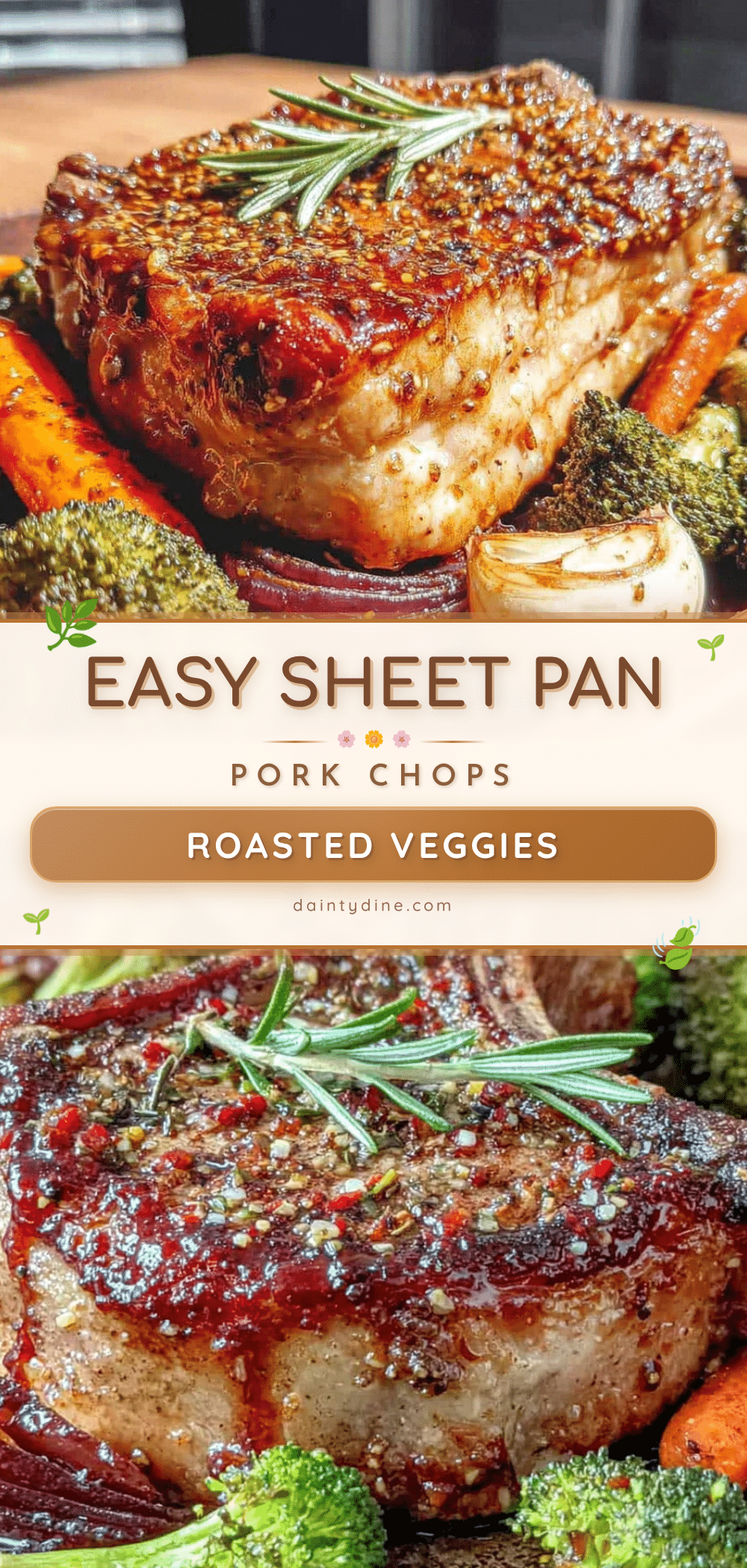
Easy Sheet Pan Pork Chops with Roasted Vegetables
A simple, one-pan dinner featuring juicy bone-in pork chops and caramelized roasted vegetables. Ready in about 35 minutes with minimal cleanup, this recipe is perfect for busy weeknights and delivers maximum flavor with minimal fuss.
- Prep Time: 15 minutes
- Cook Time: 20 minutes
- Total Time: 35 minutes
- Yield: 4 servings 1x
- Category: Main Course
- Cuisine: American
Ingredients
- 4 bone-in pork chops, about 1-inch thick
- 2 tablespoons olive oil
- 1 teaspoon garlic powder
- 1 teaspoon smoked paprika
- 1/2 teaspoon dried thyme
- 1/2 teaspoon salt
- 1/4 teaspoon black pepper
- 3 medium Yukon Gold potatoes, cut into 1-inch cubes
- 3 large carrots, peeled and cut into 1-inch chunks
- 1 red bell pepper, cut into 1-inch pieces
- 1 yellow onion, cut into wedges
- 2 tablespoons olive oil
- 1 teaspoon dried rosemary
- 1/2 teaspoon salt
- 1/4 teaspoon black pepper
Instructions
- Preheat your oven to 425°F (220°C).
- Wash and cut potatoes into 1-inch cubes. Peel carrots and cut into similar-sized chunks. Cut bell pepper into 1-inch pieces and onion into wedges.
- In a large bowl, toss the cut vegetables with 2 tablespoons olive oil, 1 teaspoon dried rosemary, 1/2 teaspoon salt, and 1/4 teaspoon black pepper. Spread in a single layer on a sheet pan, leaving space in the center for the pork chops.
- Pre-roast the vegetables for 10 minutes.
- While vegetables are pre-roasting, pat pork chops dry with paper towels. In a small bowl, mix 2 tablespoons olive oil, 1 teaspoon garlic powder, 1 teaspoon smoked paprika, 1/2 teaspoon dried thyme, 1/2 teaspoon salt, and 1/4 teaspoon black pepper. Rub this mixture all over both sides of each pork chop.
- After 10 minutes, remove the sheet pan from the oven. Place the seasoned pork chops in the center of the pan, nestled among the vegetables.
- Return the pan to the oven and roast for 18-22 minutes. Halfway through (at the 10-minute mark), flip the pork chops and stir the vegetables.
- Check for doneness: pork should reach an internal temperature of 145°F (63°C) in the thickest part. Vegetables should be tender and golden-brown.
- Let the pork chops rest on the pan for 5 minutes before serving.
- Transfer pork chops and vegetables to plates or a platter. Spoon any pan juices over the top. Serve immediately.
Notes
For best results, use bone-in pork chops at least 1-inch thick. Pat pork dry before seasoning to ensure browning. Pre-roasting vegetables gives them a head start. Let pork rest 5 minutes before serving. Leftovers keep in the refrigerator for up to 4 days.
Nutrition
- Serving Size: 1 pork chop with veg
- Calories: 450
- Sodium: 650
- Fat: 18
- Saturated Fat: 4
- Carbohydrates: 30
- Fiber: 5
- Protein: 35
Keywords: sheet pan pork chops, roasted vegetables, easy dinner, weeknight meal, one-pan dinner, pork chop recipe