Love this? Save it for later!
Share the inspiration with your friends
My neighbor, an older woman named Clara, asked why I couldn’t just use the soft, squishy persimmons instead of waiting for the rock-hard ones to ripen. I was in her kitchen, complaining about the batch of Hachiya persimmons I’d bought three days earlier that were still stubbornly firm. I started to explain why that wouldn’t work — that you need the super-ripe, almost jelly-like pulp for baking, that unripe persimmons are mouth-puckeringly astringent. Then I stopped. She was holding a spoonful of the soft, overripe fruit she’d scooped from a bowl on her counter, and she had this look. The look that said, “I’ve been doing this since before you were born.”
So I shrugged and said, “Alright, let’s try it your way.”
Honestly, I was sure it would be a disaster. I mean, I’d read all the baking blogs, I knew the “rules.” You use the squishy, almost-fermented pulp. You don’t cut corners. But Clara just mashed up her soft persimmons — the ones that felt like a water balloon — and handed me the bowl. “It’s the same thing,” she said. “Just softer.” I mixed it into the batter with a healthy dose of skepticism, adding the walnuts and cinnamon more out of habit than hope.
The loaf came out of the oven looking perfect, a deep amber-gold. But I was still waiting for that weird, dry texture to hit. The first slice told me everything I needed to know. It was moist, tender, and had this incredible, deep sweetness that I’d never gotten from my carefully-ripened fruit before. I had to admit it — she was right. The “wrong” persimmons made the best bread. Maybe you’ve been there, where a simple suggestion from someone who just *knows* flips everything you thought you knew on its head. That’s this persimmon bread recipe. It’s the one that taught me to stop overthinking and just trust the fruit.
I’ve been making it every fall since, and I honestly think it tastes better every single time.
Why You’ll Love This Recipe
This isn’t just another quick bread recipe. This is the one that makes you look like a baking pro with almost zero effort. I’ve tested this version at least a dozen times, tweaking the flour ratio and the spice blend until it was absolutely perfect. It’s the kind of recipe you’ll bookmark and come back to year after year.
- Quick & Easy: From start to oven in about 15 minutes. No stand mixer required, no complicated techniques. Just a bowl, a spoon, and a loaf pan.
- Simple Ingredients: You probably have most of these in your pantry right now. The only “special” ingredient is the persimmons, and they’re easy to find at farmers’ markets or grocery stores in the fall.
- Perfect for Cozy Mornings: This bread is made for a slow Saturday morning with a big mug of coffee. It fills your kitchen with the warmest, most comforting smell of cinnamon and baked fruit.
- Crowd-Pleaser: I’ve brought this to potlucks and holiday brunches, and it disappears every single time. People always ask for the recipe, surprised at how moist and flavorful it is.
- Unbelievably Delicious: The texture is the star here. It’s incredibly moist, almost pudding-like, with a tender crumb and a slightly crunchy top. The walnuts add the perfect little crunch against the softness of the bread.
What makes this recipe different is the secret I learned from Clara: using the softest, most overripe persimmons you can find. It creates a moisture level that perfectly ripe fruit just can’t match. It’s comfort food at its finest — simple, honest, and deeply satisfying. It’s the kind of bread that makes you close your eyes after the first bite.
What Ingredients You Will Need
This recipe relies on a handful of simple, wholesome ingredients that work together to create something truly special. The persimmons are the star, but each component plays a crucial role in building flavor and texture.
- Ripe Hachiya Persimmons (about 1 ½ cups pulp): This is non-negotiable. You want Hachiya persimmons, the acorn-shaped ones, that are incredibly soft and squishy. The skin might be slightly wrinkled. The pulp should be like a thick jelly. Fuyu persimmons (the squat, tomato-shaped ones) are not suitable for this recipe as they are not astringent and won’t break down the same way.
- All-Purpose Flour (1 ¾ cups / 220g): Provides the structure for the bread. For a slightly heartier texture, you can substitute up to half of the flour with whole wheat pastry flour.
- Granulated Sugar (1 cup / 200g): Adds sweetness and helps create a tender crumb. You can reduce it to ¾ cup if you prefer a less sweet bread, especially if your persimmons are exceptionally sweet.
- Baking Soda (1 teaspoon): The primary leavening agent. It reacts with the acid in the persimmons to help the bread rise.
- Baking Powder (½ teaspoon): Gives an extra little lift for a lighter texture.
- Salt (½ teaspoon): Balances the sweetness and enhances the overall flavor.
- Ground Cinnamon (2 teaspoons): The warm, cozy spice that pairs perfectly with the persimmons. I prefer Saigon cinnamon for its stronger, more complex flavor.
- Ground Nutmeg (¼ teaspoon): Adds a subtle warmth that rounds out the cinnamon. Freshly grated is best if you have it.
- Vegetable Oil (½ cup / 120ml): Keeps the bread incredibly moist. You can use melted coconut oil or a neutral-flavored oil like avocado oil.
- Large Eggs (2): Provide structure and richness. Make sure they are at room temperature for the best emulsion.
- Vanilla Extract (1 teaspoon): Enhances the sweetness and adds depth of flavor.
- Chopped Walnuts (1 cup / 120g): Add a wonderful crunch and nutty flavor. Toast them lightly in a dry pan for 3-4 minutes before adding to the batter for an even deeper flavor.
Equipment Needed
You don’t need a fancy bakery setup for this one. It’s a very forgiving recipe that comes together with basic kitchen tools.
- 9×5-inch Loaf Pan: A standard loaf pan is perfect. If you use a slightly smaller pan, you may need to increase the baking time.
- Large Mixing Bowl: For combining your dry ingredients.
- Medium Mixing Bowl: For whisking the wet ingredients together.
- Whisk: For combining the dry ingredients and ensuring no lumps.
- Rubber Spatula or Wooden Spoon: For folding the wet and dry ingredients together. A spatula is best for getting every last bit of batter into the pan.
- Measuring Cups and Spoons: For accurate measurements. I cannot stress this enough — baking is a science, and using the wrong measuring cup for flour can ruin the texture.
- Parchment Paper (optional but recommended): Lining the pan makes it incredibly easy to lift the bread out after baking. Just leave a little overhang on the long sides.
- Cooling Rack: Essential for allowing the bread to cool evenly and preventing a soggy bottom.
Preparation Method
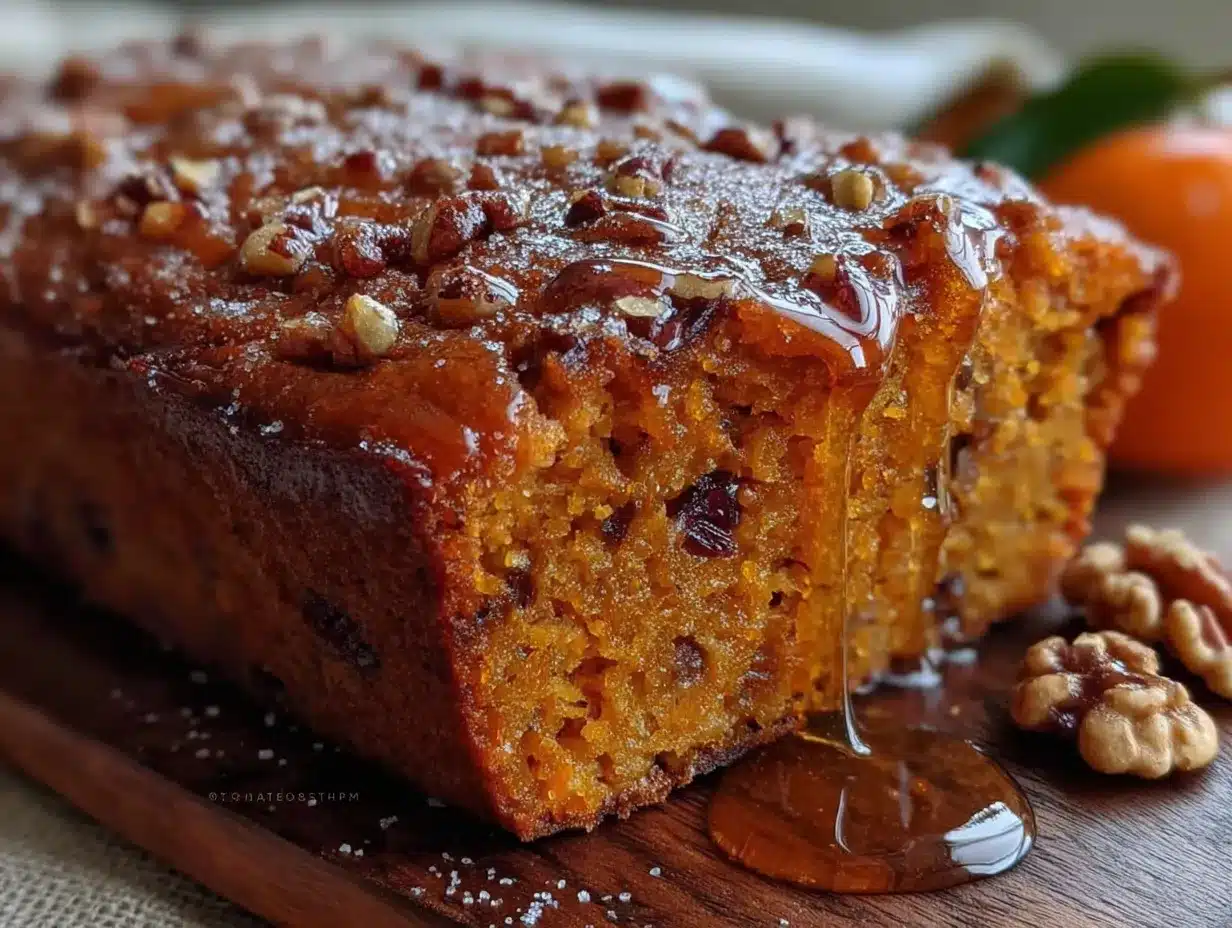
Follow these steps, and you’ll have a beautiful, fragrant loaf of persimmon bread in no time. Trust the process, especially the part about the super-soft persimmons.
- Preheat and Prep: Preheat your oven to 350°F (175°C). Grease a 9×5-inch loaf pan with butter or non-stick spray. For extra insurance, line it with a strip of parchment paper, leaving an overhang on the two long sides. This makes lifting the finished bread out a breeze.
- Prepare the Persimmon Pulp: This is the most important step. Take your very soft, squishy Hachiya persimmons. Cut off the leafy top (the calyx). You can either scoop the jelly-like pulp out with a spoon, or simply cut the persimmon in half and squeeze the pulp into a bowl. It should come out easily. Discard the skin. Use a fork or a potato masher to break up any large chunks. You should have about 1 ½ cups of puree. Set it aside.
- Whisk Dry Ingredients: In your large mixing bowl, whisk together the all-purpose flour, granulated sugar, baking soda, baking powder, salt, ground cinnamon, and ground nutmeg. Whisking ensures everything is evenly distributed, which is crucial for a consistent rise and flavor. Make a well in the center of the dry ingredients.
- Mix Wet Ingredients: In your medium mixing bowl, whisk together the vegetable oil, room-temperature eggs, and vanilla extract until they are well combined and slightly frothy. Then, add the persimmon pulp and whisk again until the mixture is smooth and uniform. It will look a bit like a thick, orange-tinted custard.
- Combine Wet and Dry: Pour the wet ingredients into the well you created in the dry ingredients. Use your rubber spatula to gently fold everything together. Stir just until the flour is incorporated and no dry streaks remain. A few small lumps are perfectly fine. Overmixing will develop the gluten and make your bread tough, so stop as soon as it comes together.
- Fold in Walnuts: Gently fold the chopped walnuts into the batter with just a few strokes. Reserve a handful of walnuts to sprinkle on top of the batter before baking for a pretty presentation.
- Bake: Pour the batter into your prepared loaf pan and spread it into an even layer. Sprinkle the reserved walnuts on top. Bake for 55-65 minutes, or until a wooden skewer or toothpick inserted into the center comes out clean or with just a few moist crumbs attached. The top should be a deep golden brown and feel springy to the touch. My oven runs a little hot, so I start checking at 50 minutes.
- Cool: Place the pan on a wire cooling rack and let the bread cool in the pan for about 15 minutes. This allows it to set and makes it easier to remove. After 15 minutes, use the parchment paper sling to lift the bread out of the pan and transfer it directly to the cooling rack. Let it cool completely before slicing. I know it’s tempting, but slicing it warm will result in a crumbly mess. Patience, my friend!
Cooking Tips & Techniques
I’ve made this recipe enough times to learn a few things the hard way. Here are my best tips to ensure your persimmon bread is perfect every single time.
- The Persimmon Test: If your Hachiya persimmons are still firm, don’t force it. Place them in a paper bag with a banana or an apple. The ethylene gas will help them ripen in a day or two. If they have a slight astringent taste after baking, they weren’t ripe enough.
- Don’t Overmix: I cannot say this enough. When you combine the wet and dry ingredients, mix only until the flour disappears. Overmixing develops gluten, which leads to a dense, rubbery, and tough loaf. A few small lumps are your friend.
- Room Temperature Eggs: Cold eggs can seize up the batter and prevent it from emulsifying properly. Take your eggs out of the fridge 30 minutes before you start baking. If you forget, place them in a bowl of warm (not hot) water for 5 minutes.
- Check for Doneness: Oven temperatures vary wildly. My first loaf came out slightly underdone in the middle because I trusted the timer too much. Use a toothpick or skewer inserted into the center. If it comes out clean, it’s done. If it’s wet with batter, give it another 5 minutes and check again.
- Toasting the Walnuts: This is a small step that makes a huge difference. Toasting the walnuts in a dry skillet over medium heat for 3-4 minutes, shaking the pan frequently, releases their natural oils and makes them much more flavorful and crunchy. Just watch them closely so they don’t burn!
Variations & Adaptations
This recipe is a fantastic base for experimentation. Don’t be afraid to make it your own.
- Spiced Persimmon Bread: Add ½ teaspoon of ground ginger and ¼ teaspoon of ground cloves to the flour mixture for an even warmer, more complex spice profile. It’s like a chai-spiced version of the bread.
- Chocolate Chip Persimmon Bread: Swap out the walnuts for 1 cup of semi-sweet or dark chocolate chips. The slight bitterness of the chocolate is a wonderful counterpoint to the sweet persimmon. This is my husband’s absolute favorite variation.
- Gluten-Free Option: Substitute the all-purpose flour with a good quality 1-to-1 gluten-free baking flour blend that contains xanthan gum. I’ve had great success with this. The texture will be slightly more delicate, but it will still be incredibly moist and delicious.
- Vegan Adaptation: Replace the two eggs with two “flax eggs” (2 tablespoons ground flaxseed meal mixed with 6 tablespoons water, let sit for 5 minutes to gel). Use melted coconut oil instead of vegetable oil. The bread will be a little denser but still very tasty.
- Persimmon Muffins: For a grab-and-go breakfast, divide the batter into a greased or lined 12-cup muffin tin. Bake at 350°F (175°C) for 18-22 minutes, or until a toothpick inserted into the center of a muffin comes out clean. You’ll get about 12-14 muffins.
Serving & Storage Suggestions
This bread is wonderful in so many ways. Here’s how to enjoy it at its best.
- Serving Temperature: It’s delicious at room temperature, but I love it slightly warm. Pop a slice in the microwave for 10-15 seconds or toast it lightly in a toaster oven. The warmth makes the spices even more aromatic.
- Presentation: Serve it simply on a plate, or dress it up for company. A light dusting of powdered sugar is always elegant. For a real treat, spread a slice with a pat of salted butter or a dollop of mascarpone cheese.
- Complementary Dishes: This bread is perfect for a fall brunch spread alongside a pumpkin spice latte or a cup of chai tea. It also pairs beautifully with a simple arugula salad with a lemon vinaigrette for a light lunch.
- Storage: Store the bread tightly wrapped in plastic wrap or in an airtight container at room temperature for up to 4 days. The moisture in the bread actually helps it stay soft and delicious for several days.
- Freezing: This bread freezes beautifully. Wrap the completely cooled loaf (or individual slices) tightly in plastic wrap, then again in aluminum foil. Freeze for up to 3 months. To thaw, leave it on the counter for a few hours or pop a frozen slice directly into the toaster.
Nutritional Information & Benefits
While this is a treat, it does offer some surprising nutritional perks, thanks to the star ingredient.
- Estimated per slice (1/12 of loaf): Calories: 280, Fat: 14g, Carbohydrates: 38g, Fiber: 2g, Sugar: 20g, Protein: 4g.
- Persimmon Power: Persimmons are packed with Vitamin A and Vitamin C, which are great for your immune system and skin health. They also contain powerful antioxidants like flavonoids and tannins.
- Healthy Fats: Walnuts are an excellent source of omega-3 fatty acids, which are fantastic for brain health.
- Dietary Considerations: This recipe can easily be made dairy-free (just use a non-dairy butter for greasing the pan) and vegan (see variations above). It is not gluten-free in its standard form, but a gluten-free adaptation is provided.
- My Take: I love that this bread feels indulgent but is made from whole, real ingredients. It’s a dessert I feel good about eating for breakfast!
Conclusion
This cozy persimmon bread with walnuts and cinnamon is more than just a recipe; it’s a little slice of fall comfort. It’s the bread I make when I want to slow down, fill my home with a beautiful aroma, and enjoy a simple pleasure. It taught me a valuable lesson about listening to the wisdom of others, even when it goes against everything I thought I knew.
I truly hope you give this recipe a try. Don’t be afraid to use the ugliest, softest persimmons you can find — they hold the secret to the most incredible texture. And please, make it your own! Toss in some chocolate chips, swap the nuts, or add a pinch of extra spice. I’d love to hear how it turns out for you. Leave a comment below and tell me about your favorite way to enjoy this bread. Happy baking!
Frequently Asked Questions
Can I use Fuyu persimmons instead of Hachiya?
I wouldn’t recommend it for this specific recipe. Fuyu persimmons are non-astringent and remain firm even when ripe. They won’t break down into the jelly-like pulp that gives this bread its signature moist texture. Stick with the acorn-shaped Hachiya persimmons and make sure they are incredibly soft.
My persimmons aren’t ripe yet. How do I speed up the process?
Place the firm Hachiya persimmons in a paper bag with a banana or an apple. These fruits release ethylene gas, a natural ripening agent. Seal the bag loosely and leave it at room temperature. Check them daily; they should be soft and ready to use in 1 to 3 days.
Can I freeze this persimmon bread?
Absolutely! This bread freezes wonderfully. Let it cool completely, then wrap it tightly in a layer of plastic wrap followed by a layer of aluminum foil. It will keep in the freezer for up to 3 months. Thaw it on the counter overnight or reheat individual slices in the toaster.
Why did my persimmon bread sink in the middle?
A sunken middle is usually a sign of one of two things: either the bread was underbaked, or the oven door was opened too early in the baking process. Make sure to use the toothpick test to check for doneness, and resist the urge to open the oven door for the first 40 minutes of baking.
Can I make this recipe into muffins?
Yes, it makes excellent muffins! Simply divide the batter evenly into a greased or lined 12-cup muffin tin. Bake at 350°F (175°C) for 18-22 minutes, or until a toothpick inserted into the center of a muffin comes out clean. This is a great way to make individual portions for a quick breakfast.
Pin This Recipe!
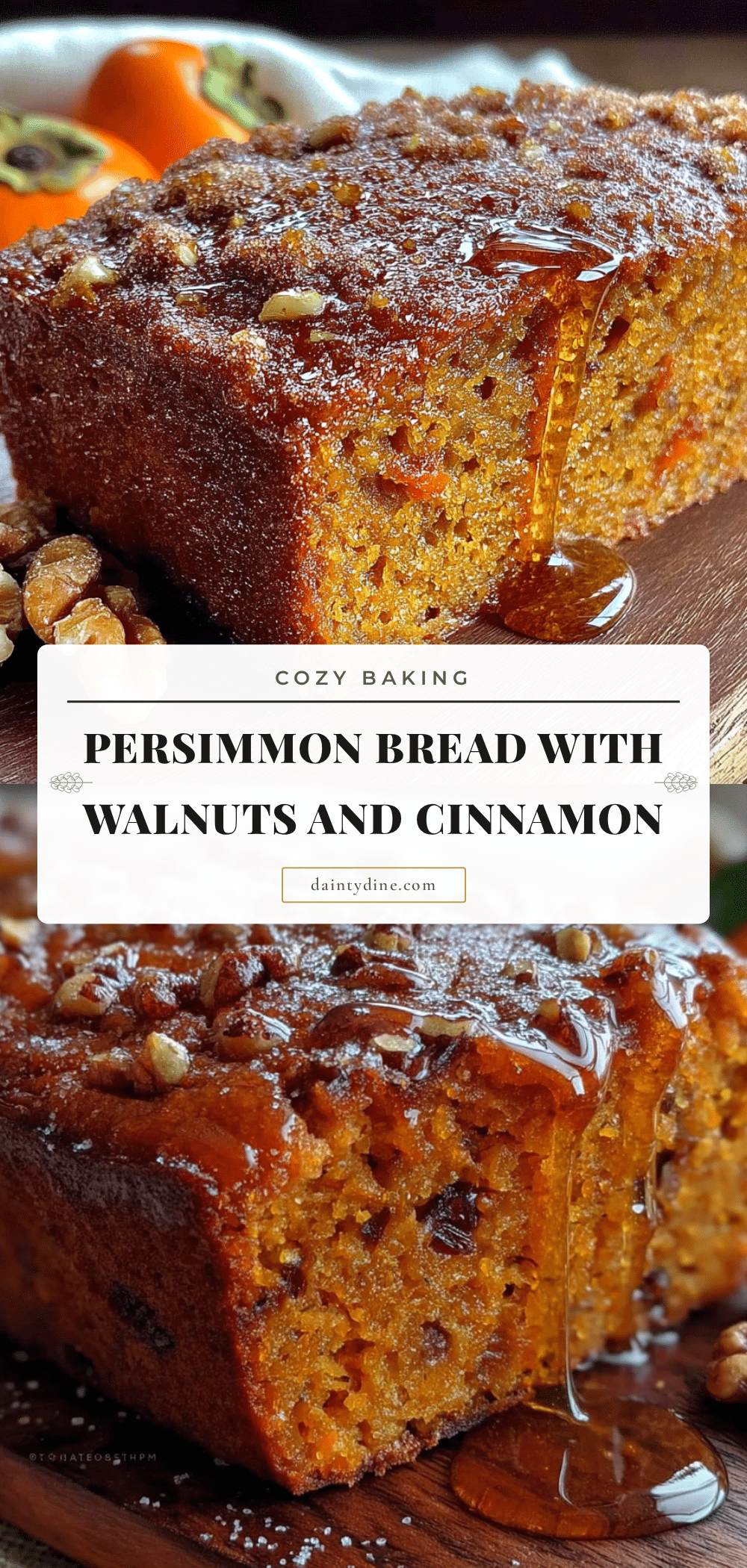
Easy Persimmon Bread with Walnuts & Cinnamon
This incredibly moist and tender persimmon bread uses the softest, most overripe Hachiya persimmons for a deep, sweet flavor. It’s a quick and easy recipe that fills your kitchen with the warm aroma of cinnamon and baked fruit, perfect for cozy mornings or holiday brunches.
- Prep Time: 15 minutes
- Cook Time: 55-65 minutes
- Total Time: 1 hour 10-20 minutes
- Yield: 12 servings 1x
- Category: Dessert
- Cuisine: American
Ingredients
- 1 ½ cups ripe Hachiya persimmon pulp (from about 2–3 very soft persimmons)
- 1 ¾ cups all-purpose flour (220g)
- 1 cup granulated sugar (200g)
- 1 teaspoon baking soda
- ½ teaspoon baking powder
- ½ teaspoon salt
- 2 teaspoons ground cinnamon
- ¼ teaspoon ground nutmeg
- ½ cup vegetable oil (120ml)
- 2 large eggs, room temperature
- 1 teaspoon vanilla extract
- 1 cup chopped walnuts (120g)
Instructions
- Preheat oven to 350°F (175°C). Grease a 9×5-inch loaf pan with butter or non-stick spray. For easy removal, line with parchment paper, leaving overhang on the long sides.
- Prepare the persimmon pulp: Cut off the leafy top of very soft Hachiya persimmons. Scoop out the jelly-like pulp or squeeze it out. Discard skin. Mash with a fork until smooth. Measure 1 ½ cups.
- In a large bowl, whisk together flour, sugar, baking soda, baking powder, salt, cinnamon, and nutmeg. Make a well in the center.
- In a medium bowl, whisk together oil, eggs, and vanilla until frothy. Add persimmon pulp and whisk until smooth.
- Pour wet ingredients into the well of dry ingredients. Fold gently with a rubber spatula until just combined (a few lumps are fine). Do not overmix.
- Fold in chopped walnuts, reserving a handful for topping.
- Pour batter into prepared pan and spread evenly. Sprinkle reserved walnuts on top.
- Bake for 55-65 minutes, or until a toothpick inserted in the center comes out clean or with a few moist crumbs. Start checking at 50 minutes.
- Cool in pan on a wire rack for 15 minutes. Then lift out using parchment sling and cool completely on rack before slicing.
Notes
Use only Hachiya persimmons (acorn-shaped) that are incredibly soft and squishy. Fuyu persimmons will not work. To ripen firm persimmons quickly, place them in a paper bag with a banana or apple for 1-3 days. Do not overmix the batter. For best flavor, toast walnuts in a dry skillet for 3-4 minutes before adding. Bread can be stored at room temperature for up to 4 days or frozen for up to 3 months.
Nutrition
- Serving Size: 1 slice (1/12 of loa
- Calories: 280
- Sugar: 20
- Sodium: 210
- Fat: 14
- Saturated Fat: 2
- Carbohydrates: 38
- Fiber: 2
- Protein: 4
Keywords: persimmon bread, easy persimmon bread, persimmon bread with walnuts, cinnamon persimmon bread, fall baking, quick bread, Hachiya persimmon