Love this? Save it for later!
Share the inspiration with your friends
“You’re telling me I can can tomatoes without a water bath or pressure canner?” My friend Lisa asked, eyebrows raised as she watched me unload a basket full of ripe, juicy tomatoes onto my kitchen counter. Honestly, I wasn’t sure either when I first heard about this method. Three summers ago, during a sweltering Saturday afternoon at the local farmers market, I overheard a conversation between two older gardeners sharing their secrets. One woman casually mentioned she canned her entire tomato haul without the usual fuss of boiling water or loud pressure canners. Naturally, my curiosity was piqued.
That day, I scribbled down the basic steps on a crumpled napkin while juggling a cracked bowl and a half-spilled sack of tomatoes (classic me, right?). I gave it a shot, figuring if it went wrong, at least I’d have fresh tomatoes for dinner. To my surprise, the jars sealed beautifully, and the tomatoes tasted just as vibrant as fresh-picked.
Maybe you’ve been there, staring at a stack of tomatoes, wishing you could preserve them but feeling daunted by complicated canning equipment. This method strips away the intimidation and keeps things simple. No fancy gear, no stressful boiling sessions, just straightforward steps that anyone can follow. Let me tell you, this easy how to can tomatoes without water bath or pressure canner recipe quickly became my go-to for preserving summer’s bounty, and I’m excited to share it with you.
Why You’ll Love This Recipe
After testing this method multiple times, I can honestly say it’s a game-changer for anyone who’s ever felt overwhelmed by traditional canning. Here’s why this recipe stands out:
- Quick & Easy: Takes less than an hour from start to finish—no waiting around for boiling water or pressure gauges.
- Simple Ingredients: Just fresh tomatoes, lemon juice, and salt. No extra additives or complicated mixes.
- Perfect for Beginners: If you thought canning was only for pros, this approach welcomes you in with open arms.
- Safe & Reliable: Despite skipping the water bath or pressure canner, the acidity and sealing process keep your tomatoes fresh and tasty.
- Crowd-Pleaser: Whether tossed into pasta, stewed for chili, or spooned onto toast, these canned tomatoes bring that sun-ripened flavor all year long.
What makes this recipe different? It respects the tomatoes’ natural flavor while simplifying the preservation process. Instead of wrestling with heavy equipment or timing water baths, you gently heat and seal, letting the jars do the rest. I love how this method feels like a friendly kitchen hack, not a chore. You’ll close your eyes after the first taste and smile, knowing you saved a little summer magic in a jar.
What Ingredients You Will Need
This recipe uses simple, wholesome ingredients to deliver bold flavor and satisfying texture without the fuss. You’ll find most of these in your pantry or at the local market.
- Fresh tomatoes (about 10 pounds / 4.5 kg) – Roma or plum tomatoes work best for canning due to their firm flesh and lower water content. I recommend picking firm, ripe tomatoes without blemishes for the best results.
- Fresh lemon juice (½ cup / 120 ml) – Adds necessary acidity to keep the tomatoes safe for long-term storage. Use bottled lemon juice if fresh isn’t available; it’s more consistent.
- Salt (2 teaspoons / 10 grams) – Use canning or kosher salt, avoiding iodized salt, which can cloud the tomatoes.
Optional but helpful:
- Jar lids and bands: Standard half-pint or pint-sized canning jars work great. I prefer Ball jars for their reliable seal.
- Jar lifter and funnel: Not mandatory but makes the process cleaner and safer.
Equipment Needed
Since this recipe skips the traditional water bath or pressure canner, you won’t need bulky or expensive equipment. Here’s what you’ll want on hand:
- Large pot or saucepan: For heating the tomatoes gently before filling the jars.
- Heat-resistant canning jars: Half-pint or pint sizes work well. I’ve found Ball jars reliable and easy to reuse.
- Lid and screw bands: Fresh lids are best for sealing. Screw bands can be reused if in good condition.
- Jar lifter: Makes handling hot jars safer, but you can use thick kitchen towels if you don’t have one.
- Wide-mouth funnel: Optional but handy for filling jars without drips and mess.
For those on a budget, basic kitchen tools like a large pot and clean jars work perfectly. Just keep your lids fresh and jars free of cracks!
Preparation Method
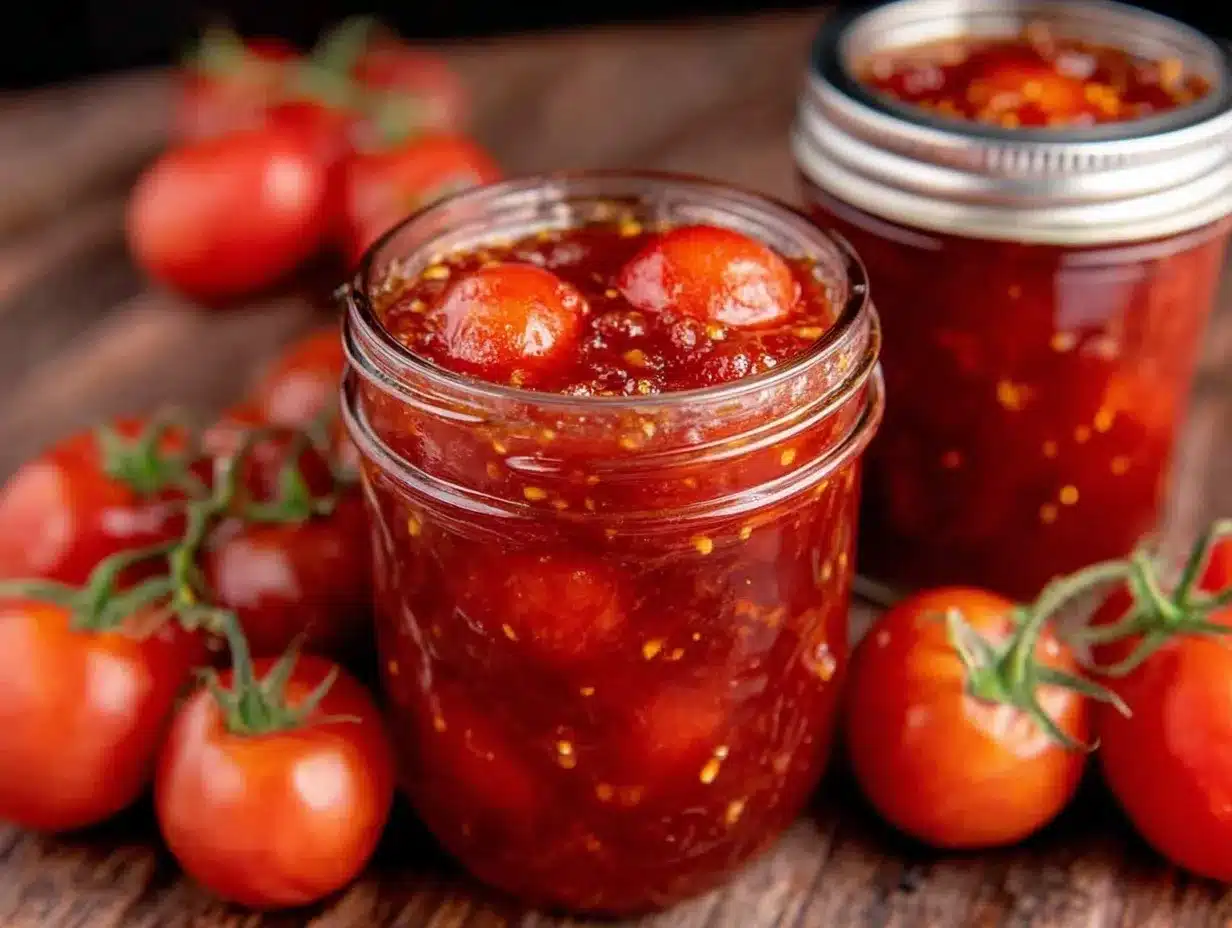
- Wash and Prepare Tomatoes (15 minutes): Rinse tomatoes under cold water to remove dirt and debris. Remove any stems or bruised areas. I usually set a big bowl in the sink to catch any drips as I work.
- Peel Tomatoes (optional but recommended, 20 minutes): Bring a large pot of water to a simmer. Drop tomatoes in batches for 30-60 seconds until skins loosen, then transfer to ice water. The skins should slip right off. This step makes your canned tomatoes smoother and more enjoyable.
- Heat Tomatoes (15 minutes): Chop peeled tomatoes roughly and place them in a large saucepan. Add salt and fresh lemon juice. Heat gently over medium-low heat, stirring occasionally, until tomatoes start to release their juices and warm through. Don’t boil hard; a gentle simmer is perfect.
- Fill Jars (10 minutes): Using a funnel, ladle hot tomatoes into sterilized jars, leaving about ½ inch (1.3 cm) headspace. Wipe jar rims clean with a damp cloth to ensure a good seal.
- Seal and Rest (10 minutes): Place lids on jars and screw bands on finger-tight. Set jars on a heat-proof surface, cover loosely with a towel, and let them sit undisturbed for 12-24 hours. You’ll hear satisfying pops as jars seal naturally.
Pro tip: If a jar doesn’t seal fully, just refrigerate and use within a week. I learned this the hard way when my phone rang mid-process and I forgot to tighten one lid enough!
Cooking Tips & Techniques
Mastering this simple canning method comes down to a few key details I picked up along the way:
- Use high-acid tomatoes: Roma or other plum varieties hold up better and provide the right acidity to keep things safe without extra processing.
- Don’t skip the lemon juice: It’s essential for acidifying the tomatoes, especially since we’re not using a water bath or pressure canner.
- Keep it clean: Sterilize your jars and lids by washing with hot, soapy water and drying thoroughly. Avoid touching the inside of lids or jars once sterilized.
- Watch the temperature: Heating tomatoes gently prevents breaking down too much pectin, so your canned tomatoes keep a nice texture.
- Listen for the pop: That satisfying seal sound means your jars are airtight and ready to store safely.
One time, I left the tomatoes simmering a bit too long, and they turned mushy. Lesson learned: patience is key! You want a soft but not overcooked texture before filling jars.
Variations & Adaptations
If you want to tweak this method a bit, here are some ideas I’ve tried that worked great:
- Herb-infused tomatoes: Add fresh basil or oregano to the pot during heating for a fragrant twist.
- Spicy kick: Toss in a pinch of red pepper flakes or a minced chili pepper before filling jars.
- Low-sodium version: Simply omit the salt and add it later when using the canned tomatoes in recipes.
- Different tomato types: While Roma tomatoes are ideal, you can experiment with cherry or heirloom varieties, but expect a looser texture.
- Freezing alternative: If you prefer, skip the sealing step and freeze the heated tomatoes in freezer-safe containers for later use.
I once made a batch with garlic and rosemary that became a hit at a friend’s potluck. Don’t be afraid to experiment! Just be mindful that adding ingredients may affect shelf life.
Serving & Storage Suggestions
These canned tomatoes are incredibly versatile. Serve them warm or cold, depending on your dish:
- Serving temperature: Use directly from the jar at room temperature or gently warm on the stove for sauces and stews.
- Pairings: Great with pasta, grilled meats, or stirred into soups. I often add a spoonful to my creamy garlic pasta for a fresh tomato burst.
- Storage: Store sealed jars in a cool, dark place for up to 12 months. Once opened, refrigerate and use within 5-7 days.
- Reheating: Warm gently on the stovetop or microwave. Avoid boiling after opening to preserve texture.
The flavor deepens over time, making your winter meals taste sun-kissed and comforting. Just like that unexpected recipe I heard at the farmers market, these tomatoes remind me why preserving is such a satisfying kitchen ritual.
Nutritional Information & Benefits
One half-cup (125 ml) serving of canned tomatoes contains roughly:
- Calories: 40
- Carbohydrates: 9 grams
- Fiber: 2 grams
- Vitamin C: 20% of daily needs
- Vitamin A: 15% of daily needs
Tomatoes are rich in antioxidants like lycopene, which supports heart health and may reduce inflammation. Because this recipe uses no added sugars or preservatives, it’s a wholesome pantry staple. Plus, it’s naturally gluten-free and low in calories, making it suitable for many diets.
Conclusion
This easy how to can tomatoes without water bath or pressure canner method is proof that preserving your harvest doesn’t need to be complicated or intimidating. I love how it takes just a few simple steps to save summer’s flavors for months to come. Whether you’re a seasoned canner or just starting out, this recipe fits right into your kitchen rhythm. Give it a try, and feel free to add your own twists — maybe a little herb here or a pinch of spice there.
I’d love to hear how your jars turn out! Leave a comment or share your favorite tomato preservation tips. Here’s to keeping the taste of sunny tomatoes alive all year long.
FAQs
Can I use any type of tomato for this canning method?
While Roma or plum tomatoes are preferred for their firmness and acidity, you can use other varieties. Just expect a slightly different texture and always add lemon juice for safety.
Is this method safe without a water bath or pressure canner?
Yes, as long as you add enough acid (lemon juice) and follow proper jar sterilization and sealing steps, this method safely preserves tomatoes.
How long can I store these canned tomatoes?
Unopened jars can last up to 12 months in a cool, dark place. Once opened, refrigerate and use within a week.
What should I do if a jar doesn’t seal properly?
If a jar fails to seal, refrigerate and use the contents within a few days or reprocess using the same method.
Can I add other ingredients like herbs or garlic to the canned tomatoes?
Yes, fresh herbs and garlic can be added for flavor. Just remember that added ingredients might slightly reduce shelf life, so consume sooner or freeze extras.
Pin This Recipe!
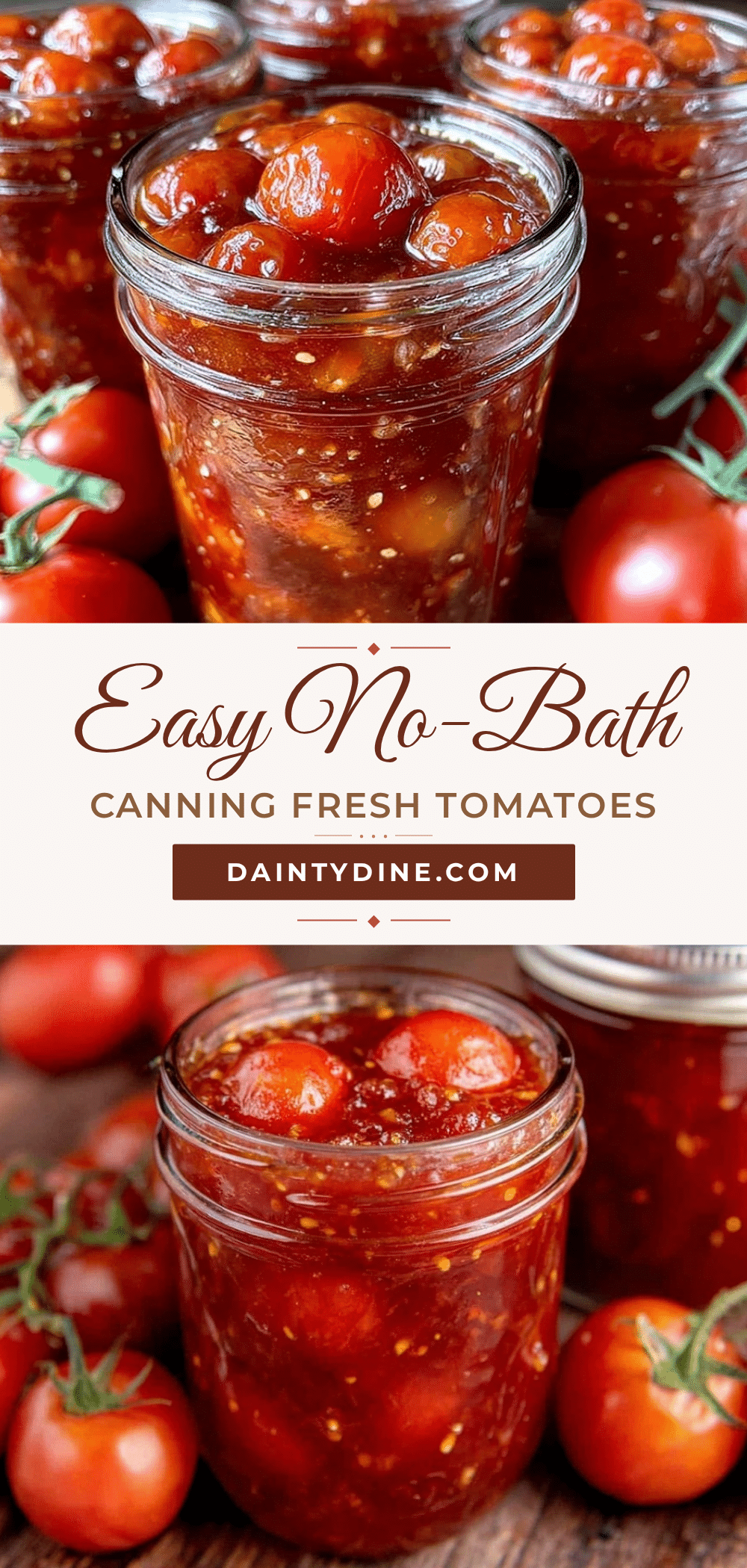
Easy How to Can Tomatoes Without Water Bath 5 Simple Steps for Perfect Canning
A simple and beginner-friendly method to can tomatoes without using a water bath or pressure canner, preserving fresh summer tomatoes with minimal equipment and fuss.
- Prep Time: 35 minutes
- Cook Time: 15 minutes
- Total Time: 1 hour
- Yield: 8 to 10 half-pint jars 1x
- Category: Preserving, Canning
- Cuisine: American
Ingredients
- 10 pounds fresh tomatoes (Roma or plum tomatoes recommended)
- ½ cup fresh lemon juice (120 ml)
- 2 teaspoons salt (canning or kosher salt, avoid iodized salt)
- Optional: jar lids and bands (half-pint or pint-sized canning jars)
- Optional: jar lifter and funnel
Instructions
- Wash and prepare tomatoes by rinsing under cold water, removing stems and bruised areas (15 minutes).
- Peel tomatoes by simmering in boiling water for 30-60 seconds until skins loosen, then transfer to ice water and slip skins off (optional but recommended, 20 minutes).
- Chop peeled tomatoes roughly and place in a large saucepan. Add salt and fresh lemon juice. Heat gently over medium-low heat, stirring occasionally until tomatoes release juices and warm through without boiling hard (15 minutes).
- Using a funnel, ladle hot tomatoes into sterilized jars, leaving about ½ inch headspace. Wipe jar rims clean with a damp cloth (10 minutes).
- Place lids on jars and screw bands on finger-tight. Set jars on a heat-proof surface, cover loosely with a towel, and let sit undisturbed for 12-24 hours to seal naturally (10 minutes).
Notes
If a jar doesn’t seal fully, refrigerate and use within a week. Use high-acid tomatoes like Roma or plum and do not skip lemon juice to ensure safety. Sterilize jars and lids thoroughly. Avoid boiling tomatoes hard to maintain texture. Added herbs or spices may reduce shelf life.
Nutrition
- Serving Size: ½ cup (125 ml)
- Calories: 40
- Carbohydrates: 9
- Fiber: 2
Keywords: canning tomatoes, no water bath, easy tomato canning, preserving tomatoes, beginner canning, tomato preservation, no pressure canner