Love this? Save it for later!
Share the inspiration with your friends
It was 10:47 PM on a random Wednesday, and a very specific panic hit—the kind that only a parent packing school lunches the night before knows. I’d stared into the fridge for a solid minute, and the usual sandwich suspects just felt… sad. I didn’t have any bread that wasn’t stale, but I had a box of rotini, a lonely bell pepper, and a jar of sun-dried tomatoes that I’d bought on a whim. The idea that arrived was simple: what if I just made a cold pasta salad that could sit in a lunchbox for hours and actually taste better for it?
Honestly, I was tired. I didn’t want to cook anything complicated. I boiled the pasta while I chopped whatever veggies I could find, tossed it all with a quick vinaigrette, and shoved it in the fridge, hoping for the best. The next morning, I packed it cold into a thermos (okay, a repurposed soup container) and crossed my fingers. When my kid came home and said, “That was actually good, can you make it again?” I knew I’d stumbled onto something magical.
This easy cold lunch pasta salad for school (no reheating) was born from that late-night scramble. It’s proof that you don’t need a fancy recipe or a ton of ingredients to make a lunch that feels special. Maybe you’ve been there—staring at a lunchbox, wondering how to make something that won’t get soggy or require a microwave. This is that recipe. It’s the one that stays with you because it works, every single time.
Why You’ll Love This Recipe
After making this salad about a dozen times (and tweaking it based on what my kids actually ate versus what they ignored), I can confidently say this recipe is a game-changer for school lunches. It’s not just another pasta salad—it’s the one that solves the cold lunch puzzle.
- No Reheating Required: It’s designed to be eaten cold, straight from the lunchbox. Perfect for schools without microwaves or for kids who prefer room-temperature food.
- Stays Fresh for Hours: Unlike soggy sandwiches or wilted greens, this pasta salad actually gets better as it sits. The flavors meld together, and the pasta stays perfectly al dente.
- Simple Ingredients: You likely have most of these in your pantry and fridge right now. No fancy trips to a specialty store—just real food, real simple.
- Kid-Approved and Parent-Tested: I’ve packed this for picky eaters, hungry teenagers, and even myself for a work lunch. It gets rave reviews across the board.
- Endlessly Customizable: Swap in whatever veggies or protein you have on hand. It’s a forgiving recipe that adapts to your family’s tastes and what’s in season.
- Meal Prep Friendly: Make a big batch on Sunday, and you’ve got lunches sorted for the entire week. It saves time, money, and sanity.
What makes this recipe different from the rest? It’s the balance of textures—the tender pasta, the crunch of fresh veggies, and the creamy-tangy dressing that clings to every bite without making things heavy. I’ve tested it with different pasta shapes, dressings, and add-ins, and this version is the one that my family fights over. It’s comfort food reimagined for the lunchbox—healthier, faster, and with the same soul-soothing satisfaction.
What Ingredients You Will Need
This recipe uses simple, wholesome ingredients that come together to create a cold pasta salad that’s anything but boring. Most of these are pantry staples, so you can whip this up without a last-minute grocery run.
- Pasta (2 cups dry, about 8 oz): I recommend rotini, fusilli, or bowtie pasta. Their nooks and crannies catch the dressing beautifully. (Gluten-free pasta works great here—just cook it a minute less than the package directs.)
- Cherry Tomatoes (1 cup, halved): They add a burst of sweetness and color. If cherry tomatoes aren’t in season, swap in 1/2 cup of sun-dried tomatoes (drained and chopped) for a more intense flavor.
- English Cucumber (1 medium, diced): No need to peel it—the skin adds color and crunch. If you’re using a regular cucumber, go ahead and peel it to avoid bitterness.
- Bell Pepper (1 medium, any color, diced): Red or orange adds sweetness; green adds a sharper bite. I usually go with red for the color contrast.
- Hard Cheese (1/2 cup, cubed or shredded): Cheddar, provolone, or even feta work beautifully. I personally love using sharp white cheddar from a block—it holds up better than pre-shredded cheese.
- Cooked Protein (1 cup, optional): Diced rotisserie chicken, salami, or chickpeas make this a full meal. I often use leftover grilled chicken from dinner.
- For the Dressing:
- Mayonnaise (1/3 cup): Use full-fat for the creamiest texture. (For a lighter version, mix half mayo and half Greek yogurt.)
- Red Wine Vinegar (2 tablespoons): Adds tanginess without overpowering. White wine vinegar or apple cider vinegar work too.
- Dijon Mustard (1 teaspoon): A little goes a long way for depth of flavor.
- Dried Oregano (1/2 teaspoon): Italian seasoning works if that’s what you have.
- Salt and Black Pepper (to taste): Don’t be shy—pasta needs a generous pinch of salt to bring out the flavors.
Ingredient Selection Tips: For the best texture, look for a cucumber that’s firm and not too seedy. I recommend using Barilla or De Cecco pasta for consistent results—they hold their shape well even after being chilled. If you’re adding cheese, buy a block and cube it yourself; the pre-shredded stuff has anti-caking agents that can make the salad grainy. And here’s a trick I learned the hard way: always taste the dressing before you pour it. You want it to be a little too tangy on its own—it will mellow out when mixed with the pasta.
Equipment Needed
You don’t need a lot of fancy gear for this recipe. Here’s what you’ll want to have on hand:
- Large Pot: For boiling the pasta. A 5-quart pot is ideal—gives the pasta room to move without sticking.
- Colander: For draining the pasta. Rinsing it with cold water stops the cooking process and cools it down fast.
- Cutting Board and Sharp Knife: A good chef’s knife makes dicing veggies a breeze. I’ve used the same $20 Victorinox knife for years, and it’s still going strong.
- Large Mixing Bowl: For tossing everything together. Go big—you don’t want ingredients spilling over the sides.
- Measuring Cups and Spoons: For accuracy, especially with the dressing.
- Whisk or Small Jar: For mixing the dressing. A jar with a tight lid lets you shake it up quickly—less mess, more fun.
- Storage Containers: Airtight containers for portioning out lunches. I use glass meal prep containers, but any BPA-free plastic works.
Budget-Friendly Tip: If you don’t have a large mixing bowl, a clean, dry stockpot works just as well. And honestly, you can skip the whisk entirely—just shake the dressing ingredients in a jar or even stir them with a fork in a small bowl.
Preparation Method
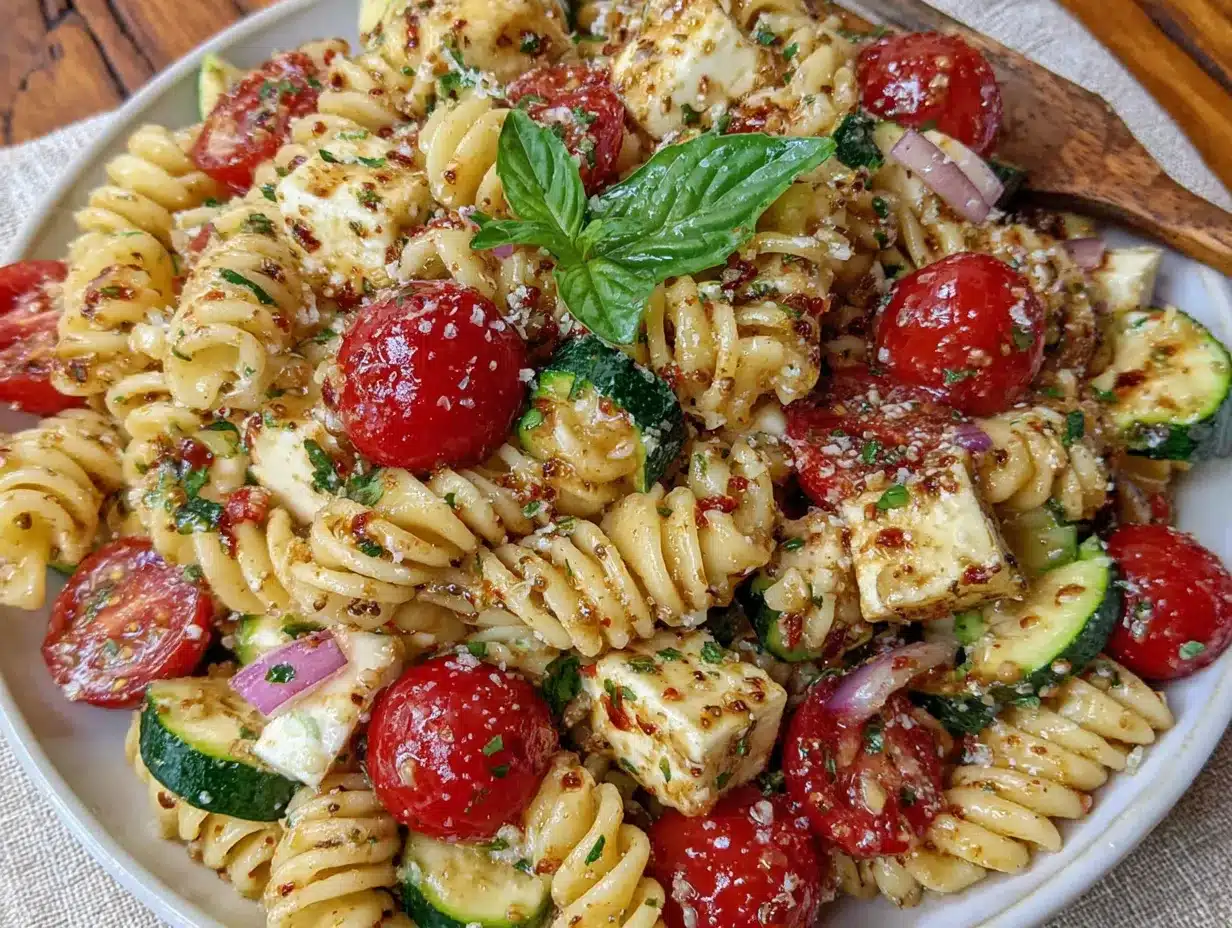
Here’s how to make this easy cold lunch pasta salad for school (no reheating). The whole process takes about 25 minutes, and most of that is just waiting for water to boil.
- Cook the Pasta: Bring a large pot of generously salted water to a rolling boil. Add the pasta and cook according to package directions, but subtract 1 minute from the recommended time. You want it al dente—firm to the bite—because it will continue to soften slightly as it cools. Drain the pasta in a colander, then rinse it under cold running water until it’s completely cool to the touch. Shake off as much water as you can. (I learned this the hard way: if you skip the rinsing, the pasta will clump together and absorb too much dressing, turning into a starchy mess.)
- Prep the Veggies: While the pasta cooks, wash and dice your vegetables. Aim for bite-sized pieces—about 1/2-inch cubes. For the cherry tomatoes, halve them crosswise. For the cucumber, dice it into small cubes. For the bell pepper, remove the seeds and white pith, then dice. If you’re using cheese, cut it into small cubes too. (Pro tip: Keep the veggies separate from the hot pasta until they’re all cool. Warm pasta can wilt the cucumber and make the tomatoes mushy.)
- Make the Dressing: In a small bowl or a jar with a tight-fitting lid, combine the mayonnaise, red wine vinegar, Dijon mustard, dried oregano, and a pinch of salt and pepper. Whisk or shake until smooth and creamy. Taste it—it should be tangy and a little salty. Adjust the seasoning if needed. (I like to add a tiny pinch of sugar here if my tomatoes aren’t super sweet.) Set aside.
- Combine Everything: In the large mixing bowl, add the cooled pasta, diced veggies, cheese, and your chosen protein (if using). Pour the dressing over the top. Using a large spoon or spatula, gently fold everything together until the pasta and veggies are evenly coated. Don’t overmix—you don’t want to break the pasta or mash the tomatoes.
- Chill and Let It Rest: Cover the bowl with plastic wrap or a lid and refrigerate for at least 30 minutes. This resting time is crucial—it lets the flavors meld and the pasta absorb some of the dressing. If you’re in a rush, 15 minutes will do, but an hour is better. (I’ve made the mistake of serving it immediately, and it just tastes like separate ingredients. The magic happens in the chill.)
- Portion and Pack: Once chilled, give the salad a final stir. Divide it into individual lunch containers. If you’re packing for school, I recommend using a thermos or a leak-proof container. The salad is meant to be eaten cold, so you don’t need any ice packs—just pop it in the lunchbox and go.
Sensory Cues: At the end of step 4, the pasta should look glossy and evenly coated, not dry or swimming in dressing. The veggies should be visible and colorful—like confetti in a creamy blanket. When you take a bite, you should taste the tang of the vinegar first, followed by the richness of the mayo, and then the freshness of the vegetables. The pasta should be firm, not mushy.
Troubleshooting: If your salad seems dry after chilling, add a tablespoon of milk or a splash of extra vinegar and stir well. If it’s too wet, you might have added too much dressing—next time, start with 3/4 of the dressing and add more as needed. If the pasta stuck together while cooling, toss it with a teaspoon of olive oil before adding the dressing.
Cooking Tips & Techniques
Over the years, I’ve made every mistake possible with cold pasta salad. Here’s what I’ve learned so you don’t have to.
- Salt the Pasta Water Generously: This is non-negotiable. The pasta absorbs the salt as it cooks, which seasons the entire dish from the inside out. I use about a tablespoon of salt for every 4 quarts of water. It should taste like the sea.
- Rinse, Rinse, Rinse: I know some chefs say never to rinse pasta, but for cold salads, it’s essential. Rinsing stops the cooking, removes excess starch, and cools the pasta down fast. Just make sure you shake off as much water as possible—wet pasta will water down your dressing.
- Dry Your Veggies: After washing your cucumber and bell pepper, pat them dry with a clean kitchen towel or paper towels. Excess moisture is the enemy of a good pasta salad—it makes the dressing thin and watery.
- Don’t Skip the Resting Time: This is the hardest lesson for impatient cooks (myself included). The salad needs at least 30 minutes in the fridge for the flavors to come together. If you can, make it the night before—it’s even better the next day.
- Double the Dressing (Almost): Pasta absorbs dressing as it sits, especially overnight. I’ve learned to make about 1.5 times the dressing I think I need, and I reserve a little to toss in right before serving. This keeps the salad from drying out by day three.
- Use a Thermometer: If you’re packing this for a school lunch that won’t be refrigerated for a few hours, make sure the salad is thoroughly chilled before packing. I aim for below 40°F (4°C) to keep it safe. A simple instant-read thermometer gives me peace of mind.
My Biggest Failure: The first time I made this, I used pre-shredded cheese and bottled Italian dressing. It was a sad, clumpy mess. The cheese didn’t melt, but it didn’t blend in either—just sat there in sad little clumps. The dressing was too sweet and thin. That disaster taught me to always cube my own cheese and make my own dressing. It takes an extra 5 minutes, and the difference is night and day.
Variations & Adaptations
This easy cold lunch pasta salad is a canvas—you can change it up based on what you have, what’s in season, or what your kids are into this week.
- Mediterranean Twist: Swap the cheddar for crumbled feta, add 1/4 cup of sliced Kalamata olives, and replace the cucumber with chopped artichoke hearts. Use a lemon-oregano vinaigrette instead of the mayo dressing. My family loves this version in the summer.
- Protein-Packed Version: Add 1 cup of canned chickpeas (rinsed and drained) and 1/2 cup of diced salami or pepperoni. This makes it hearty enough for a hungry teenager or an active adult. I’ve packed this for hiking trips, and it holds up beautifully.
- Vegan Adaptation: Use a vegan mayo (I like Follow Your Heart or Hellmann’s plant-based) and skip the cheese, or use a vegan feta. Add 1/2 cup of roasted red peppers for extra flavor. My vegan friend raved about this version—she said it was the best lunch she’d had in weeks.
- Seasonal Veggie Swap: In the fall, swap the cucumber and tomatoes for roasted butternut squash cubes and dried cranberries. In the spring, add blanched asparagus tips and fresh peas. The dressing stays the same, but the salad feels completely different.
- Gluten-Free Option: Use your favorite gluten-free pasta. I’ve tested this with chickpea pasta and brown rice pasta—both work well, but be extra careful not to overcook them. They can turn mushy faster than wheat pasta.
Personal Favorite: My go-to variation is the “Everything But the Kitchen Sink”—I add leftover roasted vegetables, a handful of fresh spinach (chopped fine), and a sprinkle of everything bagel seasoning on top. It’s a great way to use up odds and ends from the fridge, and it never tastes the same twice.
Serving & Storage Suggestions
This pasta salad is incredibly versatile when it comes to serving and storing. Here’s how to get the most out of it.
- Serving Temperature: Serve it cold, straight from the fridge. If you’re packing it for a lunch that won’t be eaten for a few hours, it will naturally come to room temperature—that’s perfectly fine. It actually tastes better slightly chilled than icy cold.
- Presentation: For a fun lunchbox presentation, pack the salad in a bento box with separate compartments for extra crunch elements like croutons, nuts, or seeds. My kids love it when I add a small container of goldfish crackers on the side for sprinkling on top.
- Complementary Dishes: This salad pairs beautifully with a simple fruit cup, a yogurt tube, or a few graham crackers for dessert. For a grown-up lunch, serve it alongside a cup of tomato soup or a handful of kettle chips.
- Storage Instructions: Store the pasta salad in an airtight container in the refrigerator for up to 5 days. Do not leave it at room temperature for more than 2 hours. If you’re packing it for a school lunch that won’t be refrigerated, use an insulated lunch bag with an ice pack, or pack it in a pre-chilled thermos.
- Reheating (If You Must): This recipe is designed to be eaten cold, but if you have leftovers that you want to eat warm, microwave a single serving for 30-45 seconds. The texture will be different—softer, less firm—but the flavor will still be good. I personally prefer it cold, even for dinner.
- Flavor Development: The salad is at its peak on day 2. The pasta has fully absorbed the dressing, and the flavors are perfectly balanced. By day 4, it might need a tiny splash of vinegar or a dollop of mayo to refresh it. Just stir it in and let it sit for 10 minutes.
Nutritional Information & Benefits
Here’s an approximate nutritional breakdown for one serving (about 1.5 cups, without added protein). Values are estimates and will vary based on specific ingredients and portion sizes.
| Nutrient | Amount per Serving |
|---|---|
| Calories | 320-380 |
| Total Fat | 15-18g |
| Saturated Fat | 4-6g |
| Carbohydrates | 38-42g |
| Fiber | 3-5g |
| Sugar | 5-7g |
| Protein | 8-12g (varies with cheese and added protein) |
| Sodium | 400-500mg |
- Health Benefits: This salad provides a good balance of carbohydrates for energy, healthy fats from the mayo and cheese, and fiber from the vegetables. The bell peppers are packed with vitamin C, and the cucumber is hydrating and low in calories.
- Dietary Considerations: This recipe can be made vegetarian by skipping the protein or using chickpeas. For a lower-carb option, use half the pasta and double the veggies. For a lower-fat version, use light mayo and reduced-fat cheese.
- Potential Allergens: This recipe contains dairy (cheese, mayo) and gluten (pasta). It can also contain eggs (mayo). For egg-free, use vegan mayo. For dairy-free, use vegan cheese or skip it entirely.
Personal Note: I love that this salad gives my kids a solid lunch without the sugar crash that comes from processed lunch kits. It keeps them full and focused through the afternoon, and I feel good knowing exactly what’s in it.
Conclusion
This easy cold lunch pasta salad for school (no reheating) has honestly become a staple in our house. It solved the lunchbox puzzle that had been bugging me for months—how to send something that’s tasty, filling, and doesn’t require a microwave. And it’s so simple that you can throw it together on a busy Sunday afternoon without breaking a sweat.
I really hope you give this one a try. Customize it with whatever your family loves—more veggies, a different cheese, a handful of olives. That’s the beauty of it. It’s a recipe that works for you, not the other way around. And if your kids come home asking for it again? That’s the best feeling in the world.
If you make this pasta salad, I’d love to hear about it! Drop a comment below and tell me what variations you tried. Did your kids love it? Did you add something unexpected? Share your wins—and your happy lunchbox moments. Until next time, happy cooking and even happier packing!
Frequently Asked Questions
Can I use any type of pasta for this cold salad?
Yes! Short, sturdy shapes like rotini, fusilli, bowtie, or even small shells work best. They hold the dressing well and don’t get mushy. Avoid long, thin pasta like spaghetti—it tends to clump together when cold.
How long does this pasta salad last in the fridge?
It stays good for up to 5 days when stored in an airtight container. The flavor actually improves after the first day. Just give it a good stir before serving, and add a splash of vinegar or a dollop of mayo if it seems dry.
Can I freeze this pasta salad?
I don’t recommend freezing it. The mayonnaise-based dressing can separate and become watery when thawed, and the vegetables will lose their crunch. It’s best enjoyed fresh or within a few days of making it.
What if my child doesn’t like mayonnaise?
No problem! You can swap the mayo dressing for a simple vinaigrette—whisk together 1/4 cup olive oil, 2 tablespoons red wine vinegar, 1 teaspoon Dijon mustard, and salt and pepper. It’s lighter and still delicious. Some kids also love a yogurt-based dressing (plain Greek yogurt mixed with a little lemon juice and dill).
Is this lunch safe to pack without an ice pack?
If you’re packing it in a lunchbox that won’t be refrigerated for a few hours, I recommend using an insulated lunch bag with an ice pack, or packing the salad in a pre-chilled thermos. The salad is safe at room temperature for about 2 hours, so for a longer school day, a little extra cooling helps keep it safe and fresh.
Pin This Recipe!
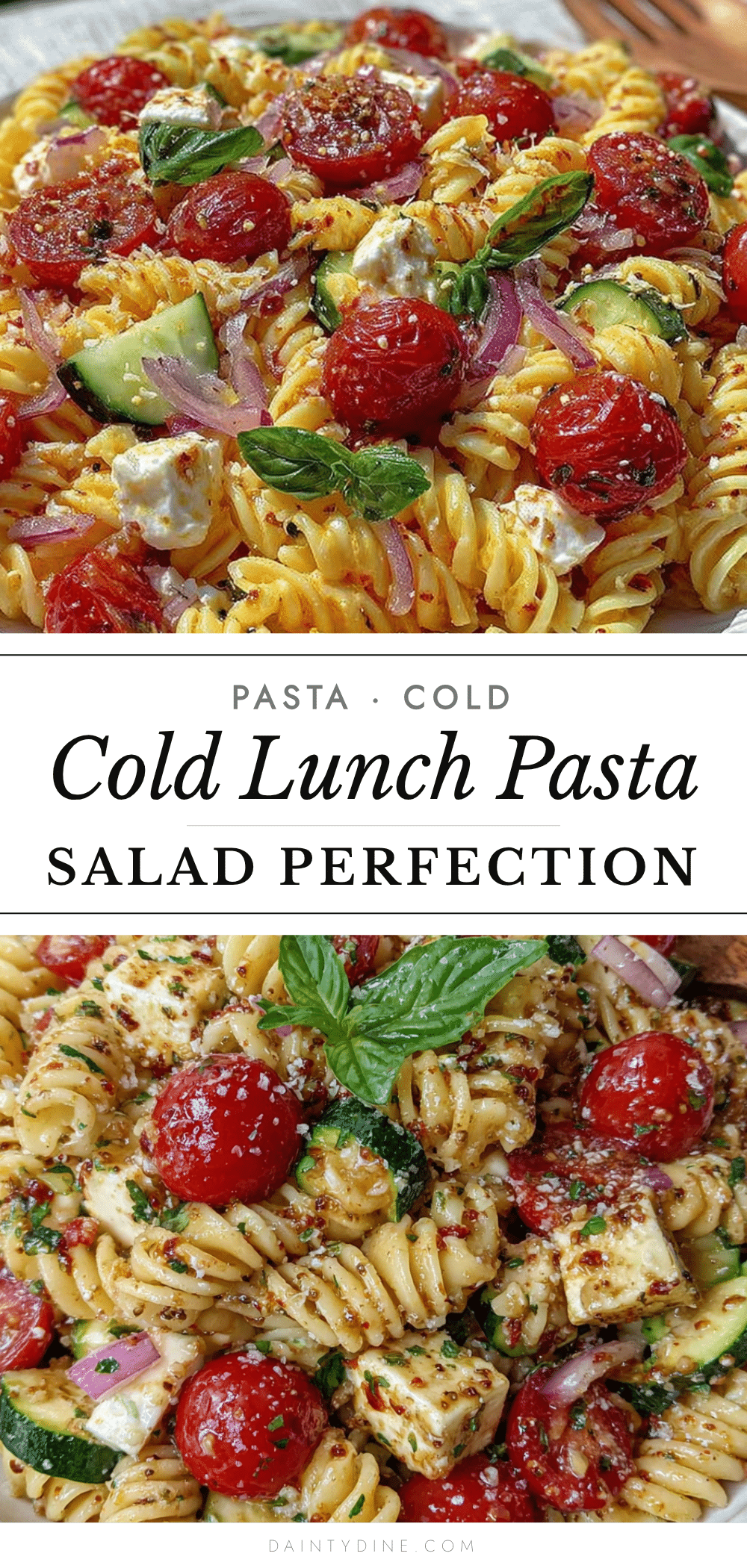
Easy Cold Pasta Salad for School Lunches (No Reheating)
This easy cold pasta salad is perfect for school lunches—no reheating required. It stays fresh for hours, uses simple ingredients, and is endlessly customizable.
- Prep Time: 15 minutes
- Cook Time: 10 minutes
- Total Time: 25 minutes
- Yield: 4 servings 1x
- Category: Main Course
- Cuisine: American
Ingredients
- 2 cups dry pasta (about 8 oz), such as rotini, fusilli, or bowtie
- 1 cup cherry tomatoes, halved
- 1 medium English cucumber, diced
- 1 medium bell pepper (any color), diced
- 1/2 cup hard cheese (cheddar, provolone, or feta), cubed or shredded
- 1 cup cooked protein (optional), such as diced rotisserie chicken, salami, or chickpeas
- 1/3 cup mayonnaise
- 2 tablespoons red wine vinegar
- 1 teaspoon Dijon mustard
- 1/2 teaspoon dried oregano
- Salt and black pepper to taste
Instructions
- Cook the Pasta: Bring a large pot of generously salted water to a rolling boil. Add the pasta and cook according to package directions, but subtract 1 minute from the recommended time. Drain the pasta in a colander, then rinse it under cold running water until completely cool. Shake off as much water as possible.
- Prep the Veggies: While the pasta cooks, wash and dice the vegetables into bite-sized pieces (about 1/2-inch cubes). Halve the cherry tomatoes crosswise, dice the cucumber, and dice the bell pepper after removing seeds and white pith. If using cheese, cut it into small cubes.
- Make the Dressing: In a small bowl or jar with a tight-fitting lid, combine the mayonnaise, red wine vinegar, Dijon mustard, dried oregano, and a pinch of salt and pepper. Whisk or shake until smooth and creamy. Taste and adjust seasoning if needed.
- Combine Everything: In a large mixing bowl, add the cooled pasta, diced veggies, cheese, and optional protein. Pour the dressing over the top. Gently fold everything together until evenly coated. Do not overmix.
- Chill and Let It Rest: Cover the bowl and refrigerate for at least 30 minutes (1 hour is better) to let the flavors meld.
- Portion and Pack: Once chilled, give the salad a final stir. Divide into individual lunch containers. Pack in a thermos or leak-proof container. Serve cold.
Notes
For best results, make the salad the night before—it tastes even better on day 2. If the salad seems dry after chilling, add a tablespoon of milk or a splash of extra vinegar. If too wet, start with 3/4 of the dressing next time. Always taste the dressing before adding; it should be a little too tangy on its own.
Nutrition
- Serving Size: 1.5 cups
- Calories: 320380
- Sugar: 57
- Sodium: 400500
- Fat: 1518
- Saturated Fat: 46
- Carbohydrates: 3842
- Fiber: 35
- Protein: 812
Keywords: cold pasta salad, school lunch, no reheating, easy lunch, kid-friendly, meal prep