Love this? Save it for later!
Share the inspiration with your friends
I was standing in the grocery store parking lot last Tuesday when the smell of grilled lemons hit me from someone’s car window — and suddenly I was twenty-two, standing in my first apartment kitchen, staring at a whole salmon fillet like it was a science experiment I hadn’t studied for.
That apartment had a stove that took forever to heat up, a sink full of dishes I was ignoring, and absolutely no confidence on my part when it came to cooking fish. I’d invited my neighbor, this older guy named Frank who lived downstairs, over for dinner because he’d helped me jump my car battery. And I thought, “Salmon sounds fancy.” What a mistake that almost was.
I burned the first batch. Overcooked the second until it was basically fish jerky. Frank was patient, but I could tell he was getting hungry. Finally, I threw everything on a sheet pan out of pure desperation — lemon slices, garlic cloves, asparagus, the salmon — and just hoped for the best. Honestly? It was the best meal I’d made in months. The lemon juice mingled with the garlic oil and dripped down onto the asparagus, and the whole thing came together in less time than it took me to clean up my mess.
That sheet pan salmon became my go-to. I’ve made it for dinner parties, for quiet Tuesday nights, and for those evenings when I need something that feels special but takes almost no effort. Maybe you’ve been there — wanting to cook something impressive but running low on energy and patience. That’s exactly why this recipe stuck with me. It’s proof that you don’t need fancy techniques or a clean kitchen to make something genuinely delicious.
Why You’ll Love This Recipe
Let me tell you — this sheet pan lemon garlic salmon has saved my dinner routine more times than I can count. Here’s why I keep coming back to it:
- Ready in 30 Minutes: From prep to plate, this meal comes together in under half an hour. Perfect for those nights when you walk through the door starving and need food on the table fast.
- Simple Ingredients: No fancy grocery trips needed. You likely already have garlic, lemons, and olive oil in your kitchen. The salmon and asparagus are the only things you might need to pick up.
- Perfect for Busy Weeknights: This is the kind of dinner that feels like you tried hard but actually took almost no effort. Great for impressing guests or just treating yourself after a long day.
- Crowd-Pleaser: I’ve served this to picky eaters, seafood skeptics, and vegetable avoiders — and it gets rave reviews every single time.
- Unbelievably Delicious: The combination of bright lemon, savory garlic, and perfectly cooked salmon with tender asparagus is pure comfort food that happens to be good for you.
What makes this recipe different from all the other salmon recipes out there? It’s the technique. Roasting everything on one sheet pan means the salmon stays moist while the asparagus gets perfectly tender. The lemon slices caramelize slightly, releasing their juice into the garlic oil, and that sauce coats everything beautifully. I’ve tested this method at least a dozen times, tweaking temperatures and timing until it was just right. This isn’t just another version of sheet pan salmon — it’s the best version I’ve ever made.
This recipe isn’t just good — it’s the kind that makes you close your eyes after the first bite. It’s comfort food reimagined, healthier and faster, but with the same soul-soothing satisfaction. Perfect for impressing guests without stress, or turning a simple Tuesday into something memorable.
What Ingredients You Will Need
This recipe uses simple, wholesome ingredients to deliver bold flavor and satisfying texture without the fuss. Most of these are pantry staples, and the ones that aren’t are easy to find at any grocery store.
For the Salmon:
- 4 salmon fillets (about 6 ounces each, skin-on or skinless — I prefer skin-on for extra moisture and crispy skin)
- 3 tablespoons olive oil (extra virgin for best flavor, but regular works fine)
- 4 cloves garlic, minced (fresh is best — jarred minced garlic can be bitter)
- 1 lemon, thinly sliced (plus extra lemon wedges for serving)
- 1 teaspoon salt (I use kosher salt for even seasoning)
- 1/2 teaspoon black pepper (freshly ground if you have it)
- 1 teaspoon dried oregano (or Italian seasoning if that’s what you’ve got)
- 1/2 teaspoon paprika (adds a subtle warmth and beautiful color)
For the Asparagus:
- 1 bunch asparagus (about 1 pound, woody ends trimmed)
- 1 tablespoon olive oil
- 1/4 teaspoon salt
- 1/4 teaspoon black pepper
- 1/4 teaspoon garlic powder (optional, but I love the extra garlic kick)
For Garnish (optional but recommended):
- Fresh parsley, chopped (adds color and freshness)
- Lemon zest (brightens everything up)
- Red pepper flakes (for a tiny bit of heat)
A few ingredient tips I’ve learned the hard way: Look for salmon fillets that are bright orange-pink and smell like the ocean, not fishy. If the asparagus stalks are thick, they’ll need a few extra minutes in the oven — thin ones cook faster. I recommend using a good quality olive oil like California Olive Ranch for the best flavor. For the lemons, go with ones that feel heavy for their size — they’ll be juicier. And please, please use fresh garlic. I tried the jarred stuff once when I was out of fresh, and the flavor just wasn’t the same.
If you need substitutions: Use avocado oil instead of olive oil for a higher smoke point. Swap asparagus with broccoli or green beans if that’s what you have. For a dairy-free option, this recipe is already dairy-free. If you’re gluten-free, everything here is naturally gluten-free too.
Equipment Needed
You don’t need much for this recipe, which is part of why I love it. Here’s what you’ll need:
- Sheet pan: A half-sheet pan (18×13 inches) works perfectly. If you don’t have one, any rimmed baking sheet will do. Just make sure it has edges so the juices don’t spill everywhere.
- Parchment paper or aluminum foil: For easy cleanup. I prefer parchment paper because nothing sticks to it.
- Chef’s knife: For mincing garlic and trimming asparagus. A sharp knife makes all the difference.
- Cutting board: Any cutting board works — just make sure it’s clean and dry.
- Small bowl: For mixing the garlic oil mixture.
- Measuring spoons: For accurate seasoning. I use my regular set from KitchenAid.
- Instant-read thermometer: Optional but highly recommended for perfectly cooked salmon. I got mine for like $12 on Amazon and it’s been a game-changer.
- Tongs: For flipping the asparagus halfway through if you want even cooking.
If you don’t have a sheet pan, a large cast-iron skillet works surprisingly well — just make sure everything fits in a single layer. And if you don’t have an instant-read thermometer, don’t worry. You can check doneness by looking at the salmon — it should flake easily with a fork and be opaque all the way through.
Preparation Method
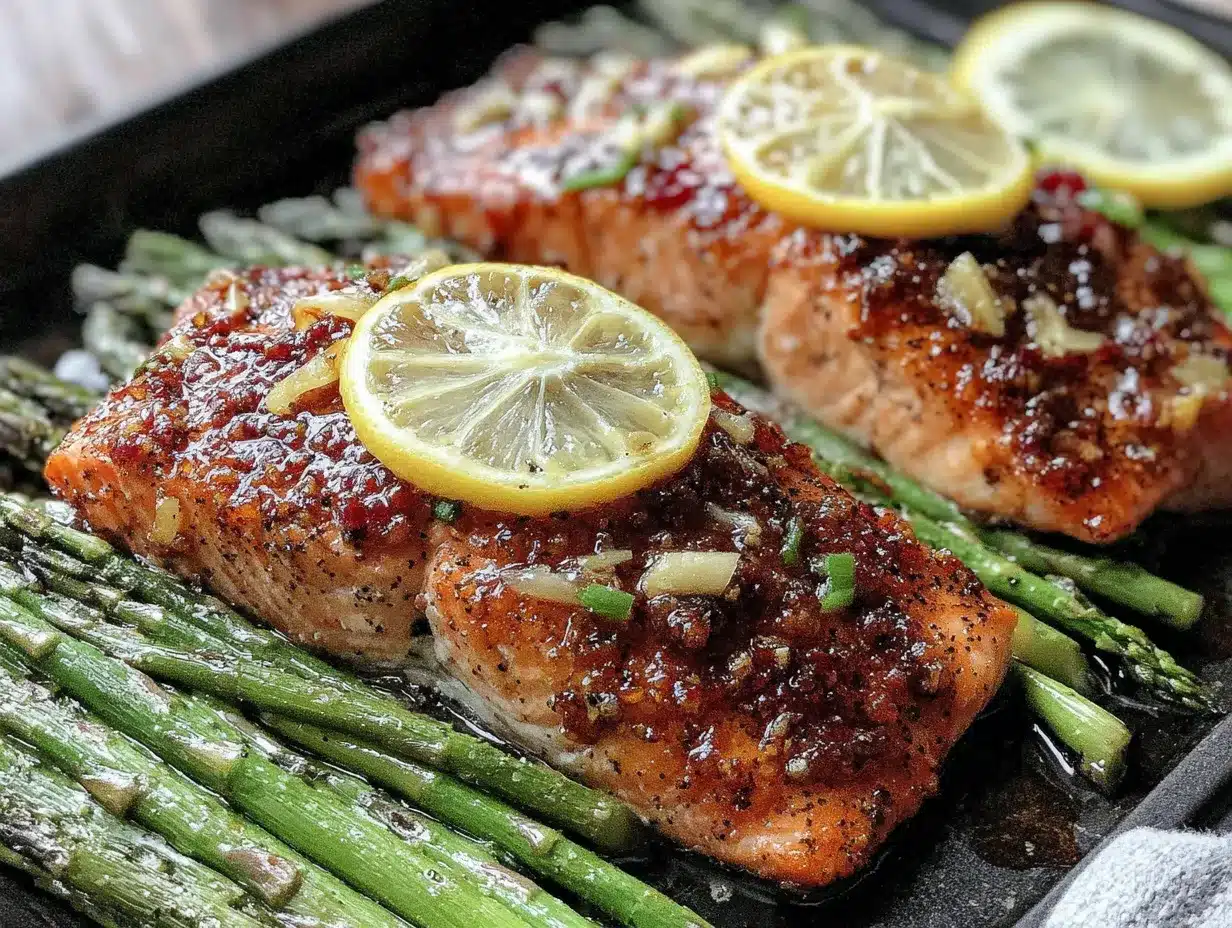
Alright, let’s get cooking. This recipe comes together fast, so I like to have everything prepped before I turn on the oven. Trust me on this one.
- Preheat your oven to 400°F (200°C). This is important — you want the oven hot when the salmon goes in. While it’s heating, line your sheet pan with parchment paper or aluminum foil. I use parchment because it makes cleanup almost nonexistent.
- Prepare the garlic oil mixture. In a small bowl, combine 3 tablespoons olive oil, minced garlic, 1 teaspoon salt, 1/2 teaspoon black pepper, 1 teaspoon dried oregano, and 1/2 teaspoon paprika. Stir it up. Let it sit for a minute so the garlic infuses the oil. The smell at this point is incredible — honestly, I could just stand there breathing it in.
- Prep the asparagus. Rinse the asparagus and snap off the woody ends. They naturally break right where the tender part starts — just bend a stalk until it snaps, then line up the rest and cut them to match. Toss the asparagus with 1 tablespoon olive oil, 1/4 teaspoon salt, 1/4 teaspoon black pepper, and 1/4 teaspoon garlic powder if you’re using it. Spread them on one side of the sheet pan in a single layer.
- Prep the salmon. Pat the salmon fillets dry with paper towels. This helps the seasoning stick and gives you a better sear. Place the fillets on the other side of the sheet pan, leaving a little space between each one. Drizzle the garlic oil mixture over the fillets, using your hands or a brush to coat them evenly. Don’t forget the sides!
- Add the lemon slices. Lay the thin lemon slices on top of the salmon fillets. I usually put 2-3 slices on each piece. The lemon will caramelize slightly in the oven and release its juice into the garlic oil, creating this beautiful sauce.
- Roast for 12-15 minutes. The exact time depends on the thickness of your salmon. For fillets that are about 1 inch thick, 12 minutes is usually perfect. The salmon should be opaque and flake easily with a fork. If you’re using an instant-read thermometer, you’re looking for 145°F (63°C) in the thickest part. The asparagus should be tender but still slightly crisp — you don’t want it mushy.
- Optional: Broil for 1-2 minutes. If you want a slightly caramelized top on the salmon, switch your oven to broil for the last minute or two. Watch it carefully — broiling can go from perfect to burnt really fast. I learned this the hard way when I walked away to check my phone and came back to smoky salmon.
- Rest for 2-3 minutes. Let the salmon rest on the sheet pan for a few minutes before serving. This allows the juices to redistribute, keeping the fish moist. Garnish with fresh parsley, lemon zest, and red pepper flakes if you’re using them.
- Serve immediately. Squeeze a little extra lemon juice over everything right before you eat. The brightness really wakes up all the flavors.
One thing I’ve learned: don’t overcrowd the pan. If everything is too close together, the vegetables steam instead of roast, and you lose that beautiful caramelization. If you’re cooking for a crowd, use two sheet pans or cook in batches.
Cooking Tips & Techniques
After making this recipe more times than I can count, I’ve picked up a few tricks that make a real difference. Let me share them with you.
Bring the salmon to room temperature. Take the fillets out of the fridge about 15 minutes before cooking. Cold salmon cooks unevenly — the outside will be done while the center is still raw. Room temperature fish cooks more evenly and stays juicier.
Don’t skip drying the salmon. Patting the fillets dry with paper towels removes excess moisture that would otherwise steam the fish. Dry fish = better browning = more flavor. It’s a small step that makes a big difference.
Watch the asparagus thickness. If your asparagus stalks are really thick, give them a 3-4 minute head start in the oven before adding the salmon. Thin stalks can go in with the salmon from the beginning. I forgot to do this once and ended up with crunchy asparagus that nobody wanted to eat.
Use a timer, not your eyes. Salmon can go from perfectly cooked to dry in about 90 seconds. Set a timer for 12 minutes and check it. If it needs more time, add it in 1-minute increments. I’ve ruined plenty of salmon by assuming it needed “just a few more minutes.”
Make extra garlic oil. The garlic oil mixture is so good that I sometimes double it and use the extra for drizzling over rice or quinoa that I serve alongside. It’s also amazing on roasted vegetables the next day.
Let the pan do the work. One of the best things about sheet pan cooking is that you don’t have to stand over the stove. Use that time to set the table, make a quick salad, or just sit down for a minute. Dinner will be ready before you know it.
Variations & Adaptations
This recipe is incredibly flexible. Here are some ways I’ve adapted it over the years:
- Lemon Garlic Salmon with Broccoli: Swap the asparagus for broccoli florets. Toss them with olive oil, salt, and pepper, and roast alongside the salmon. Broccoli takes about the same amount of time as asparagus, so no adjustments needed.
- Spicy Lemon Garlic Salmon: Add 1/2 teaspoon red pepper flakes to the garlic oil mixture for a kick of heat. I love this version when I’m craving something with a little more punch.
- Honey Lemon Garlic Salmon: Add 1 tablespoon honey to the garlic oil mixture for a sweet-savory glaze. The honey caramelizes beautifully in the oven and pairs perfectly with the lemon.
- Lemon Garlic Salmon with Green Beans: Use fresh green beans instead of asparagus. Trim the ends and toss with olive oil, salt, and pepper. Green beans might need 2-3 extra minutes in the oven depending on thickness.
- Dairy-Free Lemon Garlic Salmon: This recipe is already dairy-free, but if you want to add a creamy element without dairy, drizzle with tahini sauce or serve with avocado slices.
- Sheet Pan Lemon Garlic Salmon with Potatoes: Add baby potatoes to the pan. Toss them with olive oil, salt, and pepper, and roast for 15 minutes before adding the salmon and asparagus. This turns it into a complete one-pan meal.
I once made a version with orange slices instead of lemon because I ran out of lemons. It was surprisingly good — sweeter and more mellow. If you’re feeling adventurous, give it a try.
Serving & Storage Suggestions
This salmon is best served warm, right off the sheet pan. The lemon slices on top have caramelized and released their juice, and the asparagus is perfectly tender. I like to serve it with a side of rice, quinoa, or crusty bread to soak up all the garlic lemon sauce.
What to serve with it:
- Simple steamed rice or quinoa
- Roasted or mashed potatoes
- A crisp green salad with lemon vinaigrette
- Crusty bread for dipping in the pan juices
- Roasted cherry tomatoes thrown in with the asparagus
Storage: Leftover salmon keeps in the refrigerator for up to 3 days in an airtight container. The flavor actually gets better as it sits — the garlic and lemon continue to meld together. I’ve been known to make extra just for leftovers.
Reheating: The best way to reheat salmon is in a low oven (300°F) for about 10 minutes. You can also reheat it in a skillet over medium-low heat with a splash of water or lemon juice to keep it moist. Please don’t microwave it — I’ve done that and ended up with dry, sad salmon that made me want to cry.
Freezing: Cooked salmon freezes well for up to 2 months. Wrap each fillet individually in plastic wrap and then in foil. Thaw in the refrigerator overnight and reheat gently. The asparagus won’t freeze well, so I recommend freezing the salmon separately.
Nutritional Information & Benefits
This recipe is packed with nutrients that make you feel good about what you’re eating. Here’s the breakdown per serving (one salmon fillet with asparagus):
- Calories: Approximately 380
- Protein: 35g
- Fat: 22g (mostly healthy unsaturated fats)
- Carbohydrates: 8g
- Fiber: 3g
- Sugar: 3g (natural from lemon and asparagus)
- Sodium: 680mg
Salmon is one of the best sources of omega-3 fatty acids, which support heart health and brain function. It’s also rich in vitamin D and B vitamins. Asparagus is packed with fiber, folate, and vitamins A, C, and K. Together, they make a meal that’s as good for you as it is delicious.
This recipe is naturally gluten-free, dairy-free, and low-carb. If you’re watching your sodium intake, you can reduce the salt or use a salt substitute. For a lower-fat option, reduce the olive oil to 2 tablespoons total.
I love that this meal feels indulgent but is actually incredibly nutritious. It’s the kind of dinner that makes you feel like you’re treating yourself while also taking care of your body.
Conclusion
This easy sheet pan lemon garlic salmon with asparagus has become a staple in my kitchen for good reason. It’s quick, it’s simple, and it delivers restaurant-quality flavor with almost no effort. Whether you’re cooking for a busy weeknight dinner, a special occasion, or just because you want something delicious, this recipe delivers every single time.
I love that you can customize it based on what you have in your fridge — swap the asparagus for broccoli, add some heat with red pepper flakes, or make it sweet with a touch of honey. The possibilities are endless, and that’s what makes this recipe so special.
I’d love to hear how yours turns out. Did you try a variation? Did you serve it with something unexpected? Drop a comment below and let me know. And if you loved this recipe, share it with a friend who needs a quick and easy dinner idea.
Happy cooking, friend. You’ve got this.
Frequently Asked Questions
Can I use frozen salmon for this recipe?
Yes, you can use frozen salmon, but make sure to thaw it completely in the refrigerator overnight before cooking. Pat it dry with paper towels to remove excess moisture. Frozen salmon releases more water as it cooks, which can prevent browning.
How do I know when the salmon is done?
The salmon is done when it flakes easily with a fork and is opaque all the way through. For the most accurate result, use an instant-read thermometer — you’re looking for 145°F (63°C) in the thickest part. The salmon will continue to cook slightly after you take it out of the oven.
Can I use other vegetables besides asparagus?
Absolutely! Broccoli, green beans, zucchini, bell peppers, or cherry tomatoes all work great. Just keep in mind that different vegetables have different cooking times. Cut them into similar-sized pieces and add them to the pan based on how long they need to cook.
How do I prevent the salmon from sticking to the pan?
Line your sheet pan with parchment paper or aluminum foil. You can also lightly grease the pan with olive oil. The parchment paper method is my favorite because nothing sticks and cleanup is so easy.
Can I make this recipe ahead of time?
This recipe is best enjoyed fresh out of the oven, but you can prep the ingredients ahead of time. Mix the garlic oil, trim the asparagus, and slice the lemon up to a day in advance. Store everything in the refrigerator and assemble just before cooking.
Pin This Recipe!
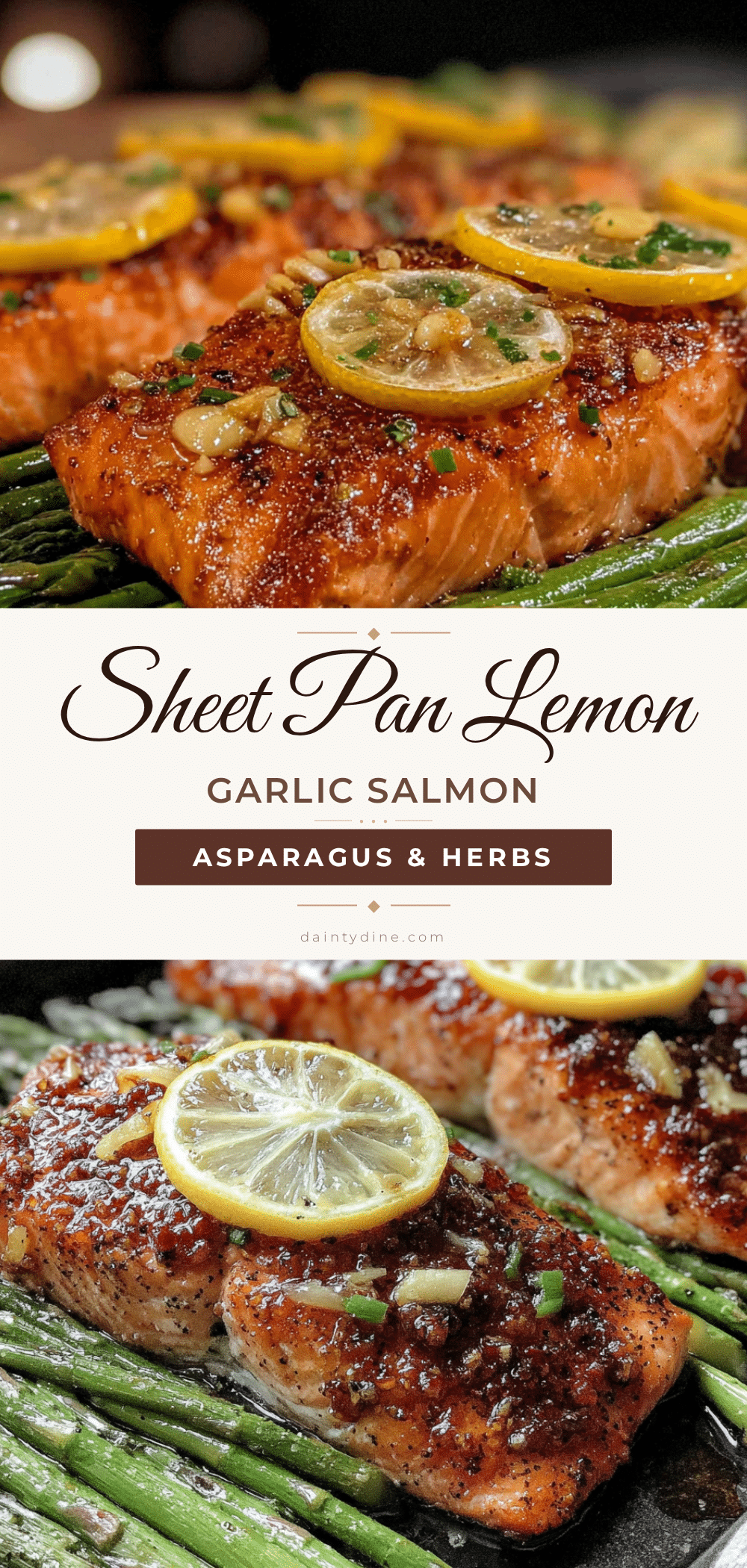
Easy 30-Minute Lemon Garlic Salmon with Asparagus

A quick and delicious sheet pan salmon recipe with lemon, garlic, and asparagus, ready in 30 minutes. Perfect for busy weeknights or impressing guests with minimal effort.
- Prep Time: 10 minutes
- Cook Time: 15 minutes
- Total Time: 25 minutes
- Yield: 4 servings 1x
- Category: Main Course
- Cuisine: American
Ingredients
- 4 salmon fillets (about 6 ounces each, skin-on or skinless)
- 3 tablespoons olive oil (extra virgin preferred)
- 4 cloves garlic, minced
- 1 lemon, thinly sliced (plus extra lemon wedges for serving)
- 1 teaspoon salt (kosher salt recommended)
- 1/2 teaspoon black pepper (freshly ground preferred)
- 1 teaspoon dried oregano (or Italian seasoning)
- 1/2 teaspoon paprika
- 1 bunch asparagus (about 1 pound, woody ends trimmed)
- 1 tablespoon olive oil (for asparagus)
- 1/4 teaspoon salt (for asparagus)
- 1/4 teaspoon black pepper (for asparagus)
- 1/4 teaspoon garlic powder (optional, for asparagus)
- Fresh parsley, chopped (for garnish, optional)
- Lemon zest (for garnish, optional)
- Red pepper flakes (for garnish, optional)
Instructions
- Preheat your oven to 400°F (200°C). Line a sheet pan with parchment paper or aluminum foil.
- In a small bowl, combine 3 tablespoons olive oil, minced garlic, 1 teaspoon salt, 1/2 teaspoon black pepper, 1 teaspoon dried oregano, and 1/2 teaspoon paprika. Stir to combine and let sit for a minute.
- Rinse the asparagus and snap off the woody ends. Toss with 1 tablespoon olive oil, 1/4 teaspoon salt, 1/4 teaspoon black pepper, and 1/4 teaspoon garlic powder (if using). Spread on one side of the sheet pan in a single layer.
- Pat the salmon fillets dry with paper towels. Place on the other side of the sheet pan, leaving space between each. Drizzle the garlic oil mixture over the fillets, coating evenly.
- Lay thin lemon slices on top of the salmon fillets (2-3 slices per piece).
- Roast for 12-15 minutes, until the salmon is opaque and flakes easily with a fork (internal temperature of 145°F/63°C) and the asparagus is tender but still slightly crisp.
- Optional: Switch the oven to broil for the last 1-2 minutes for a caramelized top. Watch carefully to avoid burning.
- Let the salmon rest on the sheet pan for 2-3 minutes. Garnish with fresh parsley, lemon zest, and red pepper flakes if desired.
- Serve immediately with extra lemon juice squeezed over the top.
Notes
Bring salmon to room temperature 15 minutes before cooking for even cooking. Pat salmon dry for better browning. Adjust cooking time based on salmon thickness. For thicker asparagus, give a 3-4 minute head start in the oven. Double the garlic oil mixture for extra sauce. Leftovers keep in the refrigerator for up to 3 days. Reheat in a low oven (300°F) for 10 minutes or in a skillet with a splash of water or lemon juice. Freeze cooked salmon for up to 2 months.
Nutrition
- Serving Size: 1 salmon fillet with
- Calories: 380
- Sugar: 3
- Sodium: 680
- Fat: 22
- Saturated Fat: 3
- Carbohydrates: 8
- Fiber: 3
- Protein: 35
Keywords: salmon, lemon garlic salmon, sheet pan salmon, asparagus, quick dinner, healthy, 30-minute meal, weeknight dinner