Love this? Save it for later!
Share the inspiration with your friends
There used to be a little farm-to-table place tucked behind the old train station in my town that made the most incredible apple cider braised pork chops. When they closed their doors two summers ago—just a handwritten sign on the door saying “Thanks for the memories”—I honestly felt a little lost. That pork chop dinner was my go-to after long workdays, the kind of meal that made you forget everything wrong with the world. After maybe a dozen tries—some embarrassingly dry, a couple that tasted more like apple pie than dinner—I finally got it. And let me tell you, this version might actually be better than the original, if I’m being honest with myself.
The key was figuring out that perfect balance between sweet and savory, that moment when the cider reduces into this glossy, almost sticky sauce that clings to the pork just right. I remember the night it finally came together—I was so excited I texted my sister a photo at 9 PM on a Tuesday. She thought I’d lost my mind, but that’s just how it goes when you’re chasing a food memory, you know? The first bite took me right back to that little restaurant, the wooden tables, the way the autumn light came through those big front windows.
What I love most about this recipe is how it delivers that deep, slow-cooked flavor in a fraction of the time. We’re talking thirty minutes, start to finish. No all-day braising, no complicated techniques, just honest, good food that tastes like you fussed when you really didn’t. If you’ve been hunting for that one pork chop recipe that actually delivers on flavor without taking over your whole evening, this might just be it. Let me show you how it’s done.
Why You’ll Love This Recipe
Look, I’ve tested a lot of pork chop recipes over the years, and most of them fall into two camps: either they’re fast but boring, or they’re delicious but take forever. These quick apple cider braised pork chops somehow manage to be neither. They’re the weeknight hero you didn’t know you needed.
- Quick & Easy: From fridge to table in 30 minutes flat. No marinating, no complicated steps, no all-day simmering. This is real food, fast.
- Simple Ingredients: You probably have most of this stuff already. Apple cider shows up in grocery stores everywhere come fall, and the rest is basic pantry staples. No hunting down fancy ingredients.
- Perfect for Busy Weeknights: This is the dinner you make when you’re tired, hungry, and need something that feels special without the effort. It’s cozy enough for a cold Tuesday but impressive enough for company.
- Crowd-Pleaser: My kids devour these, my husband asks for seconds, and even my picky mother-in-law gave them her stamp of approval. That’s a win in my book.
- Unbelievably Delicious: The sauce alone is worth making these. It’s sweet, tangy, savory, and just a little bit sticky—the kind of thing you want to spoon over everything on your plate.
What makes this recipe different from all those other pork chop recipes out there? It’s the technique. Instead of braising for hours, we use a clever two-step method that builds deep flavor fast. First, you sear the chops to get that golden crust, then you simmer them briefly in the cider mixture until they’re tender and the sauce has reduced to perfection. No dry pork chops here, I promise.
This isn’t just another dinner recipe. It’s the kind of meal that makes you close your eyes after that first bite, the kind that turns a regular Wednesday into something worth remembering. It’s comfort food that works with your schedule, not against it.
What Ingredients You Will Need
This recipe uses simple, honest ingredients that work together to create something genuinely special. Most of these are pantry staples or easy to find at any grocery store, which is exactly what you want on a busy weeknight.
- Boneless pork chops (4, about 1 inch thick): I prefer boneless for quick cooking, but bone-in works too—just add a few minutes to the cooking time. Look for chops with some marbling for the juiciest results. (I like getting mine from the butcher counter at my local grocery store—they’re usually fresher than the pre-packaged ones.)
- Salt and black pepper: Don’t skimp here. Season generously—the pork needs it. I use kosher salt because it’s easier to control, but table salt works fine too.
- Olive oil (2 tablespoons): For searing. You want something with a decent smoke point, and olive oil does the job beautifully. Avocado oil works too if that’s what you have.
- Unsalted butter (2 tablespoons): This adds richness and helps the sauce come together. If you only have salted butter, just reduce the added salt a bit.
- Apple cider (1 ½ cups): This is the star of the show. Use fresh apple cider if you can find it—it has more flavor than apple juice. The unfiltered kind with the sediment at the bottom is amazing here. (In a pinch, good quality apple juice works, but the flavor won’t be quite as complex.)
- Chicken broth (½ cup): Low-sodium is best so you can control the salt level. The broth adds savory depth that balances the sweetness of the cider.
- Dijon mustard (1 tablespoon): This is my secret weapon. It adds a subtle tanginess that cuts through the richness and keeps the sauce from being too sweet. Whole grain mustard works too for a different texture.
- Fresh thyme (3-4 sprigs): Earthy and aromatic, thyme is a natural partner for apples and pork. Dried thyme works in a pinch—use about ½ teaspoon.
- Apple cider vinegar (1 tablespoon): A little splash at the end brightens everything up. Don’t skip it—that acidity is what makes the sauce sing.
- Cornstarch (1 tablespoon) mixed with 2 tablespoons cold water: This is optional, but it helps thicken the sauce if it’s not reducing as quickly as you’d like. I usually don’t need it, but it’s good to have on hand.
One thing I’ve learned the hard way—don’t use spiced apple cider here. The extra spices can overwhelm the pork and make the sauce taste muddled. Stick with plain apple cider and let the thyme and mustard do the heavy lifting on flavor.
Equipment Needed
You don’t need a fancy kitchen to make these quick apple cider braised pork chops. Here’s what you’ll need:
- Large skillet or frying pan (12-inch): A heavy-bottomed skillet works best for even heating and good searing. Cast iron is my personal favorite—it holds heat beautifully and gives you that perfect golden crust. A stainless steel pan works great too.
- Tongs: For flipping the pork chops and handling them without piercing the meat. Trust me, you don’t want to lose those precious juices.
- Wooden spoon or spatula: For stirring the sauce and scraping up those browned bits from the bottom of the pan—that’s where so much flavor lives.
- Measuring cups and spoons: For accuracy, especially with the liquids. I’ve eyeballed it before and ended up with sauce that was either too thin or too sweet.
- Sharp knife and cutting board: For mincing garlic or herbs if you’re adding extras. A good chef’s knife makes all the difference.
- Small bowl: For mixing the cornstarch slurry if you need it. Any small bowl will do.
If you don’t have a cast iron skillet, don’t worry. I’ve made this recipe in a regular non-stick pan and it turned out just fine. The key is making sure your pan is hot enough before you add the pork—that’s what gives you the good sear, not the type of pan you use.
Preparation Method
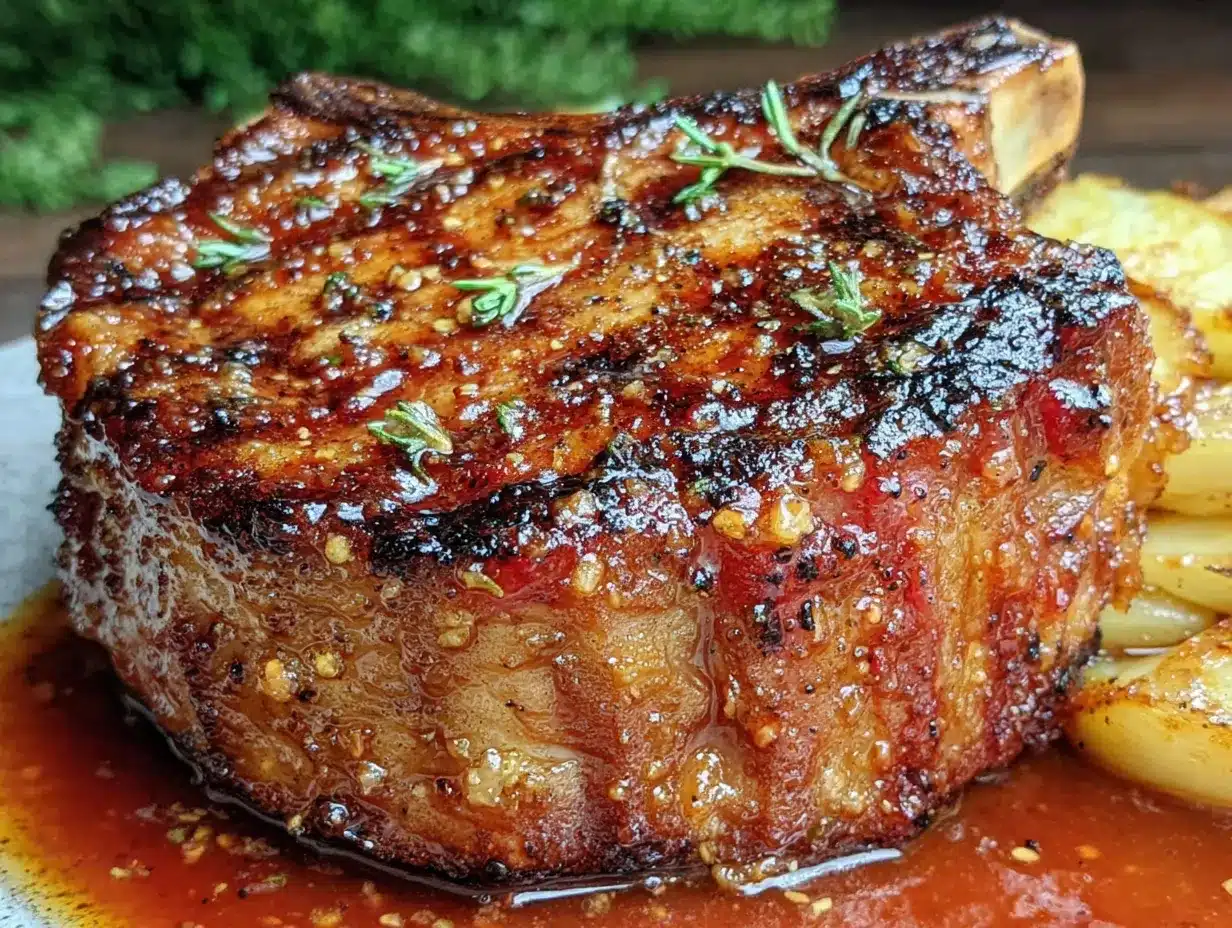
Alright, let’s get cooking. This whole process takes about 30 minutes from start to finish, so let’s make every minute count.
- Prep the pork chops (2 minutes): Pat your pork chops dry with paper towels. This is crucial—wet meat won’t sear properly. Season both sides generously with salt and pepper. Don’t be shy here; the pork can handle it. Let them sit at room temperature while you get everything else ready.
- Heat the pan (2 minutes): Place your skillet over medium-high heat and add the olive oil. Wait until the oil is shimmering but not smoking—you should see little wispy movements in the oil. If you’re not sure, flick a drop of water in the pan; if it sizzles immediately, you’re ready.
- Sear the pork chops (4-5 minutes total): Carefully place the pork chops in the hot pan. Don’t crowd them—work in batches if your pan isn’t big enough. Let them cook undisturbed for 2-3 minutes until the bottom is golden brown and releases easily from the pan. Flip and cook another 2 minutes on the other side. The pork should have a nice crust but won’t be cooked through yet—that’s fine, we’ll finish them in the sauce. Transfer to a plate and set aside.
- Build the sauce (3 minutes): Reduce the heat to medium and add the butter to the pan. Once it’s melted, pour in the apple cider and chicken broth, stirring with your wooden spoon to scrape up all those delicious browned bits from the bottom of the pan. That’s pure flavor right there. Add the Dijon mustard and thyme sprigs, and stir to combine.
- Braise the pork (10-12 minutes): Return the pork chops to the pan, nestling them into the liquid. The cider mixture should come about halfway up the sides of the chops. Bring it to a gentle simmer—you want small bubbles, not a rolling boil. Cover the pan and let it cook for 5 minutes. Then flip the chops, cover again, and cook another 5-7 minutes. The pork should be tender and cooked through (internal temperature of 145°F if you’re using a thermometer).
- Finish the sauce (3-4 minutes): Transfer the pork chops to a clean plate and tent loosely with foil. Turn the heat up to medium-high and let the sauce simmer uncovered until it reduces and thickens slightly, about 3-4 minutes. Stir in the apple cider vinegar and taste—you might want a pinch more salt or a splash more vinegar depending on your preference. If the sauce isn’t thickening enough, stir in the cornstarch slurry and let it bubble for a minute.
- Serve immediately: Spoon the sauce over the pork chops and garnish with fresh thyme leaves if you’re feeling fancy. Serve right away while everything is hot and the sauce is glossy.
Here’s a little tip I learned after my third failed attempt—don’t rush the searing step. I know you’re hungry and tired, but those few extra minutes of patience pay off big time in flavor. The browned bits that stick to the pan after searing are what make the sauce so good. If you flip the pork too early, you miss out on that crust, and the sauce just won’t have the same depth.
Cooking Tips & Techniques
I’ve made these quick apple cider braised pork chops more times than I can count, and I’ve learned a few things along the way. Let me save you some trouble.
Don’t overcook the pork. This is the number one mistake people make with pork chops. They cook them until they’re dry and tough, and then wonder why nobody wants to eat pork. Pork today is leaner than it used to be, which means it’s easier to overcook. Use a meat thermometer if you have one—145°F is the magic number. If you don’t have a thermometer, cut into the thickest chop and check that the juices run clear and the meat is just barely pink in the center.
Let the pork rest. I know it’s tempting to dig right in, but letting the pork rest for 5 minutes under foil makes a huge difference. The juices redistribute throughout the meat instead of running out onto your plate. Trust me on this one—I’ve ruined plenty of dinners by being impatient.
Control your heat. Medium-high for searing, medium for building the sauce, and a gentle simmer for braising. If your heat is too high during the braising step, the cider will reduce too quickly and you’ll end up with a thick, overly sweet syrup instead of a balanced sauce. If it’s too low, the pork won’t cook through properly. Keep an eye on those bubbles—small and steady is what you want.
Adjust the sweetness to your taste. Some apple ciders are sweeter than others, and personal preferences vary. If you taste the sauce and think it’s too sweet, add another splash of apple cider vinegar. If it’s too tart, a tiny pinch of brown sugar will balance it out. Cooking is about tasting and adjusting—don’t be afraid to make it your own.
One thing I messed up more times than I’d like to admit—I used to add the vinegar at the beginning instead of the end. The problem is that vinegar loses its punch when it cooks for too long. Adding it at the very end keeps that bright, acidic kick that makes the sauce so balanced. Learn from my mistakes, friends.
Variations & Adaptations
One of the best things about this recipe is how flexible it is. Here are some ways to make it your own:
Apple and Onion Version: Thinly slice one medium onion and one apple (Honeycrisp or Granny Smith work great) and add them to the pan after you remove the pork chops. Sauté them for 3-4 minutes before adding the cider and broth. The softened onions and apples add texture and sweetness that’s absolutely lovely. I tried this one Thanksgiving week when I had extra apples lying around, and honestly, it might be my new favorite version.
Herb Swaps: Not a fan of thyme? Try fresh rosemary or sage instead. Rosemary gives the sauce a more woodsy, almost pine-like flavor that pairs beautifully with the apple cider. Sage is more earthy and traditional with pork. Use about 2 sprigs of rosemary or 4-5 sage leaves. Just remember to remove the woody stems before serving.
Spicy Kick: If you like a little heat, add a pinch of red pepper flakes along with the cider. The warmth builds gradually and contrasts nicely with the sweetness. I do this when I’m cooking just for myself—my family prefers the milder version.
Creamy Variation: For a richer sauce, stir in ¼ cup of heavy cream at the very end, after you’ve removed the pan from the heat. The cream mellows out the tanginess and makes the sauce velvety smooth. This is decadent and not exactly weeknight-friendly, but perfect for a Sunday dinner.
Gluten-Free Option: This recipe is naturally gluten-free as written, just make sure your chicken broth and Dijon mustard are certified gluten-free if that’s a concern. Skip the cornstarch slurry or use arrowroot powder instead—same ratio, same result.
Pork Chop Swap: Bone-in pork chops work beautifully here—just add 3-5 minutes to the braising time. Thicker chops (1.5 inches) will need a bit longer too. Thin breakfast-style chops aren’t ideal for this recipe; they’ll cook too quickly and might dry out.
Serving & Storage Suggestions
These quick apple cider braised pork chops are best served hot, straight from the pan, with plenty of that gorgeous sauce spooned over the top. The sauce is honestly the best part, so don’t be shy with it.
What to serve with them: Mashed potatoes are my go-to—they soak up the sauce like a dream. Buttered egg noodles work beautifully too. For something lighter, try roasted Brussels sprouts or a simple green salad with a tangy vinaigrette. In the fall, I love serving these with roasted butternut squash and some crusty bread for sopping up every last drop of sauce. A side of sautéed green beans with almonds is also lovely.
Drink pairings: A crisp hard cider is the obvious choice and it’s absolutely perfect. For wine drinkers, a dry Riesling or a Pinot Noir works wonderfully. The acidity in the wine cuts through the richness of the sauce just right.
Storage: Leftover pork chops keep well in an airtight container in the refrigerator for up to 3 days. The flavors actually meld and deepen overnight, so leftovers might even be better the next day. Store the sauce separately if you can, or pour it over the pork—both work fine.
Reheating: The best way to reheat these is gently in a covered skillet over medium-low heat with a splash of apple cider or broth to loosen the sauce. About 5-7 minutes should do it. The microwave works in a pinch but can make the pork a bit tough. If you’re in a hurry, microwave in 30-second bursts at 50% power.
Freezing: These freeze beautifully for up to 3 months. Place the cooled pork chops and sauce in a freezer-safe container or bag. Thaw overnight in the refrigerator and reheat gently. I often double the recipe and freeze half for busy weeks—it’s like having a homemade TV dinner that’s actually good for you.
One thing I’ve noticed—the sauce thickens as it sits in the fridge. When you reheat, you might want to add a splash of broth or water to thin it back to the right consistency. Don’t skip this step or you’ll end up with a gluey sauce, which is definitely not what we’re going for.
Nutritional Information & Benefits
Here’s an approximate nutritional breakdown per serving (based on 4 servings, using lean boneless pork chops):
| Nutrient | Amount |
|---|---|
| Calories | 380 |
| Protein | 35g |
| Fat | 18g |
| Saturated Fat | 7g |
| Carbohydrates | 18g |
| Fiber | 0g |
| Sugar | 14g |
| Sodium | 520mg |
Pork chops are an excellent source of high-quality protein, which is essential for muscle repair and keeping you full and satisfied. They’re also rich in B vitamins, particularly thiamin and B12, which support energy metabolism and brain function. The apple cider provides a modest amount of vitamin C and antioxidants, though most of the sugar is natural from the apples.
This recipe is naturally gluten-free and can be made dairy-free by substituting the butter with a plant-based alternative or additional olive oil. If you’re watching your sodium intake, use low-sodium broth and go easy on the added salt—you can always add more at the table.
From a personal perspective, I love that this meal feels indulgent but is actually pretty balanced. You’re getting a good serving of protein, the sauce adds flavor without excessive calories, and if you pair it with vegetables and a sensible side, it’s a perfectly reasonable weeknight dinner that won’t derail your healthy eating goals.
Conclusion
These quick apple cider braised pork chops have become a staple in my kitchen for good reason. They deliver everything you want from a weeknight dinner—speed, flavor, comfort, and that little something extra that makes a regular meal feel special. The sauce is the kind of thing you’ll find yourself craving, and the pork stays tender and juicy every single time.
What I love most about this recipe is how forgiving it is. You can tweak the herbs, adjust the sweetness, swap in different sides, and it still comes out delicious. It’s the kind of recipe you’ll make once and then immediately want to make again, because it’s just that good and that easy.
I’d love to hear how yours turn out. Did you try any variations? Serve it with something unexpected? Found a trick that made it even better? Drop a comment below and let me know—I read every single one and I love hearing how these recipes come to life in your kitchens. And if you really loved these, share the recipe with a friend who needs a good weeknight win. Happy cooking, friends!
Frequently Asked Questions
Can I use apple juice instead of apple cider?
Yes, you can, but the flavor won’t be quite as rich or complex. Apple cider has a deeper, more authentic apple taste because it’s less processed. If you’re using apple juice, consider adding a pinch of cinnamon or a splash of lemon juice to boost the flavor profile.
How do I know when the pork chops are done without a thermometer?
Cut into the thickest part of the chop—the juices should run clear and the meat should be just barely pink in the center. Another test: press on the chop with your finger; it should feel firm but with a little give, similar to the fleshy part of your palm when your hand is relaxed.
Can I make this recipe with chicken instead of pork?
Absolutely! Boneless, skinless chicken thighs work beautifully here—they stay juicy and soak up the sauce. Chicken breasts will work too but cook faster, so reduce the braising time to about 8-10 minutes total. Just make sure the internal temperature reaches 165°F.
Why did my sauce turn out too thin?
This usually happens if the heat wasn’t high enough during the reduction step, or if you added too much liquid. Next time, let the sauce simmer uncovered over medium-high heat for a few extra minutes to let it reduce. If it’s still thin, stir in the cornstarch slurry and let it bubble for a minute—that should thicken it right up.
Can I prepare this recipe ahead of time?
You can sear the pork chops and make the sauce up to a day ahead. Store them separately in the refrigerator, then reheat everything together gently in a skillet before serving. The flavors actually meld and improve overnight, so this is a great make-ahead option for busy weeks.
Pin This Recipe!
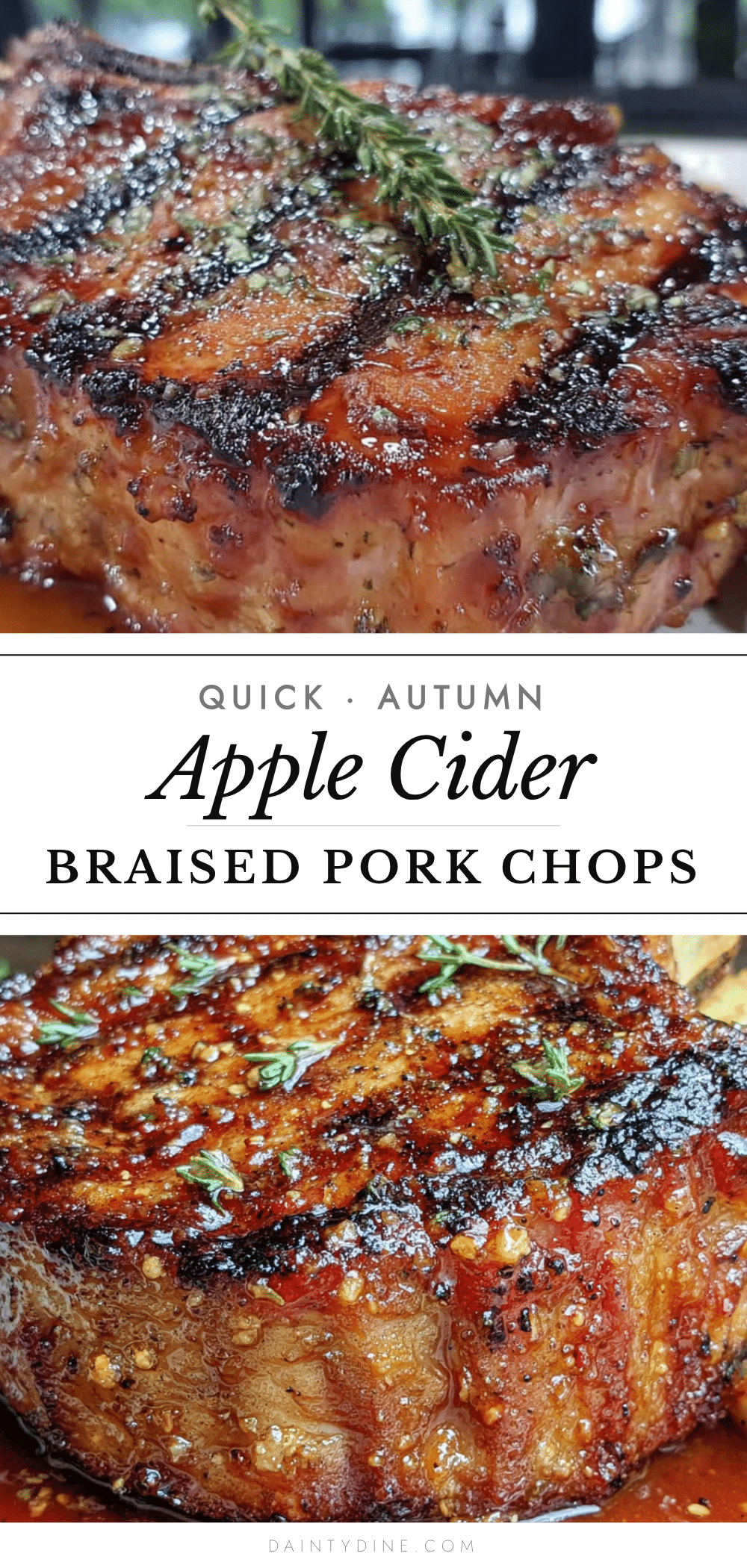
Easy 30-Min Apple Cider Braised Pork Chops

These quick apple cider braised pork chops deliver deep, slow-cooked flavor in just 30 minutes. The perfect weeknight dinner with a glossy, sweet-tangy sauce that clings to tender, juicy pork.
- Prep Time: 5 minutes
- Cook Time: 25 minutes
- Total Time: 30 minutes
- Yield: 4 servings 1x
- Category: Main Course
- Cuisine: American
Ingredients
- 4 boneless pork chops (about 1 inch thick)
- Salt and black pepper (to taste)
- 2 tablespoons olive oil
- 2 tablespoons unsalted butter
- 1 ½ cups apple cider (unfiltered preferred)
- ½ cup low-sodium chicken broth
- 1 tablespoon Dijon mustard
- 3–4 sprigs fresh thyme
- 1 tablespoon apple cider vinegar
- 1 tablespoon cornstarch mixed with 2 tablespoons cold water (optional)
Instructions
- Pat pork chops dry with paper towels. Season both sides generously with salt and pepper. Let sit at room temperature.
- Heat olive oil in a large skillet over medium-high heat until shimmering.
- Sear pork chops for 2-3 minutes per side until golden brown. Transfer to a plate.
- Reduce heat to medium. Add butter to the pan, then pour in apple cider and chicken broth. Scrape up browned bits from the bottom. Stir in Dijon mustard and thyme sprigs.
- Return pork chops to the pan. Bring to a gentle simmer, cover, and cook for 5 minutes. Flip chops, cover, and cook another 5-7 minutes until internal temperature reaches 145°F.
- Transfer pork chops to a plate and tent with foil. Increase heat to medium-high and simmer sauce uncovered for 3-4 minutes until slightly thickened. Stir in apple cider vinegar. If needed, add cornstarch slurry and cook 1 minute more.
- Spoon sauce over pork chops and serve immediately.
Notes
Don’t rush the searing step—browned bits add flavor. Use a meat thermometer for perfect doneness (145°F). Let pork rest 5 minutes before serving. Adjust sweetness with extra vinegar or a pinch of brown sugar. For a creamy variation, stir in ¼ cup heavy cream at the end.
Nutrition
- Serving Size: 1 pork chop with sau
- Calories: 380
- Sugar: 14
- Sodium: 520
- Fat: 18
- Saturated Fat: 7
- Carbohydrates: 18
- Protein: 35
Keywords: apple cider braised pork chops, quick pork chops, 30-minute dinner, fall recipe, weeknight dinner, pork chop recipe