Love this? Save it for later!
Share the inspiration with your friends
The church potluck was in six hours and I’d completely forgotten. Everyone else would be bringing their signature dishes—casseroles passed down through generations, perfectly frosted layer cakes, slow-cooked roasts that had been simmering since dawn. I had a random acorn squash sitting in my fruit bowl, a stick of butter, and a bag of pecans from a baking project I’d abandoned last month. Not exactly potluck material, right? I mean, who brings squash to a potluck when there’s going to be mac and cheese and fried chicken?
But here’s the thing—I was already late, the grocery store was in the opposite direction, and I had nothing else. So I did what any reasonable person would do when backed into a corner: I roasted that squash, browned the butter like my life depended on it, toasted those pecans until they smelled like heaven, and prayed nobody would notice I’d brought a “side dish” that took twenty minutes of actual work. Spoiler alert: they noticed. The empty dish came back. Three people asked for the recipe before I’d even sat down. And the woman who brought the seven-layer dip? She asked me to bring “that squash thing” to the next gathering.
Honestly, I still laugh thinking about it. I was panicking, scraping brown butter off the bottom of the pan, and somehow stumbled into a recipe that’s become my go-to for cozy dinners, holiday tables, and those nights when you need something that feels special but takes almost no effort. Maybe you’ve been there—staring at a single vegetable and wondering if it could possibly be enough. Let me tell you, this cozy roasted acorn squash with brown butter and pecans is proof that simple ingredients, a little bit of heat, and some panicked determination can create something truly unforgettable.
Why You’ll Love This Recipe
This isn’t just another roasted squash recipe. After countless trials in my own kitchen—some with burnt butter, some with under-toasted nuts, and one memorable disaster where I forgot the salt entirely—I’ve perfected this version. It’s the one my family requests for Thanksgiving instead of the traditional sweet potato casserole, and the one I bring to Friendsgiving when I want to impress without stress. Here’s why it works:
- Quick & Easy: Comes together in about 40 minutes, with only 10 minutes of active prep. Perfect for busy weeknights or last-minute holiday contributions.
- Simple Ingredients: You probably already have butter and pecans in your pantry. The acorn squash is the star, and it’s available at almost any grocery store from September through February.
- Perfect for Cozy Evenings: This dish screams comfort. The warmth of roasted squash, the nutty richness of browned butter, and the crunch of toasted pecans—it’s like a hug on a plate.
- Crowd-Pleaser: I’ve served this to kids who “don’t like squash” and adults who claim they’re “not vegetable people.” The empty dish speaks for itself.
- Unbelievably Delicious: The flavor combination is next-level. The natural sweetness of the squash caramelizes in the oven, while the brown butter adds a deep, almost toffee-like richness that pairs perfectly with the earthy pecans.
What makes this recipe different from the rest? It’s the technique. Most recipes just toss squash with oil and call it a day. But browning the butter first—letting it foam and turn golden and develop those nutty, complex notes—completely transforms the dish. And toasting the pecans releases their oils and intensifies their flavor. It’s a small extra step that makes a massive difference. This isn’t just roasted squash; it’s comfort food reimagined—simple enough for a Tuesday night, elegant enough for a holiday table.
What Ingredients You Will Need
This recipe uses simple, wholesome ingredients to deliver bold flavor and satisfying texture without the fuss. Most of these are pantry staples, and the few that aren’t are easy to find during fall and winter months.
- Acorn squash (2 medium): Look for squash that feels heavy for its size with a deep green color and a patch of orange on the bottom (that’s a sign of ripeness). You’ll want them firm with no soft spots. Each squash should yield about 8 wedges.
- Unsalted butter (1/2 cup, or 1 stick): I recommend using unsalted so you can control the salt level. Kerrygold or any European-style butter works beautifully here because of its higher fat content, which browns more evenly and develops richer flavor.
- Pecans (1 cup, roughly chopped): Fresh pecans make a noticeable difference. If they smell even slightly stale, toast them in a dry pan first to revive their flavor. I prefer buying raw pecan halves and chopping them myself for the best texture.
- Brown sugar (2 tablespoons, packed): Light or dark brown sugar both work. Dark brown sugar adds a deeper molasses flavor that complements the brown butter beautifully. You can also use coconut sugar or maple syrup (reduce liquid slightly if using syrup).
- Maple syrup (2 tablespoons): Pure maple syrup, not pancake syrup. The real stuff adds a complexity that artificial syrup just can’t match. Grade A dark amber is my personal favorite for its robust flavor.
- Cinnamon (1 teaspoon): Ground cinnamon adds warmth and pairs perfectly with the squash and pecans. Freshly ground cinnamon from whole sticks has a more vibrant flavor, but pre-ground works great too.
- Salt (1/2 teaspoon, plus more for finishing): I use flaky sea salt like Maldon for finishing—it adds little bursts of saltiness that make the sweetness pop. For the recipe itself, fine sea salt or kosher salt works perfectly.
- Black pepper (1/4 teaspoon, freshly ground): Don’t skip this! The pepper adds a subtle warmth that balances the sweetness and keeps the dish from being one-dimensional. It’s a small detail that makes a big difference.
- Fresh sage (8-10 leaves, optional but recommended): Sage and brown butter are a classic combination. The leaves become crispy when fried in the brown butter and add an earthy, aromatic note that elevates the whole dish. If you don’t have fresh sage, dried sage (about 1 teaspoon, crumbled) works in a pinch.
Substitution Guidance:
- For a dairy-free version, use vegan butter or coconut oil. Note that coconut oil won’t brown the same way, but it still adds lovely flavor.
- No pecans? Walnuts or hazelnuts work beautifully. Toast them just the same way.
- For a lower-sugar option, reduce the brown sugar to 1 tablespoon or omit it entirely. The maple syrup adds enough sweetness on its own.
- If acorn squash isn’t available, butternut squash or delicata squash are excellent substitutes. Adjust cooking time as needed (butternut may take slightly longer).
Equipment Needed
You don’t need a fancy kitchen to make this recipe. Here’s what you’ll need:
- Large baking sheet (rimmed): A half-sheet pan (18×13 inches) works perfectly. The rim is important to catch any butter or juices that might spill. If you don’t have one, any large oven-safe dish will work.
- Parchment paper or aluminum foil: Lining the baking sheet makes cleanup a breeze. The caramelized brown butter can get sticky, and trust me, you don’t want to scrub that off.
- Small saucepan: For browning the butter. A light-colored pan is ideal because you can see the butter change color. Stainless steel or enameled cast iron works best.
- Chef’s knife: A sharp knife is crucial for cutting through the tough skin of acorn squash. A dull knife is dangerous here—it can slip. I’ve learned this the hard way.
- Cutting board: A sturdy board that won’t slide around. Place a damp paper towel underneath to keep it stable.
- Measuring cups and spoons: For accurate measurements, especially for the butter and maple syrup.
- Mixing bowl: For tossing the squash wedges with the brown butter mixture.
- Spatula or wooden spoon: For stirring the butter as it browns. A silicone spatula is great for scraping every last bit of that liquid gold.
Budget-friendly tips: Don’t have parchment paper? You can grease the baking sheet directly with butter or oil. No small saucepan? Use any small pot or even a small skillet. The equipment doesn’t need to be fancy—it just needs to work.
Preparation Method
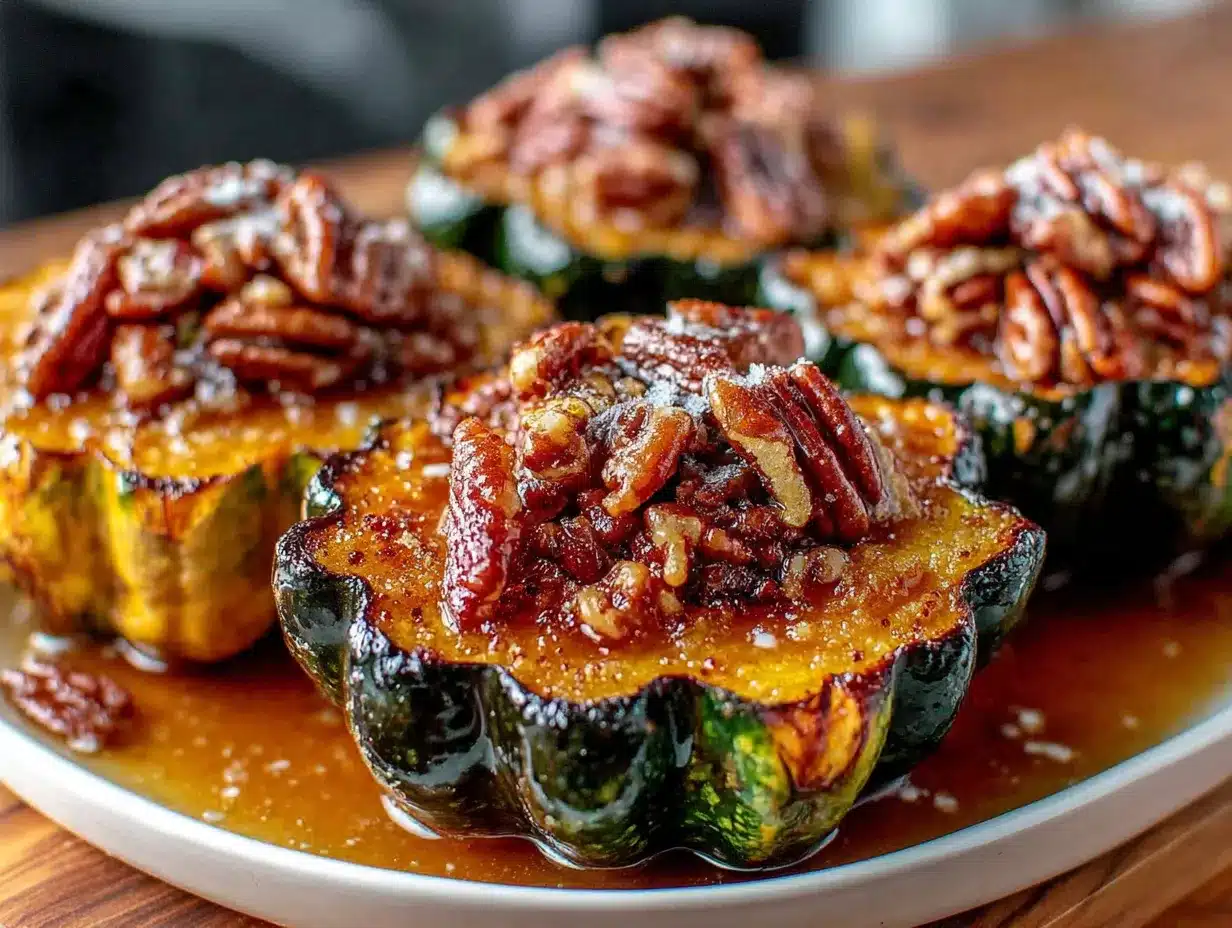
Let’s make this cozy roasted acorn squash with brown butter and pecans. I’ll walk you through every step, including the little tricks I’ve picked up along the way.
- Preheat your oven to 400°F (200°C). Line a large baking sheet with parchment paper or aluminum foil. Getting the oven hot before you start is key—you want that immediate blast of heat to start caramelizing the squash right away.
- Prepare the acorn squash. Using a sharp chef’s knife, carefully cut each squash in half from stem to tip. This can be tricky—acorn squash is tough. If you’re struggling, microwave the whole squash for 2 minutes to soften the skin slightly. Scoop out the seeds and stringy pulp with a spoon. I save the seeds to roast later (they make a great snack!). Slice each half into wedges about 1-inch thick. You should get about 8 wedges per squash.
- Brown the butter. In a small saucepan over medium heat, melt the 1/2 cup of butter. Stir constantly with a spatula or wooden spoon. The butter will foam, then bubble, then start to turn golden. Watch closely—this happens fast. Once you see brown specks forming at the bottom and the butter smells nutty (about 4-5 minutes), remove it from the heat immediately. Pour it into a heat-safe bowl to stop the cooking process. Don’t walk away during this step! I’ve burnt more butter than I care to admit while answering text messages.
- Toast the pecans (optional but recommended). In a dry skillet over medium heat, add the chopped pecans. Stir constantly for 2-3 minutes until they’re fragrant and slightly darkened. Be careful—they can burn quickly. Remove them from the pan immediately. If you’re using the sage leaves, you can fry them in the same pan with a little of the browned butter for 30 seconds per side until crispy.
- Make the glaze. In a mixing bowl, whisk together the browned butter, packed brown sugar, maple syrup, cinnamon, salt, and black pepper. Taste it—it should be sweet, salty, and slightly spicy. Adjust seasoning if needed. If you’re using fried sage, crumble it into the mixture now.
- Coat the squash. Add the acorn squash wedges to the bowl with the glaze. Use your hands or a spatula to toss everything together until each wedge is well coated. Don’t be shy—get in there and make sure every surface gets some of that liquid gold.
- Arrange on the baking sheet. Place the coated squash wedges in a single layer on the prepared baking sheet. Make sure they’re not touching each other—if they’re crowded, they’ll steam instead of roast. Pour any remaining glaze over the top. Sprinkle the toasted pecans evenly over the squash.
- Roast. Bake for 25-30 minutes, flipping the wedges halfway through. You’ll know they’re done when the squash is tender and easily pierced with a fork, and the edges are caramelized and slightly crispy. The pecans should be deep golden brown. If you want extra caramelization, switch the oven to broil for the last 1-2 minutes—but watch closely so nothing burns.
- Finish and serve. Remove from the oven and let it rest for 5 minutes. The squash will continue to soften slightly. Sprinkle with a pinch of flaky sea salt right before serving—this little burst of saltiness makes the sweetness pop. Transfer to a serving platter and drizzle any pan juices over the top.
Pro tip: If you’re making this for a crowd, you can prep the squash wedges and toast the pecans a day ahead. Store them separately in the fridge, then make the glaze and roast just before serving. The brown butter is best made fresh, but you can brown it up to 2 hours ahead and keep it at room temperature.
Cooking Tips & Techniques
After making this cozy roasted acorn squash more times than I can count, I’ve gathered some tips that will help you nail it every single time.
Don’t skip the browning step. I know it’s tempting to just melt the butter and move on, but browning it is what transforms this dish from good to unforgettable. The milk solids in the butter toast and develop those nutty, caramelized notes that make everything taste more complex. It takes less than 5 minutes, and the payoff is enormous. One tip: use a light-colored pan so you can actually see the color change. I’ve used dark nonstick pans and ended up with burnt butter more times than I’d like to admit.
Cut the squash evenly. This is crucial for even cooking. If some wedges are thicker than others, the thin ones will burn while the thick ones stay crunchy. Take your time when cutting, and aim for uniform 1-inch wedges. If you’re struggling with the tough skin, try cutting the squash into rings instead of wedges—it’s sometimes easier to manage.
Watch the oven like a hawk. Every oven runs differently. Your squash might be perfect at 25 minutes, or it might need 35. Start checking at 20 minutes. The squash should be easily pierced with a fork but still hold its shape. Overcooked squash turns mushy, and nobody wants that. Also, if you notice the pecans browning too quickly (they toast faster than the squash), you can tent the baking sheet with foil for the last 10 minutes.
Learn from my failures. I once tried to make this with frozen squash wedges because I was in a hurry. Disaster. The texture was watery, and the glaze didn’t stick. Always use fresh squash. Another time, I forgot to flip the wedges halfway through—the bottoms were burnt and the tops were undercooked. Set a timer, people. And that time I used margarine instead of butter? Let’s just say it was a sad, greasy mess. Real butter is non-negotiable here.
Multitasking is your friend. While the squash is roasting, you can clean up your workspace, set the table, or start on another dish. The oven does most of the work here. If you’re serving this as part of a larger meal, it pairs beautifully with roasted chicken, pork chops, or a simple green salad with vinaigrette.
Variations & Adaptations
This recipe is wonderfully flexible. Here are some ways to make it your own:
- Savory version: Skip the brown sugar and maple syrup. Instead, add 2 minced garlic cloves and 1 teaspoon of fresh rosemary to the browned butter. The result is a savory, herbaceous squash that pairs perfectly with roasted meats. I made this for a dinner party with roast chicken, and it was a hit.
- Spicy kick: Add 1/4 teaspoon of cayenne pepper or red pepper flakes to the brown butter mixture. The heat cuts through the sweetness and adds a surprising warmth. My brother-in-law, who claims to hate sweet dishes, devoured this version at Thanksgiving.
- Vegan adaptation: Use coconut oil or vegan butter instead of dairy butter. Note that coconut oil won’t brown the same way, but it still adds richness. Maple syrup adds enough sweetness that you can skip the brown sugar if you’re avoiding refined sugar.
- Different nuts: Walnuts, hazelnuts, or even pumpkin seeds work beautifully. Toast them exactly the same way. I’ve also used a mix of pecans and walnuts when I was running low on one—the combination was lovely.
- Herb-infused butter: Add 2-3 sprigs of fresh thyme or rosemary to the butter while it browns. The herbs infuse the butter with their flavor, and you can remove them before pouring the butter over the squash. This is my go-to for holiday dinners when I want something a little more elegant.
- Maple-balsamic twist: Replace the maple syrup with 2 tablespoons of balsamic vinegar. The acidity cuts through the richness and adds a tangy complexity. It sounds weird, but trust me—it works. I discovered this accidentally when I ran out of maple syrup and grabbed the wrong bottle.
Serving & Storage Suggestions
This cozy roasted acorn squash is best served warm, straight from the oven. The contrast between the caramelized edges and the tender interior is at its peak within 10 minutes of coming out of the oven. Here’s how to serve and store it:
Serving temperature and presentation: Arrange the squash wedges on a warm platter, drizzle any remaining pan juices over the top, and sprinkle with flaky sea salt and a few fresh sage leaves for color. The deep orange of the squash against the green sage is gorgeous—it looks like fall on a plate. For a dinner party, I sometimes arrange the wedges in a circular pattern with the pecans scattered in the center.
Complementary dishes: This squash pairs beautifully with roasted chicken, pork tenderloin, or pan-seared salmon. For a vegetarian meal, serve it alongside a hearty grain salad with farro and roasted Brussels sprouts. It also works as a side dish for Thanksgiving or Christmas dinner—it’s a lighter alternative to sweet potato casserole.
Storage: Leftover squash can be stored in an airtight container in the refrigerator for up to 4 days. The texture will soften slightly, but the flavor actually improves as the squash absorbs more of the brown butter glaze. To reheat, place the wedges on a baking sheet in a 350°F (175°C) oven for 10-15 minutes until warmed through. The microwave works in a pinch, but the squash will be softer and less caramelized.
Freezing: I don’t recommend freezing this dish. The squash becomes watery and mushy when thawed, and the pecans lose their crunch. If you must freeze, do so before adding the pecans, and add fresh toasted pecans after reheating.
Flavor development: Interestingly, the flavors meld and deepen overnight. The squash absorbs more of the brown butter and maple, becoming even more delicious. If you’re meal-prepping, you can make this a day ahead and reheat it—just add a fresh sprinkle of flaky salt before serving.
Nutritional Information & Benefits
This cozy roasted acorn squash isn’t just delicious—it’s packed with nutrients too. Here’s what you’re getting in each serving (based on 6 servings):
Estimated nutritional values per serving: Calories: 285 | Fat: 22g | Saturated Fat: 10g | Carbohydrates: 22g | Fiber: 4g | Sugar: 12g | Protein: 3g | Sodium: 210mg | Vitamin A: 45% DV | Vitamin C: 25% DV | Potassium: 600mg
Health benefits of key ingredients: Acorn squash is a powerhouse of vitamin A (great for eye health), vitamin C (immune support), and potassium (heart health). The fiber content helps with digestion and keeps you feeling full. Pecans are rich in healthy monounsaturated fats, which are good for heart health, and they provide magnesium and zinc. While butter adds saturated fat, using it in moderation as part of a balanced diet is perfectly fine—and the flavor payoff is worth it.
Dietary considerations: This recipe is naturally gluten-free and can be made vegan with simple substitutions. It’s also relatively low in carbs compared to many side dishes, making it suitable for those watching their carbohydrate intake. The main allergens are dairy (butter) and tree nuts (pecans).
My personal wellness take: I love that this dish feels indulgent but is actually pretty wholesome. The sweetness comes mostly from the squash itself, with just a little added sugar and maple syrup. It’s the kind of recipe that satisfies your craving for something cozy and comforting without leaving you feeling heavy or guilty. Plus, eating those beautiful orange vegetables is always a good idea.
Conclusion
Honestly, this cozy roasted acorn squash with brown butter and pecans has become my secret weapon. It’s the dish I bring when I need to impress but have zero time. It’s the side dish that steals the show at holiday dinners. And it’s the recipe I turn to on cold nights when I want something that feels like a warm hug. The combination of caramelized squash, nutty brown butter, and crunchy pecans is simple but somehow magical.
I hope you’ll give it a try—and don’t be afraid to make it your own. Swap in different nuts, add some spice, or go the savory route. The beauty of this recipe is that it’s forgiving and flexible. And if you’re anything like me, you’ll probably make it so often that you’ll have it memorized within a month.
I’d love to hear how yours turns out! Leave a comment below and let me know if you tried any variations, or tag me in your photos on social media. Did your family love it? Did you discover a new favorite combination? Share your wins—and your happy accidents too. After all, the best recipes often come from panicked potluck moments and burnt butter. Happy cooking, friends!
Frequently Asked Questions
Can I use butternut squash instead of acorn squash?
Absolutely! Butternut squash works beautifully in this recipe. Cut it into 1-inch cubes or wedges, and note that it may take slightly longer to roast—about 30-35 minutes. The flavor is slightly sweeter and the texture is creamier than acorn squash. Delicata squash is another excellent option, and you can eat the skin, which saves you peeling time.
How do I prevent the brown butter from burning?
The key is to watch it constantly and remove it from the heat as soon as you see brown specks forming. Use a light-colored pan so you can see the color change clearly. Swirl the pan occasionally to ensure even browning. Once you remove it from the heat, pour it into a separate bowl immediately—the residual heat in the pan can continue cooking it and turn it from perfect to burnt in seconds.
Can I make this dish ahead of time?
Yes, with some caveats. You can prep the squash wedges and toast the pecans up to a day ahead. Store them separately in the fridge. Make the brown butter fresh on the day you’re serving (or up to 2 hours ahead at room temperature). Assemble and roast just before serving for the best texture. Leftovers reheat well in a 350°F oven for 10-15 minutes.
Is this recipe suitable for meal prep?
It works okay for meal prep, but the squash will soften over time. If you’re meal-prepping for the week, I recommend roasting the squash and storing it separately from the pecans. Add the pecans just before serving to keep them crunchy. The flavors actually deepen overnight, so day-old squash can be even more delicious—just don’t expect the same crisp edges.
What can I substitute for maple syrup?
Honey is the best substitute—it has a similar consistency and sweetness level. Agave nectar or brown rice syrup also work. If you’re avoiding liquid sweeteners, you can increase the brown sugar to 3 tablespoons and add 1 tablespoon of water to thin it out. For a sugar-free option, use a monk fruit sweetener blended with a little water, though the caramelization won’t be quite the same.
Pin This Recipe!
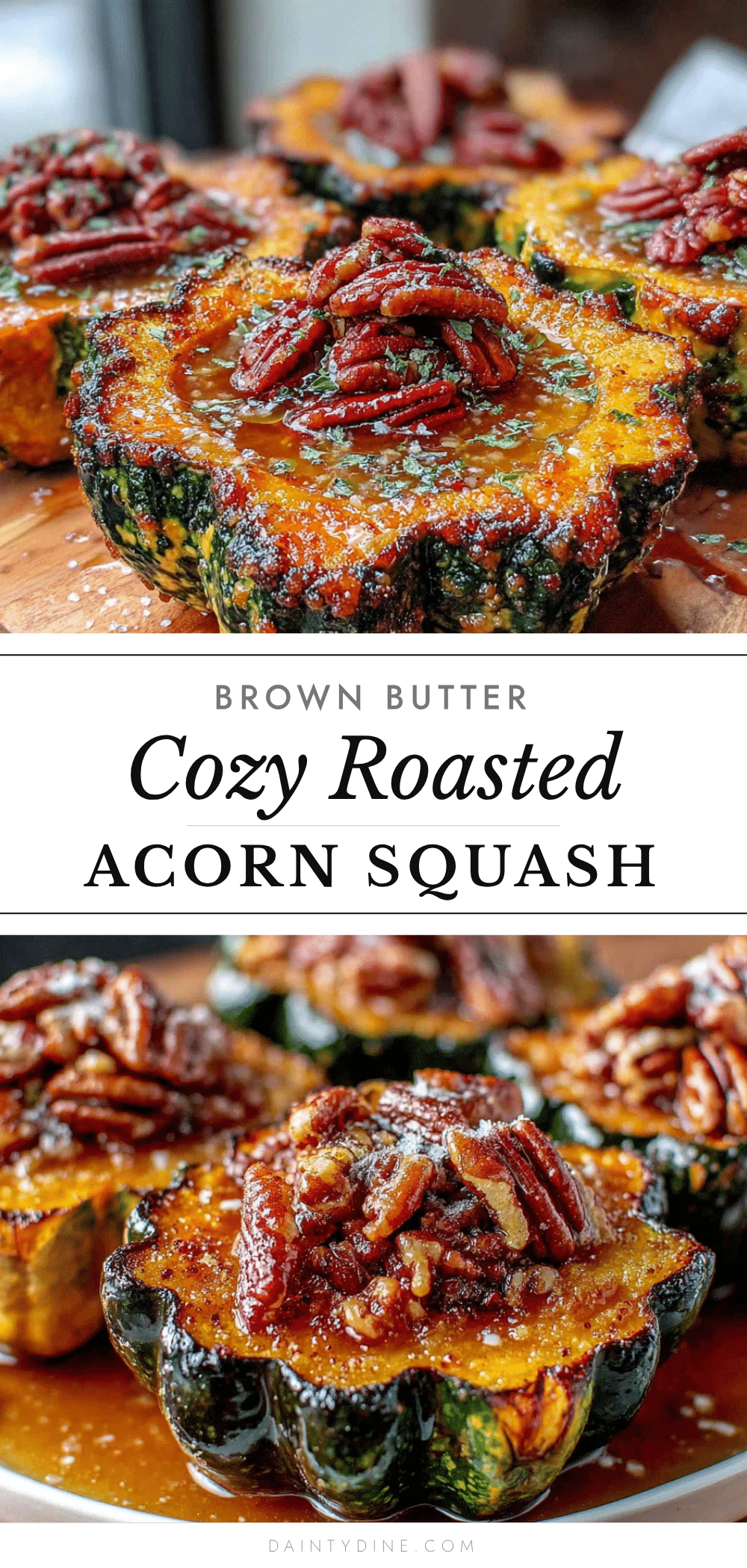
Cozy Roasted Acorn Squash with Brown Butter and Pecans
This cozy roasted acorn squash with brown butter and pecans is a simple yet elegant side dish that comes together in about 40 minutes. The natural sweetness of the squash caramelizes in the oven, while the nutty brown butter and crunchy pecans add rich, comforting flavor.
- Prep Time: 10 minutes
- Cook Time: 30 minutes
- Total Time: 40 minutes
- Yield: 6 servings 1x
- Category: Side Dish
- Cuisine: American
Ingredients
- 2 medium acorn squash
- 1/2 cup (1 stick) unsalted butter
- 1 cup roughly chopped pecans
- 2 tablespoons packed brown sugar
- 2 tablespoons pure maple syrup
- 1 teaspoon ground cinnamon
- 1/2 teaspoon salt, plus more for finishing
- 1/4 teaspoon freshly ground black pepper
- 8–10 fresh sage leaves (optional but recommended)
Instructions
- Preheat your oven to 400°F (200°C). Line a large baking sheet with parchment paper or aluminum foil.
- Prepare the acorn squash: Using a sharp chef’s knife, carefully cut each squash in half from stem to tip. Scoop out the seeds and stringy pulp with a spoon. Slice each half into wedges about 1-inch thick (about 8 wedges per squash).
- Brown the butter: In a small saucepan over medium heat, melt the 1/2 cup of butter. Stir constantly. The butter will foam, then bubble, then start to turn golden. Once you see brown specks forming at the bottom and the butter smells nutty (about 4-5 minutes), remove it from the heat immediately and pour into a heat-safe bowl.
- Toast the pecans (optional but recommended): In a dry skillet over medium heat, add the chopped pecans. Stir constantly for 2-3 minutes until fragrant and slightly darkened. Remove from pan immediately. If using sage leaves, fry them in the same pan with a little browned butter for 30 seconds per side until crispy.
- Make the glaze: In a mixing bowl, whisk together the browned butter, packed brown sugar, maple syrup, cinnamon, salt, and black pepper. If using fried sage, crumble it into the mixture now.
- Coat the squash: Add the acorn squash wedges to the bowl with the glaze. Use your hands or a spatula to toss until each wedge is well coated.
- Arrange on the baking sheet: Place the coated squash wedges in a single layer on the prepared baking sheet, making sure they are not touching. Pour any remaining glaze over the top. Sprinkle the toasted pecans evenly over the squash.
- Roast: Bake for 25-30 minutes, flipping the wedges halfway through, until the squash is tender and easily pierced with a fork, and the edges are caramelized and slightly crispy. For extra caramelization, switch the oven to broil for the last 1-2 minutes.
- Finish and serve: Remove from the oven and let rest for 5 minutes. Sprinkle with a pinch of flaky sea salt right before serving. Transfer to a serving platter and drizzle any pan juices over the top.
Notes
For a dairy-free version, use vegan butter or coconut oil. No pecans? Walnuts or hazelnuts work beautifully. For a lower-sugar option, reduce brown sugar to 1 tablespoon or omit entirely. If acorn squash isn’t available, butternut or delicata squash are excellent substitutes. The brown butter can be made up to 2 hours ahead and kept at room temperature. Leftovers can be stored in an airtight container in the refrigerator for up to 4 days; reheat in a 350°F oven for 10-15 minutes.
Nutrition
- Serving Size: 1 serving (about 4-5
- Calories: 285
- Sugar: 12
- Sodium: 210
- Fat: 22
- Saturated Fat: 10
- Carbohydrates: 22
- Fiber: 4
- Protein: 3
Keywords: roasted acorn squash, brown butter, pecans, fall side dish, Thanksgiving, easy, gluten-free