Love this? Save it for later!
Share the inspiration with your friends
My neighbor Mark wasn’t trying to impress anyone. I’d stopped by to borrow a ladder and the smell hit me before I even made it past his screen door. That deep, winey, almost woodsy scent that makes you stop mid-sentence and just breathe in. He was standing at the stove in an old band t-shirt, stirring this massive pot with a wooden spoon that looked older than both of us combined. “It’s just stew,” he said when I asked what was cooking. Just stew. Like it was nothing special. Like the entire apartment hadn’t been transformed into the coziest French bistro that never existed.
I stood there for a solid twenty minutes, ladder completely forgotten, watching him work. He didn’t sear the meat in batches like the recipes always say. He just dumped it all in, let it brown however it wanted, and shrugged when I pointed it out. “Works fine,” he said. And honestly, it did. Maybe you’ve been there—watching someone cook something incredible while they act like it’s no big deal, and you’re already mentally rearranging your entire week to make it yourself.
That night, I went home and tried to recreate it from memory. The first attempt was good. The second was better. But this version right here? This is the one that finally made me stop tweaking. It’s the stew I make when I want the kitchen to smell like a hug for six hours straight. The one that makes people walk in and say “Wow” before they even take their coat off. And honestly, it’s not complicated at all. That’s the best part.
Why You’ll Love This Recipe
I’ve tested this red wine beef stew more times than I care to count, and I can tell you with full confidence—this is the one worth keeping. It’s the kind of meal that makes a Tuesday night feel like a Sunday supper, and it does it without requiring a culinary degree or a pantry full of specialty ingredients.
- One-Pot Wonder : Everything comes together in a single Dutch oven or heavy pot. Less cleanup, more time relaxing.
- Deep, Complex Flavor : The red wine and root vegetables create a broth that tastes like it simmered all day—because it did, but with almost no active effort from you.
- Budget-Friendly : Chuck roast is affordable, and the vegetables are pantry staples. Fancy flavor without the fancy price tag.
- Weekend Prep, Weeknight Win : Make it ahead and it only gets better. The leftovers are legendary.
- Naturally Hearty : Packed with protein and fiber-rich vegetables, this stew is a meal in a bowl. No sides needed unless you want crusty bread for dipping, which you definitely do.
What makes this recipe different from the dozens of beef stews out there? It’s the balance. The wine isn’t shy, but it doesn’t overpower. The vegetables melt into the broth just enough to thicken it naturally, without any flour or cornstarch tricks. And the beef? It gets so tender you can break it apart with a fork. This isn’t just another version—it’s the version I’ve landed on after years of tweaking, and I think you’ll love it too.
What Ingredients You Will Need
This recipe uses simple, wholesome ingredients to deliver bold flavor and satisfying texture without the fuss. Most of these are probably already in your kitchen, which is exactly how I like to cook.
- Beef chuck roast, 2 pounds, cut into 1.5-inch cubes (look for good marbling—it keeps the meat tender during long cooking)
- Red wine, 1.5 cups (use something you’d actually drink—I prefer a medium-bodied Merlot or Côtes du Rhône)
- Beef broth, 4 cups, low-sodium (I like Better Than Bouillon for the richest flavor)
- Carrots, 3 large, peeled and cut into 1-inch chunks
- Celery, 3 stalks, sliced into half-inch pieces
- Yellow onion, 1 large, diced
- Garlic, 4 cloves, minced
- Russet potatoes, 2 medium, peeled and cubed (they break down slightly and thicken the broth)
- Parsnips, 2 medium, peeled and sliced (adds a subtle sweetness that balances the wine)
- Tomato paste, 2 tablespoons (adds depth and helps thicken)
- All-purpose flour, 3 tablespoons (for coating the beef—creates a nice crust)
- Dried thyme, 1 teaspoon
- Dried rosemary, 1 teaspoon
- Bay leaves, 2
- Olive oil, 2 tablespoons
- Salt and black pepper, to taste
- Fresh parsley, for garnish (optional, but nice)
A few notes on ingredients: If you can’t find parsnips, just add an extra carrot. The potatoes can be swapped for sweet potatoes if you want a slightly sweeter stew. And please, don’t use cooking wine—it has added salt and preservatives that throw off the whole dish. A $10 bottle of red is perfect here.
Equipment Needed
You don’t need a fancy kitchen to make this stew, but a few key pieces make the process smoother.
- Dutch oven or heavy-bottomed pot (5-6 quart size is ideal—I use my trusty Le Creuset, but any heavy pot works)
- Sharp chef’s knife (a dull knife makes cutting beef and root vegetables frustrating)
- Cutting board
- Wooden spoon (for stirring without scratching your pot)
- Measuring cups and spoons
- Tongs (for flipping the beef as it browns)
- Mixing bowl (for tossing the beef with flour and seasonings)
If you don’t have a Dutch oven, a large stainless steel pot or even a slow cooker will work. For the stovetop version, just make sure your pot has a tight-fitting lid. I’ve made this in a cheap enameled pot from a discount store and it turned out just as good—the pot doesn’t make the stew, the technique does.
Preparation Method
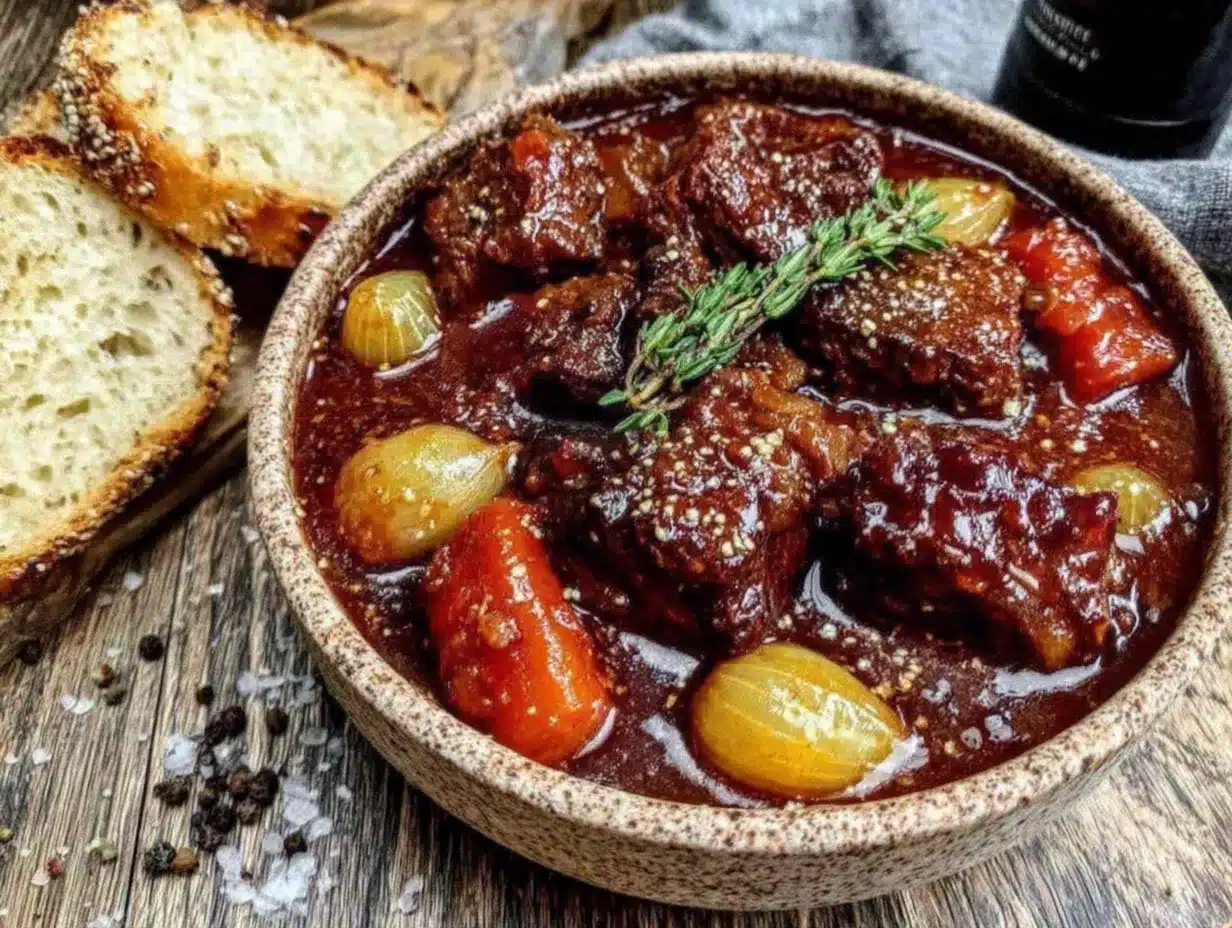
Let’s get cooking. This takes about 20 minutes of active prep and then mostly hands-off simmering. Trust the process.
-
Prep the beef. Pat the chuck roast cubes dry with paper towels. In a mixing bowl, combine the flour, 1 teaspoon salt, and 1/2 teaspoon black pepper. Toss the beef cubes in the flour mixture until evenly coated. Shake off any excess.
-
Brown the beef. Heat 1 tablespoon of olive oil in your Dutch oven over medium-high heat. Add half the beef cubes in a single layer—don’t crowd the pot. Let them brown undisturbed for 3-4 minutes per side. You want a deep golden crust. Transfer to a plate and repeat with the remaining oil and beef. This step takes patience but it’s where all the flavor starts.
-
Sauté the aromatics. Reduce heat to medium. Add the diced onion and cook for 4-5 minutes until softened and translucent. Add the minced garlic and cook for 30 seconds until fragrant. Scrape up any browned bits from the bottom of the pot—that’s pure flavor.
-
Add tomato paste and wine. Stir in the tomato paste and cook for 1 minute, stirring constantly. Pour in the red wine and bring to a simmer, scraping up any remaining browned bits. Let it bubble for 2-3 minutes to cook off some of the alcohol.
-
Return the beef and add broth. Put the browned beef back in the pot, along with any juices that accumulated on the plate. Pour in the beef broth, add the thyme, rosemary, and bay leaves. Stir everything together. Bring to a gentle simmer.
-
Add the root vegetables. Add the carrots, celery, potatoes, and parsnips. Stir to combine. The liquid should just cover the ingredients—if it doesn’t, add a splash more broth or water.
-
Simmer low and slow. Cover the pot with the lid slightly ajar to let steam escape. Reduce heat to low and let it simmer gently for 1.5 to 2 hours. Stir occasionally, checking that the liquid hasn’t reduced too much. The stew is ready when the beef is fork-tender and the vegetables are soft but not falling apart.
-
Adjust seasoning and serve. Remove the bay leaves. Taste and add more salt and pepper if needed. The flavor will deepen as it sits, so don’t oversalt early. Ladle into bowls and garnish with fresh parsley if you like.
A quick sensory cue: when it’s done, the broth should be rich and slightly thickened from the potatoes breaking down. The beef should offer no resistance when you pierce it with a fork. If it’s still tough, give it another 20 minutes.
Cooking Tips & Techniques
I’ve made this stew at least twenty times, and I’ve learned a few things the hard way. Here’s what I wish someone had told me.
Don’t skip the browning. I know it’s tempting to just dump everything in and walk away, but that golden crust on the beef is where the deep, savory flavor comes from. It’s called the Maillard reaction, and it’s not optional if you want restaurant-quality stew. I once rushed this step and ended up with stew that tasted flat. Never again.
Use the right wine. The wine is a major flavor component, so use something you’d actually drink. A dry red like Merlot, Cabernet Sauvignon, or Côtes du Rhône works beautifully. Avoid sweet wines like port or cooking wine. I once used a leftover bottle of cheap red blend and the stew had a weird, jammy aftertaste. Learn from my mistake.
Low and slow is the only way. This isn’t a recipe you can rush. Simmering at a gentle bubble—not a rolling boil—breaks down the connective tissue in the chuck roast, making it tender. If you boil it hard, the meat will be tough and dry. Trust the low heat. Your patience will be rewarded.
Season in layers. Add salt at each stage—when browning the beef, when sautéing the onions, and at the end. This builds flavor gradually. But go easy at the beginning because the broth reduces and concentrates the saltiness. You can always add more at the table.
Make it ahead. This stew is actually better the next day. The flavors meld and deepen overnight. I often make it on a Sunday and serve it Monday. Just reheat gently on the stovetop.
Variations & Adaptations
One of the best things about this stew is how flexible it is. Here are a few ways to make it your own.
- Slow Cooker Version : Brown the beef and sauté the aromatics on the stovetop first, then transfer everything to a slow cooker. Cook on low for 7-8 hours or high for 4-5 hours. Add the potatoes and parsnips in the last 2 hours so they don’t turn to mush.
- Instant Pot Version : Use the sauté function to brown the beef and cook the aromatics. Add the wine and deglaze the pot. Add all remaining ingredients, close the lid, and cook on high pressure for 35 minutes with a natural release.
- Gluten-Free Adaptation : Skip the flour coating on the beef. Instead, use 2 tablespoons of cornstarch or arrowroot powder mixed with 2 tablespoons of cold water to thicken the broth at the end. Add it during the last 10 minutes of simmering.
- Vegetable Variations : Swap the potatoes for sweet potatoes, add a cup of frozen peas in the last 10 minutes, or throw in some mushrooms for extra umami. I’ve also made this with turnips instead of parsnips and it was fantastic.
- Herb Swaps : If you don’t have fresh thyme and rosemary, use 1 teaspoon dried Italian seasoning instead. Or add a sprig of fresh sage for a slightly different flavor profile.
I once made a version with a leftover bottle of Zinfandel and added a pinch of smoked paprika. It wasn’t traditional, but it was delicious. Don’t be afraid to experiment.
Serving & Storage Suggestions
This stew is a meal in itself, but a few thoughtful accompaniments make it even better.
Serving : Ladle the stew into wide, shallow bowls. A piece of crusty bread or a warm baguette is essential for soaking up every last drop of that wine-infused broth. A simple green salad with a tangy vinaigrette cuts through the richness nicely. For a cozy presentation, garnish with fresh parsley and a sprinkle of flaky sea salt.
Storage : Let the stew cool completely before storing. Transfer to an airtight container and refrigerate for up to 4 days. The flavors actually improve after a day or two as they meld together. This is one of those rare dishes that’s better as leftovers.
Freezing : This stew freezes beautifully. Portion it into freezer-safe containers or zip-top bags, leaving some headroom for expansion. Freeze for up to 3 months. Thaw overnight in the refrigerator before reheating.
Reheating : Gently reheat on the stovetop over medium-low heat, stirring occasionally. Add a splash of broth or water if the stew has thickened too much. You can also microwave individual portions in 30-second bursts, stirring between each. Avoid boiling, which can make the beef tough.
Make-Ahead Tip : I often make this stew a day ahead specifically because the flavor deepens overnight. It’s the perfect dish for entertaining—you can focus on your guests instead of the stove.
Nutritional Information & Benefits
This stew is hearty comfort food, but it also packs some surprising nutritional benefits.
Estimated per serving (1.5 cups) : Calories: 420, Protein: 35g, Fat: 18g, Carbohydrates: 28g, Fiber: 5g, Sugar: 8g, Sodium: 680mg.
Health benefits : Beef chuck is an excellent source of high-quality protein, iron, and B vitamins, which support energy metabolism and red blood cell production. The root vegetables—carrots, parsnips, and potatoes—provide fiber, vitamin A, and antioxidants. The red wine contains resveratrol, an antioxidant linked to heart health (in moderation, of course).
Dietary considerations : This recipe is naturally dairy-free and can be made gluten-free with the cornstarch substitution mentioned above. It’s also relatively low in sugar and contains no added sugars beyond what’s naturally in the vegetables and wine.
Allergens : The original recipe contains gluten (from the flour coating) and sulfites (from the wine). The gluten-free adaptation removes the gluten concern.
I love that this stew feels indulgent but is actually quite balanced. It’s the kind of meal that fills you up without weighing you down, which is exactly what I want on a cold winter night.
Conclusion
This cozy red wine beef stew with root vegetables is more than just a recipe—it’s a ritual. It’s the smell that fills your home on a chilly Sunday afternoon, the meal that brings people to the table without being asked, and the leftovers you’ll look forward to all day at work. It’s proof that simple ingredients, treated with care, can create something truly special.
I hope you make this stew and make it your own. Add extra garlic if that’s your thing. Throw in some mushrooms. Serve it over mashed potatoes instead of with bread. The beauty of a recipe like this is that it’s a starting point, not a rulebook. The best version is the one that tastes like home to you.
If you try this recipe, I’d love to hear about it. Leave a comment below and let me know how it turned out—did you make any substitutions? Did your family ask for seconds? Did the smell make someone stop by your kitchen uninvited? (It happens more often than you’d think.) Share your experience and tag me in your photos. Happy cooking, friends.
Frequently Asked Questions
Can I use a different cut of beef?
Absolutely. Chuck roast is ideal because it has good marbling that becomes tender during long cooking. But you can also use brisket, bottom round, or even stew meat labeled for braising. Just avoid lean cuts like sirloin, which will dry out. If you use a leaner cut, reduce the cooking time by about 30 minutes and check for tenderness early.
Can I make this in a slow cooker?
Yes, and it works beautifully. Follow the recipe through step 4 (adding the wine and tomato paste), then transfer everything to a slow cooker. Add the broth and vegetables, then cook on low for 7-8 hours or high for 4-5 hours. Add the potatoes and parsnips in the last 2 hours to prevent them from turning mushy. Thicken the broth at the end with a cornstarch slurry if needed.
Can I skip the wine?
You can, but the flavor will be different. The wine adds acidity and depth that really define this stew. If you need to skip it, substitute an equal amount of beef broth plus 2 tablespoons of balsamic vinegar or red wine vinegar. It won’t be identical, but it will still be delicious. For a non-alcoholic option, use non-alcoholic red wine or pomegranate juice with a splash of vinegar.
How do I thicken the stew if it’s too thin?
If your stew is thinner than you’d like, make a cornstarch slurry by mixing 1 tablespoon of cornstarch with 2 tablespoons of cold water. Stir it into the simmering stew and cook for 2-3 minutes until thickened. Alternatively, you can mash a few of the cooked potatoes against the side of the pot and stir them in—they’ll naturally thicken the broth. This is my preferred method because it adds body without altering the flavor.
Can I add other vegetables?
Definitely. This stew is very forgiving. Frozen peas added in the last 10 minutes add a pop of color and sweetness. Mushrooms, celery root, turnips, or even butternut squash all work well. Just be mindful of cooking times—harder vegetables like carrots and potatoes need the full simmer time, while softer vegetables like peas or zucchini should be added near the end.
Pin This Recipe!
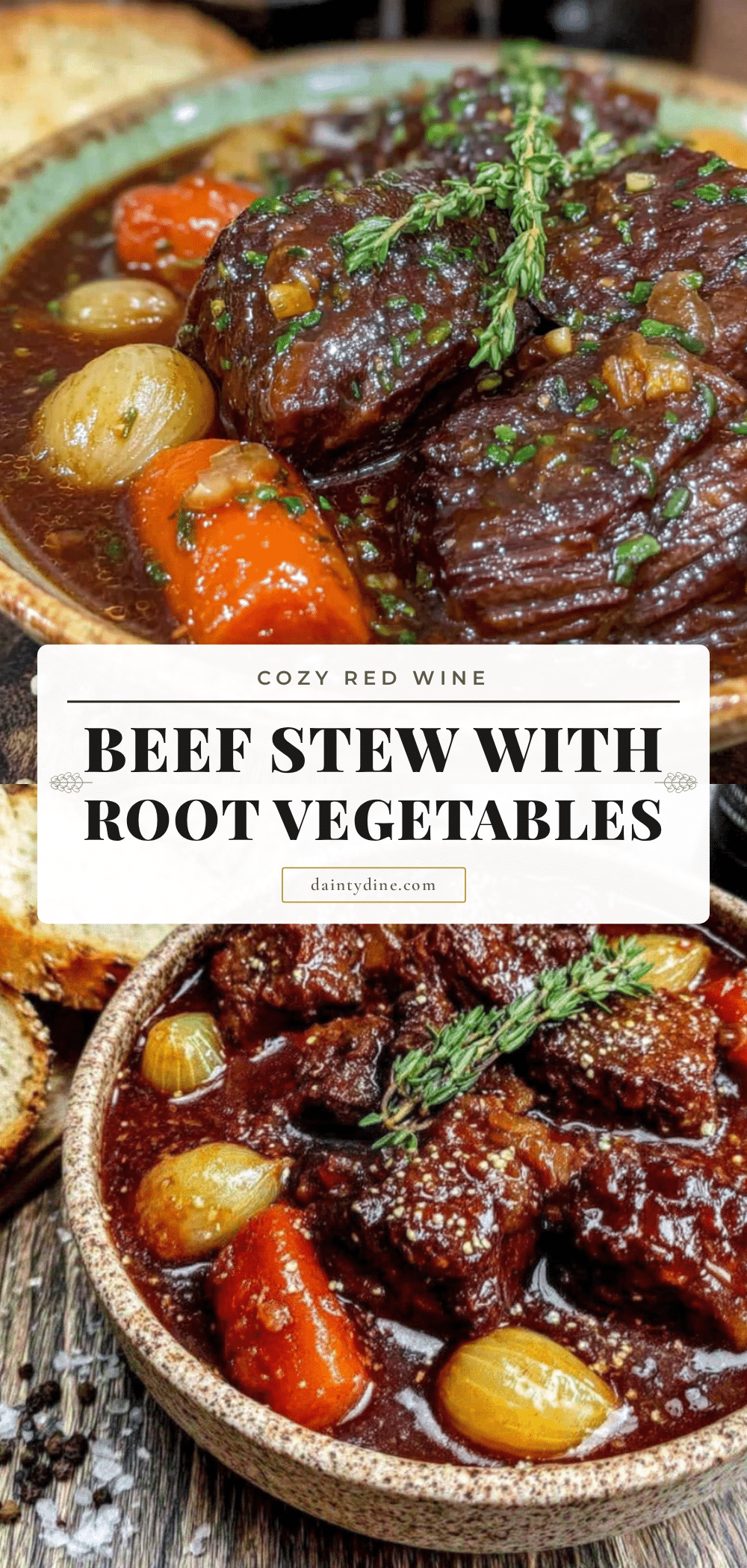
Cozy Red Wine Beef Stew with Root Vegetables: Easy One-Pot Dinner
A deeply flavorful, one-pot beef stew simmered with red wine and root vegetables until the meat is fork-tender and the broth is rich and satisfying. This comforting meal is perfect for chilly nights and tastes even better the next day.
- Prep Time: 20 minutes
- Cook Time: 1 hour 30 minutes to 2 hours
- Total Time: 1 hour 50 minutes to 2 hours 20 minutes
- Yield: 6 servings 1x
- Category: Main Course
- Cuisine: French
Ingredients
- 2 pounds beef chuck roast, cut into 1.5-inch cubes
- 1.5 cups red wine (such as Merlot or Côtes du Rhône)
- 4 cups low-sodium beef broth
- 3 large carrots, peeled and cut into 1-inch chunks
- 3 stalks celery, sliced into half-inch pieces
- 1 large yellow onion, diced
- 4 cloves garlic, minced
- 2 medium Russet potatoes, peeled and cubed
- 2 medium parsnips, peeled and sliced
- 2 tablespoons tomato paste
- 3 tablespoons all-purpose flour
- 1 teaspoon dried thyme
- 1 teaspoon dried rosemary
- 2 bay leaves
- 2 tablespoons olive oil
- Salt and black pepper, to taste
- Fresh parsley, for garnish (optional)
Instructions
- Prep the beef: Pat the chuck roast cubes dry with paper towels. In a mixing bowl, combine the flour, 1 teaspoon salt, and 1/2 teaspoon black pepper. Toss the beef cubes in the flour mixture until evenly coated. Shake off any excess.
- Brown the beef: Heat 1 tablespoon of olive oil in your Dutch oven over medium-high heat. Add half the beef cubes in a single layer—don’t crowd the pot. Let them brown undisturbed for 3-4 minutes per side. You want a deep golden crust. Transfer to a plate and repeat with the remaining oil and beef.
- Sauté the aromatics: Reduce heat to medium. Add the diced onion and cook for 4-5 minutes until softened and translucent. Add the minced garlic and cook for 30 seconds until fragrant. Scrape up any browned bits from the bottom of the pot.
- Add tomato paste and wine: Stir in the tomato paste and cook for 1 minute, stirring constantly. Pour in the red wine and bring to a simmer, scraping up any remaining browned bits. Let it bubble for 2-3 minutes to cook off some of the alcohol.
- Return the beef and add broth: Put the browned beef back in the pot, along with any juices that accumulated on the plate. Pour in the beef broth, add the thyme, rosemary, and bay leaves. Stir everything together. Bring to a gentle simmer.
- Add the root vegetables: Add the carrots, celery, potatoes, and parsnips. Stir to combine. The liquid should just cover the ingredients—if it doesn’t, add a splash more broth or water.
- Simmer low and slow: Cover the pot with the lid slightly ajar to let steam escape. Reduce heat to low and let it simmer gently for 1.5 to 2 hours. Stir occasionally, checking that the liquid hasn’t reduced too much. The stew is ready when the beef is fork-tender and the vegetables are soft but not falling apart.
- Adjust seasoning and serve: Remove the bay leaves. Taste and add more salt and pepper if needed. Ladle into bowls and garnish with fresh parsley if you like.
Notes
Don’t skip browning the beef—it’s essential for deep flavor. Use a dry red wine you’d drink, not cooking wine. Simmer low and slow; do not boil. Season in layers. The stew tastes even better the next day. For a gluten-free version, skip the flour and thicken with a cornstarch slurry at the end.
Nutrition
- Serving Size: 1.5 cups
- Calories: 420
- Sugar: 8
- Sodium: 680
- Fat: 18
- Saturated Fat: 6
- Carbohydrates: 28
- Fiber: 5
- Protein: 35
Keywords: beef stew, red wine stew, one-pot dinner, comfort food, winter recipe, root vegetables, Dutch oven, easy dinner