Love this? Save it for later!
Share the inspiration with your friends
Let me tell you how I ended up with what is now my go-to fall stew recipe. It came from the most unexpected source — my accountant. I know, right? I was sitting in his office last October, half-listening to him explain something about quarterly estimates, when he started talking about beef stew. Not tax law. Beef stew. He was describing how his grandmother would start it before sunrise, layering root vegetables and seared meat in a cast iron pot, and how the smell would follow him through his whole childhood. I almost asked him to repeat the numbers he’d just said, but honestly, I was too busy mentally taking notes on the stew.
He told me the secret was in the timing. Not the cooking time, but the moment you add each vegetable. I scribbled his instructions on a sticky note shaped like a pig — it was the only paper on his desk — and shoved it in my coat pocket. That night, I tried to recreate what he’d described, and I messed it up twice. The carrots turned to mush, and the beef was tougher than I’d like to admit. But by the third try, something clicked. I realized his grandmother’s method was perfect for a crockpot, which felt like cheating, but also felt like the smartest thing I could do on a busy Tuesday.
The result is this cozy crockpot beef and vegetable fall stew. It’s the kind of meal that fills your house with that deep, savory aroma that makes everyone wander into the kitchen asking, “What’s for dinner?” Maybe you’ve been there — standing over a pot, wondering if you should have started earlier, hoping it turns out okay. This recipe takes the guesswork out of it. You just layer, set, and let the slow cooker do its thing. I keep making it because it tastes like someone spent all day tending the stove, when really, I was just folding laundry and answering emails. That’s the kind of magic I can get behind.
Why You’ll Love This Recipe
This isn’t just another stew recipe you’ll bookmark and forget. I’ve tested this version at least seven times — through different cuts of beef, varying root vegetable combinations, and even a disastrous attempt with too much thyme that tasted like a pine forest. I’ve learned what works, and I’m sharing the best version so you don’t have to repeat my mistakes. Here’s why this one stands out:
- Quick & Easy: It takes about 20 minutes of active prep. After that, your crockpot handles everything. Perfect for those days when you want a home-cooked meal but don’t have hours to stand over a stove.
- Simple Ingredients: No fancy grocery trips needed. Beef chuck, potatoes, carrots, onions, celery, and a few pantry staples. You probably already have most of it.
- Perfect for Fall: This is the definition of seasonal comfort food. It’s made for chilly evenings, football Sundays, or the kind of rainy day that calls for something warm in a bowl.
- Crowd-Pleaser: I’ve served this to picky eaters, vegetarians who made an exception, and my uncle who “doesn’t do vegetables.” Everyone cleaned their bowl. It’s that good.
- Unbelievably Delicious: The beef comes out fork-tender, the broth is rich and silky, and the vegetables hold their shape without turning to mush. The texture and flavor combo is next-level comfort food.
What makes this recipe different from the rest is the layering technique. Most stew recipes just dump everything in the pot at once, which turns vegetables into a sad, overcooked mess. I borrowed my accountant’s grandmother’s method — searing the beef first, then adding heartier vegetables earlier and delicate ones later. It sounds simple, but it changes everything. This isn’t just another version of beef stew. It’s the version that makes you close your eyes after the first bite and forget about your long day.
What Ingredients You Will Need
This recipe uses humble, everyday ingredients that come together to create something deeply satisfying. The magic is in how they interact over low, slow heat. Here’s what you’ll need and why each one matters:
- 2 pounds beef chuck, cut into 1.5-inch cubes: Chuck is the hero here. It has enough marbling to stay moist during long cooking, and it breaks down into that melt-in-your-mouth texture you want in a stew. I’ve tried sirloin, and it turned out dry. Stick with chuck. (Look for pieces with nice fat streaks running through them.)
- 1 tablespoon olive oil: For searing the beef. You don’t need fancy extra-virgin here — regular olive oil works perfectly. Avocado oil is a good substitute if you have it.
- 3 medium carrots, peeled and cut into 1-inch chunks: Carrots add sweetness that balances the savory beef. I like to cut them on a slight diagonal for a prettier presentation, but straight chunks work fine too.
- 3 celery stalks, cut into 1-inch pieces: Celery brings a subtle earthiness and that classic stew aroma. Don’t skip it — it adds depth you’ll miss if it’s gone.
- 1 large yellow onion, diced: Onion forms the flavor base. Yellow onions are my go-to for stew because they’re mellow and sweet when cooked. White onions work too, but they’re a bit sharper.
- 4 cloves garlic, minced: Garlic is non-negotiable in my book. It adds that aromatic punch that makes the whole house smell incredible. Use fresh garlic, not the jarred stuff — trust me on this.
- 1.5 pounds Yukon Gold potatoes, cut into 1.5-inch chunks: Yukon Golds hold their shape beautifully and get creamy without falling apart. Russets will disintegrate, and red potatoes can get waxy. Yukon Golds are the sweet spot. (I recommend buying organic if you can — the skin is thin and tender enough to leave on.)
- 2 cups beef broth, low-sodium: Broth is the backbone of the stew. Low-sodium lets you control the salt level. I prefer Kitchen Basics or homemade if I have it on hand.
- 1 cup dry red wine (optional, but recommended): A splash of wine adds complexity and richness. Use something you’d drink — a Cabernet or Merlot works great. If you don’t cook with wine, just add an extra cup of beef broth.
- 2 tablespoons tomato paste: Tomato paste adds umami and a subtle tang that brightens the whole dish. It also helps thicken the broth slightly.
- 1 teaspoon dried thyme: Thyme is the classic herb for beef stew. It’s earthy and slightly floral, and it holds up well to long cooking. Fresh thyme works too — use 1 tablespoon, leaves stripped from stems.
- 2 bay leaves: Bay leaves add a subtle layer of flavor that you won’t notice until it’s missing. Remember to remove them before serving — they’re not pleasant to bite into.
- 1 teaspoon salt, plus more to taste: Salt is crucial for bringing out the flavor of every ingredient. Start with 1 teaspoon, then adjust at the end.
- 1/2 teaspoon black pepper, freshly ground: Freshly ground pepper has more punch than pre-ground. It adds a gentle heat that complements the richness.
- 1 cup frozen peas (added at the end): Peas add a pop of color and sweetness. They only need a few minutes to warm through, so add them just before serving to keep them bright green.
- 2 tablespoons all-purpose flour (optional, for thicker broth): If you like a thicker stew, toss the beef cubes in flour before searing. It helps thicken the broth naturally. Skip it if you prefer a lighter consistency.
For substitutions: Use sweet potatoes instead of Yukon Golds for a slightly sweeter twist. Swap the peas for green beans if that’s what you have. For a gluten-free version, use cornstarch slurry (1 tablespoon cornstarch mixed with 2 tablespoons cold water) stirred in at the end instead of flour.
Equipment Needed
You don’t need a fancy kitchen to make this stew, but having the right tools makes the process smoother. Here’s what I use and what you can substitute:
- 6-quart slow cooker: This is the star of the show. A 6-quart size fits the recipe perfectly with room to stir. If you have a smaller crockpot, just reduce the recipe by a third. I use a Cuisinart model I found on sale, and it’s been going strong for five years.
- Large skillet or Dutch oven: For searing the beef. A cast iron skillet works beautifully here because it holds heat well. If you don’t have one, any heavy-bottomed pan will do. Just don’t use nonstick — you won’t get a good sear.
- Chef’s knife and cutting board: A sharp knife makes prep faster and safer. I learned the hard way that dull knives are more dangerous than sharp ones. Keep your blade honed.
- Measuring cups and spoons: For accuracy, especially with the broth and seasonings. I use a set of stainless steel measuring cups that I’ve had since college.
- Wooden spoon or spatula: For stirring and scraping up the browned bits from the pan after searing — that’s where so much flavor lives.
Budget-friendly tip: If you don’t have a slow cooker, you can make this in a Dutch oven on the stovetop or in the oven at 325°F for about 2.5 to 3 hours. Just keep the lid on and check the liquid level occasionally.
Preparation Method
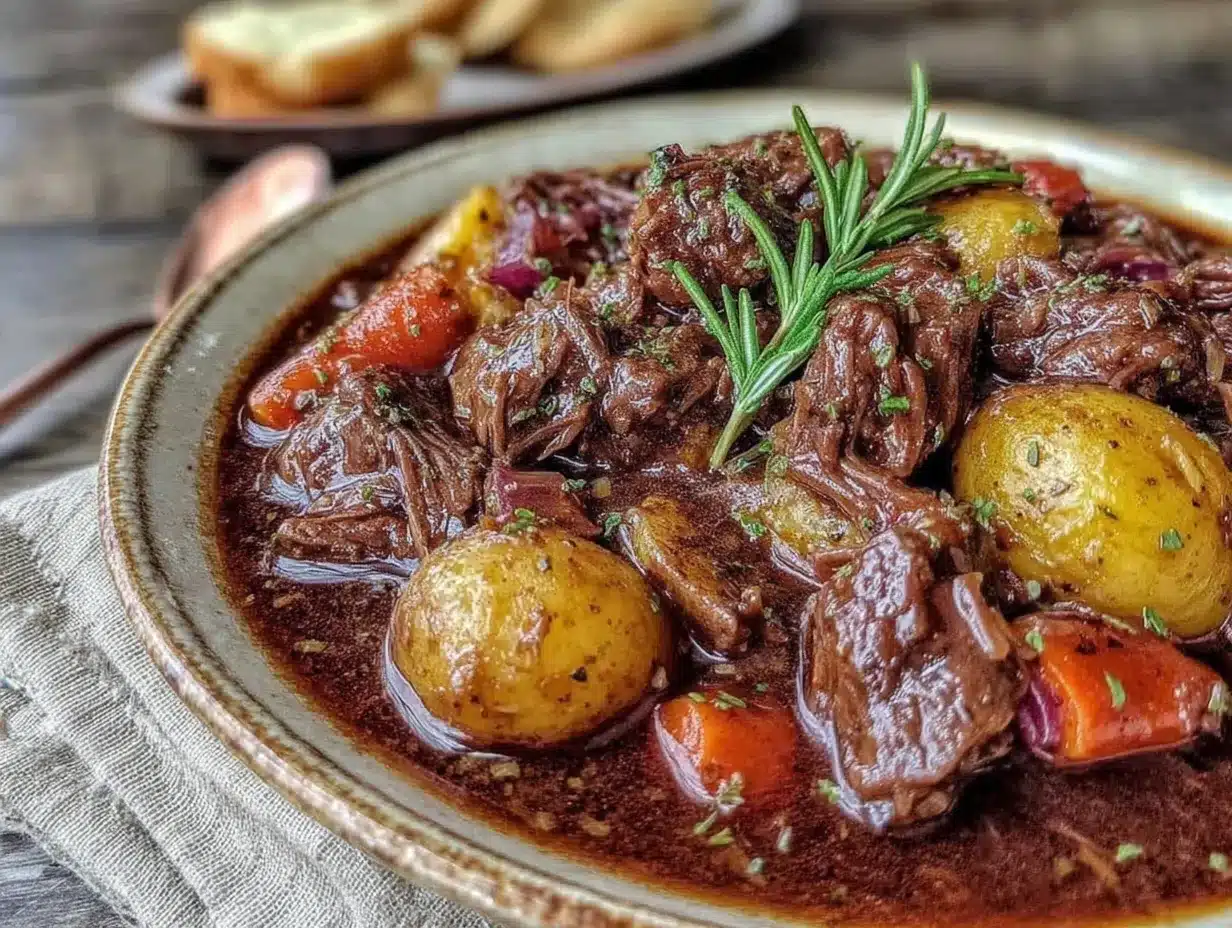
Let’s walk through this step by step. I’ve included timing cues and sensory notes so you know exactly what to look for at each stage. Don’t rush the searing step — it’s where the flavor starts.
- Sear the beef (10 minutes): Pat the beef cubes dry with paper towels. This is important — wet meat won’t brown. Season them generously with salt and pepper. Heat 1 tablespoon olive oil in your large skillet over medium-high heat until it shimmers. Add the beef in a single layer — work in batches if needed, because overcrowding will steam the meat instead of browning it. Let the cubes cook undisturbed for 3-4 minutes per side until a deep brown crust forms. You’re looking for a rich mahogany color, not just pale tan. Transfer the seared beef to your slow cooker.
- Sauté the aromatics (5 minutes): Reduce the heat to medium and add the diced onion to the same skillet. Cook for 2-3 minutes, stirring occasionally, until the onion turns translucent and starts to soften. Add the minced garlic and cook for 30 seconds more — just until fragrant. You’ll smell it when it’s ready. Scrape the onion and garlic into the slow cooker with the beef.
- Deglaze the pan (2 minutes): Pour the red wine (or 1 cup of beef broth if skipping the wine) into the hot skillet. Use your wooden spoon to scrape up all those browned bits stuck to the bottom — that’s concentrated flavor right there. Let it bubble for about a minute, then pour it into the slow cooker.
- Layer the vegetables: Add the carrots, celery, and potatoes to the slow cooker. Don’t stir too much yet — you want the heartier vegetables to stay near the bottom where they’ll cook more evenly. Add the tomato paste, dried thyme, bay leaves, 1 teaspoon salt, and 1/2 teaspoon pepper.
- Add the broth: Pour the 2 cups of beef broth over everything. The liquid should come about halfway up the ingredients — not covering them completely. The vegetables will release their own moisture as they cook. If it looks too dry, add a little more broth or water.
- Cook low and slow: Cover the slow cooker and set it to LOW for 7-8 hours or HIGH for 4-5 hours. I prefer LOW because it gives the beef more time to break down and the flavors to meld. Your house will start smelling amazing around hour 3.
- Add the peas (10 minutes before serving): About 10 minutes before you’re ready to eat, stir in the frozen peas. They just need to warm through — overcooking turns them dull and mushy. Taste the broth and adjust salt and pepper if needed.
- Thicken (optional): If you want a thicker stew, mix 2 tablespoons all-purpose flour with 3 tablespoons cold water until smooth. Stir it into the stew and let it cook on HIGH, uncovered, for 10-15 minutes until it thickens. You’ll see the broth go from watery to glossy.
Pro tip from my third attempt: Don’t lift the lid to check on it constantly. Every time you open that crockpot, you release heat and add 20-30 minutes to the cooking time. Trust the process. I learned this the hard way when I checked my stew four times in one afternoon and ended up eating dinner at 9 PM.
Cooking Tips & Techniques
I’ve made enough mistakes with stew to fill a small cookbook of failures. Here’s what I’ve learned so you can skip the frustrating parts.
Don’t skip the sear. I know it’s tempting to just throw raw beef in the crockpot and walk away — I’ve done it. But the difference is night and day. Searing creates the Maillard reaction, which is just a fancy way of saying it makes things taste deeper and richer. That brown crust on the beef is where the flavor lives. Even 2 minutes per side makes a difference.
Cut vegetables to similar sizes. If your potato chunks are twice as big as your carrot chunks, you’ll end up with either crunchy potatoes or mushy carrots. Aim for 1 to 1.5-inch pieces across the board. It takes an extra minute of knife work, but the even texture is worth it.
Watch your salt. Beef broth can vary wildly in sodium content. That’s why I recommend low-sodium broth and starting with 1 teaspoon of salt. You can always add more at the end, but you can’t take it out. I once salted a stew too early with regular broth, and it was practically brine by the time it finished cooking.
Layer with purpose. Put denser vegetables like potatoes and carrots at the bottom and sides of the slow cooker, where they’ll get more direct heat. Delicate things like peas and any fresh herbs should go in at the end. This isn’t just about texture — it’s about respecting what each ingredient needs.
Let it rest. If you can, let the stew sit in the warm setting for 30 minutes before serving. The flavors meld together even more during this resting period. I’ve noticed that stew always tastes better the next day, and this little rest helps bridge that gap.
Variations & Adaptations
This recipe is forgiving, and I’ve tried several twists over the years. Here are some of my favorites:
- Make it dairy-free: This recipe is naturally dairy-free as written, which is great for anyone avoiding dairy. Just double-check your beef broth — some brands add milk solids.
- Swap the protein: I’ve made this with cubed lamb shoulder, and it was incredible. Lamb has a stronger flavor that works beautifully with thyme and red wine. Pork shoulder also works, but reduce the cooking time by about an hour since pork is leaner.
- Add mushrooms: Toss in 8 ounces of cremini mushrooms, halved, with the other vegetables. They add an earthy umami that makes the stew even more satisfying. I did this on a whim one rainy Sunday, and now I rarely skip it.
- Make it gluten-free: Skip the flour for thickening. Instead, mash a few of the cooked potato chunks against the side of the pot and stir them in — it naturally thickens the broth without any gluten.
- Seasonal vegetable swaps: In late fall, swap the peas for chopped kale or Swiss chard, added in the last 20 minutes. In winter, add parsnips or turnips alongside the potatoes. In spring, use fresh asparagus cut into 2-inch pieces, added in the last 30 minutes.
- Herb variations: Try 1 teaspoon dried rosemary instead of thyme for a piney, aromatic twist. Or use a bouquet garni with parsley, thyme, and a bay leaf tied together — easy to remove before serving.
Serving & Storage Suggestions
This stew is at its best served piping hot in deep bowls, with plenty of broth to soak into whatever you serve alongside it. I like to ladle it over a scoop of creamy mashed potatoes or egg noodles for extra comfort. A crusty baguette or sourdough toast with butter is perfect for dipping — honestly, the bread is half the experience.
For a complete meal, I often pair this stew with a simple side salad dressed with lemon vinaigrette. The acidity cuts through the richness and keeps things balanced. A glass of the same red wine you used in the stew is a natural pairing — a Merlot or Zinfandel works beautifully.
Storage: Let the stew cool completely before transferring it to airtight containers. It keeps in the refrigerator for up to 4 days. The flavors actually improve after a day or two, so don’t be afraid to make it ahead. I’ve been known to make a double batch just for the leftovers.
Freezing: This stew freezes wonderfully for up to 3 months. Portion it into freezer-safe bags or containers, leaving about an inch of headspace for expansion. Thaw overnight in the refrigerator before reheating.
Reheating: Reheat gently on the stovetop over medium-low heat, stirring occasionally. Add a splash of beef broth or water if it’s too thick. You can also reheat individual portions in the microwave — just cover the bowl and heat in 1-minute intervals, stirring between each. The texture stays surprisingly good even after freezing and reheating.
Nutritional Information & Benefits
This stew is as nourishing as it is comforting. Here’s a rough estimate per serving (based on 6 servings):
- Calories: ~420
- Protein: 35g
- Fat: 14g
- Carbohydrates: 38g
- Fiber: 7g
- Sugar: 9g
- Sodium: ~680mg (varies by broth)
This meal is packed with protein from the beef, which supports muscle health and keeps you full. The carrots and potatoes provide vitamin A, potassium, and fiber. Celery adds antioxidants and hydration. The bone broth (if you use it) contributes collagen and minerals that support joint health. It’s a balanced meal in a bowl — protein, carbs, and vegetables all in one place.
Dietary considerations: This recipe is naturally dairy-free and can be made gluten-free with the cornstarch option. It’s not suitable for vegetarian or vegan diets as written, but you could swap the beef for portobello mushrooms and use vegetable broth for a plant-based version.
Conclusion
This cozy crockpot beef and vegetable fall stew is the kind of recipe that becomes a seasonal tradition. It’s forgiving enough for a beginner, satisfying enough for a seasoned cook, and flexible enough to adapt to whatever you have in your fridge. The beef turns tender, the vegetables stay intact, and the broth is rich enough to warrant sopping up every last drop with good bread.
I love this recipe because it reminds me that good food doesn’t have to be complicated. It came from a sticky note shaped like a pig, scribbled during a tax meeting, and it turned into something I look forward to making every fall. That’s the kind of cooking I believe in — humble, honest, and made for sharing.
I’d love to hear how yours turns out. Did you try a variation? Add mushrooms? Swap in sweet potatoes? Drop a comment below and let me know. And if you loved it, share it with someone who needs a warm bowl of comfort this season. Happy cooking!
Frequently Asked Questions
Can I use a different cut of beef for this stew?
Yes, but stick with tougher cuts that benefit from slow cooking. Beef chuck is ideal, but brisket or bottom round also work well. Avoid lean cuts like sirloin or tenderloin — they’ll dry out and turn tough during the long cook time.
Do I have to sear the beef first?
Technically no, but I strongly recommend it. Searing adds a depth of flavor that you just can’t get from slow cooking alone. If you’re truly short on time, you can skip it, but the stew won’t be as rich. Think of it as the difference between good and great.
Can I make this in an Instant Pot?
Absolutely. Use the sauté function to sear the beef and cook the aromatics directly in the pot. Then add the remaining ingredients, seal the lid, and cook on high pressure for 35 minutes with a natural release. The texture will be slightly different — the vegetables will be softer — but it’s still delicious.
How do I prevent the potatoes from falling apart?
Use Yukon Gold or red potatoes, which hold their shape better than russets. Cut them into 1.5-inch chunks and avoid stirring too much once they’re in the pot. Also, don’t overcook — check for tenderness around the 7-hour mark on low.
Can I add other vegetables to this stew?
Yes, this recipe is very flexible. Try adding parsnips, turnips, or sweet potatoes along with the carrots and potatoes. Add mushrooms or bell peppers for extra flavor. Just keep in mind that delicate vegetables like zucchini or spinach should go in during the last 30 minutes of cooking.
Pin This Recipe!
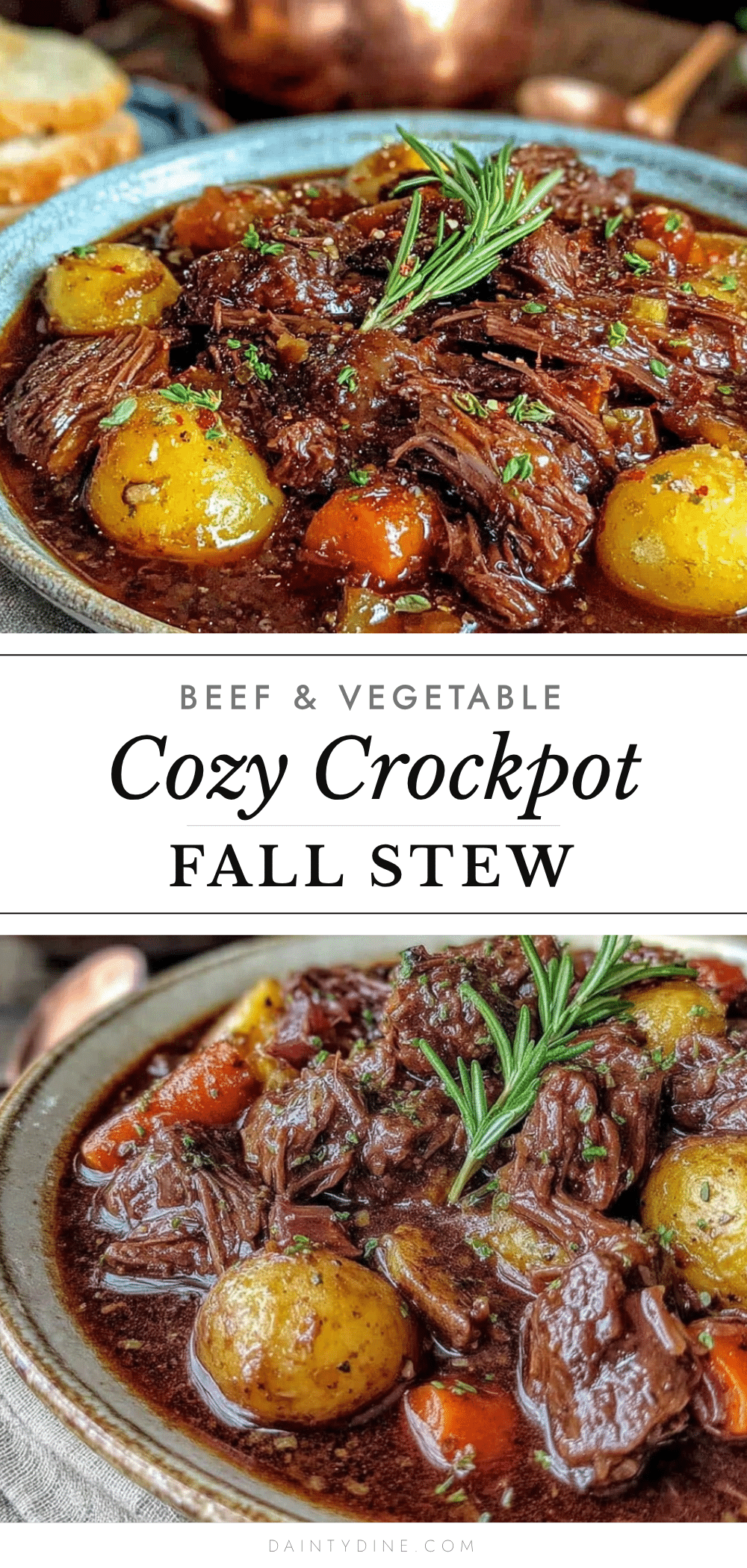
Cozy Crockpot Beef and Vegetable Fall Stew – Easy Comfort Meal
This cozy crockpot beef and vegetable fall stew is the kind of meal that fills your house with a deep, savory aroma. With tender beef, perfectly cooked vegetables, and a rich broth, it’s a comforting, hands-off dinner perfect for busy days.
- Prep Time: 20 minutes
- Cook Time: 7-8 hours on low or 4-5 hours on high
- Total Time: 7 hours 20 minutes to 8 hours 20 minutes
- Yield: 6 servings 1x
- Category: Main Course
- Cuisine: American
Ingredients
- 2 pounds beef chuck, cut into 1.5-inch cubes
- 1 tablespoon olive oil
- 3 medium carrots, peeled and cut into 1-inch chunks
- 3 celery stalks, cut into 1-inch pieces
- 1 large yellow onion, diced
- 4 cloves garlic, minced
- 1.5 pounds Yukon Gold potatoes, cut into 1.5-inch chunks
- 2 cups low-sodium beef broth
- 1 cup dry red wine (optional, but recommended)
- 2 tablespoons tomato paste
- 1 teaspoon dried thyme
- 2 bay leaves
- 1 teaspoon salt, plus more to taste
- 1/2 teaspoon freshly ground black pepper
- 1 cup frozen peas (added at the end)
- 2 tablespoons all-purpose flour (optional, for thicker broth)
Instructions
- Sear the beef (10 minutes): Pat the beef cubes dry with paper towels. Season generously with salt and pepper. Heat 1 tablespoon olive oil in a large skillet over medium-high heat until shimmering. Add the beef in a single layer (work in batches if needed) and cook undisturbed for 3-4 minutes per side until a deep brown crust forms. Transfer the seared beef to a 6-quart slow cooker.
- Sauté the aromatics (5 minutes): Reduce heat to medium and add the diced onion to the same skillet. Cook for 2-3 minutes until translucent. Add the minced garlic and cook for 30 seconds until fragrant. Scrape the onion and garlic into the slow cooker with the beef.
- Deglaze the pan (2 minutes): Pour the red wine (or 1 cup of beef broth if skipping the wine) into the hot skillet. Use a wooden spoon to scrape up the browned bits. Let it bubble for about a minute, then pour into the slow cooker.
- Layer the vegetables: Add the carrots, celery, and potatoes to the slow cooker. Add the tomato paste, dried thyme, bay leaves, 1 teaspoon salt, and 1/2 teaspoon pepper.
- Add the broth: Pour the 2 cups of beef broth over everything. The liquid should come about halfway up the ingredients.
- Cook low and slow: Cover the slow cooker and set to LOW for 7-8 hours or HIGH for 4-5 hours. Do not lift the lid during cooking.
- Add the peas (10 minutes before serving): Stir in the frozen peas. Taste the broth and adjust salt and pepper if needed.
- Thicken (optional): If you want a thicker stew, mix 2 tablespoons all-purpose flour with 3 tablespoons cold water until smooth. Stir into the stew and cook on HIGH, uncovered, for 10-15 minutes until thickened.
Notes
Don’t skip searing the beef—it adds deep flavor. Cut vegetables to similar sizes for even cooking. Use low-sodium broth and adjust salt at the end. Let the stew rest for 30 minutes before serving for better flavor melding.
Nutrition
- Serving Size: 1 serving (about 1.5
- Calories: 420
- Sugar: 9
- Sodium: 680
- Fat: 14
- Saturated Fat: 4
- Carbohydrates: 38
- Fiber: 7
- Protein: 35
Keywords: beef stew, crockpot stew, fall stew, comfort food, slow cooker, beef and vegetable stew