Love this? Save it for later!
Share the inspiration with your friends
Why You’ll Love This Recipe
There is something deeply spiritual about baking pan de muerto during the Day of the Dead season. It’s not just about feeding people; it’s about honoring those who have passed. This version strikes the perfect balance between tradition and modern ease. You don’t need to be a professional baker to make this work. In fact, the beauty of this recipe lies in its forgiving nature. If your dough is a little sticky, that’s okay. If the bones aren’t perfectly symmetrical, it just means it’s handmade with love.
- Quick & Easy: While it does need time to rise, the active hands-on time is minimal. You can mix this on a busy Sunday morning and have fresh bread ready for the evening altar.
- Simple Ingredients: You likely have most of these in your kitchen already. Flour, yeast, sugar, eggs, and butter are staples. The orange blossom water is the only specialty item, and it’s easy to find online or in well-stocked grocery stores.
- Perfect for Altars: Whether you are setting up a ofrenda or just enjoying a quiet morning with coffee, this bread fits the occasion beautifully. It brings warmth to the table.
- Crowd-Pleaser: Even people who don’t usually like sweet bread tend to love this. The citrus notes cut through the richness of the dough perfectly.
- Unbelievably Delicious: The texture is soft and pillowy, while the sugar coating adds a lovely crunch. It’s comfort food that tastes like history.
What makes this recipe different from the rest is the glaze. Many traditional recipes skip the sweet topping or use a simple sugar dusting. Here, we use an orange blossom glaze that soaks into the cracks, creating pockets of sweet, floral flavor. It’s the kind of bread that makes you close your eyes after the first bite. It’s not just food; it’s a hug from the past. You might have made bread before, but this one has a soul all its own. I mean, how often does a recipe make you feel connected to your heritage? That’s the magic here.
What Ingredients You Will Need
This recipe uses simple, wholesome ingredients to deliver bold flavor and satisfying texture without the fuss. The key is quality. Since there aren’t many ingredients, each one plays a vital role. You want to use fresh yeast if you can find it, as it gives a better rise and flavor. But active dry yeast works fine too. Just make sure it’s not expired.
- For the Dough:
- 4 cups (500g) all-purpose flour, spooned and leveled (I prefer King Arthur for its consistency)
- 1 packet (2 1/4 tsp) active dry yeast or instant yeast
- 3/4 cup (150g) granulated sugar
- 1 tsp salt
- 2 large eggs, room temperature
- 1/2 cup (115g) unsalted butter, softened
- 1/2 cup (120ml) warm milk
- 1 tbsp orange blossom water (this is crucial for the authentic scent)
- 1 tsp ground anise seeds (optional, but adds a nice licorice note)
- For the Topping:
- 1 egg white, beaten (for egg wash)
- 1/2 cup (100g) coarse sugar, for rolling
- For the Orange Blossom Glaze:
- 1 cup (120g) powdered sugar, sifted
- 2-3 tbsp warm water
- 1 tsp orange blossom water
- 1/2 tsp fresh lemon juice (to balance the sweetness)
I recommend using a good quality orange blossom water. Brands like La Sierra or Bitter Orange are reliable. If you can’t find anise seeds, you can skip them, but they add a traditional depth that is hard to beat. For the milk, whole milk gives the best richness, but you can use almond milk if you need a dairy-free option for the dough. Just remember that the butter should be softened, not melted, so it incorporates into the dough properly. This isn’t the place for shortcuts, but it is the place for care. Take your time with the butter.
Equipment Needed
You don’t need much to make this bread. A large mixing bowl is essential. I use a ceramic one because it keeps the dough cool while it rises. A stand mixer with a dough hook is helpful, but you can easily do this by hand. If you use a mixer, go slow. You don’t want to tear the gluten. A baking sheet lined with parchment paper is necessary for even baking. I also recommend a pastry brush for the egg wash and glaze. For the bones and cross shape, you can roll the dough yourself, but if you are feeling fancy, you can buy plastic bone molds. They are cheap and save time. Just make sure your oven is calibrated. An oven thermometer is a cheap tool that saves a lot of headaches. If your oven runs hot, your bread will burn on the outside while staying raw inside. Trust me on this one.
Preparation Method
- Activate the Yeast: In a small bowl, mix the warm milk with 1 teaspoon of the sugar and the yeast. Let it sit for 5-10 minutes until it becomes foamy. This step is critical. If it doesn’t foam, your yeast is dead, and you need to start over. I learned this the hard way with batch number two. (Time: 10 minutes)
- Mix the Dry Ingredients: In a large bowl, whisk together the flour, remaining sugar, salt, and anise seeds. Make a well in the center. (Time: 5 minutes)
- Combine Wet and Dry: Add the eggs, orange blossom water, and the activated yeast mixture to the well. Start mixing with a wooden spoon or your stand mixer on low speed. Gradually add the softened butter. (Time: 10 minutes)
- Knead the Dough: If mixing by hand, turn the dough onto a floured surface and knead for 10 minutes until smooth and elastic. If using a mixer, knead on medium-low for 8 minutes. The dough should be soft but not sticky. If it’s too sticky, add a sprinkle of flour. If it’s too dry, add a teaspoon of water. (Time: 10-15 minutes)
- First Rise: Place the dough in a greased bowl, cover with a damp towel or plastic wrap, and let it rise in a warm spot for 1.5 to 2 hours, or until doubled in size. (Time: 2 hours)
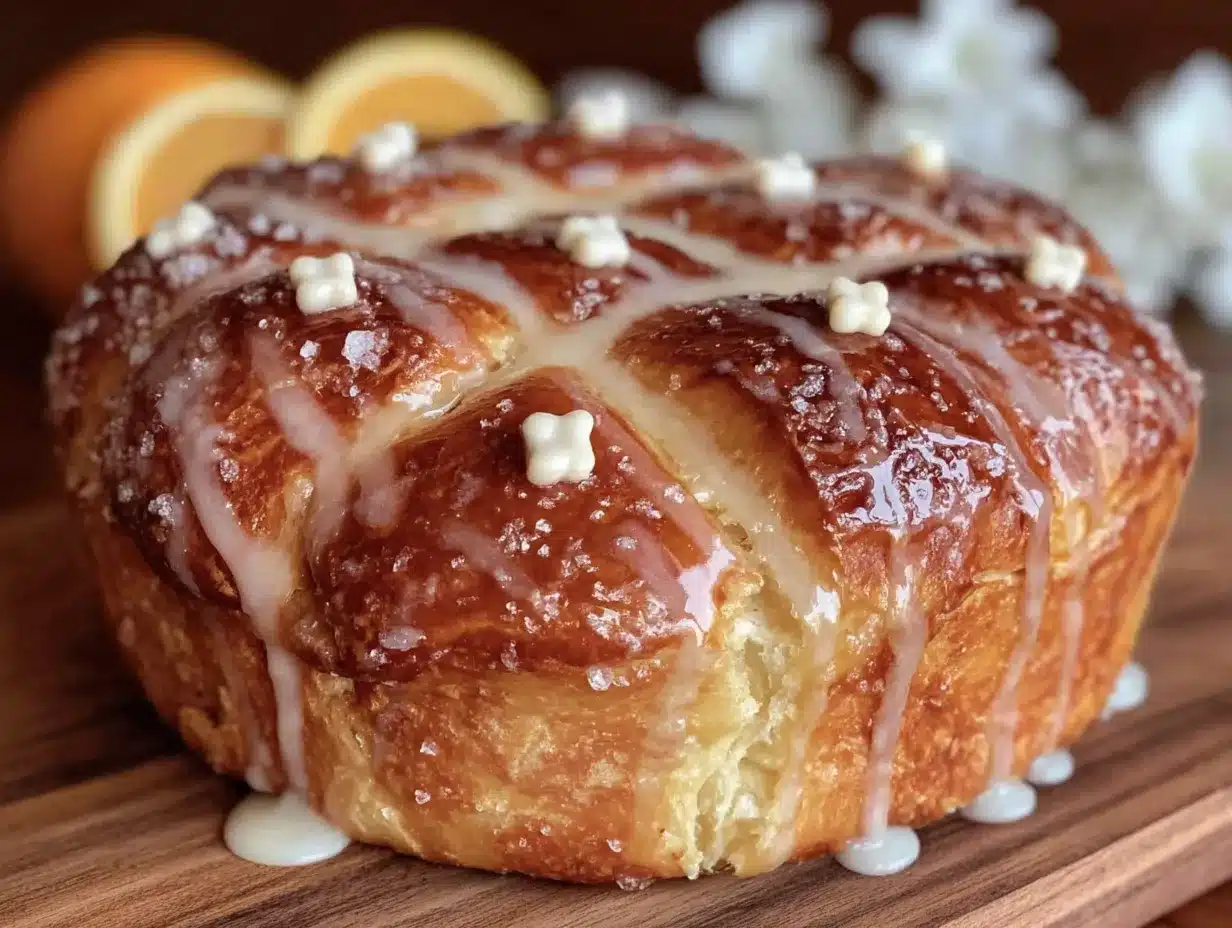
- Shape the Bread: Punch down the dough. Divide it into four equal parts. Roll one part into a ball for the center. Roll the other three into long ropes. Place the ball in the center of your baking sheet. Arrange the ropes around it to form a circle. Cross two ropes over the top to make a cross, and place one small rope on top of the cross to represent a bone. (Time: 15 minutes)
- Second Rise: Cover the shaped bread loosely and let it rise again for 45-60 minutes. Do not skip this step. It ensures a light texture. (Time: 45 minutes)
- Bake: Preheat your oven to 350°F (175°C). Brush the bread with beaten egg white and roll it in coarse sugar. Bake for 25-30 minutes until golden brown. (Time: 30 minutes)
- Glaze: While the bread bakes, mix the powdered sugar, water, orange blossom water, and lemon juice. Once the bread is out of the oven and still warm, brush the glaze over the top. (Time: 5 minutes)
Cooking Tips & Techniques
One common mistake is over-kneading. If you use a mixer, stop when the dough is smooth. Overworking it can make the bread tough. Another tip is to keep your hands floured when shaping. The dough is sticky, and you don’t want to tear it. If the bread browns too quickly, cover it with foil halfway through baking. I also suggest letting the dough rest for 5 minutes after punching it down before shaping. It makes it much easier to work with. Temperature matters too. If your kitchen is cold, your dough will take longer to rise. You can turn on your oven light to create a warm environment. This is a pro tip from my early baking days. Also, don’t rush the second rise. This is what gives the bread its airy crumb. Patience is a virtue in baking.
Variations & Adaptations
While the classic version is best, you can experiment. Add chocolate chips to the dough for a sweet surprise. Some people add raisins soaked in rum for a richer flavor. For a gluten-free version, use a 1:1 gluten-free flour blend, but note that the texture will be denser. You can also skip the glaze and just use the sugar coating for a crunchier texture. I once tried adding a pinch of cinnamon to the dough, and it was delicious. It added a warm, spicy note that paired well with the orange. Feel free to adjust the sweetness to your taste. Less sugar in the dough means a less sweet bread, which some people prefer.
Serving & Storage Suggestions
Serve pan de muerto warm with hot chocolate or coffee. It pairs beautifully with rich, dark chocolate. For storage, keep it in an airtight container at room temperature for up to 3 days. If you want to keep it longer, freeze it. Wrap it tightly in plastic wrap and then foil. Thaw at room temperature and warm it in the oven for a few minutes. The flavors actually develop over the first day, so it tastes even better on day two. Reheating is key if you freeze it. A quick toast brings back the freshness. Don’t refrigerate it, as it will dry out quickly. Cold bread is sad bread.
Nutritional Information & Benefits
This bread is a source of carbohydrates and provides energy. The eggs add protein, and the butter provides healthy fats in moderation. The orange blossom water has antioxidant properties, though the amount used is small. It is not a low-calorie food, so enjoy it in moderation. For those with dietary restrictions, note that it contains gluten, dairy, and eggs. You can make it dairy-free by using plant-based butter and milk. It’s a treat, not a staple. I view it as a way to connect with culture, which is good for the soul. Just balance it with a healthy meal.
Conclusion
Making pan de muerto is more than just baking. It’s a ritual. It’s a way to remember, to honor, and to celebrate. I hope this recipe brings you joy in the kitchen. Don’t be afraid to make it your own. Add your own twists and share it with loved ones. The process is as important as the result. So, preheat your oven and get mixing. I can’t wait to hear how it turns out for you. Leave a comment below with your results or any questions you might have. Let’s keep this tradition alive together. Happy baking!
Frequently Asked Questions
Can I use instant yeast instead of active dry yeast?
Yes, you can use instant yeast. You don’t need to activate it in milk first. Just mix it directly with the flour. The result will be very similar, though some say active dry yeast has a slightly better flavor.
Why is my pan de muerto dense?
This usually happens if the yeast was dead or if the dough didn’t rise enough. Make sure your milk is warm, not hot, and that you let the dough rise until it doubles in size. Over-kneading can also make it dense.
Can I make the dough ahead of time?
Yes, you can let the first rise happen in the refrigerator overnight. This develops more flavor. Just let it come to room temperature before shaping and doing the second rise.
What is orange blossom water?
It is a fragrant water made from the blossoms of the bitter orange tree. It adds a floral, citrusy aroma to baked goods. You can find it in the spice aisle of most grocery stores or online.
How do I store the glaze?
The glaze is best used immediately. If you need to make it ahead, store it in an airtight container in the fridge for up to 2 days. Reheat it slightly and stir before brushing it on the bread.
Pin This Recipe!
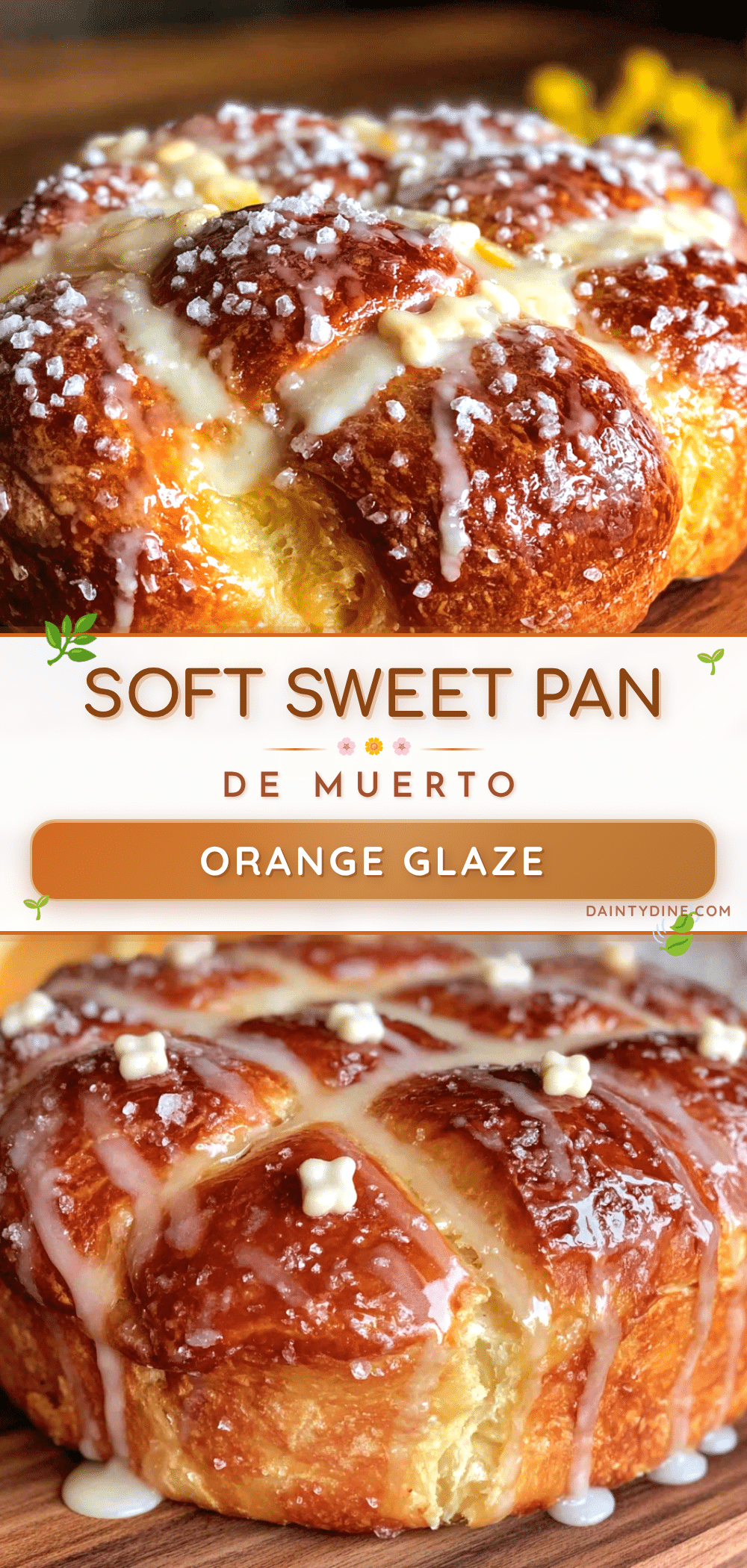
Classic Pan De Muerto with Orange Blossom Glaze
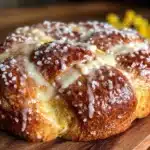
A traditional Day of the Dead sweet bread featuring soft, pillowy dough infused with orange blossom water and anise, topped with coarse sugar and a floral orange blossom glaze.
- Prep Time: 45 minutes
- Cook Time: 30 minutes
- Total Time: 3 hours 15 minutes
- Yield: 1 loaf (serves 8-10) 1x
- Category: Dessert
- Cuisine: Mexican
Ingredients
- 4 cups (500g) all-purpose flour
- 1 packet (2 1/4 tsp) active dry yeast or instant yeast
- 3/4 cup (150g) granulated sugar
- 1 tsp salt
- 2 large eggs, room temperature
- 1/2 cup (115g) unsalted butter, softened
- 1/2 cup (120ml) warm milk
- 1 tbsp orange blossom water
- 1 tsp ground anise seeds (optional)
- 1 egg white, beaten (for egg wash)
- 1/2 cup (100g) coarse sugar, for rolling
- 1 cup (120g) powdered sugar, sifted (for glaze)
- 2–3 tbsp warm water (for glaze)
- 1 tsp orange blossom water (for glaze)
- 1/2 tsp fresh lemon juice (for glaze)
Instructions
- In a small bowl, mix warm milk with 1 teaspoon of sugar and the yeast. Let sit for 5-10 minutes until foamy.
- In a large bowl, whisk together flour, remaining sugar, salt, and anise seeds. Make a well in the center.
- Add eggs, orange blossom water, and activated yeast mixture to the well. Mix with a wooden spoon or stand mixer on low speed. Gradually add softened butter.
- Knead the dough by hand for 10 minutes or in a mixer on medium-low for 8 minutes until smooth and elastic. Add flour or water as needed to adjust consistency.
- Place dough in a greased bowl, cover, and let rise in a warm spot for 1.5 to 2 hours until doubled in size.
- Punch down dough and divide into four equal parts. Roll one part into a ball. Roll the other three into long ropes. Place the ball in the center of a baking sheet, arrange ropes in a circle around it, cross two ropes over the top to form a cross, and place a small rope on top to represent a bone.
- Cover shaped bread loosely and let rise again for 45-60 minutes.
- Preheat oven to 350°F (175°C). Brush bread with beaten egg white and roll in coarse sugar. Bake for 25-30 minutes until golden brown.
- While bread bakes, mix powdered sugar, warm water, orange blossom water, and lemon juice to make the glaze. Brush glaze over the warm bread once out of the oven.
Notes
Ensure yeast is fresh and foams before proceeding. If kitchen is cold, turn on oven light to create a warm rising environment. Do not over-knead to avoid tough bread. If bread browns too quickly, cover with foil halfway through baking. Can be made dairy-free by using plant-based butter and milk.
Nutrition
- Serving Size: 1 slice
- Calories: 320
- Sugar: 24
- Sodium: 280
- Fat: 10
- Saturated Fat: 6
- Carbohydrates: 52
- Fiber: 2
- Protein: 6
Keywords: pan de muerto, day of the dead, mexican bread, orange blossom glaze, sweet bread, holiday baking, traditional recipe