Love this? Save it for later!
Share the inspiration with your friends
I was elbow-deep in pumpkin guts last October when my phone buzzed. My neighbor Deb, the one who grows enough zucchini to feed a small army, had texted a photo of a bread loaf so golden and crackly-topped it looked like a magazine cover. “Used your starter discard,” she wrote. “Game changer.” I stared at my counter—a tub of sourdough discard I’d been meaning to feed, a can of pumpkin puree I’d grabbed on a whim—and felt that familiar spark. You know the one. The moment a recipe idea clicks into place and you just know you’re onto something.
That night, I mixed up my first batch. And honestly? It was a mess. Too wet, too dense, not nearly sweet enough. But the second attempt? That’s when the magic happened. The tangy sourdough played off the earthy pumpkin like they’d been waiting their whole lives to meet. I brought a slice to Deb the next morning, still warm, and she just nodded. That’s the nod every cook wants—the one that says, “Yep, you got it.”
This Best Sourdough Discard Pumpkin Bread isn’t just another fall recipe to pin and forget. It’s the bread that turned my kitchen into a pumpkin-scented lab for three straight weekends. I tweaked, tested, burned a few edges (okay, more than a few), and finally landed on a version that’s moist, tender, and just tangy enough to keep you coming back for “one more slice.” Maybe you’ve had that moment where a recipe feels like it belongs in your regular rotation. This is that recipe. Let me show you exactly how to make it.
Why You’ll Love This Recipe
I’ve tested this recipe more times than I care to admit—seven batches in two weeks, if you’re counting. My neighbors stopped being polite about the free bread and started asking when the next loaf was coming. That’s when I knew this one was special. Here’s why it will become your new go-to:
- Uses Up That Starter Discard: If you maintain a sourdough starter, you know the guilt of pouring that cloudy liquid down the drain. This bread turns discard into something glorious—no feeding required.
- Perfectly Moist, Never Gummy: The combination of pumpkin puree and sourdough creates a crumb that’s tender without being wet. I’ve tested this with both homemade and canned pumpkin, and both work beautifully.
- Just the Right Amount of Tang: That subtle sourdough tang cuts through the sweetness of the pumpkin and spices. It’s not overpowering—just enough to make you wonder why you haven’t been adding discard to everything.
- Simple Pantry Ingredients: No weird flours or hard-to-find extracts. You probably have everything except the pumpkin and sourdough discard already in your kitchen.
- Freezes Like a Dream: I baked two loaves last month, froze one, and pulled it out for a last-minute brunch guest. She asked for the recipe before she finished her first slice.
- One Bowl, No Mixer: Seriously. No hauling out the stand mixer or scrubbing extra bowls. This comes together in about 10 minutes of active work.
This isn’t just another pumpkin bread recipe. It’s the one that makes you close your eyes on that first bite—the tang, the spice, the tender crumb all hitting at once. It’s comfort food that uses up your discard, fills your house with the smell of fall, and makes you look like a kitchen wizard with minimal effort.
What Ingredients You Will Need
This recipe relies on simple, everyday ingredients that work together to create something surprisingly complex. The sourdough discard adds depth, the pumpkin brings moisture, and the spices warm everything up. Here’s what you’ll need:
For the Bread
- All-purpose flour, 1 ¾ cups (220g) – I prefer King Arthur Flour for consistent results, but any brand works. Spoon and level your flour—don’t scoop directly from the bag or you’ll end up with dry bread.
- Baking soda, 1 teaspoon – This gives the bread its rise. Make sure it’s fresh; stale baking soda leads to flat, dense loaves.
- Ground cinnamon, 1 ½ teaspoons – The backbone of the spice blend. I use McCormick or Penzeys for the best flavor.
- Ground nutmeg, ½ teaspoon – Freshly grated if you have it, but pre-ground works fine too.
- Ground ginger, ½ teaspoon – Adds a subtle warmth that pairs beautifully with the sourdough tang.
- Ground cloves, ¼ teaspoon – Just a pinch. Cloves are potent, so don’t go overboard.
- Salt, ½ teaspoon – Balances the sweetness and enhances all the flavors.
- Unsalted butter, ½ cup (113g), melted and slightly cooled – You can use salted butter and reduce the added salt to ¼ teaspoon.
- Granulated sugar, ¾ cup (150g) – Regular white sugar works best here. Brown sugar makes the bread too dense.
- Light brown sugar, ¼ cup (50g), packed – Adds a hint of molasses depth.
- Large eggs, 2, at room temperature – Room temperature eggs incorporate more smoothly into the batter.
- Pumpkin puree, 1 cup (245g) – Not pumpkin pie filling! Make sure you grab 100% pure pumpkin. Libby’s is my go-to, but store brands work too.
- Sourdough discard, ½ cup (120g), unfed and at room temperature – Straight from the fridge is fine, but let it sit on the counter for 15 minutes so it mixes in more easily.
- Vanilla extract, 1 teaspoon – Pure vanilla, not imitation. Trust me on this one.
Optional Mix-Ins
- Chocolate chips, ½ cup (90g) – Semi-sweet or dark chocolate balances the pumpkin beautifully.
- Chopped pecans or walnuts, ½ cup (60g) – Toast them first for extra flavor.
- Dried cranberries, ¼ cup (35g) – Adds a tart pop that cuts through the sweetness.
One thing I learned the hard way: don’t skip the room temperature eggs. Cold eggs seize up the melted butter and create a lumpy batter. I’ve done it, cursed about it, and now I just set my eggs out an hour before I start baking. Small habit, big difference.
Equipment Needed
You don’t need a fancy kitchen to make this bread. Here’s what you’ll actually use:
- 9×5-inch loaf pan – Metal or glass both work. If you use glass, reduce the oven temperature by 25°F (about 15°C) to prevent over-browning.
- Large mixing bowl – Any bowl big enough to hold all the ingredients without splashing.
- Whisk – For combining the dry ingredients and smoothing out the wet mixture.
- Rubber spatula – For folding everything together without overmixing.
- Parchment paper – Lining the pan makes removal effortless. I’ve used wax paper in a pinch (don’t recommend it).
- Cooling rack – Lets air circulate so the bottom doesn’t get soggy. A wire rack from an oven works perfectly.
- Measuring cups and spoons – For dry and wet ingredients separately. I keep a set of dry measuring cups and a glass liquid measure.
- Kitchen scale (optional but helpful) – Weighing your flour guarantees consistent results. I resisted buying one for years, and now I use it every single time.
If you don’t have a loaf pan, you can bake this in an 8×8-inch square pan—just reduce the baking time to about 35-40 minutes and start checking early. I’ve also used a muffin tin (greased well) and baked for 18-22 minutes for pumpkin bread muffins. No special equipment required, just a little creativity.
Preparation Method
Let’s get baking. This comes together faster than you think, so read through the steps once before you start. I learned that lesson after forgetting the vanilla in batch number three.
- Preheat and prep: Preheat your oven to 350°F (175°C). Line your 9×5-inch loaf pan with parchment paper, leaving a couple inches overhang on the long sides. This creates handles for lifting the bread out later. Lightly grease the exposed ends with butter or cooking spray.
- Mix the dry ingredients: In your large bowl, whisk together the flour, baking soda, cinnamon, nutmeg, ginger, cloves, and salt. Whisk for about 20 seconds—this aerates the flour and distributes the spices evenly. Set aside.
- Combine the wet ingredients: In a separate medium bowl, whisk the melted butter with both sugars until smooth. It should look like wet sand—grainy but uniform. Add the eggs one at a time, whisking well after each addition. The mixture will lighten slightly and become glossy.
- Add the pumpkin and discard: Whisk in the pumpkin puree, sourdough discard, and vanilla extract. Don’t worry if the mixture looks a little separated or curdled—that’s normal when cold discard meets warm butter. Keep whisking until it’s smooth and uniform. The color should be a deep, warm orange.
- Fold it together: Pour the wet ingredients into the dry ingredients. Use your rubber spatula to fold gently—cut through the center, scrape along the bottom, and turn the mixture over itself. Stop as soon as you no longer see streaks of flour. A few lumps are fine. Overmixing will make the bread tough, and nobody wants tough pumpkin bread.
- Add mix-ins (optional): If you’re using chocolate chips, nuts, or cranberries, gently fold them in at this point. Reserve a handful to sprinkle on top before baking—it makes the loaf look gorgeous.
- Fill the pan: Scrape the batter into your prepared loaf pan. It will be thick and slightly sticky—that’s perfect. Use the spatula to spread it evenly to the corners. Give the pan a gentle tap on the counter to release any air bubbles.
- Bake: Place the pan in the center of the oven and bake for 55-65 minutes. At the 45-minute mark, check the top—if it’s browning too quickly, tent it loosely with aluminum foil. The bread is done when a toothpick inserted into the center comes out clean or with a few moist crumbs. If you hit a pocket of melted chocolate chips, test in a different spot.
- Cool properly: Let the bread cool in the pan for 15 minutes. Then use the parchment handles to lift it out onto a wire rack. Let it cool completely before slicing—I know it’s hard to wait, but cutting too early turns the crumb gummy. I’ve made that mistake at least three times.
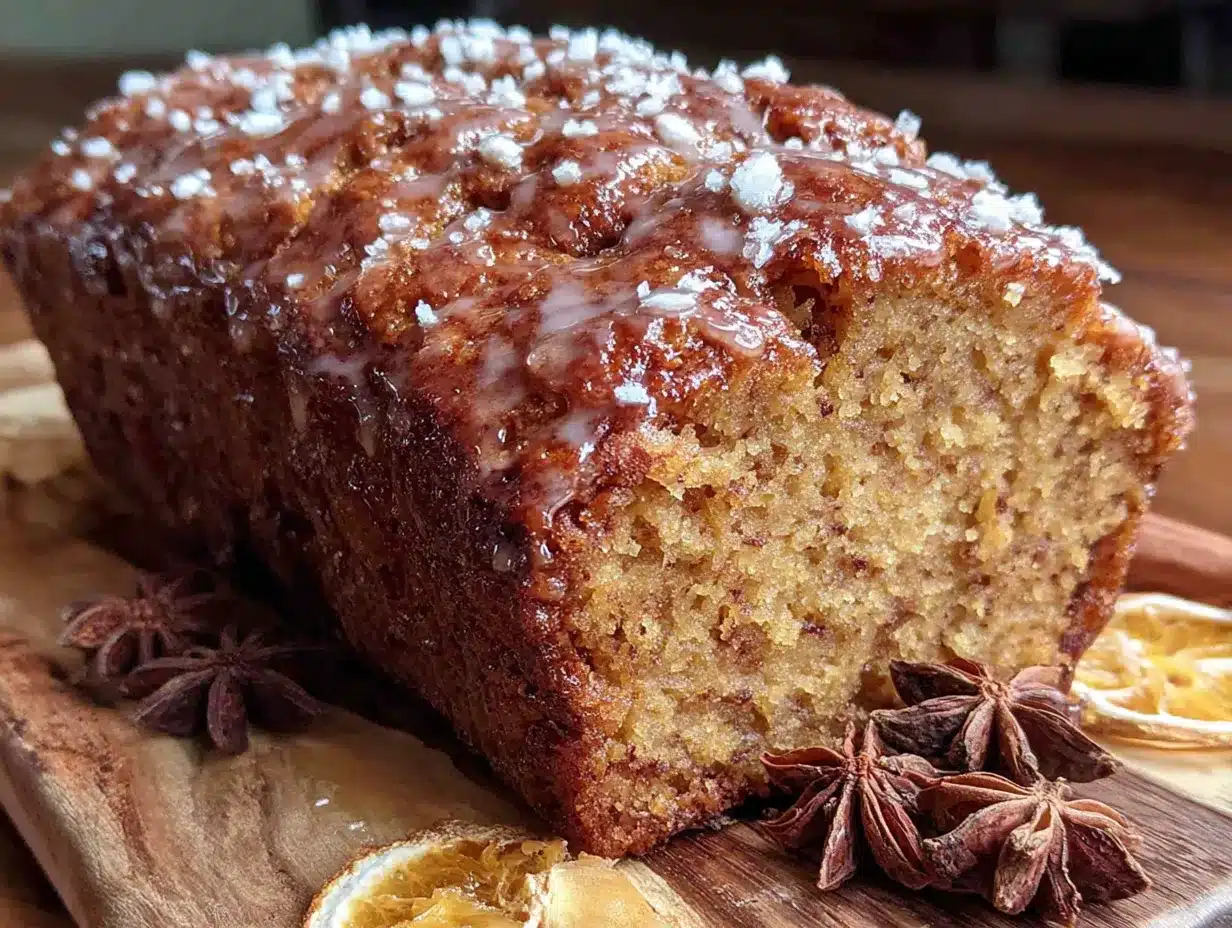
Here’s a sensory cue to watch for: the bread will pull away from the sides of the pan slightly when it’s done, and the top will be a deep golden brown with a few cracks running across. That crackly top is the best part, honestly. Don’t skip the cooling step—it’s where the texture sets up properly.
Cooking Tips & Techniques
After seven batches (and a few sad, sunken failures), I’ve gathered some wisdom that’ll save you from my mistakes.
Don’t overmix the batter. This is the number one mistake I see in comments on other pumpkin bread recipes. Mix until the flour just disappears—about 12 to 15 folds with your spatula. Overmixing develops gluten, which makes the bread tough and dense instead of tender and cakey. I once got distracted by a phone call and kept stirring. That loaf came out like a brick. A tasty brick, but a brick nonetheless.
Check your sourdough discard’s temperature. If your discard is straight from the fridge, let it sit at room temperature for 15-20 minutes before using. Cold discard can seize the melted butter and create a lumpy batter. I learned this the hard way when my first batch had little butter clumps floating around. The bread still tasted fine, but the texture was uneven.
Use the toothpick test correctly. Insert the toothpick into the center of the loaf, but avoid hitting any chocolate chips if you added them. Melted chocolate will make the toothpick look wet even when the bread is done. Test in a plain spot, or use a thin knife instead. The bread should feel springy when you gently press the center.
Let it cool completely. I cannot stress this enough. The bread continues to set as it cools. Cutting into it while warm releases steam and turns the crumb gummy. I know the smell is intoxicating—trust me, I’ve burned my tongue on impatient slices more times than I’ll admit. Wait at least one hour. Your patience will be rewarded with clean, beautiful slices.
Room temperature ingredients matter. Eggs and sourdough discard at room temperature incorporate more smoothly into the batter. Cold ingredients can cause the melted butter to solidify into tiny lumps. Set everything out an hour before you start baking. It’s a small step that makes a noticeable difference in the final texture.
Variations & Adaptations
One of the best things about this recipe is how flexible it is. Here are some variations I’ve tested and loved:
Gluten-Free Version: Substitute the all-purpose flour with a 1:1 gluten-free baking flour blend that contains xanthan gum. I’ve used Bob’s Red Mill 1-to-1 Baking Flour with great results. The texture will be slightly more delicate, so handle the batter gently. Bake for the same amount of time, but start checking at 50 minutes.
Dairy-Free Adaptation: Swap the butter with melted coconut oil or a plant-based butter stick. I’ve used both, and coconut oil adds a subtle tropical note that pairs surprisingly well with pumpkin. Use a dairy-free chocolate brand if you’re adding chips.
Less Sugar Option: Reduce the granulated sugar to ½ cup (100g) and keep the brown sugar at ¼ cup. The bread will be less sweet but still delicious, especially if you add chocolate chips or a sprinkle of turbinado sugar on top before baking for a crunchy crust.
Pumpkin Spice Latte Twist: Add 2 tablespoons of instant espresso powder dissolved in 1 tablespoon of hot water along with the wet ingredients. The coffee deepens the pumpkin flavor without making it taste like coffee. I tried this on a whim one rainy Sunday, and it’s become my secret weapon for fall baking.
Vegan Option: Replace the eggs with two flax eggs (2 tablespoons ground flaxseed mixed with 6 tablespoons water, let sit for 5 minutes until gel-like). Use melted coconut oil instead of butter. The texture will be slightly denser but still moist and delicious. Bake for an extra 5-10 minutes since flax eggs add more moisture.
Extra Tangy Version: Increase the sourdough discard to ¾ cup (180g) and reduce the pumpkin puree to ¾ cup (185g). This amps up the sourdough flavor while keeping the bread moist. My friend Sarah, a sourdough purist, swears by this version.
Serving & Storage Suggestions
This bread shines at room temperature, but it’s also wonderful warm. Here’s how to make the most of it:
Serving Ideas: Slice and serve plain for breakfast with a cup of coffee. For dessert, warm a slice for 10 seconds in the microwave and top with a dollop of whipped cream or a drizzle of cream cheese glaze (mix 4 ounces softened cream cheese with ¼ cup powdered sugar and 2 tablespoons milk). It’s also fantastic toasted—the edges get slightly crispy while the center stays tender. Spread with salted butter for the perfect afternoon snack.
Storage: Wrap the cooled loaf tightly in plastic wrap or aluminum foil and store at room temperature for up to 4 days. The flavors actually deepen after a day or two as the sourdough tang mellows and the spices meld together. I’ve found day-two slices taste even better than fresh ones.
Freezer Instructions: This bread freezes beautifully. Wrap the completely cooled loaf (or individual slices) tightly in plastic wrap, then in a layer of aluminum foil. Place in a freezer-safe bag and freeze for up to 3 months. To thaw, leave at room temperature for 2-3 hours (for a whole loaf) or about 30 minutes (for individual slices). You can also pop a frozen slice directly into the toaster for a quick treat.
Reheating: For that just-baked warmth, reheat slices in a 300°F (150°C) oven for 5-8 minutes. The microwave works in a pinch (15-20 seconds per slice), but the oven gives you a better texture. If you’re reheating a whole loaf, wrap it in foil and warm at 300°F for about 15 minutes.
Gift Giving: This bread makes a wonderful homemade gift. Wrap in parchment paper, tie with kitchen twine, and attach a tag with the recipe. I’ve given loaves to neighbors, teachers, and holiday hosts, and they always disappear fast.
Nutritional Information & Benefits
Here’s the approximate nutritional breakdown for one slice (based on 10 slices per loaf, without mix-ins):
- Calories: 285
- Total Fat: 12g
- Saturated Fat: 7g
- Cholesterol: 55mg
- Sodium: 290mg
- Total Carbohydrates: 41g
- Dietary Fiber: 2g
- Sugars: 22g
- Protein: 4g
This bread offers some surprising nutritional perks. Pumpkin puree is packed with vitamin A (over 200% of your daily needs per cup) and antioxidants like beta-carotene, which supports eye health and immune function. The sourdough fermentation process breaks down some of the phytic acid in flour, making the minerals more bioavailable—a fancy way of saying your body can absorb them better. Plus, sourdough has a lower glycemic impact compared to bread made with commercial yeast, so you get steadier energy without the sugar crash.
If you’re watching your sugar intake, you can reduce the sugar by a third without sacrificing too much moisture. The pumpkin and sourdough provide enough natural sweetness and tang to keep the bread satisfying. For a lower-fat option, substitute half the butter with unsweetened applesauce—the texture will be slightly more cake-like, but still delicious.
Conclusion
This Best Sourdough Discard Pumpkin Bread is the recipe that turned my kitchen into a fall baking sanctuary. It’s the one I make when I need to use up discard, when the air turns crisp, and when I want to fill my home with the smell of cinnamon and pumpkin. It’s forgiving enough for beginners, rewarding enough for experienced bakers, and versatile enough to adapt to whatever you have on hand.
What I love most about this recipe is how it transforms something you might throw away—sourdough discard—into something you’ll want to make on purpose. That tangy, tender crumb with the warm spice blend? It’s the kind of bread that makes you slow down and actually taste what you’re eating. Not just scarf it down while standing at the counter (though I won’t judge if you do).
I’d love to hear how yours turns out. Did you add chocolate chips? Try the vegan version? Burn the first batch like I did? Drop a comment below and tell me about it—your tweaks might inspire someone else’s perfect loaf. And if you loved this recipe, share it with a friend who needs a little fall comfort in their life. Happy baking, friends!
Frequently Asked Questions
Can I use active sourdough starter instead of discard?
Yes, absolutely! Use the same amount of active, bubbly starter if that’s what you have. The bread will rise slightly more and have a milder tang. Just keep in mind that active starter adds more fermentation power, so the texture might be a touch airier. Both work beautifully, so use whatever you’ve got.
Why did my pumpkin bread sink in the middle?
This usually happens for one of three reasons: the batter was overmixed (which creates too much gluten), the oven temperature was too low (invest in an oven thermometer to check), or the bread was underbaked. Make sure you’re baking at 350°F and testing with a toothpick in the center. If the top is browning too fast, tent with foil and keep baking until the center is set.
Can I make this into muffins instead of a loaf?
Definitely! Grease a 12-cup muffin tin and divide the batter evenly (about ¼ cup per muffin). Bake at 350°F for 18-22 minutes, until a toothpick comes out clean. Let them cool in the tin for 5 minutes, then transfer to a wire rack. Muffins are perfect for freezing—just pop one in the microwave for 15 seconds when you need a quick breakfast.
How do I know if my sourdough discard is still good to use?
Healthy discard should smell pleasantly sour or tangy—like yogurt or sourdough bread. If it smells like acetone (nail polish remover) or has pink or orange streaks, it’s time to toss it and start fresh. A layer of grayish liquid on top is normal; just stir it back in. Discard that’s been in the fridge for up to two weeks is usually fine to use in this recipe.
Can I substitute pumpkin puree with butternut squash puree?
Yes, and it works surprisingly well! Roast and puree butternut squash until smooth, then use it cup-for-cup in place of pumpkin. The flavor is slightly sweeter and less earthy, but the texture is almost identical. I’ve done this when pumpkin was out of season, and nobody noticed the swap. Just make sure your puree isn’t too watery—drain it in a fine-mesh sieve if it looks thin.
Pin This Recipe!
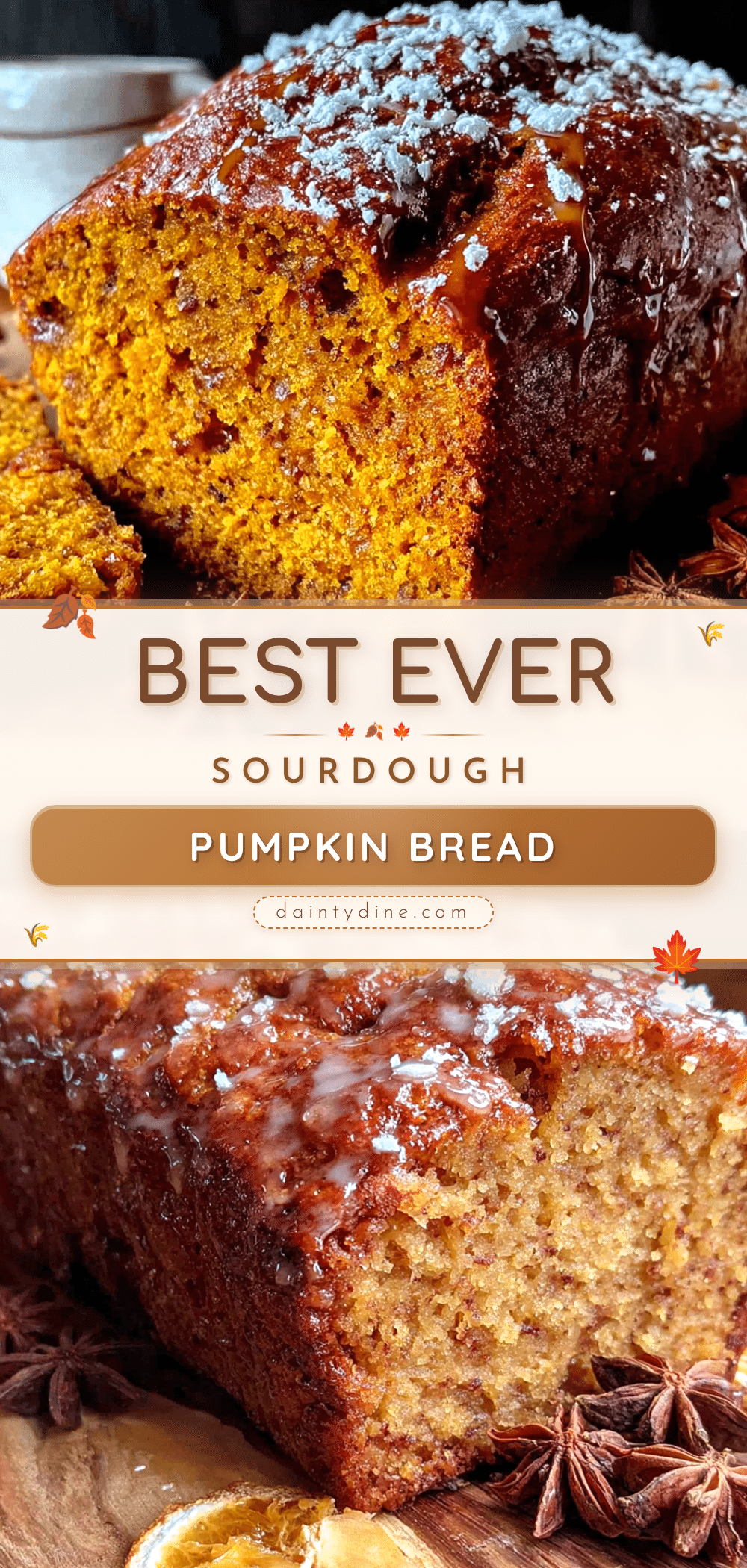
Best Sourdough Discard Pumpkin Bread (Easy Recipe)
This moist, tender pumpkin bread uses sourdough discard for a subtle tang, making it the perfect fall treat. It’s easy to make in one bowl with simple pantry ingredients.
- Prep Time: 15 minutes
- Cook Time: 55-65 minutes
- Total Time: 1 hour 10 minutes to 1 hour 20 minutes
- Yield: 10 servings 1x
- Category: Bread
- Cuisine: American
Ingredients
- 1 ¾ cups (220g) all-purpose flour
- 1 teaspoon baking soda
- 1 ½ teaspoons ground cinnamon
- ½ teaspoon ground nutmeg
- ½ teaspoon ground ginger
- ¼ teaspoon ground cloves
- ½ teaspoon salt
- ½ cup (113g) unsalted butter, melted and slightly cooled
- ¾ cup (150g) granulated sugar
- ¼ cup (50g) light brown sugar, packed
- 2 large eggs, at room temperature
- 1 cup (245g) pumpkin puree (not pumpkin pie filling)
- ½ cup (120g) sourdough discard, unfed and at room temperature
- 1 teaspoon vanilla extract
- ½ cup (90g) chocolate chips (optional)
- ½ cup (60g) chopped pecans or walnuts (optional)
- ¼ cup (35g) dried cranberries (optional)
Instructions
- Preheat your oven to 350°F (175°C). Line a 9×5-inch loaf pan with parchment paper, leaving overhang on the long sides. Lightly grease the exposed ends with butter or cooking spray.
- In a large bowl, whisk together the flour, baking soda, cinnamon, nutmeg, ginger, cloves, and salt. Whisk for about 20 seconds to aerate and distribute spices evenly. Set aside.
- In a separate medium bowl, whisk the melted butter with both sugars until smooth. Add the eggs one at a time, whisking well after each addition until the mixture lightens and becomes glossy.
- Whisk in the pumpkin puree, sourdough discard, and vanilla extract until smooth and uniform. The mixture may look slightly separated—that’s normal.
- Pour the wet ingredients into the dry ingredients. Use a rubber spatula to fold gently until no streaks of flour remain. Do not overmix; a few lumps are fine.
- If using optional mix-ins (chocolate chips, nuts, or cranberries), gently fold them in. Reserve a handful to sprinkle on top before baking.
- Scrape the batter into the prepared loaf pan. Spread evenly to the corners and tap the pan gently on the counter to release air bubbles.
- Bake for 55-65 minutes. At the 45-minute mark, check the top; if browning too quickly, tent loosely with aluminum foil. The bread is done when a toothpick inserted into the center comes out clean or with a few moist crumbs.
- Let the bread cool in the pan for 15 minutes. Then use the parchment handles to lift it out onto a wire rack. Cool completely before slicing (at least 1 hour).
Notes
Don’t overmix the batter—mix until flour just disappears. Use room temperature eggs and sourdough discard for best texture. Let the bread cool completely before slicing to avoid a gummy crumb. For a gluten-free version, use a 1:1 gluten-free flour blend with xanthan gum. For dairy-free, substitute butter with melted coconut oil or plant-based butter.
Nutrition
- Serving Size: 1 slice
- Calories: 285
- Sugar: 22
- Sodium: 290
- Fat: 12
- Saturated Fat: 7
- Carbohydrates: 41
- Fiber: 2
- Protein: 4
Keywords: sourdough discard, pumpkin bread, fall baking, easy recipe, one bowl, sourdough pumpkin bread