Love this? Save it for later!
Share the inspiration with your friends
My neighbor Marianne watched me struggling with a bag of tiny potatoes at the farmers market, my eyes darting from the raclette cheese stall to the pickled vegetables and back again. She didn’t say anything at first. Then she reached past me, grabbed a bag of Yukon Golds, and said, “These. For raclette, you want the ones that hold their shape.”
That was three winters ago, and honestly, I haven’t looked back. Marianne grew up in the Swiss Alps, and for her, raclette wasn’t a fancy dinner party thing—it was what you ate on a Tuesday when the snow piled up outside. She told me about her grandmother’s old tabletop grill, the one that had seen decades of family arguments and celebrations, all punctuated by the smell of melting cheese and boiled potatoes.
I remember standing there in the cold, my hands full of produce bags, while she described the perfect bite: a warm potato, a smear of gooey cheese, the sharp snap of a cornichon cutting through all that richness. I mean, I’d had raclette before, in restaurants with fancy presentations and tiny portions. But Marianne’s version was different. It was practical. It was generous. It was meant to be shared with people you actually like.
So I went home that afternoon with potatoes, cheese, and a jar of cornichons that she insisted I buy. I burned my finger on the broiler trying to melt the cheese just right. The first batch was a mess—too much cheese, not enough potato, and I’d forgotten to set out the pickles until everything was cold. But that second attempt? That was the one. The one that made my husband close his eyes after the first bite. The one that got requested for every gathering since.
Maybe you’ve been there—standing in a grocery aisle, overwhelmed by options, just wanting to make something that feels special without turning your kitchen into a disaster zone. Raclette potatoes are that dish. They’re simple enough for a Tuesday, impressive enough for company, and forgiving enough for someone like me who still occasionally forgets the pickles.
This recipe stayed with me because it’s not really about the food. It’s about the way Marianne shared it—not as a formal lesson, but as a conversation between two people who both loved good food. That’s the kind of recipe worth keeping.
Why You’ll Love This Recipe
Let me tell you why this raclette potato situation has become my secret weapon for hosting. I’ve tested this dozens of times—for casual Friday nights, for New Year’s Eve parties, for that one time my in-laws showed up unexpectedly and I had to pull something together fast. Every single time, it works.
- Stress-Free Hosting : You prep everything before guests arrive. The potatoes boil, the cheese slices, the cornichons go in a bowl. When people show up, you’re actually relaxed. Imagine that.
- Simple Ingredients : Potatoes. Cheese. Pickles. That’s basically it. No hunting down obscure spices or making three separate sauces.
- Perfect for Gatherings : This is the dish that turns a regular dinner into an event. People gather around the table, they build their own bites, they laugh. It’s interactive without being complicated.
- Crowd-Pleaser : I’ve served this to picky eaters, cheese skeptics, and people who swore they didn’t like pickles. The cornichons won them over every time. The combination is just that good.
- Unbelievably Delicious : There’s something magical about warm potato, melted cheese, and that bright, vinegary snap. It’s comfort food that feels fancy without trying too hard.
What makes this recipe different from the rest? It’s the balance. The potatoes are boiled until just tender—not mushy, not hard. The cheese is melted until it’s stretchy and golden, but not greasy. And the cornichons aren’t an afterthought; they’re the essential bright note that makes everything sing. I’ve tried other versions that skip the pickles or use pre-shredded cheese, and honestly, they just don’t hit the same.
This is the kind of dish that makes you close your eyes after the first bite. It’s simple enough for a weeknight but special enough for the people you love. And when you serve it at a party, you’ll watch everyone’s faces light up. That’s the good stuff.
What Ingredients You Will Need
This recipe uses simple, honest ingredients that come together to create something genuinely special. The magic is in the quality of each component and how they play off each other.
- 1.5 kg (3 lbs) small Yukon Gold or fingerling potatoes : These hold their shape beautifully after boiling. Look for potatoes that are roughly the same size so they cook evenly. I prefer Yukon Golds for their buttery texture and thin skin—no peeling required.
- 500 g (1.1 lbs) raclette cheese : This is the star. Raclette cheese has a nutty, slightly fruity flavor and melts into absolute perfection. You can find it at most grocery stores with a good cheese section, or at specialty markets. I recommend buying a whole wedge and slicing it yourself—pre-sliced just isn’t the same.
- 1 cup (150 g) cornichons : These tiny French pickles are essential. Their sharp, vinegary bite cuts through the richness of the cheese and potato. Don’t substitute with regular dill pickles—cornichons have a distinct flavor and crunch that makes the dish work.
- 200 g (7 oz) cured ham or prosciutto, optional : Thin slices add a salty, savory element that complements the cheese beautifully. I serve this on the side so guests can add it if they want.
- 1 small red onion, thinly sliced : The sharpness of raw onion is a nice contrast to the creamy cheese. Some guests love it, some skip it—I always offer it.
- Freshly ground black pepper : A generous crack over everything right before serving. Don’t skip this—it wakes up all the flavors.
- Flaky sea salt : For finishing. The potatoes need a little salt, but go easy since the cheese is already salty.
- Optional garnishes : Fresh chives or parsley, chopped. Adds a pop of color and freshness.
Ingredient Selection Tips : For the potatoes, avoid waxy red potatoes—they don’t have the right texture. For the cheese, if you can’t find raclette, Gruyère or Fontina make good substitutes, though the flavor will be slightly different. I’ve tested this with both, and while raclette is best, the dish still works beautifully with Gruyère.
Substitution Guidance : For a vegetarian version, skip the ham and load up on extra cornichons and pickled onions. For a dairy-free option, this is tough because the cheese is the star—but you could try a high-quality plant-based melting cheese if needed. I haven’t tested this personally, so let me know if you do.
Equipment Needed
Here’s what you’ll need to pull this off without any fuss.
- Large pot : For boiling the potatoes. Go big enough that they have room to move around.
- Raclette grill or broiler-safe baking dish : A tabletop raclette grill is ideal for serving, but a regular broiler works just as well. I’ve used both, and honestly, the broiler is easier for a crowd.
- Small individual pans or a large oven-safe platter : If using a raclette grill, you’ll need the little pans for melting cheese. If using the broiler, a large baking dish works.
- Sharp knife and cutting board : For slicing potatoes and cheese.
- Slotted spoon : For removing potatoes from boiling water.
- Serving platter : Something nice to arrange everything on.
- Small bowls : For cornichons, onions, and ham.
Personal Experience : I started with a cheap raclette grill from a discount store, and it worked fine. The non-stick surface eventually wore out, but by then I’d upgraded to a cast iron version that I absolutely love. If you’re just trying this for the first time, don’t feel like you need fancy equipment. A baking sheet under the broiler works perfectly.
Budget-Friendly Options : Skip the raclette grill entirely. Boil the potatoes, slice the cheese, and melt it under the broiler on a baking sheet. Serve everything on a big platter. Your guests won’t care about the equipment—they’ll care about the taste.
Preparation Method
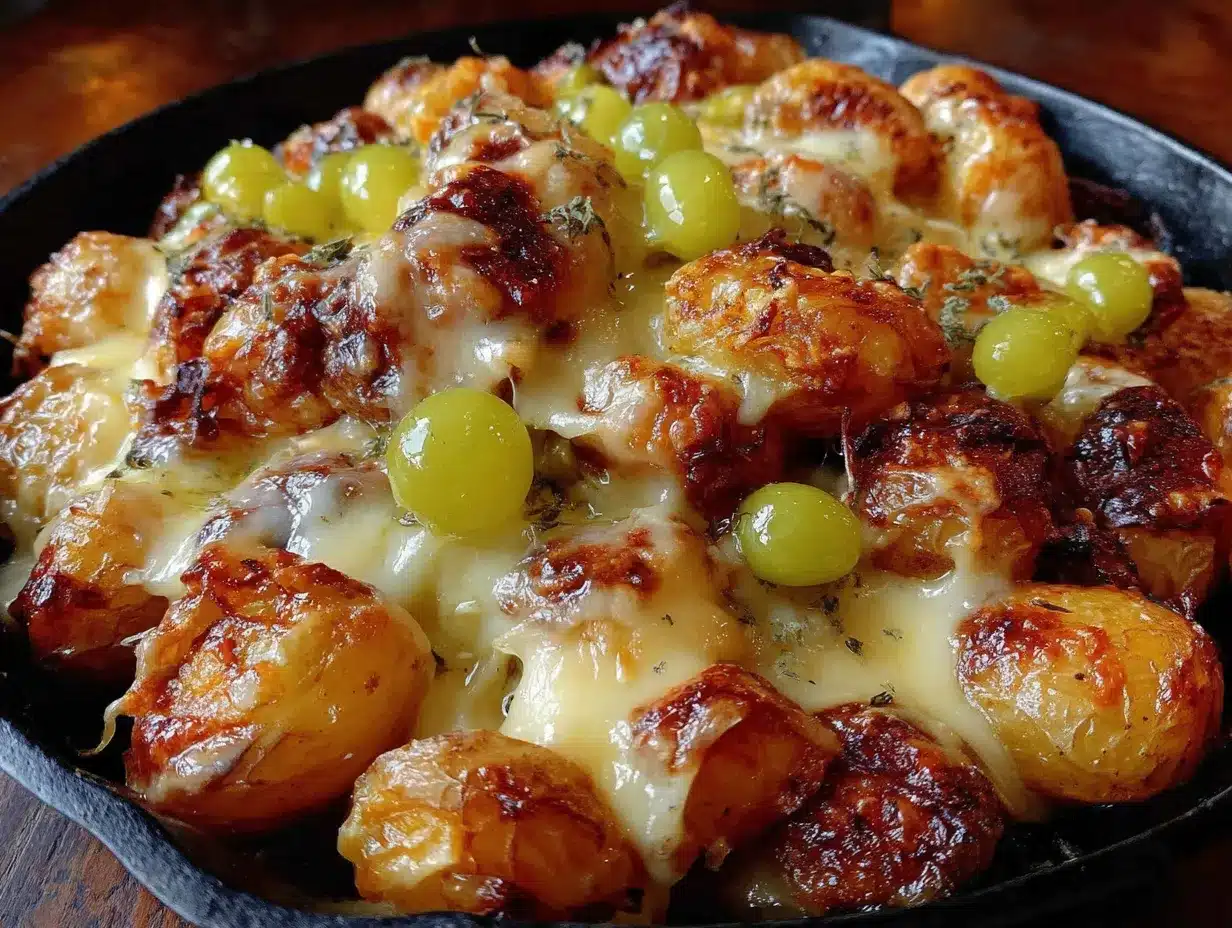
Let’s get cooking. This is straightforward, but a few details make all the difference.
- Boil the potatoes : Place the potatoes in a large pot and cover with cold water by about 2 inches. Add a generous pinch of salt. Bring to a boil over high heat, then reduce to a simmer. Cook for 15-20 minutes, or until a knife slides in easily but the potatoes still hold their shape. You don’t want them falling apart. Drain and let them cool just enough to handle.
- Slice the potatoes : Once cool enough to touch, slice each potato in half lengthwise. If you’re using larger Yukon Golds, quarter them. The goal is bite-sized pieces that are easy to eat in one or two bites. Arrange them cut-side up on your serving platter or individual plates.
- Prepare the cheese : While the potatoes cook, slice the raclette cheese into thin pieces, about 1/4 inch thick. You want slices that will melt quickly and evenly. If the cheese is too thick, it takes forever to melt and gets greasy. I learned this the hard way during a particularly impatient dinner party.
- Set up your melting station : If using a raclette grill, preheat it according to the manufacturer’s instructions. Place a slice of cheese in each little pan and let it melt, about 2-3 minutes. If using the broiler, preheat your broiler to high. Arrange the potato halves on a baking sheet, top each with a slice of cheese, and broil for 2-4 minutes until bubbly and golden. Watch carefully—broilers vary wildly, and burnt cheese is sad cheese.
- Arrange the accompaniments : While the cheese melts, arrange the cornichons, sliced red onion, and ham (if using) in small bowls on the table. This makes it easy for everyone to build their perfect bite.
- Serve immediately : As soon as the cheese is melted and bubbly, transfer the potatoes to a serving platter or individual plates. Sprinkle with freshly ground black pepper and a pinch of flaky sea salt. Garnish with fresh chives if you’re feeling fancy.
- Build your bite : The classic way to eat this is to take a warm potato, top it with a piece of melted cheese, add a cornichon, and maybe a sliver of onion. Pop the whole thing in your mouth and close your eyes. That’s the moment.
Troubleshooting Tips : If your cheese isn’t melting evenly, it might be too thick. Slice it thinner next time. If the potatoes are falling apart, you boiled them too long. Start checking at 12 minutes. If the cornichons seem too sharp, that’s actually perfect—they’re supposed to cut through the richness.
Sensory Cues : The potatoes should feel tender but firm when pierced. The cheese should be bubbly and golden on top, with a slight stretch when you pull it apart. The cornichons should snap when you bite into them. The whole thing should smell like warm potatoes, nutty cheese, and vinegar—in the best possible way.
Personal Efficiency Tip : Boil the potatoes a day ahead and keep them in the fridge. When guests arrive, just slice them, top with cheese, and broil. It saves so much stress and makes you look like a culinary genius.
Cooking Tips & Techniques
After making this dish more times than I can count, I’ve picked up a few things worth sharing.
Don’t overcook the potatoes : This is the most common mistake. Mushy potatoes don’t hold the cheese properly, and the whole thing becomes a sad, starchy mess. Test your potatoes early and often. The knife should meet some resistance but slide through easily.
Slice the cheese at room temperature : Cold cheese is harder to slice evenly and takes longer to melt. Let it sit out for 15-20 minutes before you start. This small step makes a big difference in how smoothly everything goes.
Watch the broiler like a hawk : I cannot stress this enough. Broilers are unpredictable. I’ve burned an entire batch of cheese because I turned away to answer a question about where the napkins were. Set a timer for 2 minutes and check. Add more time in 30-second increments if needed.
Multitasking strategy : While the potatoes boil, slice the cheese and arrange the accompaniments. While the cheese melts under the broiler, plate everything else. This dish comes together fast, so having everything ready before you start melting is key.
Consistency tip : Use potatoes that are similar in size. If you have a mix of small and large, the small ones will be done before the large ones are even close. I sort my potatoes by size and cook them in batches if needed. It’s a little extra work, but the results are worth it.
My biggest failure : I once tried to melt the cheese directly on the potatoes in the microwave. Don’t do this. It turns rubbery and weird. The broiler or raclette grill is the only way to go. Trust me on this one.
Variations & Adaptations
This recipe is wonderfully flexible. Here are a few ways I’ve adapted it over the years.
Vegetarian version : Skip the ham and add roasted mushrooms or caramelized onions instead. The earthy mushrooms pair beautifully with the cheese, and the sweetness of caramelized onions is a lovely contrast to the cornichons.
Spicy twist : Add a drizzle of hot honey or a sprinkle of red pepper flakes before serving. The heat plays nicely with the rich cheese and bright pickles. I tried this on a whim one night and it’s become a regular variation.
Seasonal adaptation : In the summer, swap the cornichons for pickled cherry tomatoes or grilled zucchini slices. In the fall, add roasted butternut squash cubes alongside the potatoes. The cheese works with so many vegetables—don’t be afraid to experiment.
Dietary modifications : For a gluten-free version, this dish is naturally gluten-free as written. Just double-check your cornichons and ham for any added gluten. For a lower-fat option, use less cheese and more vegetables. It won’t be the same, but it’ll still be delicious.
Different cooking method : If you don’t have a broiler or raclette grill, you can melt the cheese in a non-stick skillet over medium-low heat. Place a slice of cheese on each potato half, cover the pan, and cook for 2-3 minutes until melted. It’s not as dramatic, but it works in a pinch.
Personal variation I love : I sometimes add a thin slice of apple or pear under the cheese before melting. The fruit adds sweetness and a little texture that’s surprisingly good. My husband thought I was crazy until he tried it.
Serving & Storage Suggestions
This dish is best served immediately, while the cheese is still warm and stretchy. But there are a few tricks to make the experience even better.
Serving temperature : Serve the potatoes hot, the cheese melted and bubbly, and the accompaniments at room temperature. The contrast between warm and cool is part of what makes this dish so satisfying.
Presentation tips : Arrange the potatoes on a large wooden board or platter. Place the cheese on top, then scatter cornichons and red onion rings around the edges. Sprinkle with fresh herbs and black pepper. It looks rustic and impressive without being fussy.
What to serve alongside : A simple green salad with a sharp vinaigrette cuts through the richness beautifully. A glass of dry white wine or a light beer is perfect. For a heartier meal, serve with crusty bread and a bowl of soup.
Storage instructions : Leftover potatoes can be stored in an airtight container in the refrigerator for up to 3 days. The cheese will harden, but that’s okay. To reheat, place the potatoes on a baking sheet and warm them in a 350°F (175°C) oven for 5-7 minutes, or until the cheese is melted again. The microwave will make the cheese rubbery—avoid it if you can.
Freezer instructions : I don’t recommend freezing this dish. The potatoes become grainy and the cheese separates when thawed. It’s best enjoyed fresh.
How flavors develop : Honestly, this dish is best the day it’s made. The potatoes are at their peak, the cheese is perfectly melted, and the cornichons are still crunchy. That said, I’ve eaten leftovers cold straight from the fridge and enjoyed them. The flavors meld together in a different way, and it’s still pretty good.
Nutritional Information & Benefits
Let’s talk about what’s actually in this dish, because it’s not just delicious—it’s got some surprising benefits.
Estimated nutritional values per serving (based on 6 servings) :
- Calories: 380-420
- Protein: 18-22g
- Fat: 20-25g
- Carbohydrates: 30-35g
- Fiber: 3-4g
- Calcium: 300-400mg
Health benefits of key ingredients : Potatoes are actually a good source of vitamin C, potassium, and fiber—especially if you leave the skins on. Raclette cheese is rich in calcium and protein, which are essential for bone health and muscle function. Cornichons are low in calories and provide a small amount of vitamin K from the fermentation process.
Dietary considerations : This dish is naturally gluten-free and can be made vegetarian by omitting the ham. It’s not suitable for vegans or those with dairy sensitivities, unfortunately. If you’re watching your sodium intake, go easy on the added salt—the cheese and cornichons already bring plenty.
Potential allergens : Dairy (cheese) is the main allergen here. Some cornichons may contain sulfites, so check the label if that’s a concern.
Personal wellness perspective : I don’t make this dish every week, but when I do, I don’t worry about the numbers. It’s a treat. It’s meant to be shared with people you love. And honestly, a meal that brings people together has its own kind of nutritional value.
Conclusion
This raclette potato situation has become my go-to for hosting, and I think you’ll understand why once you try it. It’s simple enough that you won’t stress, impressive enough that your guests will think you spent hours, and delicious enough that everyone will ask for the recipe.
I love this recipe because it reminds me of that afternoon with Marianne, standing in the cold at the farmers market, learning that the best recipes come from real conversations. It’s not about perfection—it’s about connection. It’s about the way food can bring people together, even when you burn the first batch or forget the pickles.
So go ahead and make this your own. Add extra cornichons if you love them. Skip the ham if you don’t. Invite your people over, put everything on a big board, and watch them light up. That’s what this dish is really about.
I’d love to hear how it goes. Drop a comment below and tell me about your raclette night—what you served, who you shared it with, and whether you forgot the pickles like I did. And if you come up with a brilliant variation, please share it. We’re all learning from each other here.
Happy cooking, friends. Go melt some cheese.
Frequently Asked Questions
Can I make raclette potatoes ahead of time?
Yes, you can boil the potatoes up to a day in advance and store them in the fridge. When you’re ready to serve, just slice them, top with cheese, and broil. The cheese melting should happen right before serving for the best texture.
What cheese is best for raclette if I can’t find raclette cheese?
Gruyère or Fontina are excellent substitutes. They melt beautifully and have a similar nutty flavor. Avoid pre-shredded cheeses—they contain anti-caking agents that prevent smooth melting.
Can I use regular pickles instead of cornichons?
You can, but the flavor won’t be quite the same. Cornichons are smaller, tangier, and have a distinct crunch that regular dill pickles don’t match. If you must substitute, look for small gherkins or pickled baby cucumbers.
How do I prevent the cheese from burning under the broiler?
Watch it closely and set a timer for 2 minutes. Broilers vary wildly in temperature. If your broiler runs hot, move the rack to a lower position. You want the cheese bubbly and golden, not brown and crispy.
Can I make this dish vegan?
This is a tough one because the cheese is really the star. You could try a high-quality plant-based melting cheese, but I haven’t tested any personally. If you experiment, let me know in the comments how it turns out.
Pin This Recipe!
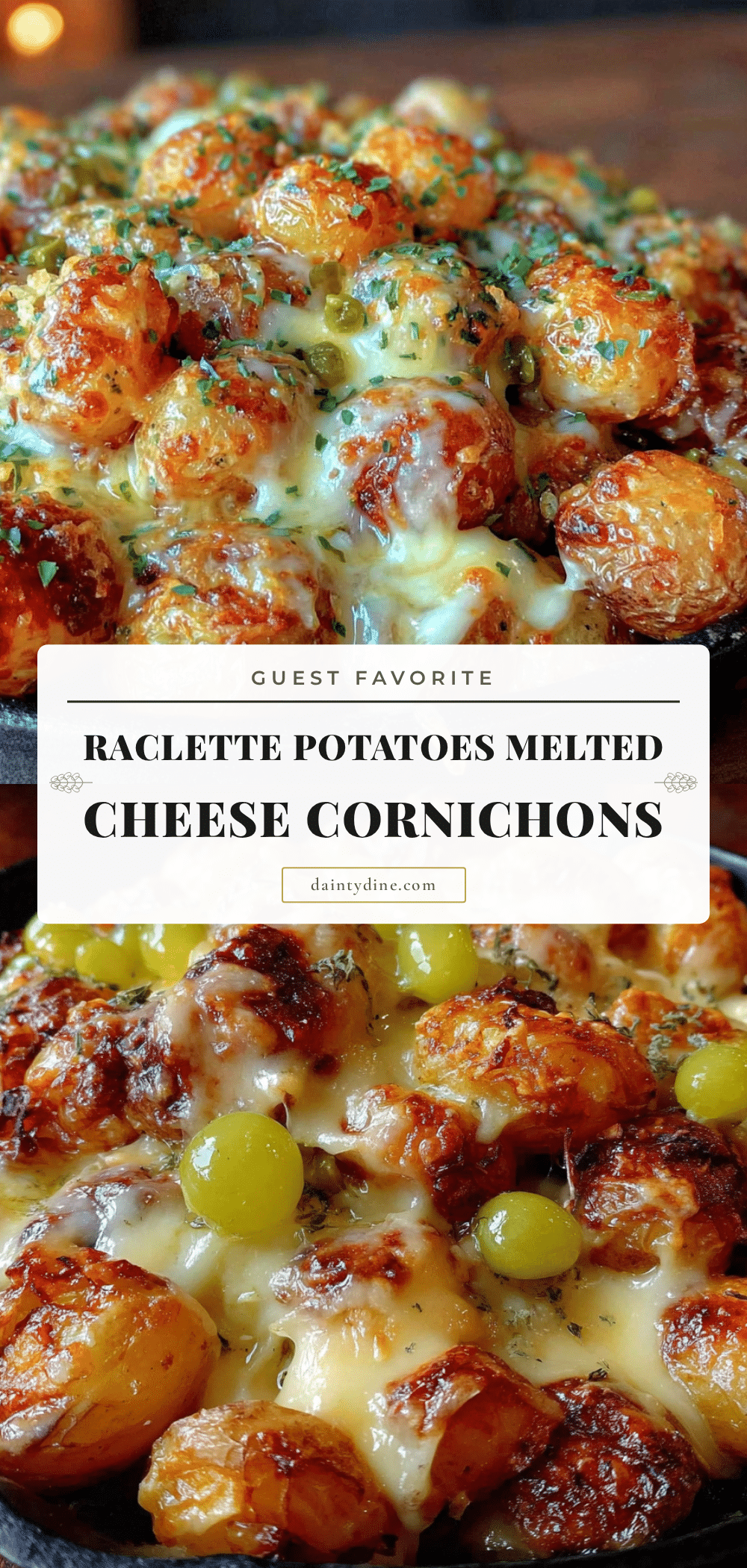
Best Guest-Favorite Raclette Potatoes with Melted Cheese

A simple yet impressive dish of boiled Yukon Gold potatoes topped with melted raclette cheese, served with cornichons, red onion, and optional cured ham. Perfect for gatherings, this interactive meal is stress-free and delicious.
- Prep Time: 15 minutes
- Cook Time: 20 minutes
- Total Time: 35 minutes
- Yield: 6 servings 1x
- Category: Main Course
- Cuisine: Swiss
Ingredients
- 1.5 kg (3 lbs) small Yukon Gold or fingerling potatoes
- 500 g (1.1 lbs) raclette cheese
- 1 cup (150 g) cornichons
- 200 g (7 oz) cured ham or prosciutto (optional)
- 1 small red onion, thinly sliced
- Freshly ground black pepper
- Flaky sea salt
- Optional: fresh chives or parsley, chopped
Instructions
- Boil the potatoes: Place potatoes in a large pot, cover with cold water by 2 inches, add salt. Bring to a boil, then simmer 15-20 minutes until tender but firm. Drain and cool slightly.
- Slice the potatoes: Once cool enough to handle, slice each potato in half lengthwise (or quarter if larger). Arrange cut-side up on a serving platter or individual plates.
- Prepare the cheese: Slice raclette cheese into thin pieces (about 1/4 inch thick).
- Set up melting station: For raclette grill, preheat and melt cheese in small pans for 2-3 minutes. For broiler, preheat to high, place potato halves on a baking sheet, top each with cheese, and broil 2-4 minutes until bubbly and golden.
- Arrange accompaniments: Place cornichons, sliced red onion, and ham (if using) in small bowls on the table.
- Serve immediately: Transfer potatoes to platter or plates. Sprinkle with black pepper and flaky sea salt. Garnish with fresh chives if desired.
- Build your bite: Take a warm potato, top with melted cheese, add a cornichon and maybe a sliver of onion. Enjoy!
Notes
Boil potatoes a day ahead to save time. Watch the broiler closely to prevent burning. For best results, slice cheese at room temperature. Cornichons are essential for the perfect balance.
Nutrition
- Serving Size: 1 serving (about 1/6
- Calories: 400
- Sugar: 2
- Sodium: 800
- Fat: 22
- Saturated Fat: 12
- Carbohydrates: 32
- Fiber: 3
- Protein: 20
Keywords: raclette, potatoes, melted cheese, Swiss, party food, comfort food, easy appetizer