Love this? Save it for later!
Share the inspiration with your friends
There used to be a tiny, unassuming bakery tucked away on a side street in the old city of Jerusalem called “Ha’Ofeh Ha’Katan” — The Little Baker. Every December, they would produce a single, perfect batch of sufganiyot that was, honestly, legendary. When the owner retired and the bakery closed its doors for good three years ago, I felt a genuine pang of loss. I mean, it sounds dramatic, but those jelly-filled donuts were a cornerstone of my Hanukkah season.
After 17 tries — including one disastrous batch that exploded in the fryer — I finally got it. This recipe is my love letter to that little bakery and the exact, pillowy, jam-packed sufganiyot that made them famous. It took me a solid year of testing, tweaking, and tasting (tough job, I know) to nail that perfect balance of a light, airy dough and a generous, fruity center.
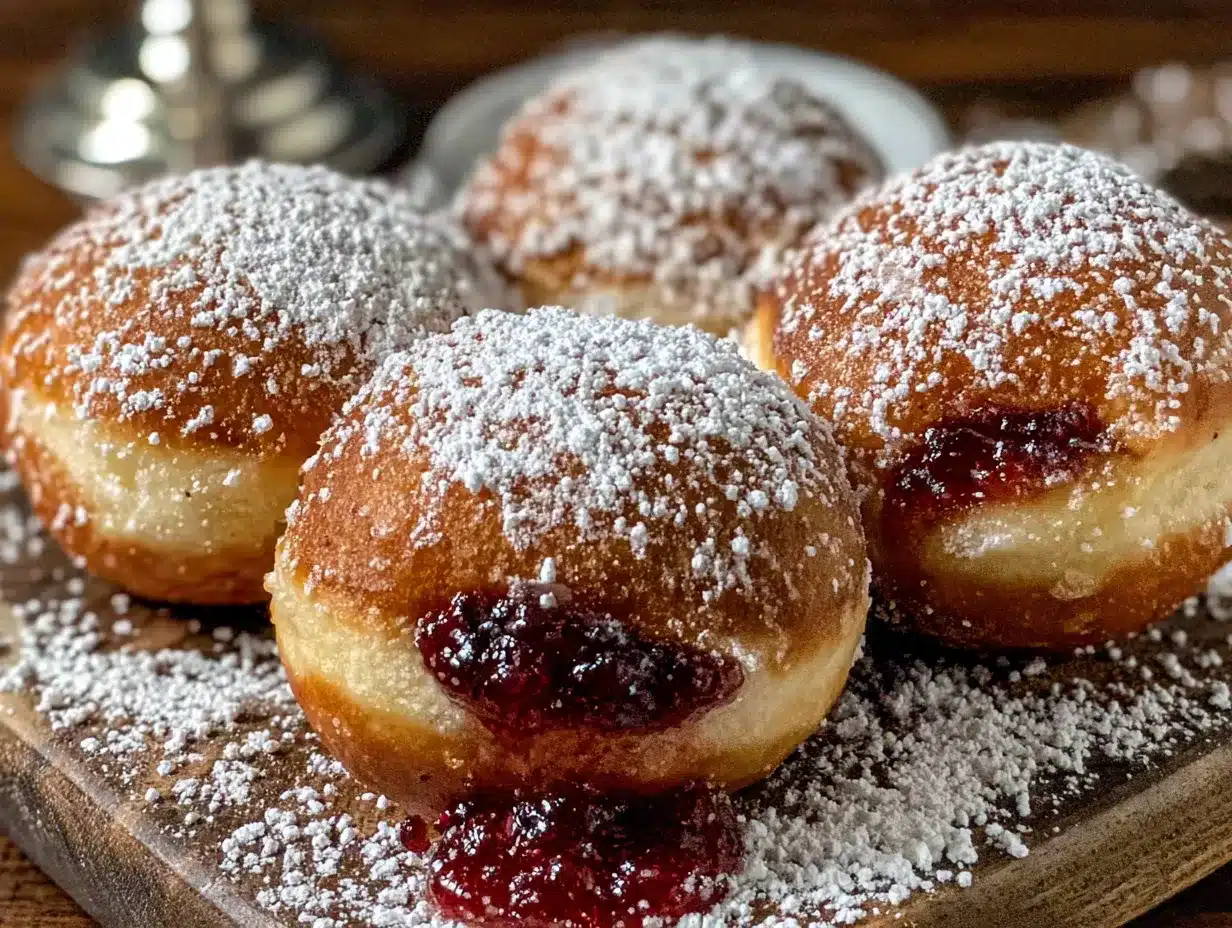
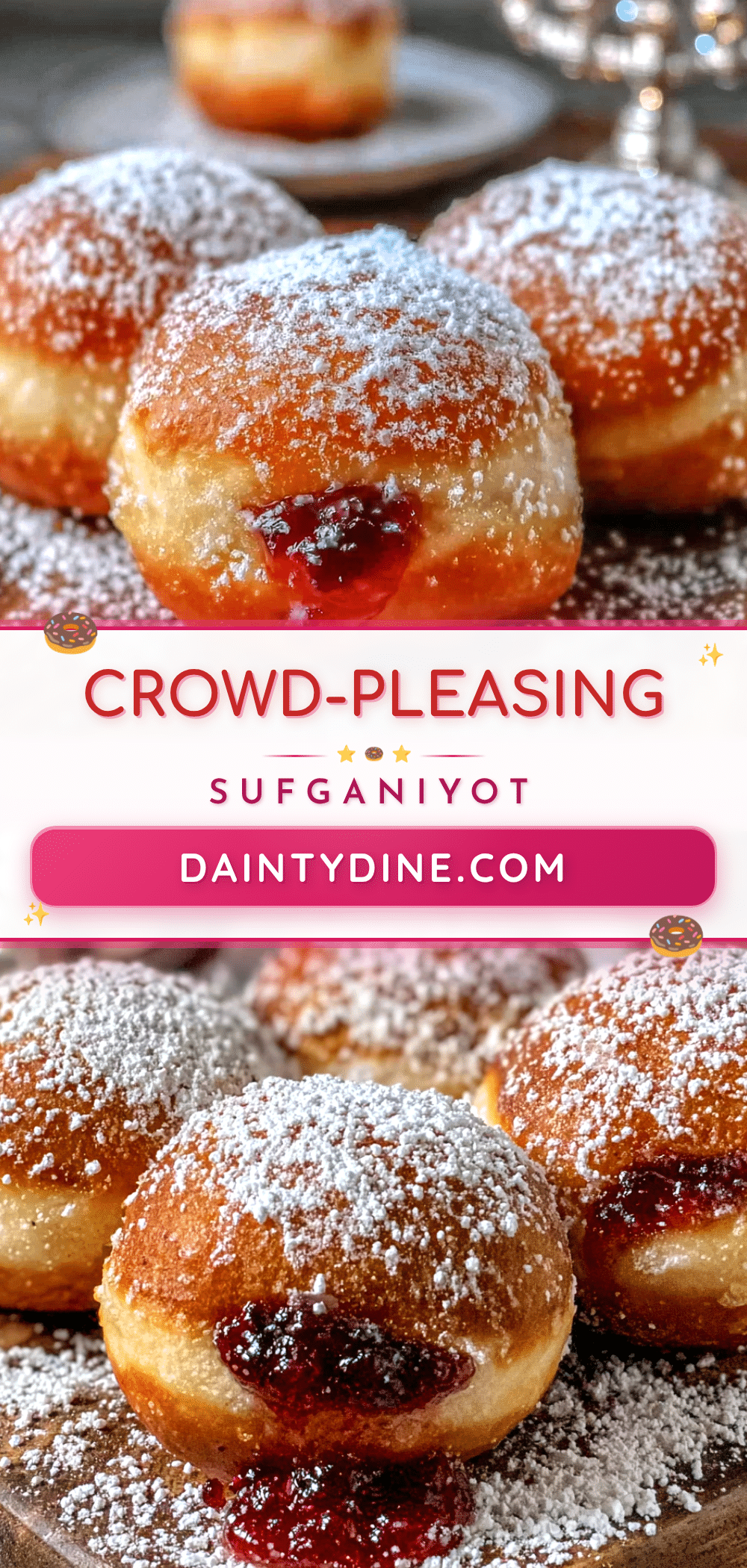
You know that moment when you bite into a sufganiyah and the jelly squirts out the side, leaving you with a sticky, happy mess? That’s the goal here. These aren’t just donuts; they are a celebration of texture and flavor. I finally cracked the code on getting them to stay fluffy for hours, which is a game-changer when you’re hosting a crowd.
Honestly, the first time I served these at my annual Hanukkah party, my friend Sarah took one bite and said, “This tastes like a memory.” And that’s exactly what I was going for. Let me tell you, recreating that specific, nostalgic flavor was an obsession, but now I get to share it with you. This is the recipe that made me stop missing that little bakery.
Why You’ll Love This Recipe
This isn’t just another donut recipe. After testing countless versions and learning from a few spectacular failures, I can confidently say this one stands apart. It’s been family-approved, guest-devoured, and even survived a road trip to a friend’s house (don’t ask).
- Foolproof Dough: I’ve tested this with different flours and temperatures, and it consistently produces a soft, pillowy texture that doesn’t turn greasy. No more hockey pucks or deflated blobs.
- Perfect for a Crowd: This recipe scales beautifully. I’ve made it for 8 people and for 40 people, and the results are always the same — empty platters and happy faces.
- Make-Ahead Friendly: The dough can be prepped the night before, so you’re not stuck in the kitchen while your guests are having fun. Just fry them fresh!
- Customizable Fillings: While classic strawberry jelly is my go-to, you can use raspberry, apricot, chocolate ganache, or even a spiced apple butter. It’s your party.
- Unbelievably Fluffy: The secret is in the rest time and the oil temperature. Get that right, and you get a donut that is light as air with a delicate, golden crust.
This recipe is the kind that makes people close their eyes after the first bite. It’s comfort food reimagined for a celebration — faster than you think, but with the same soul-soothing satisfaction. Perfect for impressing guests without the stress of a complicated dessert.
What Ingredients You Will Need
This recipe uses simple, wholesome ingredients to deliver that bakery-quality flavor and texture. Most of these are pantry staples, which makes this a last-minute hero recipe for any holiday gathering.
For the Dough
- 3 ½ cups (440g) all-purpose flour: I prefer King Arthur Flour for its consistent protein content, which gives a great structure. Spoon and level your flour — don’t scoop directly from the bag!
- ¼ cup (50g) granulated sugar: This adds a touch of sweetness and helps with browning.
- 1 packet (2 ¼ tsp) active dry yeast: Make sure your yeast is fresh. I always proof mine in warm water with a pinch of sugar first to make sure it’s alive.
- ½ cup (120ml) warm milk (around 110°F): Whole milk works best for richness, but 2% is fine too. Don’t use skim — the fat is important for tenderness.
- ¼ cup (60ml) warm water: This helps the yeast activate.
- 3 large eggs, room temperature: This is crucial! Cold eggs will shock the dough and slow down rising. Let them sit out for an hour.
- 4 tablespoons (56g) unsalted butter, softened: I use European-style butter for a richer flavor, but regular is fine. Cut it into small cubes so it incorporates easily.
- 1 teaspoon vanilla extract: Pure, not imitation, if you can swing it. It adds a lovely warmth.
- ½ teaspoon salt: Don’t skip this — it balances the sweetness and controls the yeast.
For Frying & Topping
- 6 cups (1.5 liters) vegetable or canola oil: You need enough oil for the donuts to float freely. Peanut oil works great too for a slightly nutty flavor.
- ½ cup (100g) granulated sugar: For rolling the hot donuts. Some people use powdered sugar, but granulated gives that classic, slightly crunchy coating.
- 1 cup (320g) good quality strawberry jam or jelly: Seedless is easiest for piping. I love Bonne Maman for its intense fruit flavor.
Substitution Tip: If you need a dairy-free version, use oat milk and vegan butter. The texture will be slightly less tender, but it still works beautifully. For a gluten-free option, a 1:1 gluten-free flour blend with xanthan gum is your best bet, though the dough will be a bit stickier.
Equipment Needed
You don’t need a deep fryer for these — just a few basic tools you probably already have. I learned the hard way that the right equipment makes all the difference here.
- Large, heavy-bottomed pot or Dutch oven: This is non-negotiable for even heat distribution. A thin pot will give you hot spots and uneven browning.
- Deep-fry thermometer: Honestly, this is the most important tool. Without it, you’re guessing, and guessing leads to greasy or burnt donuts. A clip-on candy thermometer is perfect.
- Stand mixer with dough hook: You can knead by hand, but a mixer makes it so much easier. I’ve done both, and the mixer gives a more consistent result.
- Slotted spoon or spider strainer: For gently lowering and removing the donuts from the hot oil.
- Piping bag with a round tip (or a Bismarck tip): A Bismarck tip is long and narrow, perfect for injecting jelly into the center. A regular round tip works too, just make a small hole.
- Cooling rack set over a baking sheet: This prevents the bottoms from getting soggy while they cool.
- 2-inch round cookie cutter: For cutting out the donuts. A drinking glass works in a pinch, but a sharp cutter gives cleaner edges.
If you don’t have a stand mixer, a large bowl and a sturdy wooden spoon will work. It’ll just take a bit more elbow grease. And for the piping bag, a heavy-duty zip-top bag with the corner snipped off is a great budget-friendly alternative.
Preparation Method
Let’s get to the good part. I’ve broken this down into steps that are easy to follow, with all the little tricks I learned from my many, many attempts. Take your time with the dough — it rewards patience.
- Proof the yeast (5 minutes): In the bowl of your stand mixer, combine the warm water, warm milk, and a pinch of sugar. Sprinkle the yeast on top and let it sit for 5-7 minutes until it gets foamy. If it doesn’t foam, your yeast is dead — start over with fresh yeast. I learned this one the hard way on attempt number three.
- Make the dough (10 minutes): Add the eggs, vanilla extract, sugar, and salt to the yeast mixture. Mix on low with the dough hook until combined. Add 2 cups of the flour and mix until a shaggy dough forms. Add the softened butter, one cube at a time, mixing on medium-low after each addition. It will look messy at first — that’s okay. Gradually add the remaining flour, ½ cup at a time, until the dough pulls away from the sides of the bowl. You might not need all the flour; the dough should be soft and slightly tacky, not sticky.
- First rise (1 to 1.5 hours): Transfer the dough to a lightly oiled bowl, turning to coat. Cover with plastic wrap or a clean kitchen towel. Let it rise in a warm, draft-free spot until doubled in size. I like to put mine in the oven with the light on — it’s the perfect temperature. Don’t rush this step; a slow rise develops better flavor.
- Shape the donuts (15 minutes): Punch the dough down gently to release the air. Turn it out onto a lightly floured surface. Roll the dough out to ½-inch thickness. Use your 2-inch cutter to cut out rounds. Re-roll the scraps once and cut more rounds. You should get about 24-30 donuts. Place them on a parchment-lined baking sheet, spacing them about 2 inches apart. Cover loosely with a towel.
- Second rise (30-45 minutes): Let the cut donuts rise until they are puffy and almost doubled. This is a shorter rise, but it’s critical for that airy texture. They should feel light and pillowy when you gently poke them.
- Heat the oil (10 minutes): While the donuts are rising, pour the oil into your heavy pot. It should be about 2 inches deep. Heat over medium heat until it reaches 350°F (175°C). Use your thermometer! If the oil is too hot, the donuts will brown on the outside and stay raw inside. Too cool, and they’ll absorb oil and become greasy.
- Fry the donuts (2-3 minutes total): Carefully lower 3-4 donuts into the hot oil using your slotted spoon. Don’t overcrowd the pot — they need room to puff up. Fry for 60-90 seconds per side, until deep golden brown. They will puff up significantly. Flip them gently using your spoon. The first batch is always a test batch — don’t worry if they aren’t perfect.
- Drain and coat (2 minutes): Transfer the fried donuts to your cooling rack. Let them drain for about 30 seconds, then immediately roll them in the bowl of granulated sugar. The sugar sticks best when the donuts are still warm. Work quickly!
- Fill the donuts (5 minutes): Let the donuts cool completely before filling. If you fill them while hot, the jelly will melt and run out. Fit your piping bag with the Bismarck tip and fill it with jam. Insert the tip into the side of each donut and gently squeeze until you feel the donut swell slightly. Don’t overfill, or you’ll get a burst! A little jelly peeking out is perfect.
- Serve immediately: These are best eaten within a few hours of frying. The magic is in that fresh, crispy exterior and soft, jammy center.
Sensory Cue: When the donut hits the oil, it should sizzle immediately. It will puff up and float to the surface within 15 seconds. The color should be a rich, even amber — not pale or burnt. You’ll smell that sweet, yeasty aroma as they cook. That’s the smell of success.
Cooking Tips & Techniques
I’ve made every mistake in the book so you don’t have to. Here are the hard-won lessons that will make your sufganiyot absolutely perfect.
Oil Temperature is Everything: I cannot stress this enough. On my fourth attempt, I got distracted and let the oil climb to 380°F. The donuts looked beautiful on the outside but were completely raw in the center. Keep that thermometer clipped to the pot and watch it like a hawk. The temperature will drop when you add the donuts, so let the oil come back to 350°F between batches.
Don’t Skip the Rest: The second rise is where the magic happens. I once tried to rush it by only letting them rest for 15 minutes, and the donuts came out dense and heavy. They need that time to develop air pockets. If your kitchen is cold, place the tray in the oven with just the light on.
The Flip Technique: Use a slotted spoon, not tongs. Tongs can deflate the delicate donut. Gently slide the spoon under the donut and flip it in one smooth motion. I’ve had a few flips go wrong, and the donut landed back in the oil with a splash — not fun.
Batch Size Matters: Frying too many at once drops the oil temperature too much. I fry 3-4 at a time in a 6-quart pot. It takes longer, but the results are consistent. Patience is a virtue when frying.
Testing the First One: Always fry one test donut first. This gives you a chance to check the oil temperature and the dough texture. If it’s too dark, lower the heat. If it’s pale and greasy, raise it. That first donut is a sacrifice to the donut gods.
My Biggest Failure: On attempt number eleven, I used cold eggs straight from the fridge. The dough was stiff and wouldn’t rise properly. The resulting donuts were tough and chewy. Room temperature ingredients are not a suggestion — they are a requirement. Set your eggs out an hour before you start.
Variations & Adaptations
One of the best things about this recipe is how versatile it is. I’ve experimented with all sorts of fillings and toppings, and here are some of my favorites.
- Classic Jelly Swap: While strawberry is traditional, raspberry, apricot, or even a tart cherry jam are fantastic. For a grown-up twist, try a fig jam with a splash of balsamic vinegar. The tanginess cuts through the sweetness beautifully.
- Chocolate Lover’s Version: Fill the donuts with a thick chocolate ganache instead of jelly. Use ½ cup heavy cream and 4 ounces of dark chocolate, melted together. Let it cool slightly before piping. I served these at a party and they vanished in five minutes.
- Spiced Apple Filling: For a fall-inspired version, cook down diced apples with cinnamon, nutmeg, and a little brown sugar until thick. Let it cool completely before using. This is my personal favorite for a cozy night in.
- Vegan Adaptation: Use a flax egg (1 tablespoon ground flaxseed mixed with 3 tablespoons water per egg) and plant-based milk and butter. The texture will be slightly denser, but still delicious. I’ve tested this for friends with dietary restrictions, and it works.
- Baked Version: If deep-frying isn’t your thing, you can bake these at 375°F for 10-12 minutes. They won’t be as fluffy or golden, but they are a lighter alternative. Brush them with melted butter after baking and roll in cinnamon sugar.
I once tried a batch filled with lemon curd and topped with a dusting of powdered sugar. It was a bright, sunny twist that felt totally different from the traditional version. Don’t be afraid to experiment — that’s half the fun!
Serving & Storage Suggestions
These sufganiyot are best enjoyed fresh, but I have a few tricks for making them work for a party schedule. Presentation matters too, especially when you’re hosting.
Serving Temperature: Serve these at room temperature. If you fill them too early, the jelly can make the interior soggy. I like to fry them, coat them in sugar, and let them cool completely on a rack. Then I fill them just before my guests arrive. Arrange them on a beautiful platter, and maybe dust with a little extra powdered sugar for a snow-dusted effect.
What to Serve Alongside: These are rich, so a light side is perfect. A platter of fresh fruit — sliced apples, pears, and grapes — balances the sweetness. For drinks, hot coffee or spiced tea is classic. For a Hanukkah party, a glass of kosher wine or a warm mug of spiced apple cider is wonderful.
Storage Instructions: If you have leftovers (unlikely!), store them in an airtight container at room temperature for up to 1 day. Do not refrigerate — it dries them out. They are best reheated in a 350°F oven for 3-4 minutes to crisp up the exterior. Never microwave them, or you’ll get a sad, rubbery donut.
Freezing: You can freeze the unfilled, uncoated donuts after they’ve cooled completely. Place them in a single layer on a baking sheet and freeze until solid, then transfer to a freezer bag. They’ll keep for up to 1 month. To serve, reheat in a 350°F oven for 5 minutes, then roll in sugar and fill. The texture is remarkably close to fresh.
Flavor Development: Honestly, these don’t get better with time. The magic is in that first few hours. That’s why I always fry them right before my party starts. The aroma of fresh donuts fills the house, and everyone gravitates to the kitchen. It’s a beautiful thing.
Nutritional Information & Benefits
Let’s be real — these are a treat, not a health food. But knowing what’s in them helps you enjoy them mindfully, especially when you’re sharing with a crowd.
- Estimated per donut (based on 24): Calories: 180, Fat: 8g, Carbs: 25g, Protein: 4g, Sugar: 10g. These are estimates and will vary based on oil absorption and filling type.
- Key Ingredients: The eggs provide protein and B vitamins, while the butter adds a small amount of vitamin A. The jam contributes a bit of fruit, though it’s mostly sugar.
- Dietary Considerations: This recipe contains gluten, dairy, and eggs. For gluten-free or vegan options, see the variations section above.
- Allergen Note: The frying oil can be a concern for those with nut allergies if you use peanut oil. Stick with vegetable or canola for a nut-free version.
- Personal Perspective: I believe in balance. These donuts are a celebration food, meant to be enjoyed with loved ones. One or two is plenty, and they are worth every single calorie. It’s about the experience, not the numbers.
Conclusion
This recipe is more than just a list of ingredients — it’s a way to bring a little bit of that magical bakery into your own home. After 17 tries, I can honestly say this is the version that makes me close my eyes and smile. It’s the one I serve at every Hanukkah party, the one that gets requested year after year, and the one that finally made me stop missing Ha’Ofeh Ha’Katan.
I hope you make these for your next gathering. I hope you fill them with your favorite jam and watch your guests’ faces light up. Don’t be afraid to make them your own — swap the filling, play with the toppings, and enjoy the process. The kitchen is meant to be a place of joy, not perfection.
If you try this recipe, I’d love to hear about it! Leave a comment below and tell me how they turned out. What filling did you use? Did you make any adaptations? Share your photos on social media and tag me — I love seeing your creations. Happy Hanukkah, and happy frying!
Frequently Asked Questions
Can I make the dough ahead of time?
Yes! After the first rise, punch down the dough and refrigerate it overnight, covered tightly. The next day, let it come to room temperature for about 30 minutes before rolling and cutting. This actually develops a deeper flavor.
Why did my donuts come out greasy?
Greasy donuts are usually a sign that the oil wasn’t hot enough. If the oil is below 325°F, the donuts absorb too much oil before they cook through. Always preheat to 350°F and maintain that temperature between batches.
Can I use a different type of jam?
Absolutely! Any seedless jam or jelly works well. Raspberry, apricot, and cherry are all fantastic. Just make sure it’s thick enough that it doesn’t run out of the donut. If it’s too thin, cook it down for a few minutes on the stove.
How do I know when the donuts are done frying?
Look for a deep golden brown color on both sides. The donuts will also puff up significantly and feel light when you lift them with your slotted spoon. The total fry time is usually 2-3 minutes.
Can I bake these instead of frying?
Yes, but the texture will be different — more like a yeast roll than a donut. Bake at 375°F for 10-12 minutes on a parchment-lined baking sheet. Brush with melted butter and roll in sugar immediately after baking. They are still delicious, just not as fluffy.
Pin This Recipe!
Best Easy Sufganiyot Recipe – Perfect Jelly-Filled Donuts
After 17 tries, this recipe finally captures the perfect, pillowy, jam-packed sufganiyot from a legendary Jerusalem bakery. These light, airy donuts with a generous fruity center are a celebration of texture and flavor, perfect for Hanukkah or any gathering.
- Prep Time: 30 minutes
- Cook Time: 15 minutes
- Total Time: 2 hours 30 minutes
- Yield: 24-30 donuts 1x
- Category: Dessert
- Cuisine: Jewish
Ingredients
- 3 ½ cups (440g) all-purpose flour
- ¼ cup (50g) granulated sugar
- 1 packet (2 ¼ tsp) active dry yeast
- ½ cup (120ml) warm milk (around 110°F)
- ¼ cup (60ml) warm water
- 3 large eggs, room temperature
- 4 tablespoons (56g) unsalted butter, softened
- 1 teaspoon vanilla extract
- ½ teaspoon salt
- 6 cups (1.5 liters) vegetable or canola oil (for frying)
- ½ cup (100g) granulated sugar (for coating)
- 1 cup (320g) good quality strawberry jam or jelly (for filling)
Instructions
- Proof the yeast: In the bowl of your stand mixer, combine the warm water, warm milk, and a pinch of sugar. Sprinkle the yeast on top and let it sit for 5-7 minutes until it gets foamy.
- Make the dough: Add the eggs, vanilla extract, sugar, and salt to the yeast mixture. Mix on low with the dough hook until combined. Add 2 cups of the flour and mix until a shaggy dough forms. Add the softened butter, one cube at a time, mixing on medium-low after each addition. Gradually add the remaining flour, ½ cup at a time, until the dough pulls away from the sides of the bowl. The dough should be soft and slightly tacky.
- First rise: Transfer the dough to a lightly oiled bowl, turning to coat. Cover with plastic wrap or a clean kitchen towel. Let it rise in a warm, draft-free spot until doubled in size, about 1 to 1.5 hours.
- Shape the donuts: Punch the dough down gently. Turn it out onto a lightly floured surface. Roll the dough out to ½-inch thickness. Use a 2-inch round cookie cutter to cut out rounds. Re-roll the scraps once and cut more rounds. Place them on a parchment-lined baking sheet, spacing them about 2 inches apart. Cover loosely with a towel.
- Second rise: Let the cut donuts rise until they are puffy and almost doubled, about 30-45 minutes.
- Heat the oil: Pour the oil into a heavy pot to about 2 inches deep. Heat over medium heat until it reaches 350°F (175°C).
- Fry the donuts: Carefully lower 3-4 donuts into the hot oil using a slotted spoon. Fry for 60-90 seconds per side, until deep golden brown. Flip gently using the spoon.
- Drain and coat: Transfer the fried donuts to a cooling rack. Let them drain for about 30 seconds, then immediately roll them in a bowl of granulated sugar.
- Fill the donuts: Let the donuts cool completely. Fit a piping bag with a Bismarck tip and fill it with jam. Insert the tip into the side of each donut and gently squeeze until the donut swells slightly.
- Serve immediately: These are best eaten within a few hours of frying.
Notes
Oil temperature is critical: maintain 350°F. Room temperature ingredients are essential. The second rise is crucial for airy texture. Fry a test donut first to check oil temperature. For best results, fill donuts just before serving.
Nutrition
- Serving Size: 1 donut
- Calories: 180
- Sugar: 10
- Sodium: 95
- Fat: 8
- Saturated Fat: 3
- Carbohydrates: 25
- Fiber: 1
- Protein: 4
Keywords: sufganiyot, jelly donuts, Hanukkah donuts, fried donuts, jelly-filled donuts, holiday dessert