Love this? Save it for later!
Share the inspiration with your friends
Maggie wasn’t trying to impress anyone. I’d stopped by to borrow her stand mixer—mine had finally given up after a decade of loyal service—and the smell hit me before I even got through the back door. Something nutty, warm, and deeply savory wrapped around me like a hug. She was standing at the stove, stirring a pan of butter that was turning the most incredible shade of amber, completely nonchalant about it. “Oh, that’s just stuffing,” she said when I asked. “I’m trying to use up some old sourdough.” Just stuffing. As if she hadn’t just created something that smelled like Thanksgiving had moved into her kitchen a month early. I stood there watching her pour that brown butter over cubed bread, and honestly, I think I forgot why I’d come over in the first place. She didn’t have a recipe written down—just a handful of sage leaves, some day-old sourdough, and that magical butter situation happening on the stove. I scribbled notes on a napkin while she talked me through it, and I’ve been making it ever since. Maybe you’ve been there, watching someone cook something incredible and realizing they don’t even know how good they are. That’s this stuffing. It’s the kind of recipe that makes you feel like you’ve discovered a secret.
So here’s the thing—this isn’t your grandmother’s stuffing that bakes for an hour and comes out soft and bread-pudding-like. This one gets crispy edges, tender centers, and that brown butter-sage flavor that makes everything taste like you spent hours in the kitchen. But you didn’t. You spent maybe 30 minutes, tops. And that’s the magic of it.
Why You’ll Love This Recipe
Let me tell you why this stuffing has become my go-to for every holiday and random Tuesday dinner. I’ve made it for Thanksgiving, for Christmas, for a random Sunday roast, and even as a side dish for roasted chicken on a regular weeknight. It delivers every single time.
- Quick & Easy: This comes together in about 30 minutes of active time. The oven does the rest. Perfect for busy weeknights when you want something special without the fuss.
- Simple Ingredients: You probably already have sourdough bread, butter, sage, onions, and celery in your kitchen. No fancy grocery trips required.
- Perfect for Weeknights: Unlike traditional stuffing that takes forever, this one is designed for real life. It’s ready when you need it.
- Crowd-Pleaser: I’ve served this to kids, picky eaters, and serious food people. Everyone goes back for seconds. The crispy edges are basically irresistible.
- Unbelievably Delicious: That brown butter-sage combo? It’s next-level. The nuttiness of the butter plus the earthy sage creates something that tastes way more complicated than it actually is.
What makes this different from other stuffing recipes is the technique. Most recipes dump butter on bread and call it done. Here, you brown the butter first, which takes about 5 minutes but adds this incredible depth. The sage gets crispy in that butter, and then everything gets tossed together and baked until golden. It’s not just another version—it’s the best version.
This is comfort food that feels special but doesn’t demand your whole evening. It’s the kind of dish that makes you close your eyes after the first bite and forget you were tired. Honestly, that’s the best kind of recipe.
What Ingredients You Will Need
This recipe uses simple, mostly pantry-staple ingredients to deliver big flavor without the hassle. Here’s what you’ll need and why each one matters.
- Sourdough bread, 8 cups cubed (about 1 large loaf): Day-old or slightly stale works best. The dryness helps it absorb the butter mixture without turning mushy. If your bread is fresh, cube it and leave it out overnight, or toast it in a 300°F oven for 10 minutes. I prefer a rustic loaf from the bakery section—it has better texture than pre-sliced sandwich bread.
- Unsalted butter, 8 tablespoons (1 stick): You’ll brown this, so unsalted is important. Salted butter can get too salty as it reduces. I use Kerrygold or Plugrà for the best flavor, but any good unsalted butter works.
- Fresh sage leaves, 12-15 leaves: Don’t use dried sage here—it just isn’t the same. Fresh sage gets crispy and fragrant in the brown butter, and that’s where the magic happens. Look for leaves that are vibrant green and not wilted.
- Yellow onion, 1 medium, diced: About 1 cup. Yellow onion has the right balance of sweetness and bite. White onion works too, but red onion can be too sharp.
- Celery, 3 ribs, diced: About 1 cup. Celery adds that classic stuffing crunch and freshness. Don’t skip it—it balances the richness of the brown butter.
- Chicken or vegetable broth, 1½ cups: Low-sodium is best so you can control the salt. Homemade broth makes this even better, but store-bought works fine. Use vegetable broth for a vegetarian version.
- Egg, 1 large: This helps bind the stuffing together without making it heavy. If you’re vegan, you can use a flax egg (1 tablespoon flaxseed meal plus 3 tablespoons water).
- Salt, 1 teaspoon: I use kosher salt. If you’re using table salt, reduce to ¾ teaspoon.
- Black pepper, ½ teaspoon: Freshly ground is always better.
- Fresh parsley, 2 tablespoons chopped (optional): For garnish. It adds a pop of color and freshness.
Ingredient Tips: For the best texture, use sourdough that’s at least 2-3 days old. The tanginess of the sourdough pairs beautifully with the nutty brown butter. If you don’t have sourdough, a good crusty Italian or French bread works too, but you’ll miss that slight tang. Also, feel free to add a cup of cooked crumbled sausage or diced mushrooms for extra heartiness—both work great here.
Equipment Needed
You don’t need much for this recipe, which is part of why I love it. Here’s what you’ll need:
- Large skillet or sauté pan: A 12-inch skillet is ideal for browning the butter and cooking the aromatics. I use my cast iron skillet for this—it holds heat beautifully and gives the butter a nice even browning.
- Large mixing bowl: For tossing the bread cubes with the butter mixture and broth. Any big bowl works.
- 9×13-inch baking dish: This is the perfect size for this amount of stuffing. A 2-quart casserole dish works too.
- Wooden spoon or spatula: For stirring the butter as it browns. A silicone spatula works too, but I prefer wood for this.
- Chef’s knife and cutting board: For dicing the onion, celery, and sage.
- Measuring cups and spoons: For accuracy.
If you don’t have a 9×13 dish, you can use a 10-inch cast iron skillet for a more rustic look. Just make sure it’s oven-safe. I’ve also made this in individual ramekins for a dinner party—it looks adorable and cooks in about 15 minutes less time.
Preparation Method

Alright, let’s get cooking. This comes together faster than you think, so have everything prepped and ready before you start.
- Preheat your oven to 375°F. Position a rack in the middle of the oven. While it’s heating, get your bread ready. If your sourdough isn’t already stale, spread the cubes on a baking sheet and toast for 8-10 minutes, tossing halfway through. You want them dry but not hard.
- Start the brown butter. Place your large skillet over medium heat and add the stick of butter. Let it melt completely, then swirl the pan occasionally. After about 3-4 minutes, the butter will start to foam and turn golden. Watch carefully—it goes from brown to burnt quickly. When you see amber-colored specks forming at the bottom and it smells nutty and amazing, it’s ready. This usually takes 5-6 minutes total.
- Add the sage leaves. Once the butter is browned, carefully drop in the sage leaves. They’ll sizzle and crisp up in about 30 seconds. Use a slotted spoon to remove them and set them aside on a paper towel. They’ll get even crispier as they cool.
- Cook the aromatics. Add the diced onion and celery to the brown butter remaining in the skillet. Cook over medium heat, stirring occasionally, for about 5-6 minutes until the onion is translucent and the celery is tender. The smell at this point is incredible—that brown butter plus onion is pure comfort.
- Combine the bread and butter mixture. Place the bread cubes in your large mixing bowl. Pour the onion-celery-butter mixture over the bread and toss gently to coat. Don’t stir too hard—you want the bread to stay in chunks.
- Add the broth and egg. In a small bowl, whisk together the broth and egg until combined. Pour this over the bread mixture and toss again. The bread should be moist but not soggy. If it looks dry, add a splash more broth.
- Season and transfer. Add the salt and pepper, and toss one more time. Crumble half the crispy sage leaves into the mixture. Transfer everything to your greased 9×13 baking dish and spread it evenly.
- Bake. Bake for 25-30 minutes, until the top is golden brown and crispy. The edges should be darker and crunchy, while the center stays tender. About halfway through, give it a gentle stir with a fork to ensure even cooking.
- Rest and garnish. Let the stuffing rest for 5 minutes after it comes out of the oven. Top with the remaining crispy sage leaves and the chopped parsley if using. Serve warm.
Pro tip: If you want extra crispy edges, spread the stuffing in a thinner layer in a larger dish. It’ll cook faster too—check it at 20 minutes.
Cooking Tips & Techniques
I’ve made this stuffing more times than I can count, and I’ve learned a few things along the way. Here are my best tips for getting it perfect every time.
Don’t rush the brown butter. This is the most important step. Medium heat is your friend—too high and the butter burns before it browns. Swirl the pan constantly and trust your nose. When it smells like toasted nuts, you’re there. I once got distracted and ended up with black butter. The whole kitchen smelled terrible, and I had to start over. Learn from my mistake.
Use day-old bread. Fresh bread turns into mush. If your bread is too fresh, cube it and let it sit out uncovered for a few hours, or toast it in the oven. Dry bread absorbs the butter mixture evenly without falling apart.
Don’t overmix. When you add the broth and egg, toss gently. You want some bread pieces to stay intact for texture. Overmixing turns everything into paste.
Check for doneness. The top should be golden and crispy, and the center should be hot throughout. If the top is browning too fast, cover loosely with foil for the last 10 minutes.
Make it ahead. You can assemble the stuffing up to a day in advance. Just cover it and refrigerate. Add 10-15 minutes to the baking time if starting from cold. This is a lifesaver on Thanksgiving when the oven is full of other things.
My biggest failure: I once tried to double this recipe in a pan that was too small. The center was undercooked while the edges burned. Trust the pan size—if you double it, use two dishes or a larger one.
Variations & Adaptations
This recipe is flexible, and I’ve tried several variations over the years. Here are some of my favorites.
Add sausage: Brown ½ pound of Italian sausage (casings removed) in the skillet before starting the butter. Remove it, then proceed with the recipe. Crumble the cooked sausage into the bread mixture. This turns it into a heartier dish that could almost be a main course.
Go vegetarian: Use vegetable broth instead of chicken broth. Add 8 ounces of cremini mushrooms, sliced and sautéed with the onion and celery. The mushrooms add umami that mimics the meaty depth.
Add apples or pears: Dice one apple or pear and add it with the onion and celery. The sweetness balances the savory brown butter beautifully. I did this for a fall dinner party and everyone raved about it.
Make it gluten-free: Use gluten-free sourdough bread. The rest of the ingredients are naturally gluten-free. Just make sure your broth is certified gluten-free if needed.
Add nuts: Toast ½ cup of pecans or walnuts and stir them in before baking. The crunch is lovely against the soft bread.
Spice it up: Add ¼ teaspoon of red pepper flakes with the sage for a subtle heat. It’s unexpected but really works.
I once made a version with dried cranberries and orange zest for Christmas dinner. The tartness cut through the richness perfectly. Don’t be afraid to experiment—this recipe is forgiving.
Serving & Storage Suggestions
This stuffing is best served warm, straight from the oven. The contrast between the crispy top and tender interior is at its peak right after baking. But it’s still delicious at room temperature—honestly, I’ve eaten it cold from the fridge and loved it.
Serving ideas: This pairs beautifully with roasted chicken, turkey, pork chops, or even a simple roast beef. For a vegetarian meal, serve it alongside a hearty salad or roasted vegetables. It also works as a stuffing for roasted acorn squash halves—just spoon it in and bake.
Storage: Leftovers keep in the fridge for up to 4 days in an airtight container. The texture softens a bit, but the flavor deepens. I actually think it’s even better the next day.
Reheating: The best way to reheat is in a 350°F oven for 10-15 minutes, which restores some of the crispiness. The microwave works in a pinch, but the texture won’t be as good. If you’re reheating a large batch, add a splash of broth to keep it moist.
Freezing: You can freeze the unbaked stuffing for up to 3 months. Assemble it in the baking dish, wrap tightly with plastic wrap and foil, and freeze. Thaw overnight in the fridge, then bake as directed, adding 10-15 minutes. Baked stuffing also freezes well—just reheat straight from frozen in a 350°F oven for about 30 minutes.
Make-ahead tip: If you’re serving this for a holiday meal, assemble it the day before and keep it covered in the fridge. It actually helps the flavors meld together. Just remember to add those extra minutes to the baking time.
Nutritional Information & Benefits
Here’s the approximate nutritional breakdown per serving (based on 8 servings):
| Nutrient | Amount per Serving |
|---|---|
| Calories | 285 |
| Total Fat | 14g |
| Saturated Fat | 8g |
| Cholesterol | 55mg |
| Sodium | 520mg |
| Total Carbohydrates | 32g |
| Dietary Fiber | 2g |
| Sugars | 4g |
| Protein | 7g |
Health benefits: Sourdough bread is easier to digest than regular bread due to the fermentation process. It also has a lower glycemic index, which means it won’t spike your blood sugar as much. Sage is packed with antioxidants and has anti-inflammatory properties. And while butter isn’t a health food, the brown butter process actually reduces some of the lactose, making it slightly easier to digest for those with mild sensitivities.
Dietary considerations: This recipe can be made gluten-free with GF sourdough, and vegetarian with vegetable broth. It’s not dairy-free as written, but you can substitute a high-quality vegan butter for the regular butter—just note that it won’t brown the same way.
Potential allergens: Contains wheat (gluten), dairy, and eggs.
I’m not a nutritionist, but I love that this stuffing feels indulgent while still being made from real, whole ingredients. It’s comfort food you can feel good about.
Frequently Asked Questions
Can I use dried sage instead of fresh? I really recommend fresh sage for this recipe. Dried sage has a different flavor and won’t crisp up in the butter the same way. If you’re in a pinch, use 1 teaspoon of dried sage, but the texture won’t be the same.
Can I make this stuffing vegan? Yes! Use a good quality vegan butter (like Miyoko’s or Earth Balance), vegetable broth, and a flax egg (1 tablespoon flaxseed meal + 3 tablespoons water, let sit for 5 minutes). The vegan butter won’t brown exactly like dairy butter, but it will still be delicious.
Why is my stuffing soggy? This usually happens if the bread is too fresh or if you added too much broth. Make sure your bread is dry and stale before starting. Also, don’t pour all the broth in at once—add it gradually and stop when the bread is moist but not swimming in liquid.
Can I double this recipe? Absolutely. Just use a larger baking dish or two 9×13 dishes. The cooking time might increase slightly—check at 30 minutes and add time as needed. Don’t overcrowd the pan or the center won’t cook properly.
How do I get extra crispy edges? Spread the stuffing in a thinner layer in a larger baking dish. You can also broil it for the last 2-3 minutes, but watch it carefully so it doesn’t burn. Another trick is to drizzle a little melted butter over the top before baking.
Conclusion
This brown butter sage sourdough stuffing is the kind of recipe that makes you look like a hero without actually doing that much work. It’s got that perfect balance of crispy and tender, savory and nutty, and it comes together in about 30 minutes of active time. Whether you’re making it for Thanksgiving, a weeknight dinner, or just because you have some leftover sourdough, it delivers every single time.
I love how flexible it is—you can add sausage, mushrooms, apples, or nuts depending on what you have on hand. And the fact that it works as a make-ahead dish? That’s a game-changer for busy cooks. Honestly, this has become my most-requested side dish, and I never get tired of making it.
I’d love to hear how it turns out for you! Drop a comment below and let me know if you tried any variations or if this became a new favorite in your kitchen. And if you’re looking for other quick weeknight sides, check out my roasted garlic mashed potatoes or honey glazed carrots—they pair perfectly with this stuffing. Happy cooking, friends!
Pin This Recipe!
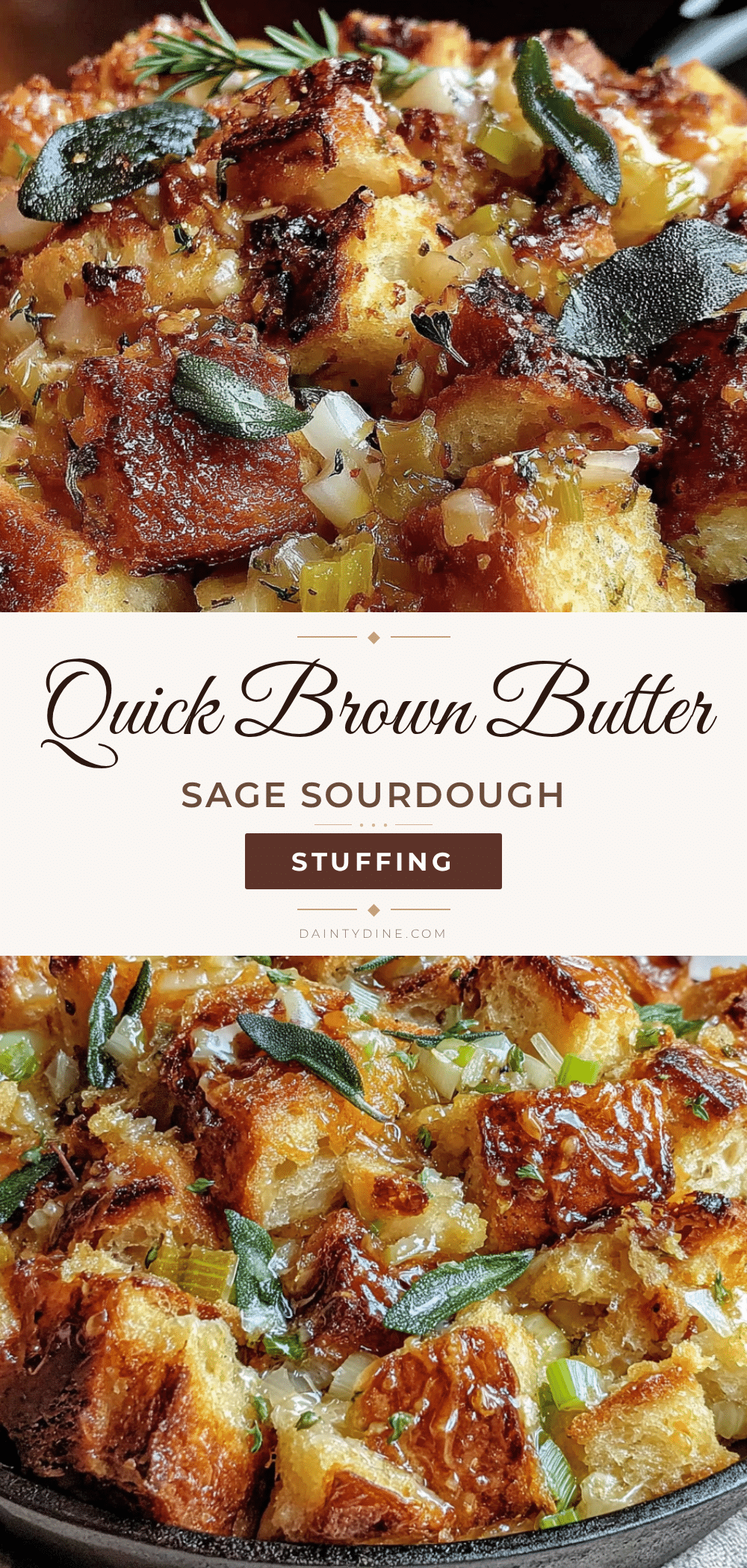
Best Easy Brown Butter Sage Sourdough Stuffing

This brown butter sage sourdough stuffing gets crispy edges, tender centers, and that brown butter-sage flavor that makes everything taste like you spent hours in the kitchen. It comes together in about 30 minutes of active time and is perfect for holidays or weeknight dinners.
- Prep Time: 15 minutes
- Cook Time: 30 minutes
- Total Time: 45 minutes
- Yield: 8 servings 1x
- Category: Side Dish
- Cuisine: American
Ingredients
- 8 cups cubed sourdough bread (about 1 large loaf), day-old or stale
- 8 tablespoons (1 stick) unsalted butter
- 12–15 fresh sage leaves
- 1 medium yellow onion, diced (about 1 cup)
- 3 ribs celery, diced (about 1 cup)
- 1½ cups low-sodium chicken or vegetable broth
- 1 large egg
- 1 teaspoon kosher salt (or ¾ teaspoon table salt)
- ½ teaspoon freshly ground black pepper
- 2 tablespoons chopped fresh parsley (optional, for garnish)
Instructions
- Preheat your oven to 375°F. Position a rack in the middle of the oven. If your sourdough isn’t already stale, spread the cubes on a baking sheet and toast for 8-10 minutes, tossing halfway through. You want them dry but not hard.
- Place a large skillet over medium heat and add the stick of butter. Let it melt completely, then swirl the pan occasionally. After about 3-4 minutes, the butter will start to foam and turn golden. Watch carefully—when you see amber-colored specks forming at the bottom and it smells nutty and amazing, it’s ready (about 5-6 minutes total).
- Once the butter is browned, carefully drop in the sage leaves. They’ll sizzle and crisp up in about 30 seconds. Use a slotted spoon to remove them and set them aside on a paper towel.
- Add the diced onion and celery to the brown butter remaining in the skillet. Cook over medium heat, stirring occasionally, for about 5-6 minutes until the onion is translucent and the celery is tender.
- Place the bread cubes in a large mixing bowl. Pour the onion-celery-butter mixture over the bread and toss gently to coat.
- In a small bowl, whisk together the broth and egg until combined. Pour this over the bread mixture and toss again. The bread should be moist but not soggy. If it looks dry, add a splash more broth.
- Add the salt and pepper, and toss one more time. Crumble half the crispy sage leaves into the mixture. Transfer everything to a greased 9×13-inch baking dish and spread it evenly.
- Bake for 25-30 minutes, until the top is golden brown and crispy. The edges should be darker and crunchy, while the center stays tender. About halfway through, give it a gentle stir with a fork to ensure even cooking.
- Let the stuffing rest for 5 minutes after it comes out of the oven. Top with the remaining crispy sage leaves and the chopped parsley if using. Serve warm.
Notes
For extra crispy edges, spread the stuffing in a thinner layer in a larger dish. You can assemble the stuffing up to a day in advance; cover and refrigerate, then add 10-15 minutes to the baking time if starting from cold. To make it vegan, use vegan butter, vegetable broth, and a flax egg (1 tablespoon flaxseed meal + 3 tablespoons water).
Nutrition
- Serving Size: 1 serving (about 1 c
- Calories: 285
- Sugar: 4
- Sodium: 520
- Fat: 14
- Saturated Fat: 8
- Carbohydrates: 32
- Fiber: 2
- Protein: 7
Keywords: stuffing, sourdough stuffing, brown butter, sage, Thanksgiving, holiday side dish, easy stuffing