Love this? Save it for later!
Share the inspiration with your friends
The Friendsgiving potluck was in six hours and I’d completely forgotten. Everyone else would be bringing their signature dishes—my best friend Sarah had been perfecting her grandmother’s lasagna for three days, and our host Mark was smoking a brisket that had been marinating since Tuesday. I had a random honeynut squash I’d impulse-bought at the farmers market because it was cute, some butter that was definitely going to go bad soon, and a vague memory of a maple syrup bottle hiding in the back of my pantry. Honestly, I almost just grabbed a bottle of wine and called it a day.
But there I was, staring at this tiny, adorable squash at 10 AM on a Saturday, feeling the familiar panic of being the person who shows up empty-handed. I mean, I’d been to enough potlucks to know the unspoken rules—you bring something, or you bring shame. So I did what any reasonable person would do when faced with limited ingredients and no plan. I started browning butter. Let me tell you, there’s something about the smell of butter turning nutty and golden that makes you feel like you actually know what you’re doing, even when you absolutely don’t.
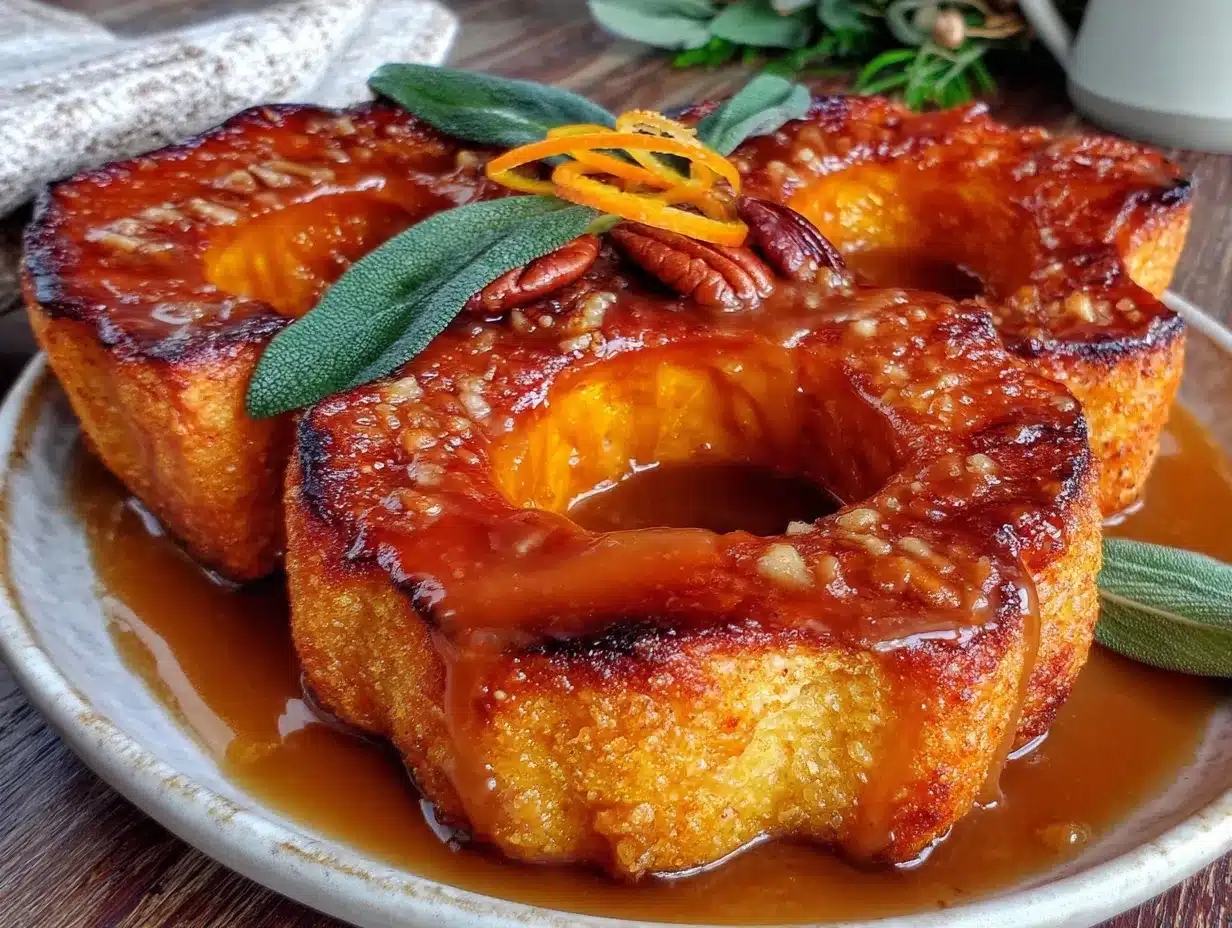
The squash got halved, the butter got foamy and brown, and somewhere between drizzling maple syrup and a pinch of flaky salt, I realized I might actually be onto something. I slid the pan into the oven, crossed my fingers, and hoped for the best. When I pulled it out forty minutes later, the edges were caramelized, the flesh was fork-tender, and the whole thing looked like it belonged on a magazine cover. I brought it to the potluck feeling like a fraud, but you know what? That little honeynut squash stole the show. People asked for the recipe before they even asked for seconds. Maybe you’ve been there—the accidental win that makes you look way more put-together than you actually are. That’s this recipe for me.
Why You’ll Love This Recipe
This cozy maple brown butter honeynut squash isn’t just another fall side dish. It’s the kind of recipe that makes people close their eyes after the first bite. I’ve tested this version more times than I can count, tweaking the butter-to-squash ratio and the maple syrup timing until everything hit just right. Here’s why it works:
- Quick & Easy : Comes together in under an hour with only 5 minutes of active prep. Perfect for busy weeknights or last-minute holiday contributions.
- Simple Ingredients : No fancy grocery trips needed. You likely have butter and maple syrup in your kitchen right now.
- Perfect for Fall Gatherings : Great for Thanksgiving, Friendsgiving, Sunday dinners, or cozy nights when you need something warm and comforting.
- Crowd-Pleaser : I’ve served this to picky kids, vegan friends (just swap the butter), and serious foodies. It gets rave reviews every single time.
- Unbelievably Delicious : The combination of nutty browned butter, sweet maple syrup, and caramelized squash edges is pure comfort food magic.
What makes this recipe different from the rest? It’s the technique. Most people just roast squash with oil and call it done. But browning the butter first changes everything. It adds this deep, toasty flavor that makes the squash taste almost like dessert—but in a sophisticated, not-too-sweet way. The maple syrup caramelizes at just the right temperature, creating sticky, golden edges that are honestly the best part.
This recipe isn’t just good—it’s the kind that makes you feel like you’ve wrapped yourself in a warm blanket on a cold day. It’s comfort food reimagined: simple enough for a Tuesday, fancy enough for Thanksgiving. Perfect for impressing guests without stress, or turning a simple meal into something memorable.
What Ingredients You Will Need
This recipe uses humble, wholesome ingredients to deliver big flavor without the fuss. Most of these are pantry staples or easy to find at any grocery store. The key is choosing quality where it counts—especially the butter and maple syrup.
- Honeynut squash (4 small or 2 large) – Look for squash that feels heavy for its size with firm, unblemished skin. Honeynut squash is smaller and sweeter than butternut, with thinner skin that doesn’t need peeling. (If you can’t find honeynut, butternut squash works too—see notes below.)
- Unsalted butter (4 tablespoons, 56g) – I recommend Kerrygold or Plugrà for best flavor. Unsalted lets you control the salt level. The browning process is where the magic happens.
- Pure maple syrup (3 tablespoons, 60ml) – Please use real maple syrup, not pancake syrup. Grade A dark amber works beautifully here. The robust flavor stands up to the browned butter without getting lost.
- Flaky sea salt (½ teaspoon, plus more for finishing) – Maldon or Jacobsen salt is my go-to. The flaky texture adds little bursts of saltiness that balance the sweetness perfectly.
- Fresh thyme sprigs (4-5 sprigs) – Optional but highly recommended. The earthy, slightly floral notes cut through the richness and add a savory element that makes this dish feel complete.
- Black pepper (¼ teaspoon, freshly ground) – Just a touch to round out the flavors. Don’t skip it—it makes the sweetness taste more complex.
- Cinnamon stick (1, optional) – Adds warmth without being overpowering. I tuck it into the pan while roasting for a subtle background note.
Substitution Notes:
- No honeynut squash? Use butternut squash, peeled and cut into 1-inch cubes. Roast for 5-10 minutes longer since the pieces are thicker.
- Vegan option: Substitute the butter with a high-quality vegan butter (Miyoko’s works great) or coconut oil. The browning won’t be as pronounced, but it’ll still be delicious.
- No maple syrup? Honey or agave nectar can work, but the flavor profile will change slightly. Maple really is the star here, so I’d recommend finding it if you can.
- Fresh thyme not available? Use ½ teaspoon dried thyme, or try fresh rosemary for a different but equally delicious twist.
Equipment Needed
You don’t need a fancy kitchen to make this recipe shine. Here’s what I use:
- Large rimmed baking sheet (half-sheet pan, about 18×13 inches) – The rim is important to catch any butter or syrup that might bubble over. I love my Nordic Ware sheet pans—they don’t warp at high heat.
- Small saucepan (1-2 quart) – For browning the butter. Light-colored pans are best so you can see the butter change color.
- Sharp chef’s knife (8-inch) – Honeynut squash is small but dense. A sharp knife makes halving them safe and easy.
- Cutting board – Preferably one with a groove to catch juices.
- Mixing bowl (small to medium) – For tossing the squash with the browned butter mixture.
- Silicone spatula – For scraping every last drop of that glorious browned butter out of the pan. Trust me, you want it all.
- Parchment paper or silicone baking mat – Makes cleanup a breeze and prevents sticking. Parchment is my preference because the edges brown better.
- Measuring spoons – For accuracy, especially with the maple syrup and salt.
Budget-Friendly Alternatives: No need to buy expensive equipment. A regular baking dish works instead of a sheet pan. Any small pot will do for browning butter. If you don’t have parchment, lightly grease your pan with oil. I’ve made this in a cast iron skillet before, and it came out beautifully—just watch the cooking time since cast iron retains heat differently.
Preparation Method
- Preheat your oven to 400°F (200°C). Position the rack in the middle. Line your baking sheet with parchment paper for easy cleanup. Trust me, you’ll thank yourself later when you’re not scrubbing caramelized syrup off the pan.
- Prepare the squash. Using a sharp chef’s knife, carefully cut each honeynut squash in half lengthwise. The skin is thin enough that you don’t need to peel it—it softens during roasting and becomes perfectly edible. Scoop out the seeds and stringy bits with a spoon. (I save the seeds to roast later with salt and cayenne—they make a great snack.)
- Brown the butter. Place the butter in your small saucepan over medium heat. Let it melt completely, then swirl the pan occasionally. After about 3-4 minutes, the butter will start to foam and turn golden. Watch closely—it can go from browned to burnt in seconds. When you see brown specks forming at the bottom and smell a nutty, toasty aroma, remove it from the heat immediately. This usually takes 4-5 minutes total. Pour it into a small bowl to stop the cooking process.
- Make the glaze. To the browned butter, add the maple syrup, ½ teaspoon flaky salt, and black pepper. Whisk together until smooth. The mixture will look glossy and smell absolutely incredible—like liquid fall.
- Coat the squash. Place the halved squash in your mixing bowl, cut-side up. Pour the browned butter mixture over them, using your spatula to get every drop. Toss gently to coat, making sure the cut sides get well covered. I like to use my hands here—it’s messy but ensures even coverage.
- Arrange on the baking sheet. Place the squash halves cut-side up on the prepared baking sheet. Tuck the thyme sprigs and cinnamon stick (if using) around the squash. Drizzle any remaining glaze from the bowl over the tops.
- Roast for 35-40 minutes. The squash is done when the flesh is fork-tender and the edges are caramelized and golden brown. Halfway through (around 20 minutes), baste the squash with the pan juices using a spoon or pastry brush. This keeps everything moist and builds up those sticky, sweet layers.
- Finish and serve. Remove from the oven and let rest for 5 minutes. Discard the thyme sprigs and cinnamon stick. Transfer the squash to a serving platter, spoon any remaining pan juices over the top, and sprinkle with a final pinch of flaky salt. The contrast of sweet, salty, and nutty is pure perfection.
Pro tip: If you want extra caramelization, switch your oven to broil for the last 2 minutes. Watch it like a hawk—syrup burns fast. I learned this the hard way when I got distracted and ended up with charcoal squash. Not my finest moment.
Cooking Tips & Techniques
Let me save you some trial and error. I’ve made this recipe more times than I can count, and here’s what I’ve learned:
Don’t rush the butter. Browning butter is the most important step, and it requires patience. Keep the heat at medium, not high. Swirl the pan constantly. When you see those brown specks form, pull it off the heat immediately. I once tried to multitask and ended up with burnt butter that tasted bitter and sad. The nutty, golden-brown stage only lasts about 30 seconds, so stay focused.
Cut the squash evenly. Try to halve the squash so both sides are roughly the same size. If some pieces are much smaller than others, they’ll cook faster and might burn before the rest is done. I’ve definitely had tiny squash halves turn into charcoal while their bigger siblings were still perfectly cooked.
Basting is non-negotiable. That halfway baste isn’t just for show. It redistributes the butter and syrup, ensuring every bit of squash gets that caramelized coating. Skip it, and you’ll end up with dry spots. Trust me, I’ve tried.
Use a light-colored pan for browning. Dark nonstick pans make it hard to see the butter change color. If all you have is dark cookware, tilt the pan to see the butter’s true color in the lighter areas. Or just use a stainless steel saucepan—it’s worth the extra 30 seconds of cleanup.
Room temperature matters. Cold squash straight from the fridge will take longer to cook. Let it sit on the counter for 15 minutes before prepping if you can. It’s a small thing, but it makes a difference in cooking time consistency.
Multitasking strategy: While the squash roasts, you have 35-40 minutes of free time. This is perfect for making a main dish like crispy garlic chicken or prepping a quick salad. I usually throw together a simple arugula salad with lemon vinaigrette to serve alongside.
Variations & Adaptations
This recipe is wonderfully flexible. Here are some variations I’ve tried and loved:
Savory Herb Version: Skip the cinnamon and add 2 minced garlic cloves to the browned butter along with 1 tablespoon fresh sage leaves. The garlic gets mellow and sweet as it roasts, and the sage adds an earthy, almost peppery note. This version pairs beautifully with roast chicken or pork.
Spicy Maple Kick: Add ¼ teaspoon cayenne pepper or red pepper flakes to the browned butter mixture. The heat sneaks up on you after the initial sweetness, creating this addictive sweet-spicy balance. My neighbor Dave, who claims he doesn’t like sweet sides, ate half a pan of this version.
Vegan Adaptation: Substitute the butter with 4 tablespoons of coconut oil or a high-quality vegan butter. Coconut oil won’t brown the same way, but it adds a subtle tropical note that works surprisingly well with the maple syrup. Use maple syrup in place of honey if you’re strict about vegan ingredients.
Different Squash Options: No honeynut? No problem. Butternut squash (peeled and cubed into 1-inch pieces), delicata squash (halved and seeded, no peeling needed), or even acorn squash (cut into wedges) all work beautifully. Adjust cooking time as needed—delicata cooks faster (about 25 minutes), while butternut might need 45-50 minutes.
Nutty Crunch Topping: In the last 10 minutes of roasting, sprinkle ¼ cup chopped pecans or walnuts over the squash. They’ll toast in the oven and add a lovely crunch. I did this accidentally once when I dropped pecans on the pan, and it was a happy accident I’ve repeated ever since.
Balsamic Twist: Replace 1 tablespoon of maple syrup with balsamic vinegar. The acidity cuts through the richness and adds complexity. This version is especially good if you’re serving the squash alongside something rich like braised short ribs.
Serving & Storage Suggestions
This cozy maple brown butter honeynut squash is best served warm, right out of the oven. The caramelized edges are at their crispiest, and the butter-maple glaze is still glossy and inviting.
Serving Ideas: Arrange the squash halves on a platter cut-side up, spoon any remaining pan juices over the top, and finish with a sprinkle of flaky salt and fresh thyme leaves. It’s beautiful enough for a holiday table but simple enough for a Tuesday dinner. I love serving it alongside creamy mushroom risotto for a vegetarian fall feast, or with roast chicken, pork chops, or seared salmon. For Thanksgiving, it fits right in next to turkey and stuffing.
Complementary Dishes: A bright, acidic salad with lemon vinaigrette balances the sweetness beautifully. Crusty bread for soaking up any extra glaze is never a bad idea. And honestly, this squash is so good you might want to eat it as a main course with a side of greens.
Storage Instructions: Leftover squash keeps well in an airtight container in the refrigerator for up to 4 days. The texture softens a bit upon reheating, but the flavor remains wonderful. I often make a double batch just for leftovers—they’re that good.
Reheating Methods: The best way to reheat is in a 350°F (175°C) oven for 10-15 minutes. This helps restore some of the caramelization. The microwave works in a pinch (about 1 minute per serving), but the edges won’t be as crispy. If you’re in a hurry, a hot skillet with a tiny bit of butter does the trick in about 3 minutes per side.
Freezer Notes: I don’t recommend freezing this dish. The texture of the squash becomes watery and mushy upon thawing. If you must, freeze the roasted squash without the glaze, then add fresh browned butter and maple syrup when reheating.
Nutritional Information & Benefits
Here’s the approximate nutritional breakdown per serving (one small squash half, assuming 4 servings):
| Nutrient | Amount |
|---|---|
| Calories | 195 |
| Total Fat | 12g |
| Saturated Fat | 7g |
| Carbohydrates | 22g |
| Fiber | 3g |
| Sugar | 14g |
| Protein | 2g |
| Sodium | 290mg |
| Vitamin A | 120% DV |
| Vitamin C | 25% DV |
Health Benefits: Honeynut squash is packed with vitamin A (beta-carotene), which supports eye health and immune function. It’s also a good source of vitamin C, potassium, and fiber. The maple syrup provides quick energy, while the butter adds fat-soluble vitamins A, D, E, and K. This dish is naturally gluten-free and can be made dairy-free with the vegan adaptation above.
Dietary Considerations: As written, this recipe is vegetarian and gluten-free. For a vegan version, substitute the butter as mentioned. It’s relatively low in calories for a side dish that feels indulgent, making it a smart choice for holiday meals where you want to save room for dessert.
Conclusion
This cozy maple brown butter honeynut squash has become my go-to fall side dish for good reason. It’s simple enough for a busy weeknight but impressive enough for company. The browned butter adds depth you just can’t get any other way, and the maple syrup caramelizes into those sticky, golden edges that make everyone reach for seconds.
I love this recipe because it reminds me that you don’t need elaborate techniques or exotic ingredients to make something truly special. Sometimes the best dishes come from a moment of panic and a willingness to just try something. That little squash I brought to Friendsgiving taught me that simple, honest cooking wins every time.
Now I want to hear from you. Have you tried this recipe? Did you add your own twist? Drop a comment below and let me know how it turned out. And if you’re looking for more cozy fall recipes, don’t miss my cozy butternut squash soup—it’s another one that started as a happy accident and became a family favorite. Happy cooking, friends!
Frequently Asked Questions
Can I use butternut squash instead of honeynut?
Absolutely. Butternut squash is the closest substitute. Since it’s larger and denser, peel it and cut it into 1-inch cubes. Roast for 40-45 minutes instead of 35-40, and toss halfway through for even cooking.
Do I need to peel honeynut squash?
Nope. Honeynut squash has thin, tender skin that softens beautifully during roasting. It’s completely edible and adds a nice texture contrast. Plus, it saves you a ton of prep time.
Can I make this recipe ahead of time?
You can prep the squash (halve and seed it) up to 24 hours in advance and store it in the fridge. Brown the butter and mix the glaze just before roasting for best results. The dish is best served fresh, but leftovers reheat well.
How do I know when the butter is properly browned?
Look for three signs: the butter will smell nutty and toasty, it will turn a golden-amber color, and you’ll see small brown specks forming at the bottom of the pan. Remove it from heat immediately when you see those specks—it goes from perfect to burnt very quickly.
Is this recipe spicy?
Not at all in its basic form. The cinnamon adds warmth but no heat. If you want a spicy kick, add cayenne or red pepper flakes as mentioned in the variations section. Otherwise, it’s sweet, savory, and completely family-friendly.
Pin This Recipe!
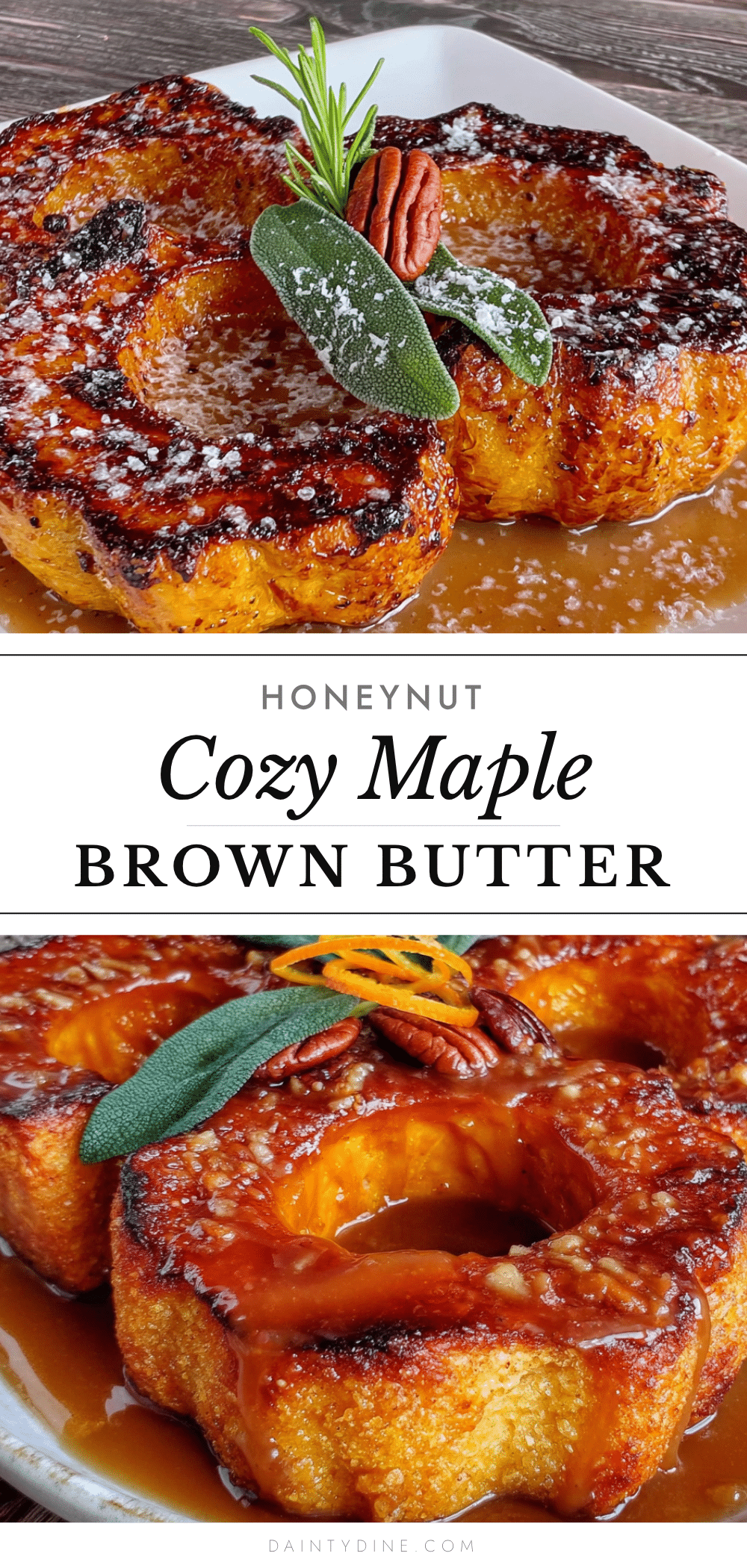
Cozy Maple Brown Butter Honeynut Squash: Easy Fall Side Dish
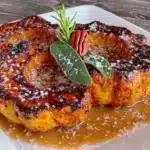
This cozy maple brown butter honeynut squash is a simple yet impressive fall side dish. With nutty browned butter, sweet maple syrup, and caramelized edges, it’s perfect for weeknights or holiday gatherings.
- Prep Time: 15 minutes
- Cook Time: 40 minutes
- Total Time: 55 minutes
- Yield: 4 servings 1x
- Category: Side Dish
- Cuisine: American
Ingredients
- 4 small or 2 large honeynut squash
- 4 tablespoons (56g) unsalted butter
- 3 tablespoons (60ml) pure maple syrup
- ½ teaspoon flaky sea salt, plus more for finishing
- 4–5 sprigs fresh thyme
- ¼ teaspoon freshly ground black pepper
- 1 cinnamon stick (optional)
Instructions
- Preheat oven to 400°F (200°C). Line a baking sheet with parchment paper.
- Cut each honeynut squash in half lengthwise. Scoop out seeds and stringy bits.
- In a small saucepan over medium heat, melt butter. Swirl occasionally until it foams and turns golden with brown specks, about 4-5 minutes. Remove from heat immediately.
- Add maple syrup, ½ teaspoon flaky salt, and black pepper to the browned butter. Whisk until smooth.
- Place squash halves in a mixing bowl, cut-side up. Pour browned butter mixture over them and toss gently to coat.
- Arrange squash cut-side up on the prepared baking sheet. Tuck thyme sprigs and cinnamon stick (if using) around the squash. Drizzle any remaining glaze over tops.
- Roast for 35-40 minutes, basting with pan juices halfway through, until fork-tender and edges are caramelized.
- Remove from oven and let rest 5 minutes. Discard thyme and cinnamon. Transfer to a platter, spoon pan juices over top, and sprinkle with additional flaky salt.
Notes
For extra caramelization, broil for the last 2 minutes, watching carefully to prevent burning. Honeynut squash skin is edible and softens during roasting. If using butternut squash, peel and cut into 1-inch cubes; roast 5-10 minutes longer. For a vegan version, substitute butter with coconut oil or vegan butter.
Nutrition
- Serving Size: 1 small squash half
- Calories: 195
- Sugar: 14
- Sodium: 290
- Fat: 12
- Saturated Fat: 7
- Carbohydrates: 22
- Fiber: 3
- Protein: 2
Keywords: honeynut squash, maple brown butter, fall side dish, roasted squash, easy side dish, Thanksgiving side