Love this? Save it for later!
Share the inspiration with your friends
My neighbor, a retired baker named Frank, had claimed he hated apple cider donuts for thirty-seven years. “Too sweet,” he’d grumble every autumn when the farm stands appeared. “They’re just sugar delivery systems for people who don’t actually like apples.” I believed him, mostly because Frank had strong opinions about everything from lawn care to proper pie crust technique. Then last October, I found him standing at my kitchen counter, halfway through a slice of this bundt cake, caught completely off guard by his own enthusiasm. “What is this?” he asked, crumbs on his chin, trying to sound casual and failing miserably.
The thing is, I didn’t set out to convert anyone that day. I was just trying to capture the flavor of those little donuts you get at the orchard—you know, the ones that come in a paper bag already dusted with cinnamon sugar and somehow taste like autumn itself. But I wanted something that didn’t disappear in three bites. Something you could slice and share and maybe even serve for dessert after a Sunday dinner. So I took the spiced apple cider flavor I loved, added a few structural tricks I’d learned from years of baking, and let it bake into something that honestly surprised even me.
The batter smelled like the first cold morning of the season. The kitchen filled with that warm, cidery aroma that makes you want to curl up with a blanket and a good book. And when I pulled the cake from the pan—that golden-brown crust, the way the cinnamon-sugar coating stuck to every crevice—I knew I had something special. Frank’s conversion was just the bonus. This cake became the thing I look forward to making every single fall, the recipe that makes people close their eyes on the first bite. Maybe you’ve been there, chasing a flavor memory that never quite comes out right. Let me tell you, this one finally does.
Why You’ll Love This Recipe
This isn’t just another apple cider cake. It’s a bundt cake that tastes exactly like those beloved cider donuts, but in an easier, more shareable form. I’ve tested this recipe more times than I care to count, and each iteration brought me closer to that perfect balance of spice, sweetness, and that tender crumb you crave on a cool autumn day.
- Quick & Easy : Comes together in under an hour with just 15 minutes of active prep. Perfect for busy weekday baking or last-minute fall gatherings.
- Simple Ingredients : No fancy extracts or hard-to-find spices. You probably have most of these in your pantry right now.
- Perfect for Fall : Great for Thanksgiving dessert, apple picking celebrations, or cozy Sunday mornings with coffee.
- Crowd-Pleaser : Gets rave reviews from donut lovers and cake enthusiasts alike. Even my neighbor Frank couldn’t resist.
- Unbelievably Delicious : The texture is moist and tender, the cinnamon-sugar coating adds that signature crunch, and the apple cider flavor shines through in every single bite.
What makes this recipe different from the rest? It’s the combination of reducing the apple cider for concentrated flavor and using a simple trick of tossing the cake in cinnamon sugar while it’s still warm. That little step creates that authentic donut-shop experience right in your own kitchen. Plus, the cake stays moist for days—if it lasts that long.
This is the kind of recipe that makes you feel like a hero. It’s impressive enough for company, simple enough for a Tuesday night, and comforting enough to become your new fall tradition. Honestly, it’s the recipe I turn to when I need a little bit of autumn magic without a lot of fuss.
What Ingredients You Will Need
This recipe uses simple, wholesome ingredients to deliver that bold apple cider donut flavor and satisfying tender texture. Most of these are pantry staples, and the few special ones are well worth seeking out for the authentic taste.
For the Cake:
- 2 cups apple cider (reduced to 1/2 cup concentrate) — This is the secret to deep, authentic flavor. Look for unfiltered cider for best results. I prefer local orchard cider when available.
- 2 1/2 cups all-purpose flour (315 grams) — Spoon and level for accuracy. King Arthur Flour is my go-to for consistent results.
- 1 teaspoon baking powder
- 1/2 teaspoon baking soda
- 1 teaspoon ground cinnamon — Fresh cinnamon makes a noticeable difference. I like Saigon cinnamon for its warmth.
- 1/2 teaspoon ground nutmeg — Freshly grated if you have it, but pre-ground works perfectly too.
- 1/4 teaspoon ground cloves — Just a pinch for that classic mulled spice vibe.
- 1/2 teaspoon salt — Fine sea salt is my preference.
- 1/2 cup unsalted butter (1 stick, 113 grams), softened to room temperature
- 1 cup granulated sugar (200 grams)
- 1/2 cup packed light brown sugar (100 grams) — Adds moisture and a hint of molasses depth.
- 2 large eggs, room temperature
- 1 teaspoon vanilla extract — Pure, not imitation, for the best flavor.
- 1/2 cup buttermilk (120 ml), room temperature — Adds tenderness. If you don’t have buttermilk, add 1 tablespoon lemon juice to regular milk and let it sit for 5 minutes.
For the Cinnamon-Sugar Coating:
- 1/2 cup granulated sugar (100 grams)
- 1 tablespoon ground cinnamon
- 1/4 cup unsalted butter (1/2 stick, 57 grams), melted — For brushing onto the warm cake so the coating sticks.
Ingredient Tips: I recommend using a good quality apple cider rather than apple juice. The cider has more depth and a slight tang that mimics the donut shop flavor perfectly. If you’re in a pinch, you can substitute the buttermilk with plain yogurt thinned with a little milk, but the texture will be slightly different. For a dairy-free version, use plant-based butter and buttermilk substitute, though the crumb may be a bit less tender.
Equipment Needed
You don’t need a professional bakery setup for this recipe, but a few key tools will make the process smoother and the results more reliable.
- 10 to 12-cup Bundt pan — This is non-negotiable. A standard 10-cup pan works perfectly. I use a Nordic Ware classic pan, and it releases cakes beautifully every time.
- Small saucepan — For reducing the apple cider. A heavy-bottomed pan works best to prevent scorching.
- Electric mixer — A stand mixer or hand mixer both work. You need to cream the butter and sugar thoroughly, and doing it by hand is possible but tiring.
- Large mixing bowls — At least two, for wet and dry ingredients.
- Whisk — For combining dry ingredients evenly.
- Rubber spatula — For scraping down the bowl and folding ingredients.
- Cooling rack — Essential for even cooling and for catching the cinnamon-sugar coating drips.
- Pastry brush — For brushing melted butter onto the warm cake. A silicone brush works great and is easy to clean.
- Measuring cups and spoons — For accuracy, especially with the reduced cider.
Budget-Friendly Alternatives: If you don’t have a bundt pan, you can use two 9-inch loaf pans or a 9×13-inch baking dish. The baking time will change significantly—start checking at 30 minutes for loaf pans and 25 minutes for the rectangular pan. A pastry brush can be substituted with a paper towel dipped in melted butter, though it’s messier.
Preparation Method
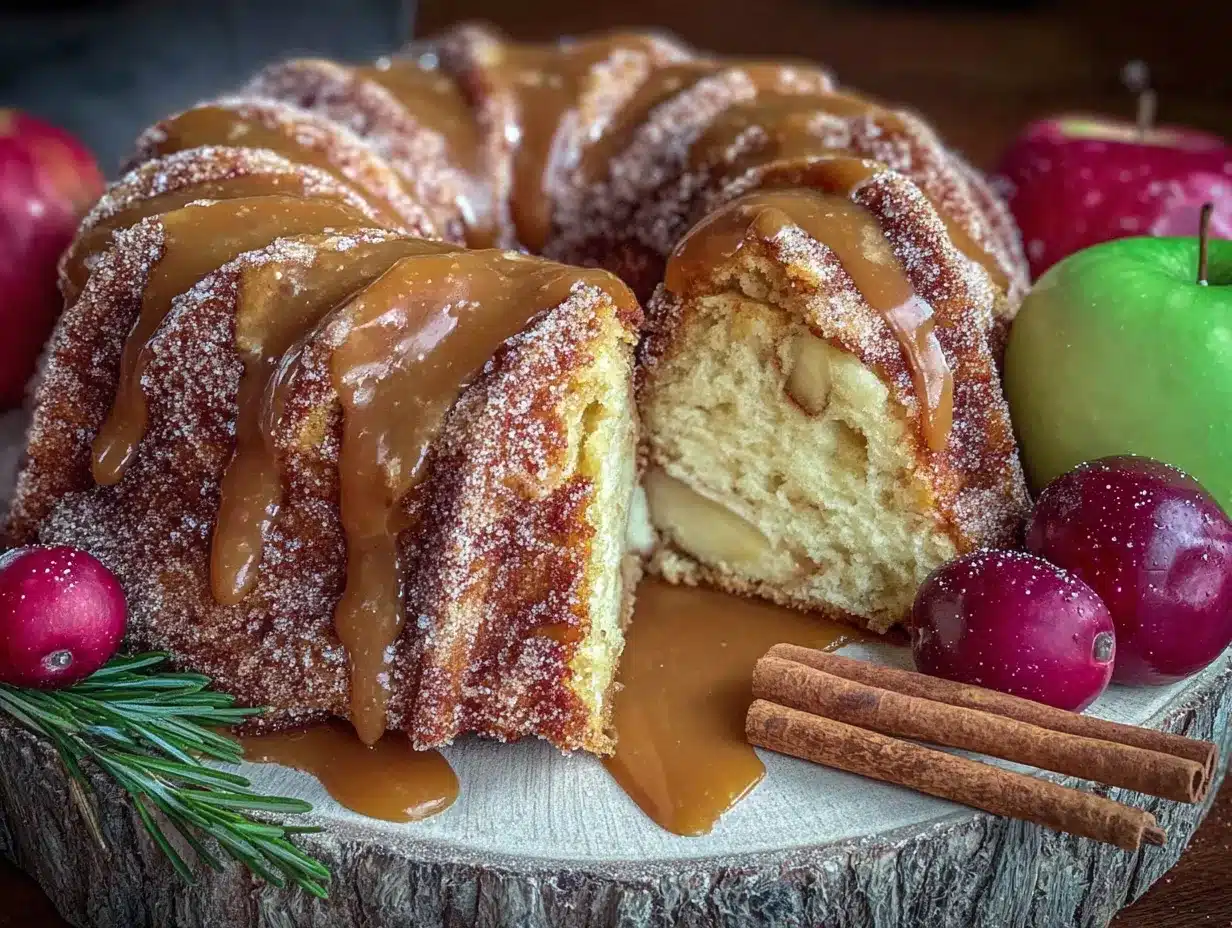
Let’s walk through this step by step. I’ve included all the little details I wish someone had told me the first time I made this cake.
- Reduce the apple cider. Pour 2 cups of apple cider into a small saucepan. Bring it to a boil over medium-high heat, then reduce the heat to medium-low and let it simmer gently. Stir occasionally. You’re looking for it to reduce down to 1/2 cup, which takes about 15 to 20 minutes. The cider will thicken slightly and smell intensely of apples. Let it cool completely before using. Pro tip: If you overshoot and it gets too thick, just add a splash of water to thin it back to 1/2 cup.
- Preheat and prepare the pan. Preheat your oven to 350°F (175°C). Generously grease your bundt pan with butter or non-stick baking spray that contains flour. Don’t skimp here—I learned this the hard way. Get into all the nooks and crannies. A well-greased pan is the difference between a beautiful cake and a tragic crumble.
- Mix the dry ingredients. In a medium bowl, whisk together the flour, baking powder, baking soda, cinnamon, nutmeg, cloves, and salt. Set this aside. Make sure there are no lumps, especially from the spices.
- Cream the butter and sugars. In a large mixing bowl, beat the softened butter, granulated sugar, and brown sugar together until light and fluffy. This takes about 3 to 4 minutes with an electric mixer on medium speed. You want the mixture to look pale and airy. Scrape down the sides of the bowl halfway through.
- Add the eggs and vanilla. Add the eggs one at a time, beating well after each addition. Then mix in the vanilla extract. The batter should look smooth and slightly glossy at this point.
- Alternate adding dry ingredients and liquids. With the mixer on low speed, add about one-third of the flour mixture, then half of the buttermilk, then another third of flour, the remaining buttermilk, and finally the last of the flour. Mix just until combined after each addition. Warning: Overmixing will make the cake tough. Stop as soon as the flour disappears.
- Fold in the reduced cider. Gently fold the cooled reduced apple cider into the batter using a rubber spatula. The batter will be thick and smell incredible. Don’t overmix—just fold until the cider is evenly distributed.
- Bake the cake. Pour the batter into the prepared bundt pan and spread it evenly. Bake for 40 to 45 minutes, or until a toothpick inserted into the center comes out clean or with just a few moist crumbs. The top should be golden brown and the cake should spring back when lightly touched.
- Cool in the pan. Let the cake cool in the pan on a wire rack for 15 minutes. This is crucial—if you try to remove it too soon, it will fall apart. Too late, and it might stick. Fifteen minutes is the sweet spot.
- Prepare the coating. While the cake cools slightly, mix the granulated sugar and cinnamon together in a shallow bowl. Melt the 1/4 cup of butter in a small microwave-safe bowl.
- Coat the cake. Turn the cake out onto the cooling rack. While it’s still warm (but not hot), brush the entire surface with melted butter. Then generously sprinkle or roll the cake in the cinnamon-sugar mixture. Be thorough—get the center hole and all the crevices. The warm cake will absorb the butter and the sugar will stick beautifully.
- Cool completely. Let the coated cake cool completely on the rack before slicing. The coating will set into a slightly crunchy shell that mimics the donut experience perfectly.
Cooking Tips & Techniques
I’ve made this cake at least a dozen times, and I’ve collected a few hard-won lessons along the way. Here are the ones that make the biggest difference.
Don’t skip reducing the cider. I know it’s an extra step, and I tried skipping it once. The cake was bland and watery. Reducing concentrates the apple flavor and removes excess liquid that would make the batter too thin. It’s non-negotiable for that authentic donut taste.
Room temperature ingredients matter. Cold eggs and cold buttermilk will seize the butter and give you a dense, heavy cake. Take them out of the fridge 30 minutes before you start baking. I usually set everything on the counter while the cider reduces.
Watch the baking time. Every oven runs differently. My old oven needed a full 45 minutes; my current one is done at 40. Start checking at 35 minutes if you’re nervous. A toothpick test is your best friend here.
The coating technique is everything. I learned this after making a mess of my first few attempts. Brush the butter on generously but quickly—you want the cake warm enough to absorb it but not so hot that the butter runs off. Then apply the cinnamon sugar in layers. I use a spoon to sprinkle it over the top and sides, pressing gently to help it stick.
One mistake I made: I once tried to double the coating by brushing on extra butter and adding more sugar. The coating got clumpy and fell off in chunks. Stick with the single layer—it’s plenty.
Multitasking tip: While the cake bakes, measure out your coating ingredients and melt the butter. That way, the moment the cake comes out, you’re ready to go. The timing window for coating is narrow, so being prepared makes all the difference.
Variations & Adaptations
This recipe is wonderfully adaptable. Here are a few ways I’ve tweaked it over the years.
Gluten-Free Version: Substitute the all-purpose flour with a 1:1 gluten-free baking flour blend that contains xanthan gum. I’ve used Bob’s Red Mill with great success. The texture will be slightly more delicate, so handle the cake gently when turning it out.
Dairy-Free Adaptation: Use plant-based butter (I like Miyoko’s for baking) and substitute the buttermilk with 1/2 cup unsweetened almond milk mixed with 1 tablespoon lemon juice. The cake will be a touch less tender, but still delicious.
Spice Variation: For a chai-inspired twist, add 1/2 teaspoon ground cardamom and 1/4 teaspoon ground ginger to the dry ingredients. It gives the cake a warm, aromatic complexity that pairs beautifully with the apple cider.
Maple Glaze Option: Instead of the cinnamon-sugar coating, whisk together 1 cup powdered sugar, 2 tablespoons maple syrup, and 1 tablespoon milk. Drizzle over the cooled cake. This version is less donut-like but equally delicious and more elegant for serving at brunch.
My personal favorite variation: I once added 1/2 cup finely chopped toasted pecans to the batter and another 1/4 cup to the cinnamon-sugar coating. The nutty crunch against the tender cake was incredible. My neighbor Frank approved, which is the highest compliment I can offer.
Serving & Storage Suggestions
This cake is best served at room temperature, sliced into generous wedges. The cinnamon-sugar coating should have a slight crunch, and the interior should be moist and tender. It’s perfect with a cup of hot coffee or a glass of cold milk.
For presentation: Arrange slices on a wooden board or a simple white plate. A dusting of extra cinnamon on the plate adds a nice touch. If you’re feeling fancy, a dollop of lightly sweetened whipped cream or a scoop of vanilla ice cream turns it into a proper dessert.
Storage: Keep the cake in an airtight container at room temperature for up to 3 days. The coating will soften slightly over time, but the flavor actually improves on day two. If your kitchen is warm, you can refrigerate it, but bring slices to room temperature before serving for the best texture.
Freezing: This cake freezes beautifully. Wrap the completely cooled, uncoated cake tightly in plastic wrap, then in foil. Freeze for up to 3 months. When ready to serve, thaw overnight in the refrigerator, then warm gently in a 300°F oven for 10 minutes. Apply the coating after warming.
Reheating: For that just-baked warmth, microwave individual slices for 10 to 15 seconds, or pop the whole cake in a 300°F oven for 10 minutes. The coating will crisp up again slightly.
Flavor development: Honestly, this cake tastes even better the day after it’s made. The spices meld together, the cider flavor deepens, and the texture becomes even more tender. If you can resist eating it immediately, you’re in for a real treat.
Nutritional Information & Benefits
While this is definitely a treat, there are a few redeeming qualities worth mentioning. One slice (based on 12 servings) contains approximately:
- Calories: 380
- Fat: 16g
- Carbohydrates: 56g
- Protein: 4g
- Fiber: 1g
- Sugar: 38g
Health benefits of key ingredients: Apple cider contains antioxidants and polyphenols that support immune health. Cinnamon has anti-inflammatory properties and may help regulate blood sugar. The eggs provide high-quality protein, and the buttermilk offers calcium and probiotics.
Dietary considerations: This recipe contains gluten, dairy, and eggs. For gluten-free and dairy-free adaptations, see the variations section above. It’s not suitable for vegan diets without significant modification.
My perspective: I believe in balance. This cake is a celebration of autumn flavors, meant to be enjoyed in moderation with the people you love. It’s not health food, but it’s made with real ingredients and a whole lot of care—and that counts for something.
Conclusion
This cozy apple cider donut bundt cake is everything I love about fall baking. It’s warm, spiced, and deeply satisfying—the kind of dessert that makes a chilly afternoon feel like an occasion. The flavor is authentic, the texture is spot-on, and the cinnamon-sugar coating gives you that nostalgic donut shop experience without the fryer.
I hope you’ll make this your own. Adjust the spices to your liking, try the maple glaze variation, or add those toasted pecans. Baking is about making recipes work for you and your family. And honestly, this one is forgiving enough to experiment with.
If you make this cake, I’d love to hear about it. Leave a comment below and tell me how it turned out, what variations you tried, or if you managed to convert a skeptic of your own. Don’t forget to share a photo on Pinterest or Instagram and tag me—I love seeing these cakes in all their cinnamon-sugar glory.
Here’s to cozy kitchens, good company, and the simple joy of a perfect slice of cake. Happy fall baking, friend.
Frequently Asked Questions
Can I use apple juice instead of apple cider?
You can, but the flavor will be noticeably different. Apple juice is sweeter and less tangy than cider, and it doesn’t reduce as well. If you’re in a pinch, use apple juice and add a teaspoon of lemon juice to mimic the acidity. But for the best results, stick with real apple cider.
Why did my cake stick to the bundt pan?
This usually happens when the pan isn’t greased thoroughly enough. Make sure you get into all the crevices with butter or baking spray. Letting the cake cool for exactly 15 minutes before turning it out also helps. If it still sticks, run a thin knife around the edges and center tube before inverting.
Can I make this cake ahead of time?
Absolutely. The cake actually tastes better the next day. Bake it, let it cool completely, and store it in an airtight container without the coating. Apply the cinnamon-sugar coating just before serving for the best texture. The uncoated cake keeps well for up to 3 days at room temperature.
How do I get the coating to stick better?
The key is brushing the melted butter onto a warm cake—not hot, not cold. Let the cake cool for about 15 minutes after baking, then brush generously with butter. Apply the cinnamon sugar immediately while the butter is still tacky. Using a spoon to press the coating gently into the cake helps it adhere.
Can I use a different pan shape?
Yes, but the baking time will change. For two 9-inch loaf pans, bake at 350°F for 30 to 35 minutes. For a 9×13-inch rectangular pan, bake for 25 to 30 minutes. For cupcakes, fill liners two-thirds full and bake for 15 to 18 minutes. Always check for doneness with a toothpick.
Pin This Recipe!
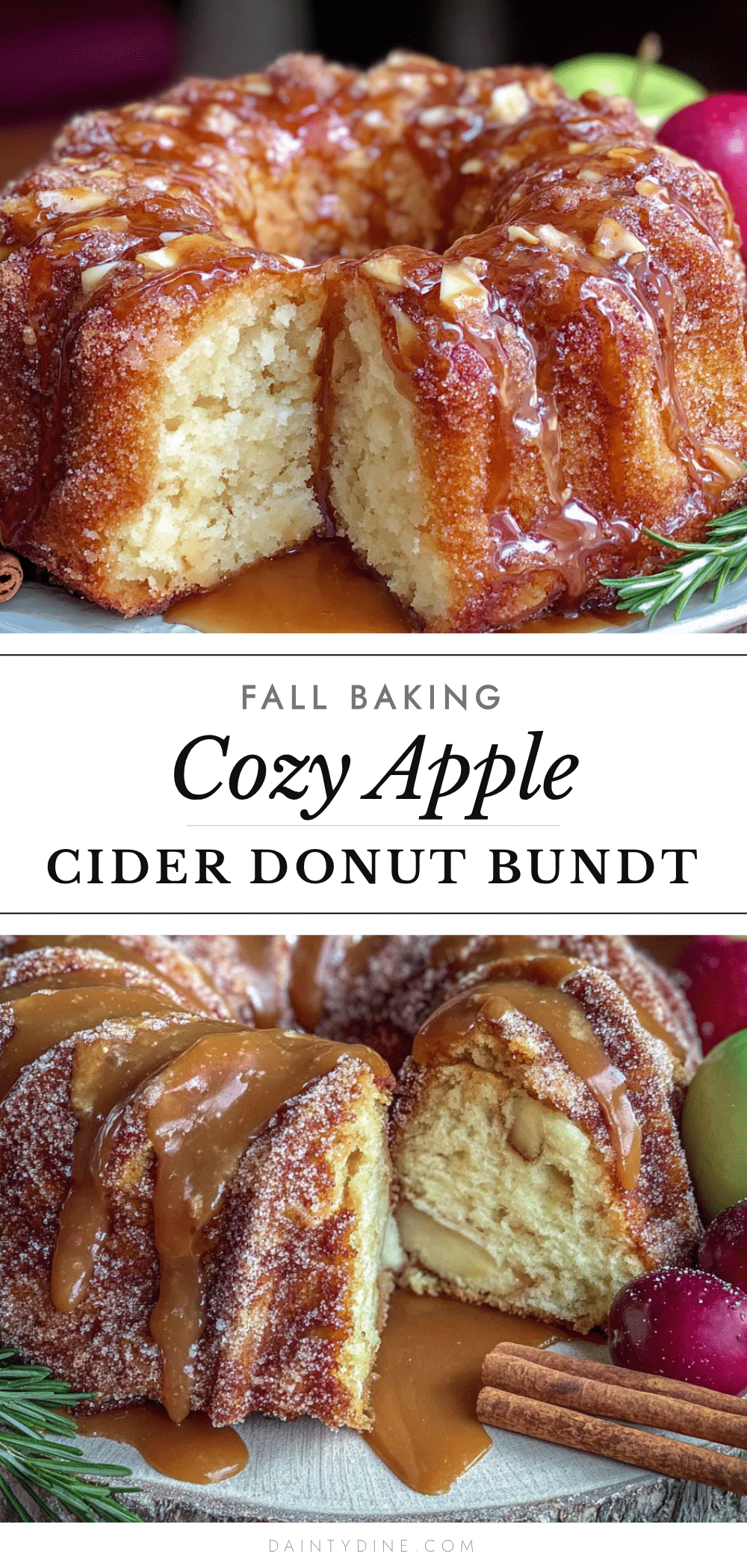
Cozy Apple Cider Donut Bundt Cake: Best Easy Fall Dessert
This bundt cake captures the flavor of apple cider donuts in an easy, shareable form. With a tender crumb, concentrated apple cider flavor, and a cinnamon-sugar coating, it’s the perfect fall dessert.
- Prep Time: 15 minutes
- Cook Time: 45 minutes
- Total Time: 1 hour
- Yield: 12 servings 1x
- Category: Dessert
- Cuisine: American
Ingredients
- 2 cups apple cider (reduced to 1/2 cup concentrate)
- 2 1/2 cups all-purpose flour (315 grams)
- 1 teaspoon baking powder
- 1/2 teaspoon baking soda
- 1 teaspoon ground cinnamon
- 1/2 teaspoon ground nutmeg
- 1/4 teaspoon ground cloves
- 1/2 teaspoon salt
- 1/2 cup unsalted butter (1 stick, 113 grams), softened to room temperature
- 1 cup granulated sugar (200 grams)
- 1/2 cup packed light brown sugar (100 grams)
- 2 large eggs, room temperature
- 1 teaspoon vanilla extract
- 1/2 cup buttermilk (120 ml), room temperature
- 1/2 cup granulated sugar (100 grams) (for coating)
- 1 tablespoon ground cinnamon (for coating)
- 1/4 cup unsalted butter (1/2 stick, 57 grams), melted (for coating)
Instructions
- Reduce the apple cider: Pour 2 cups of apple cider into a small saucepan. Bring to a boil over medium-high heat, then reduce heat to medium-low and simmer gently, stirring occasionally, until reduced to 1/2 cup (about 15-20 minutes). Let cool completely.
- Preheat oven to 350°F (175°C). Generously grease a 10 to 12-cup bundt pan with butter or non-stick baking spray containing flour.
- In a medium bowl, whisk together flour, baking powder, baking soda, cinnamon, nutmeg, cloves, and salt. Set aside.
- In a large mixing bowl, beat softened butter, granulated sugar, and brown sugar together until light and fluffy (about 3-4 minutes with an electric mixer on medium speed). Scrape down the sides as needed.
- Add eggs one at a time, beating well after each addition. Mix in vanilla extract.
- With mixer on low speed, add about one-third of the flour mixture, then half of the buttermilk, then another third of flour, the remaining buttermilk, and finally the last of the flour. Mix just until combined after each addition. Do not overmix.
- Gently fold the cooled reduced apple cider into the batter using a rubber spatula until evenly distributed.
- Pour batter into prepared bundt pan and spread evenly. Bake for 40 to 45 minutes, or until a toothpick inserted into the center comes out clean or with a few moist crumbs.
- Let cake cool in the pan on a wire rack for 15 minutes.
- While cake cools, mix 1/2 cup granulated sugar and 1 tablespoon cinnamon in a shallow bowl. Melt 1/4 cup butter in a small microwave-safe bowl.
- Turn cake out onto cooling rack. While still warm, brush entire surface with melted butter. Generously sprinkle or roll cake in cinnamon-sugar mixture, covering all crevices.
- Let coated cake cool completely on rack before slicing.
Notes
Don’t skip reducing the cider—it concentrates flavor and removes excess liquid. Room temperature ingredients are crucial for a tender crumb. For best coating, brush butter on a warm (not hot) cake and apply cinnamon sugar immediately. The cake tastes even better the next day.
Nutrition
- Serving Size: 1 slice
- Calories: 380
- Sugar: 38
- Sodium: 280
- Fat: 16
- Saturated Fat: 10
- Carbohydrates: 56
- Fiber: 1
- Protein: 4
Keywords: apple cider donut bundt cake, fall dessert, apple cider cake, cinnamon sugar bundt cake, easy fall baking