Love this? Save it for later!
Share the inspiration with your friends
My husband claimed to hate stew for twelve years. Twelve years, I tell you. He’d make a face at the very word, wrinkling his nose like I’d suggested we eat mud for dinner. “Too gloppy,” he’d say. “Everything tastes the same.” I tried every version I could think of—red wine versions, tomato-heavy versions, versions with so many herbs you’d think you were eating a garden. No dice. Then, on a particularly chilly Sunday in October, with the football game blaring and the kids getting hangry, I threw this one-pot beef stew together out of sheer desperation. I was just trying to get something warm into everyone before the fourth quarter. I didn’t even tell him it was stew. I called it “game day beef.” And I found him, about an hour later, standing at the stove with a ladle, eating straight from the pot. Caught red-handed. He looked at me, sheepish, and said, “Okay, this is different.” Different, he said. I call it a victory.
Honestly, maybe you’ve been there. You spend time making something you know is good, and someone in your house just refuses to even try it based on principle alone. It’s frustrating, right? But this recipe? It’s the one that broke the curse. It’s not your average, gloopy, everything-tastes-the-same stew. It’s rich, but not heavy. The beef gets incredibly tender, the vegetables keep their shape, and the broth… well, the broth is the kind of thing you want to sop up with a crusty piece of bread. It’s the kind of meal that makes a cold, rainy Sunday feel like a hug.
I keep making it because it’s more than just a recipe. It’s the smell that fills the house when everyone’s gathered around the TV. It’s the way my kids, who also claimed to “not like stew,” now ask for “game day beef” by name. It’s the one pot on the stove that means we’re all together, warm, and happy. And honestly, that’s the best kind of cooking there is.
Why You’ll Love This Recipe
This isn’t just another stew recipe. This is the one that will make your family forget they ever said they didn’t like stew. I’ve tested this version more times than I can count, tweaking the sear time, the simmer duration, and the vegetable sizes until everything was just right. It’s a recipe built on real experience, not guesswork.
- One-Pot Wonder: Everything cooks in a single pot. Less cleanup means more time to watch the game or relax with your family. This is a huge win on a busy Sunday.
- Kid-Approved & Budget-Friendly: This stew uses affordable cuts of beef like chuck roast, which become incredibly tender with slow cooking. It’s a smart way to feed a crowd without breaking the bank. Plus, the familiar, savory flavor is a hit with even the pickiest eaters.
- Deep, Rich Flavor, No Fuss: We’re building layers of flavor with a good sear on the meat and a splash of Worcestershire sauce. You don’t need fancy wine or hard-to-find herbs to get a deeply satisfying result.
- Perfect for a Crowd: This recipe makes a generous amount, perfect for feeding a family on game day, a cozy dinner party, or for making leftovers that are even better the next day.
- Comfort Food, Reimagined: It’s hearty and soul-warming, but not heavy or gloppy. The vegetables are tender but not mushy, and the broth is rich and savory, not like a thick paste. It’s comfort food that feels good to eat.
What makes this recipe different from the rest is the technique. We take the time to properly sear the meat in batches—this isn’t a step to skip. That deep brown crust is where the flavor lives. Then, we deglaze the pot with the broth, scraping up all those delicious browned bits. It’s a simple step that makes a world of difference. This isn’t just another version; it’s your best version.
What Ingredients You Will Need
This recipe uses simple, wholesome ingredients that you can find at any grocery store. The magic is in how they come together. Most of these are probably pantry or fridge staples, making this a great recipe to whip up on a whim.
- For the Beef:
- 2 lbs beef chuck roast, cut into 1.5-inch cubes: This is my go-to cut for stew. It has great marbling that breaks down during cooking, making the meat incredibly tender. Don’t use pre-cut “stew meat” from the store if you can avoid it—it’s often cut from random, leaner parts and can be tough. Buy a whole chuck roast and cube it yourself. It’s cheaper and better.
- 1 teaspoon salt
- 1/2 teaspoon black pepper
- 2 tablespoons all-purpose flour (optional, for a slightly thicker stew; use gluten-free flour if needed)
- 2 tablespoons olive oil, divided
- For the Aromatics & Vegetables:
- 1 large yellow onion, diced (about 1.5 cups)
- 3 cloves garlic, minced
- 3 large carrots, peeled and cut into 1-inch chunks (about 1.5 cups)
- 3 celery stalks, cut into 1-inch pieces (about 1 cup)
- 1.5 lbs Yukon Gold potatoes, cut into 1-inch chunks (about 4-5 medium potatoes). I love Yukon Golds because they hold their shape well and have a buttery flavor. Russets will get too mushy.
- For the Broth & Flavor Base:
- 4 cups low-sodium beef broth (I prefer Kitchen Basics or Swanson)
- 1 (14.5 oz) can diced tomatoes, undrained (fire-roasted adds a nice depth)
- 2 tablespoons tomato paste
- 1 tablespoon Worcestershire sauce (this is the secret weapon for umami)
- 2 bay leaves
- 1 teaspoon dried thyme
- 1/2 teaspoon dried rosemary
- For the Finish:
- 1 cup frozen peas (added at the end for a pop of color and sweetness)
- 2 tablespoons fresh parsley, chopped (for garnish)
Ingredient Selection Tips: When buying beef chuck, look for pieces with good white marbling throughout. That fat is what melts and keeps the meat moist. For the potatoes, choose ones that are firm and free of green spots.
Substitution Guidance: You can swap the beef chuck for boneless beef short ribs or brisket, but you may need to increase the simmering time. For a gluten-free version, simply omit the flour or use a gluten-free all-purpose blend. If you don’t have Worcestershire, a splash of soy sauce and a dash of vinegar will work in a pinch. For a thicker stew without flour, you can mash a few of the cooked potatoes against the side of the pot at the end.
Equipment Needed
You don’t need a lot of fancy equipment for this recipe, which is part of its beauty. The most important thing is a good, heavy pot.
- Large Dutch Oven or Heavy-Bottomed Pot (6-7 quarts): This is non-negotiable. A Dutch oven holds heat evenly and is perfect for searing and then slow-simmering. Le Creuset is lovely, but a Lodge cast iron enameled pot is a fantastic, budget-friendly option that works just as well. I’ve had my Lodge for five years and it’s still going strong.
- Sharp Chef’s Knife: A good knife makes cubing the beef and chopping vegetables safe and easy. A dull knife is a dangerous knife!
- Cutting Board
- Wooden Spoon or Silicone Spatula: For stirring and scraping up those delicious browned bits from the bottom of the pot.
- Measuring Cups and Spoons
- Tongs: For turning the beef cubes while searing. Much easier than a fork.
- Ladle: For serving.
Preparation Method
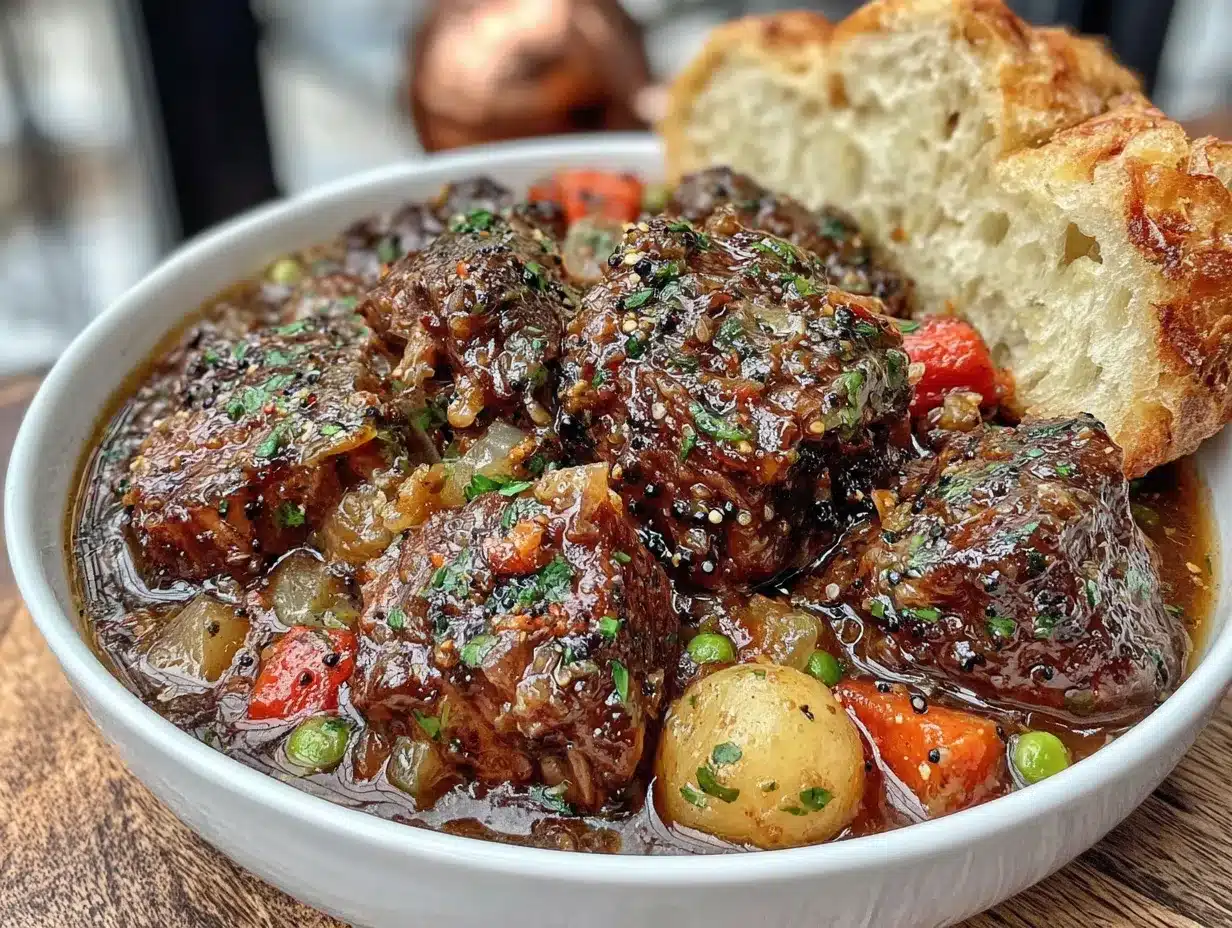
Let’s get cooking! This process is straightforward, but taking your time with the first few steps makes all the difference in the final flavor. Patience is your friend here.
- Prep the Beef (5 minutes): Pat the beef cubes completely dry with paper towels. This is crucial for a good sear—wet meat will steam, not brown. In a large bowl, toss the beef with the salt, pepper, and flour (if using) until evenly coated. Set aside while you prep your veggies.
- Sear the Beef (15 minutes): Heat 1 tablespoon of olive oil in your Dutch oven over medium-high heat until it shimmers. Working in two batches to avoid crowding the pot (crowding lowers the temperature and steams the meat), add half the beef cubes in a single layer. Let them sear without moving for 3-4 minutes, until a deep brown crust forms. Use your tongs to flip them and sear on all sides, about 2-3 more minutes. Don’t rush this! The fond (those browned bits) is pure flavor. Transfer the seared beef to a clean plate and repeat with the remaining tablespoon of oil and the rest of the beef.
- Sauté the Aromatics (5 minutes): Reduce the heat to medium. Add the diced onion to the pot (there should be some oil and fat left). Sauté, scraping up the browned bits from the bottom of the pot with your wooden spoon, for 4-5 minutes, until the onion is softened and translucent. Add the minced garlic and cook for another 30 seconds until fragrant. Be careful not to burn the garlic.
- Build the Flavor Base (3 minutes): Add the tomato paste to the pot and stir it into the onions. Cook for 1-2 minutes, stirring constantly. This cooks out the raw, tinny flavor of the paste and deepens its richness. It’s a small step with a big payoff.
- Deglaze and Combine (5 minutes): Pour in about 1/2 cup of the beef broth and use your wooden spoon to scrape up every last bit of the fond from the bottom of the pot. This is where the flavor party really starts. Add the remaining broth, the undrained diced tomatoes, Worcestershire sauce, bay leaves, thyme, and rosemary. Stir to combine. Return the seared beef and any accumulated juices on the plate to the pot.
- Simmer (1.5 hours): Bring the stew to a gentle boil, then immediately reduce the heat to low, cover the pot, and let it simmer gently for 1 hour. The liquid should be at a low bubble, not a rolling boil. A rapid boil will make the beef tough.
- Add the Vegetables (1 hour): After 1 hour, add the carrots, celery, and potatoes to the pot. Stir them in, making sure they are submerged in the liquid. Re-cover the pot and continue to simmer for another 45 minutes to 1 hour, or until the beef is fork-tender and the vegetables are cooked through but not mushy. The cooking time will depend on the size of your beef cubes and your specific pot.
- Finish and Serve (5 minutes): Once the beef and vegetables are tender, remove the bay leaves and discard them. Stir in the frozen peas and cook for just 2-3 minutes, until they are heated through and bright green. Taste the stew and adjust the salt and pepper to your liking. You might need a little more salt depending on your broth. Ladle into bowls, garnish with fresh parsley, and serve hot with crusty bread for dipping.
Troubleshooting Tip: If your stew seems too thin at the end, you can make a slurry by whisking 1 tablespoon of cornstarch with 2 tablespoons of cold water. Stir it into the simmering stew and cook for 2-3 minutes until it thickens. If it’s too thick, simply stir in a little more beef broth or water until it reaches your desired consistency.
Cooking Tips & Techniques
Over the years, I’ve learned a few things the hard way. Here are my best tips for making this stew perfect every single time.
- The Most Important Step: The Sear. I cannot stress this enough. Do not skip the sear. That deep brown crust on the beef is the number one source of flavor in this entire dish. It creates the fond, which becomes the backbone of the broth. If you’re tempted to skip it to save time, just remember my husband eating from the pot. That flavor is the difference between a good stew and a life-changing one.
- Don’t Crowd the Pot. When searing the beef, if you add all the cubes at once, the temperature of the pan drops too much. The beef will release its juices and start to steam instead of sear. You’ll end up with gray, tough meat. Two batches is the way to go.
- Low and Slow is the Way to Go. Once you add the liquid, keep the heat on a gentle simmer. A vigorous boil will make the beef fibers contract and become tough and stringy. A lazy bubble is what you’re after. This allows the collagen in the chuck to break down into gelatin, giving you that melt-in-your-mouth tenderness.
- Size Matters. Cut all your vegetables and beef into uniform, 1-inch pieces. This ensures they all cook at the same rate. You don’t want some mushy potatoes and others that are still crunchy.
- My Biggest Failure: I once tried to rush this stew by cranking the heat to high after adding the vegetables. I ended up with a burnt bottom, tough beef, and a kitchen that smelled like a campfire. Lesson learned. Patience is not just a virtue here; it’s a requirement.
Variations & Adaptations
This recipe is a fantastic base that you can easily adapt to your family’s tastes or what you have on hand. Here are a few of my favorite variations.
- Herb & Mushroom Twist: Add 8 oz of cremini or baby bella mushrooms, quartered, along with the onions. Sauté them until they release their liquid and start to brown. This adds an incredible earthy, savory depth. You can also swap the dried thyme and rosemary for a couple of sprigs of fresh rosemary and a few fresh thyme sprigs—just remember to remove the stems before serving.
- Slow Cooker Adaptation: This is perfect for a busy game day. Complete steps 1-4 (searing the beef and sautéing the aromatics) in a skillet on the stovetop. Then, transfer everything to your slow cooker. Add the broth, tomatoes, Worcestershire, herbs, and vegetables (except the peas). Cook on LOW for 7-8 hours or on HIGH for 4-5 hours, until the beef is tender. Stir in the frozen peas during the last 10 minutes of cooking.
- Instant Pot (Pressure Cooker) Version: Use the “Sauté” function on your Instant Pot to sear the beef and cook the aromatics. Then, add the broth, tomatoes, Worcestershire, herbs, and vegetables (except the peas). Pressure cook on HIGH for 35 minutes, then allow a 15-minute natural release before manually releasing any remaining pressure. Stir in the frozen peas and let them warm through before serving.
- Lighter, Brothier Version: If you prefer a stew that’s more like a soup, simply omit the flour when coating the beef and don’t add the tomato paste. The broth will be thinner and lighter, but still full of flavor. You can also swap half the beef broth for a good quality chicken stock for a different flavor profile.
Serving & Storage Suggestions
This stew is a meal in itself, but a few thoughtful additions can make it even more special. The way the flavors meld overnight is truly magical.
Serving: Serve this stew piping hot. Ladle it into deep bowls so none of that delicious broth is wasted. The classic pairing is a chunk of crusty bread or a warm dinner roll for sopping up every last drop. A simple side salad with a tangy vinaigrette is also a great choice to cut through the richness of the stew.
Storage: This stew is an absolute champion when it comes to leftovers. In fact, it’s even better the next day! The flavors have time to meld and deepen. Let the stew cool completely to room temperature before storing. Transfer it to an airtight container and store it in the refrigerator for up to 4 days.
Freezing: This stew freezes beautifully. Once cooled, portion it into freezer-safe bags or containers. Lay the bags flat in the freezer to save space. It will keep for up to 3 months. To thaw, move a bag to the refrigerator overnight.
Reheating: The best way to reheat this stew is on the stovetop over medium-low heat, stirring occasionally. Add a splash of beef broth or water if it has thickened too much in the fridge. You can also reheat individual portions in the microwave. The texture of the potatoes will be slightly softer after freezing and reheating, but the flavor will remain fantastic.
Nutritional Information & Benefits
While this is definitely comfort food, it’s packed with nutritious ingredients that make it a wholesome meal for the whole family.
Estimated Nutritional Values (per serving, based on 6 servings):
- Calories: ~450-500
- Protein: ~35-40g
- Fat: ~20-25g
- Carbohydrates: ~30-35g
- Fiber: ~6-8g
Health Benefits: This stew is a fantastic source of protein from the beef, which is essential for muscle building and repair. The carrots and potatoes provide a good dose of Vitamin A, Vitamin C, and potassium. The celery adds fiber and is a great source of Vitamin K. Using low-sodium beef broth helps you control the salt content of the final dish.
Dietary Considerations: This recipe is naturally dairy-free and nut-free. It can be made gluten-free by simply omitting the flour or using a gluten-free all-purpose blend. It’s a hearty, satisfying meal that fits into a balanced diet.
Conclusion
So there you have it. A cozy, one-pot beef stew that turned a twelve-year stew-hater into a ladle-wielding fan. This recipe is more than just a collection of ingredients—it’s a game day tradition, a rainy day comfort, and a surefire way to get everyone around the table (or the coffee table in front of the TV). It’s proof that with a little patience and a few simple techniques, you can create something truly memorable from humble, affordable ingredients.
I absolutely love how this stew makes my house feel. The slow simmer, the rich aroma, the way everyone gathers when I say it’s almost ready. It’s the very definition of a hug in a bowl. I hope you’ll give it a try and make it your own. Maybe you’ll add a pinch more thyme, or a splash of red wine. That’s the beauty of a recipe like this—it’s a starting point for your own family story.
I’d love to hear how it turns out for you! Did your picky eater ask for seconds? Did you try a fun variation? Drop a comment below and let me know. And if you’re looking for another cozy, family-friendly meal, you might also enjoy my creamy tuscan chicken one pot or this easy sheet pan sausage and vegetables for another easy weeknight win. Happy cooking, friends!
Frequently Asked Questions
Can I use a different cut of beef?
Absolutely! Boneless beef short ribs or brisket are excellent alternatives. The key is to use a cut with good marbling (fat) that will break down during the long, slow simmer. Avoid lean cuts like sirloin or round, as they will become tough and dry.
My stew is too salty. How can I fix it?
If you accidentally over-salted your stew, don’t panic. You can try adding a raw, peeled potato to the pot and simmering for 15-20 minutes. The potato will absorb some of the excess salt. You can also add a splash of water or unsalted beef broth to dilute the saltiness, or a squeeze of lemon juice to balance the flavor.
Can I make this stew in advance?
Yes, and I highly recommend it! This stew is one of those dishes that tastes even better the next day. The flavors have time to meld and deepen. Simply prepare the stew as directed, let it cool completely, and store it in the refrigerator. Reheat it gently on the stovetop before serving.
Can I add other vegetables?
Of course! This is a very adaptable recipe. Parsnips, turnips, or sweet potatoes would be wonderful additions or substitutions. You can also add a cup of frozen corn or green beans along with the peas at the end. Just be mindful of the cooking time for different vegetables—harder root vegetables should be added earlier, while delicate ones like peas and corn should go in at the end.
How do I thicken my stew without flour?
If you want a thicker stew without using flour or cornstarch, you have a couple of options. You can mash a few of the cooked potato chunks against the side of the pot with your spoon. This will release their starch and naturally thicken the broth. Alternatively, you can puree a cup of the cooked vegetables and broth in a blender (be careful with hot liquids!) and stir it back into the pot.
Pin This Recipe!
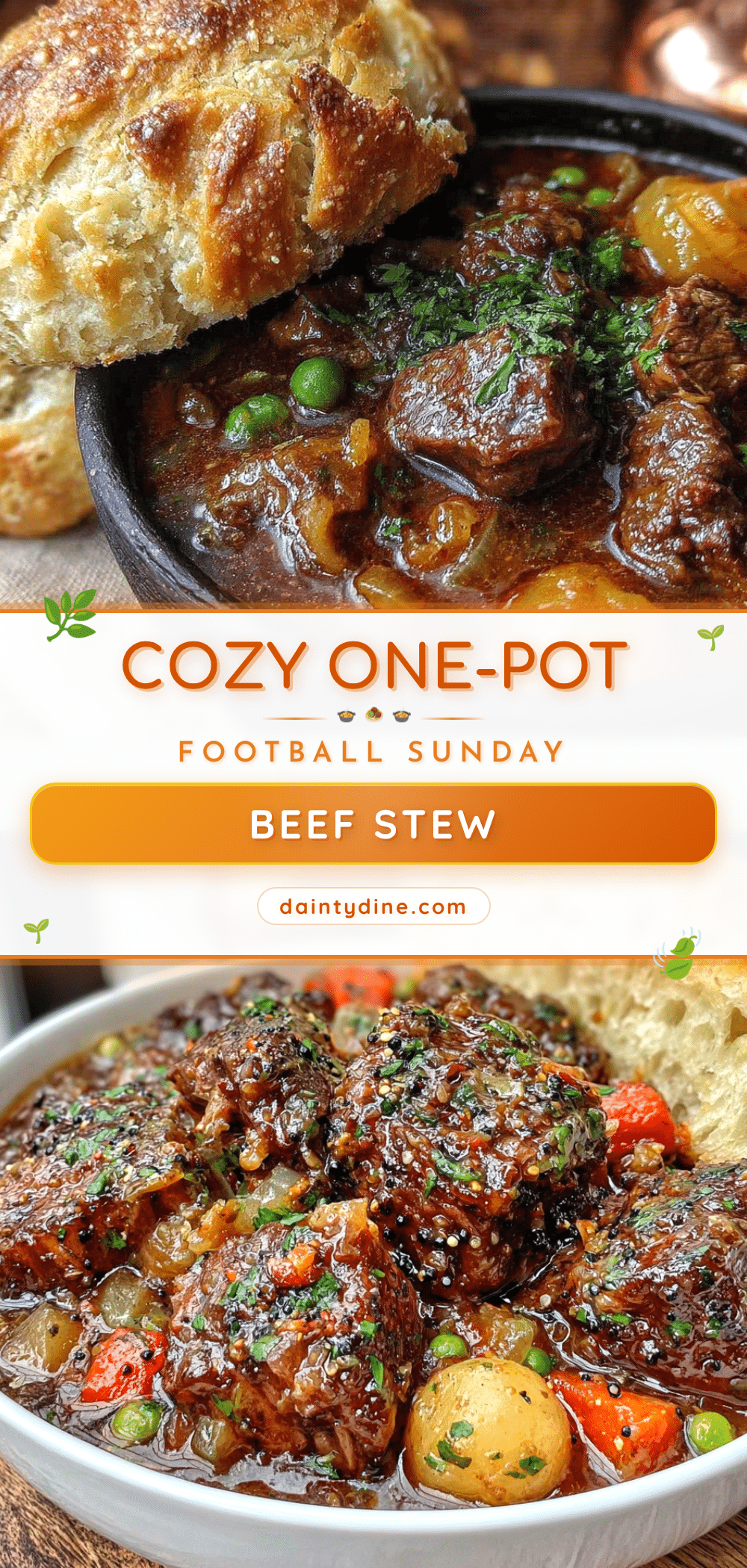
Cozy One-Pot Football Sunday Beef Stew (Kid-Approved)
A rich, hearty beef stew that even picky eaters will love. Made in one pot with tender beef, vegetables, and a savory broth, it’s the ultimate comfort food for game day or a cozy family dinner.
- Prep Time: 15 minutes
- Cook Time: 2 hours 30 minutes
- Total Time: 2 hours 45 minutes
- Yield: 6 servings 1x
- Category: Main Course
- Cuisine: American
Ingredients
- 2 lbs beef chuck roast, cut into 1.5-inch cubes
- 1 teaspoon salt
- 1/2 teaspoon black pepper
- 2 tablespoons all-purpose flour (optional, for a slightly thicker stew; use gluten-free flour if needed)
- 2 tablespoons olive oil, divided
- 1 large yellow onion, diced (about 1.5 cups)
- 3 cloves garlic, minced
- 3 large carrots, peeled and cut into 1-inch chunks (about 1.5 cups)
- 3 celery stalks, cut into 1-inch pieces (about 1 cup)
- 1.5 lbs Yukon Gold potatoes, cut into 1-inch chunks (about 4–5 medium potatoes)
- 4 cups low-sodium beef broth
- 1 (14.5 oz) can diced tomatoes, undrained (fire-roasted adds a nice depth)
- 2 tablespoons tomato paste
- 1 tablespoon Worcestershire sauce
- 2 bay leaves
- 1 teaspoon dried thyme
- 1/2 teaspoon dried rosemary
- 1 cup frozen peas
- 2 tablespoons fresh parsley, chopped (for garnish)
Instructions
- Prep the Beef (5 minutes): Pat the beef cubes completely dry with paper towels. In a large bowl, toss the beef with the salt, pepper, and flour (if using) until evenly coated. Set aside while you prep your veggies.
- Sear the Beef (15 minutes): Heat 1 tablespoon of olive oil in your Dutch oven over medium-high heat until it shimmers. Working in two batches to avoid crowding the pot, add half the beef cubes in a single layer. Let them sear without moving for 3-4 minutes, until a deep brown crust forms. Use your tongs to flip them and sear on all sides, about 2-3 more minutes. Transfer the seared beef to a clean plate and repeat with the remaining tablespoon of oil and the rest of the beef.
- Sauté the Aromatics (5 minutes): Reduce the heat to medium. Add the diced onion to the pot. Sauté, scraping up the browned bits from the bottom of the pot with your wooden spoon, for 4-5 minutes, until the onion is softened and translucent. Add the minced garlic and cook for another 30 seconds until fragrant.
- Build the Flavor Base (3 minutes): Add the tomato paste to the pot and stir it into the onions. Cook for 1-2 minutes, stirring constantly.
- Deglaze and Combine (5 minutes): Pour in about 1/2 cup of the beef broth and use your wooden spoon to scrape up every last bit of the fond from the bottom of the pot. Add the remaining broth, the undrained diced tomatoes, Worcestershire sauce, bay leaves, thyme, and rosemary. Stir to combine. Return the seared beef and any accumulated juices on the plate to the pot.
- Simmer (1.5 hours): Bring the stew to a gentle boil, then immediately reduce the heat to low, cover the pot, and let it simmer gently for 1 hour.
- Add the Vegetables (1 hour): After 1 hour, add the carrots, celery, and potatoes to the pot. Stir them in, making sure they are submerged in the liquid. Re-cover the pot and continue to simmer for another 45 minutes to 1 hour, or until the beef is fork-tender and the vegetables are cooked through but not mushy.
- Finish and Serve (5 minutes): Once the beef and vegetables are tender, remove the bay leaves and discard them. Stir in the frozen peas and cook for just 2-3 minutes, until they are heated through and bright green. Taste the stew and adjust the salt and pepper to your liking. Ladle into bowls, garnish with fresh parsley, and serve hot with crusty bread for dipping.
Notes
For a thicker stew without flour, mash a few of the cooked potatoes against the side of the pot at the end. If the stew is too thin, make a slurry with 1 tablespoon cornstarch and 2 tablespoons cold water, stir in, and cook for 2-3 minutes. For a gluten-free version, omit the flour or use a gluten-free all-purpose blend. Leftovers taste even better the next day.
Nutrition
- Serving Size: 1 bowl (about 1.5 cu
- Calories: 475
- Sugar: 8
- Sodium: 780
- Fat: 22
- Saturated Fat: 7
- Carbohydrates: 33
- Fiber: 7
- Protein: 37
Keywords: beef stew, one-pot, game day, comfort food, kid-friendly, easy dinner, fall recipe, winter recipe