Love this? Save it for later!
Share the inspiration with your friends
Introduction: The Late Afternoon Market Surprise
“You gotta tap it,” said Mr. Jenkins, the elderly vendor at the farmer’s market, as I squinted under the blazing afternoon sun last July. I was on a mission for the perfect watermelon—one that would actually taste like summer and not just look pretty on the picnic table. Honestly, I wasn’t expecting much from a man who wore a hat so old it looked like it belonged in a museum. But there I was, balancing a cracked ceramic bowl I’d brought along (because, why not?), trying to catch the sound of a ripe watermelon under his patient gaze.
Maybe you’ve been there, staring at a sea of green melons, unsure which one will be juicy and sweet and which will just leave you with a disappointing crunch. That day, I learned a few tricks that changed my approach forever. The sweet, dripping reward wasn’t just luck—it was a little bit of science, a pinch of intuition, and a dash of patience. The best part? These tips are easy enough to remember, so you won’t feel like you’re gambling with your summertime dessert anymore. Let me tell you, I keep coming back to those moments at the market every summer because the watermelon I pick now makes me close my eyes after the very first bite. This guide is all about sharing those secrets so you can experience that same joy every time.
Why You’ll Love This Recipe
Picking the sweetest watermelon isn’t just a lucky guess anymore. After countless trials, some juicy wins, and a few melons that were all rind and no sweetness, I’ve fine-tuned a simple approach that works like a charm. Whether you’re shopping for a backyard BBQ or a quiet afternoon snack, these tips will help you pick a watermelon that’s bursting with flavor and refreshment.
- Quick & Easy: These 5 simple tips can be remembered and used in just minutes at the market or store.
- Simple Ingredients: No need for complicated tools or gadgets—just your senses and a little know-how.
- Perfect for Summer: Ideal for hot days, picnics, pool parties, or any occasion that calls for a sweet, hydrating treat.
- Crowd-Pleaser: Everyone loves a juicy watermelon, but the sweetest ones will have guests asking for seconds.
- Unbelievably Delicious: These tips help you find melons with that perfect balance of crisp texture and sugary juice—pure summer magic.
What sets these tricks apart is that they combine sensory cues with a touch of simple science: from the sound a melon makes when tapped to the color of its rind. I mean, who knew that the spot where the watermelon rested on the ground could tell you so much? This isn’t just another list; it’s what I use every summer to bring the best watermelon home—no guessing, no regrets.
What Ingredients You Will Need
This guide doesn’t require actual ingredients, but since picking the right watermelon is your first step to an amazing fruit experience, here’s what you should look for in the melons themselves. Think of these as your “ingredients” in the selection process.
- Watermelon Size: Choose melons that feel heavy for their size, indicating juiciness.
- Field Spot: Look for a creamy yellow patch on the rind—this is where the melon rested on the ground and ripened in the sun.
- Rind Color & Texture: A deep green rind with a slightly dull surface usually means ripeness, while shiny rinds might indicate underripe fruit.
- Webbing or Sugar Spots: Brown, rough patches (called sugar spots) show where sugars are seeping out, signaling sweetness.
- Tapping Sound: A hollow, deep thump suggests ripeness, while a dull sound can mean the melon is underripe or overripe.
- Shape: Uniform, symmetrical shapes often indicate even ripening.
These “ingredients” are easy to spot once you know what to look for. I prefer melons from local farms or farmers markets because they tend to be fresher and picked at the right time. But don’t worry, these tips work just as well at your local grocery store. If you see a few melons with a nice golden field spot and a deep green rind, those are usually safe bets. And remember, a watermelon that’s too light or oddly shaped might just be a dud.
Equipment Needed
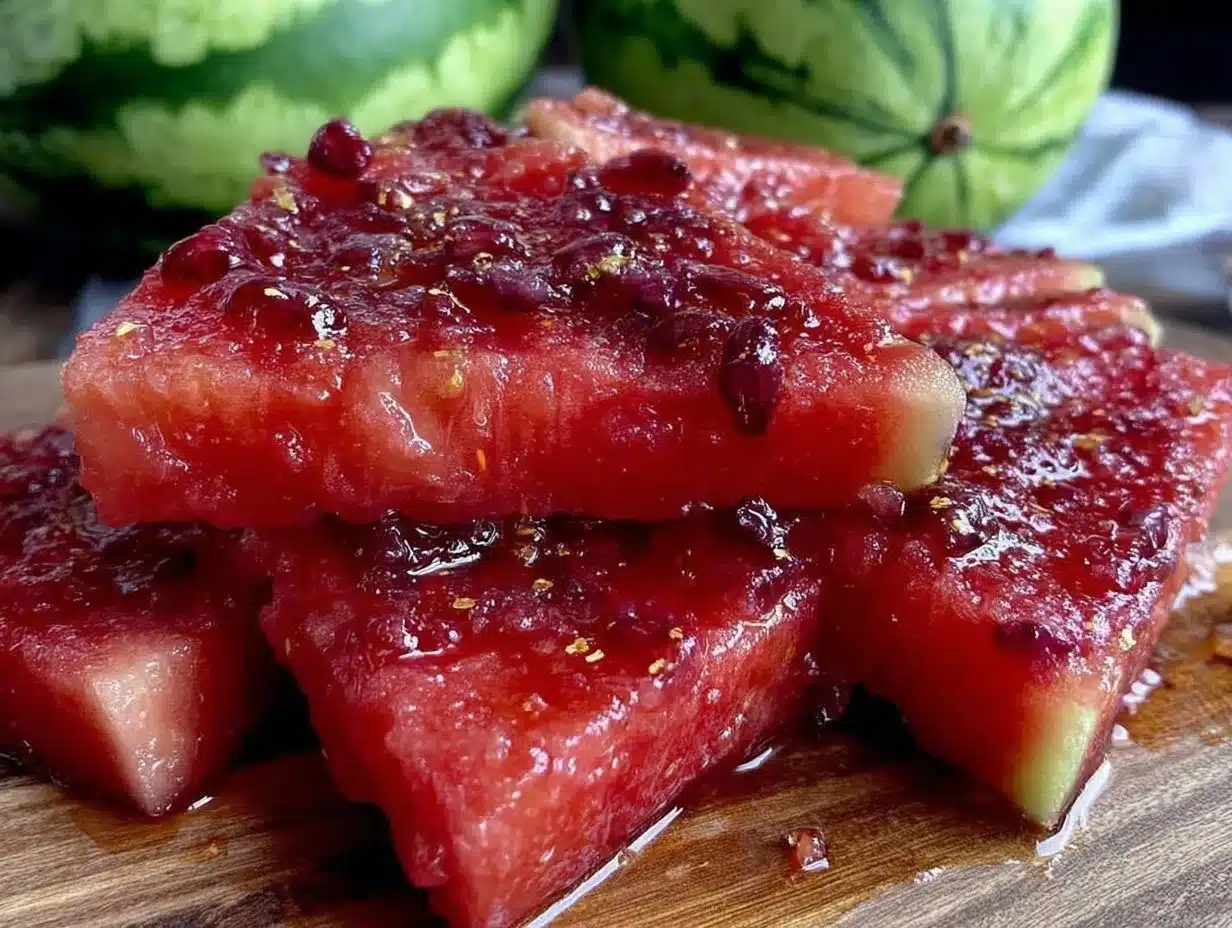
Picking the sweetest watermelon requires no fancy equipment—just your senses and maybe a few extras to make things easier.
- Your Hands: For heft and feel—trust me, a melon that feels light for its size is usually dry inside.
- Experienced Ears: Tapping the melon with your knuckles helps you judge ripeness by sound.
- A Clean Knife: When you get your watermelon home, a sharp serrated knife makes slicing easier and cleaner.
- Optional: A Pen or Sticker: If you want to mark your top picks at the market, a small sticker or pen works well.
Honestly, I’ve tried fancy gadgets that claim to test ripeness, but nothing beats the classic tap and look method. It’s budget-friendly and quick, and after a few tries, you’ll get a feel for it like I did that day at the market with Mr. Jenkins. If you’re worried about damaging the rind while tapping, don’t be—the melon’s tough skin can handle it just fine.
Preparation Method
- Pick up the watermelon and feel its weight. A ripe watermelon should feel heavy for its size. For example, a 10-pound (4.5 kg) melon that feels more like 12 pounds (5.4 kg) is likely juicier. If it feels too light, it might be dry inside. Spend about 10 seconds comparing a few melons this way.
- Look for the field spot. Flip the watermelon over to find the yellowish patch where it rested on the ground. This patch should be a creamy, buttery yellow—not white or greenish. The deeper the yellow, the longer it ripened on the vine, which usually means sweeter fruit. This step takes only a few seconds but is a key indicator.
- Examine the rind color and texture. The watermelon’s surface should be dull rather than shiny. A shiny rind often means it’s underripe. Also, check for sugar spots—small brown rough patches—that hint at sugar concentration inside. Avoid melons with soft spots or bruises. Spend up to 15 seconds on this visual check.
- Tap the watermelon with your knuckles. Give the melon a gentle but firm tap. Listen for a deep, hollow sound, like a drum. If the sound is dull or flat, the melon might be underripe or overripe. This step might feel a bit weird at first, but after a few tries, you’ll start recognizing the sound. Try tapping for about 10 seconds.
- Inspect the shape and symmetry. Lastly, pick melons that are symmetrical and uniform in shape—round or oval shapes without bumps or dents. A misshapen melon can mean uneven ripening or texture. This final glance should only take a few seconds.
If you’re ever unsure, trust your gut and remember that a combination of these steps is the best bet. I once forgot to check the field spot and ended up with a melon that looked perfect but tasted bland—lesson learned! The best watermelons come from using all your senses together. Once home, chill your melon for a few hours before cutting—it makes that first bite even more refreshing.
Cooking Tips & Techniques
While you might not be cooking watermelon, picking the right one sets the stage for your entire eating experience. Here are some tips to make the most of your watermelon selection and preparation:
- Trust Your Senses: Picking watermelon is sensory work. Don’t rush—take your time to tap, look, and feel. I’ve learned that sometimes rushing leads to picking the prettiest melon, not the sweetest.
- Use Both Hands: Heft the watermelon with two hands to better judge its weight. One-handed lifts can be misleading, especially with larger melons.
- Check Multiple Spots: Sometimes the field spot is small or hidden. Rotate the melon to find the best area to check.
- Store Properly: Once picked, keep your watermelon cool but avoid freezing. A chilled melon tastes sweeter and keeps the texture crisp.
- Cut Smart: Cut away the rind completely before serving to avoid bitterness. I like to slice watermelon into wedges for easy sharing.
One time, I skipped the tapping step and ended up with a melon that was all rind and no juice—lesson learned the hard way. Patience is key. If you keep practicing, these tips become second nature, and you’ll never come home with a bland watermelon again.
Variations & Adaptations
Watermelon is wonderfully versatile, and while this guide focuses on picking the sweetest melons, here are some ways to tweak your experience:
- Seedless vs. Seeded: Seedless watermelons are convenient and sweet, but some swear seeded ones have fuller flavor. Try both and see which you prefer.
- Mini Watermelons: If you’re short on storage or feeding fewer people, mini or personal-sized watermelons follow the same ripeness rules.
- Organic vs. Conventional: Organic melons often have more pronounced flavor, but the picking tips stay the same regardless.
- Different Varieties: Yellow or orange-fleshed watermelons have a sweeter, honey-like taste. Use the same selection techniques for these varieties.
- Cold or Room Temperature: Some prefer watermelon slightly chilled, others at room temp for maximum flavor. Try both to find your favorite.
Personally, I once bought a yellow watermelon following these tips, and it was a delightful surprise—so sweet and refreshing, perfect for a summer salad twist. Whatever variation you choose, these pointers help you pick the sweetest fruit every time.
Serving & Storage Suggestions
After picking that perfect watermelon, serving it right can make all the difference. Serve chilled for the best refreshment—about 45 minutes in the fridge should do it. For parties, slice into bite-sized cubes or classic wedges for easy eating.
Watermelon pairs beautifully with salty cheeses like feta, fresh mint, or a splash of lime juice. For drinks, try watermelon-infused sparkling water or cocktails to bring out the melon’s natural sweetness.
To store leftover watermelon, keep it covered in an airtight container in the fridge for up to 3 days. If you want to freeze it, cut into chunks and spread on a tray before bagging—great for smoothies later.
Flavors deepen a bit when watermelon is stored chilled, making it taste even sweeter after a few hours. Just avoid leaving cut watermelon out at room temperature for long to keep it fresh and safe.
Nutritional Information & Benefits
Watermelon is more than just a sweet treat—it’s packed with hydration and nutrients. A typical serving (about 1 cup or 150 grams) contains roughly:
- 46 calories
- 12 grams of natural sugars
- Less than 1 gram of fat
- About 1 gram of fiber
- Helpful amounts of vitamins A and C
Its high water content (over 90%) makes it excellent for hydration on hot summer days. Plus, lycopene, the antioxidant that gives watermelon its red color, has been linked to heart health benefits.
This fruit is naturally gluten-free, low in calories, and vegan-friendly, making it a great choice for many diets. Just watch out if you’re sensitive to fruit sugars or need to monitor blood sugar levels.
Conclusion
Picking the sweetest watermelon is less about luck and more about paying attention to a few simple cues. With these tips, you can shop confidently, bringing home melons that make every summer moment a little sweeter. I love this guide because it turns what used to be a guessing game into a fun, sensory experience that anyone can master.
Give it a try on your next trip to the market, and let me know how it goes. Maybe you’ll find yourself tapping melons and hearing that perfect hollow sound too. And hey, if you discover your own watermelon-picking secret, don’t hesitate to share it—I’m always up for learning new tricks.
Here’s to many juicy, sweet bites of summer ahead!
FAQs About Picking the Sweetest Watermelon
How can I tell if a watermelon is ripe without cutting it?
Use the field spot color (creamy yellow), tap test (hollow sound), and heft (heavy for size) to judge ripeness without slicing.
What does a white or greenish field spot on a watermelon mean?
It usually means the watermelon was picked too early and might not be as sweet or ripe as one with a yellow field spot.
Are bigger watermelons always sweeter?
Not necessarily. Weight relative to size is more important—heavier melons tend to be juicier, but size alone doesn’t guarantee sweetness.
Can I eat watermelon rind?
Yes, watermelon rind is edible and can be pickled or cooked, but most people prefer to eat just the juicy flesh.
How long can I store a whole watermelon?
Whole watermelons can be stored at room temperature for up to 1 week and in the fridge for 2 weeks. Once cut, keep refrigerated and consume within 3 days.
Pin This Recipe!
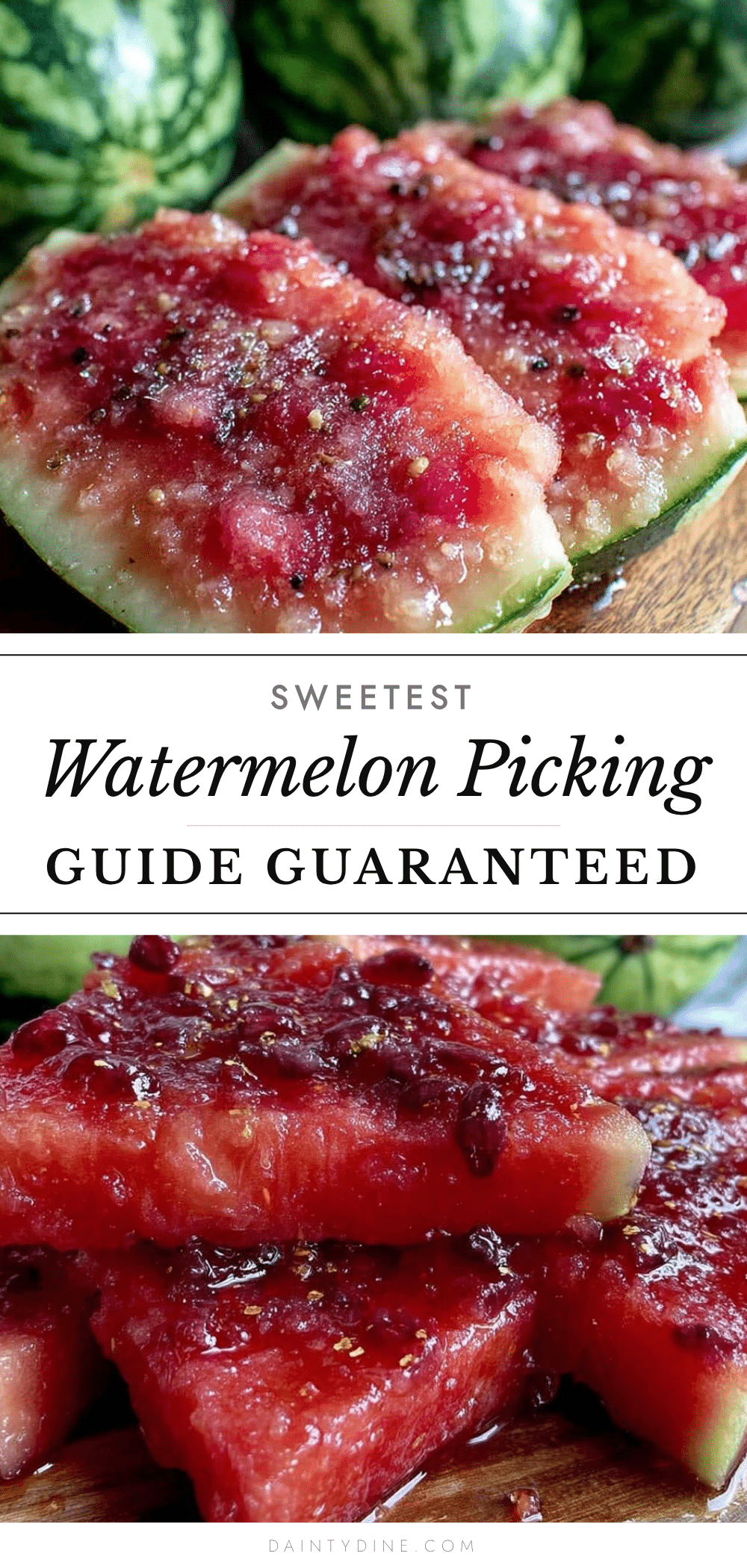
Sweetest Watermelon Picking Guide 5 Easy Tips for Perfect Summer Fruit
Learn how to pick the sweetest watermelon with 5 simple tips combining sensory cues and science to ensure juicy, flavorful summer fruit every time.
- Prep Time: 5 minutes
- Cook Time: 0 minutes
- Total Time: 5 minutes
- Yield: Varies (depends on watermelon size and servings)
- Category: Guide / Fruit Selection
- Cuisine: American
Ingredients
- Watermelon size: Choose melons that feel heavy for their size, indicating juiciness.
- Field spot: Look for a creamy yellow patch on the rind where the melon rested on the ground.
- Rind color & texture: Deep green rind with a slightly dull surface indicates ripeness.
- Webbing or sugar spots: Brown, rough patches signaling sweetness.
- Tapping sound: A hollow, deep thump suggests ripeness.
- Shape: Uniform, symmetrical shapes indicate even ripening.
Instructions
- Pick up the watermelon and feel its weight; a ripe watermelon should feel heavy for its size (e.g., a 10-pound melon feeling like 12 pounds).
- Look for the field spot; it should be creamy, buttery yellow, not white or greenish.
- Examine the rind color and texture; the surface should be dull, not shiny, and check for sugar spots while avoiding soft spots or bruises.
- Tap the watermelon with your knuckles and listen for a deep, hollow sound indicating ripeness.
- Inspect the shape and symmetry; choose melons that are round or oval without bumps or dents.
- Once home, chill the watermelon for about 45 minutes before cutting for best refreshment.
- Use a sharp serrated knife to slice the watermelon into wedges or bite-sized cubes for serving.
Notes
Use all senses together for best results; chill watermelon before serving for enhanced sweetness and crisp texture; avoid rushing the selection process; store cut watermelon in airtight container in fridge for up to 3 days.
Nutrition
- Serving Size: 1 cup (150 grams)
- Calories: 46
- Sugar: 12
- Sodium: 1
- Fat: 1
- Carbohydrates: 12
- Fiber: 1
- Protein: 0.9
Keywords: watermelon picking, ripe watermelon, summer fruit, watermelon tips, juicy watermelon, fruit selection, farmer's market, watermelon guide