Love this? Save it for later!
Share the inspiration with your friends
My brother Mark asked me why I couldn’t just dump everything in the slow cooker raw and skip the stovetop searing step. I started to explain why that wouldn’t work—something about the Maillard reaction and deep flavor development. Then stopped. Honestly, I was tired of scrubbing splattered grease off my stovetop after every stew I made, and his suggestion sounded like a dream. So on a rainy Tuesday afternoon, I tossed cubed chuck roast, onions, carrots, and a full bottle of red wine into my old Crockpot without browning a single piece of meat. I braced for blandness.
The power flickered once around hour five, and I held my breath. When I finally lifted the lid six hours later, the smell that hit me was rich, winey, and deeply savory—nothing like the thin, gray stews I’d made in my early cooking days. The meat fell apart at the slightest touch of a fork. The broth was velvety and dark, with a glossy sheen that looked like I’d slaved over it for hours. Mark took one bite, grinned, and said, “Told you.”
That moment changed how I approach slow cooker cooking forever. I mean, I’d spent years believing that browning was non-negotiable for beef stew. Let me tell you, being wrong never tasted so good. Maybe you’ve been there too—standing over a hot skillet, flipping each cube of meat, wondering if it’s all worth it. This recipe proves it isn’t. The Crockpot does the heavy lifting, and the red wine does the flavor magic. It’s the kind of meal that makes you close your eyes after the first spoonful, and I keep making it because it works every single time.
Why You’ll Love This Recipe
This isn’t just another beef stew recipe—it’s the one that will retire your stovetop searing pan for good. After testing this method over a dozen times with different cuts of beef and varying wine qualities, I can confidently say that skipping the browning step doesn’t sacrifice flavor. In fact, the slow braise in red wine creates a tenderness that seared meat sometimes loses.
- No Browning Needed: Throw everything in the Crockpot raw and walk away. No splattering oil, no extra dishes, no stress before guests arrive.
- Simple Ingredients: Beef chuck, red wine, carrots, potatoes, onions, and pantry staples. You likely have most of these already.
- Perfect for Hosting: Prep it in the morning, let it cook all day, and serve a showstopping dinner with zero last-minute fuss.
- Crowd-Pleaser: Every time I’ve served this at a potluck or dinner party, someone asks for the recipe before they finish their first bowl.
- Unbelievably Tender: The low-and-slow method with red wine breaks down the collagen in the chuck roast into buttery, melt-apart perfection.
What makes this recipe different from all the other stews out there is the wine-to-broth ratio. Most recipes treat wine as an afterthought—a splash here, a glug there. This one uses a full cup of dry red wine as a primary braising liquid, which infuses every single vegetable and piece of meat with complex, fruity depth. The result is a stew that tastes like it simmered in a French farmhouse kitchen, not your average weeknight Crockpot.
This recipe is comfort food reimagined—richer, deeper, and easier than any version you’ve tried before. It’s the kind of dish that makes hosting feel effortless, because honestly, the hardest part is opening the bottle of wine. Perfect for impressing guests without breaking a sweat, or turning a chilly Sunday into something memorable with zero stress.
What Ingredients You Will Need
This recipe relies on a handful of quality ingredients that work together to build deep flavor without any pre-cooking. The red wine is the star here, so choose one you’d actually drink—but don’t feel pressured to buy the most expensive bottle on the shelf.
- 2 pounds beef chuck roast, cut into 1.5-inch cubes (look for well-marbled pieces; the fat renders during cooking and keeps the meat juicy)
- 1 cup dry red wine (I prefer Cabernet Sauvignon or Merlot—both add bold fruitiness without overwhelming the broth)
- 1 cup beef broth, low-sodium (use a good-quality brand like Kitchen Basics or Pacific Foods for cleaner flavor)
- 4 medium carrots, peeled and cut into 1-inch chunks
- 3 medium Yukon Gold potatoes, peeled and cubed (they hold their shape better than Russets in the slow cooker)
- 1 large yellow onion, diced
- 3 cloves garlic, minced
- 2 tablespoons tomato paste (adds richness and helps thicken the broth naturally)
- 2 tablespoons all-purpose flour (for thickening; can substitute with cornstarch mixed with water for gluten-free)
- 2 bay leaves
- 1 teaspoon dried thyme
- 1 teaspoon smoked paprika (adds a subtle smokiness that complements the wine beautifully)
- 1/2 teaspoon black pepper
- 1 teaspoon salt, plus more to taste
- 2 tablespoons olive oil (optional, but helps coat the meat and vegetables before cooking for better texture)
- 1 cup frozen peas, added in the last 30 minutes (adds a pop of color and sweetness)
- Fresh parsley, chopped for garnish
For the best results, I recommend using chuck roast labeled “chuck shoulder” or “chuck eye” if you can find it—these cuts have excellent marbling that breaks down into fork-tender meat. If chuck isn’t available, bottom round or brisket work well too, though brisket may need an extra hour of cooking time. For a dairy-free option, skip the flour and use a cornstarch slurry at the end.
Equipment Needed
You don’t need a fancy kitchen to pull off this stew. The beauty of this recipe is that it relies on one main appliance and a few basic tools.
- 6-quart or larger slow cooker (Crockpot brand is my go-to, but any brand works; just make sure your cooker has a low and high setting)
- Sharp chef’s knife for cutting beef and vegetables
- Cutting board
- Measuring cups and spoons
- Wooden spoon for stirring
- Small bowl for mixing flour if needed
- Ladle for serving
If you don’t have a 6-quart slow cooker, a 4-quart will work—just reduce the vegetable quantities slightly to avoid overcrowding. I’ve also made this in a Dutch oven in the oven at 300°F for 3 hours with excellent results, so don’t stress if you’re slow cooker-less. A tip I learned the hard way: wipe the inside of your Crockpot lid with a paper towel after cooking to prevent condensation from dripping back into the stew and thinning it out.
Preparation Method
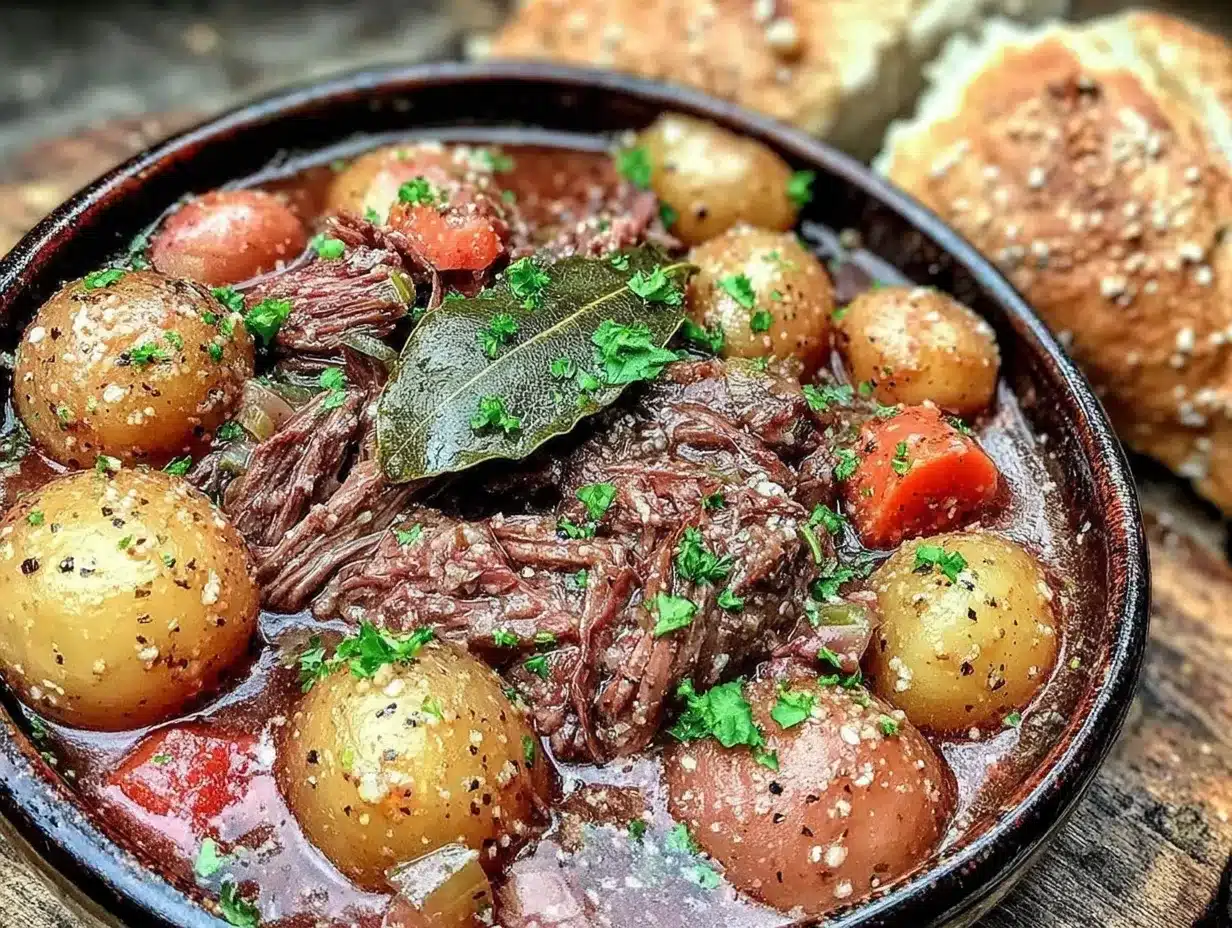
This method is almost laughably simple, but I’ll walk you through every step so you feel confident even if you’ve never made stew before.
- Prep the beef and vegetables (10 minutes): Pat the beef chuck cubes dry with paper towels. This helps the flour stick better later. Cut your carrots, potatoes, and onion, and mince the garlic. Keep the potatoes in a bowl of cold water so they don’t brown while you work.
- Season and coat the meat (5 minutes): In a large bowl, toss the beef cubes with salt, pepper, smoked paprika, and the 2 tablespoons of flour. Make sure every piece is lightly coated. Don’t skip this step—the flour helps thicken the stew as it cooks and gives the meat a subtle crust even without browning.
- Layer the vegetables (3 minutes): Place the diced onion, carrots, and potatoes in the bottom of your slow cooker. This creates a natural rack that lifts the meat slightly, preventing it from sitting in direct liquid and overcooking.
- Add the beef and aromatics (2 minutes): Arrange the seasoned beef cubes on top of the vegetables. Sprinkle the minced garlic, dried thyme, and bay leaves over everything.
- Pour in the liquids (1 minute): In a measuring cup, whisk together the red wine, beef broth, and tomato paste until smooth. Pour this mixture evenly over the beef and vegetables. Don’t stir—the liquid will find its way down through the layers naturally.
- Cook low and slow (6-8 hours): Cover the slow cooker and set it to LOW for 7-8 hours or HIGH for 4-5 hours. I strongly recommend LOW for the best texture. The meat needs time to break down its connective tissue, and rushing it on HIGH can leave you with tough, chewy cubes.
- Check for doneness (at hour 6): Around hour 6 on LOW, use a fork to test a piece of beef. It should shred easily with minimal pressure. If it’s still firm, let it go another hour. Every slow cooker runs a little differently—mine tends to run hot, so I start checking at 6 hours.
- Add the peas and adjust seasoning (5 minutes): In the last 30 minutes of cooking, stir in the frozen peas. They only need time to warm through and turn bright green. Taste the broth and add more salt or pepper if needed. The wine flavor will have mellowed significantly, so don’t be shy with seasoning.
- Thicken if desired (5 minutes): If you prefer a thicker stew, mix 1 tablespoon cornstarch with 2 tablespoons cold water in a small bowl. Stir this slurry into the stew during the last 15 minutes of cooking. Let it bubble and thicken before serving.
- Rest and serve (10 minutes): Turn off the slow cooker and let the stew sit uncovered for 10 minutes. This allows the flavors to settle and the broth to thicken slightly as it cools. Remove the bay leaves, ladle into bowls, and garnish with fresh parsley.
A visual cue to watch for: the broth should be a deep, garnet-red color with a glossy surface. The carrots should be tender enough to pierce with a fork but still hold their shape. If the broth looks thin at the end, don’t panic—it will thicken as it cools.
Cooking Tips & Techniques
After making this stew more times than I can count, I’ve gathered a few tricks that make the difference between good and unforgettable. First, resist the urge to open the lid during cooking. Every time you lift that lid, you release heat and steam, adding 20-30 minutes to your cooking time. I learned this the hard way when I peeked at hour four and ended up with slightly undercooked potatoes.
Another thing: don’t skip the tomato paste. I once forgot to add it (I was distracted by a phone call), and the stew lacked that deep, savory backbone that tomato paste provides. It’s not just about acidity—it adds umami that complements the wine beautifully. If you have a tube of tomato paste in your fridge, even better; it’s more concentrated and blends in seamlessly.
For the best texture, cut your vegetables into uniform chunks—about 1-inch pieces for everything. I made the mistake of cutting carrots into thin rounds once, and they turned to mush by hour six. Chunky pieces hold their shape and give the stew satisfying bites. And here’s a pro tip: if you’re cooking for a crowd, double the recipe but don’t overcrowd your slow cooker. Use a 7-quart or larger model, or split it between two cookers.
One failure I’ll admit: I once used a cheap cooking wine from the grocery store, thinking it wouldn’t matter since it was simmering for hours. It mattered. The stew had a harsh, artificial aftertaste that no amount of salt could fix. Stick with a real wine you’d enjoy drinking—even a $10 bottle works beautifully.
Variations & Adaptations
This recipe is wonderfully flexible, so feel free to make it your own based on what you have or who you’re feeding.
- Gluten-Free Version: Skip the flour coating on the beef and use a cornstarch slurry (2 tablespoons cornstarch mixed with 3 tablespoons cold water) stirred in during the last 20 minutes of cooking. The texture will be slightly silkier but just as rich.
- Dairy-Free Adaptation: This recipe is naturally dairy-free as written, but if you’re serving it with mashed potatoes, use olive oil and dairy-free milk for the mash. The stew itself needs no adjustments.
- Vegetable Variations: Swap potatoes for parsnips or turnips for a lower-carb option. Add mushrooms in the first hour for extra earthy flavor—cremini or baby bellas work best. In summer, I sometimes add zucchini in the last hour, but don’t add it earlier or it turns to mush.
- Herb Swaps: If you don’t have thyme, use 1 teaspoon dried rosemary or 2 fresh sprigs. Bay leaves are non-negotiable in my book, but you can skip them in a pinch.
- Wine Substitutions: No red wine? Use an extra cup of beef broth plus 2 tablespoons balsamic vinegar for acidity and depth. It won’t be exactly the same, but it’s still delicious.
I once tried a smoked paprika-heavy version with chipotle in adobo, and it turned into a smoky, slightly spicy stew that my brother-in-law still requests. Don’t be afraid to experiment—the slow cooker is forgiving.
Serving & Storage Suggestions
This stew is best served piping hot in deep bowls with a generous ladle of broth. I love pairing it with crusty sourdough bread for soaking up every last drop, or over a bed of buttery egg noodles for a heartier meal. For a dinner party, I serve it with a simple green salad dressed with lemon vinaigrette to cut through the richness, and a glass of the same red wine I used in the stew—full circle, you know?
For storage, let the stew cool completely before transferring to airtight containers. It keeps in the refrigerator for up to 4 days, and the flavors actually deepen overnight. I often make this a day ahead when I’m hosting—it’s one less thing to worry about on the day of the party.
To freeze, portion the stew into freezer-safe bags or containers, leaving an inch of headspace for expansion. It freezes beautifully for up to 3 months. Thaw overnight in the refrigerator and reheat gently on the stovetop or in the microwave. Add a splash of beef broth or water when reheating, as the stew thickens considerably after freezing.
A note on flavor development: this stew tastes even better on day two. The wine mellows further, the vegetables absorb more broth, and everything melds into a cohesive, deeply comforting dish. If you can resist eating it all the first night, you’re in for a treat.
Nutritional Information & Benefits
Per serving (based on 8 servings): approximately 380 calories, 28g protein, 22g carbohydrates, 18g fat, 5g fiber, 6g sugar, 680mg sodium. These values are estimates and will vary based on exact ingredients and portion sizes.
This stew offers several health benefits worth noting. Beef chuck is rich in iron, zinc, and B vitamins, which support energy metabolism and immune function. Carrots provide beta-carotene for eye health, while potatoes offer potassium and vitamin C. The red wine contains resveratrol, an antioxidant linked to heart health—though most of the alcohol cooks off during the long simmer.
For those watching their sodium, use low-sodium beef broth and go easy on the added salt. You can also reduce the potatoes for a lower-carb option. This recipe is naturally gluten-free if you use the cornstarch slurry instead of flour, and it’s dairy-free as written. Just be mindful of the wine if you’re avoiding alcohol—though again, most of it evaporates during cooking.
I personally love that this stew feels indulgent but is packed with whole foods. It’s the kind of meal that fills you up without weighing you down, perfect for cold-weather comfort that actually nourishes.
Conclusion
This Crockpot beef stew with red wine has become my secret weapon for hosting—the one dish that makes me look like I spent all day in the kitchen when I really just threw things in a pot and walked away. It’s proof that sometimes the simplest methods produce the most memorable meals, and that being wrong about cooking can be a delicious discovery.
I hope you give this recipe a try and make it your own. Swap in your favorite vegetables, experiment with different herbs, or double it for your next gathering. The beauty of this stew is that it adapts to whatever you have on hand and still delivers that deep, winey, soul-warming flavor every time. Honestly, I don’t think I’ll ever brown beef for stew again—and I’m completely okay with that.
If you make this, I’d love to hear how it turned out. Drop a comment below with your favorite variation, or tag me in your photos—I’m always inspired by how you all put your own spin on things. Until next time, happy slow cooking!
Frequently Asked Questions
Can I use frozen beef directly in the slow cooker?
I don’t recommend it. Frozen beef releases excess water as it thaws, which can dilute the broth and lead to uneven cooking. Thaw the beef in the refrigerator overnight before starting this recipe for the best texture and flavor.
What’s the best cut of beef for slow cooker stew?
Chuck roast is my top choice because of its excellent marbling, which breaks down into tender, juicy meat over long cooking. Bottom round or brisket also work well, but avoid lean cuts like sirloin—they’ll turn out dry and tough.
Can I cook this on HIGH instead of LOW?
Yes, but the texture won’t be quite as tender. Cook on HIGH for 4-5 hours, checking for doneness at hour 4. The meat may be slightly firmer, and the vegetables might not be as soft. LOW is always better for fall-apart results.
How do I thicken the stew if it’s too thin?
Mix 1 tablespoon cornstarch with 2 tablespoons cold water to make a slurry, then stir it into the stew during the last 15 minutes of cooking. Let it bubble and thicken before serving. Alternatively, you can mash some of the cooked potatoes against the side of the slow cooker to naturally thicken the broth.
Can I make this stew ahead of time for a party?
Absolutely! In fact, it tastes even better the next day. Make it a day ahead, cool it completely, and refrigerate overnight. Reheat gently on the stovetop or in the slow cooker on LOW for 1-2 hours before serving. Add a splash of broth if it’s too thick.
Pin This Recipe!
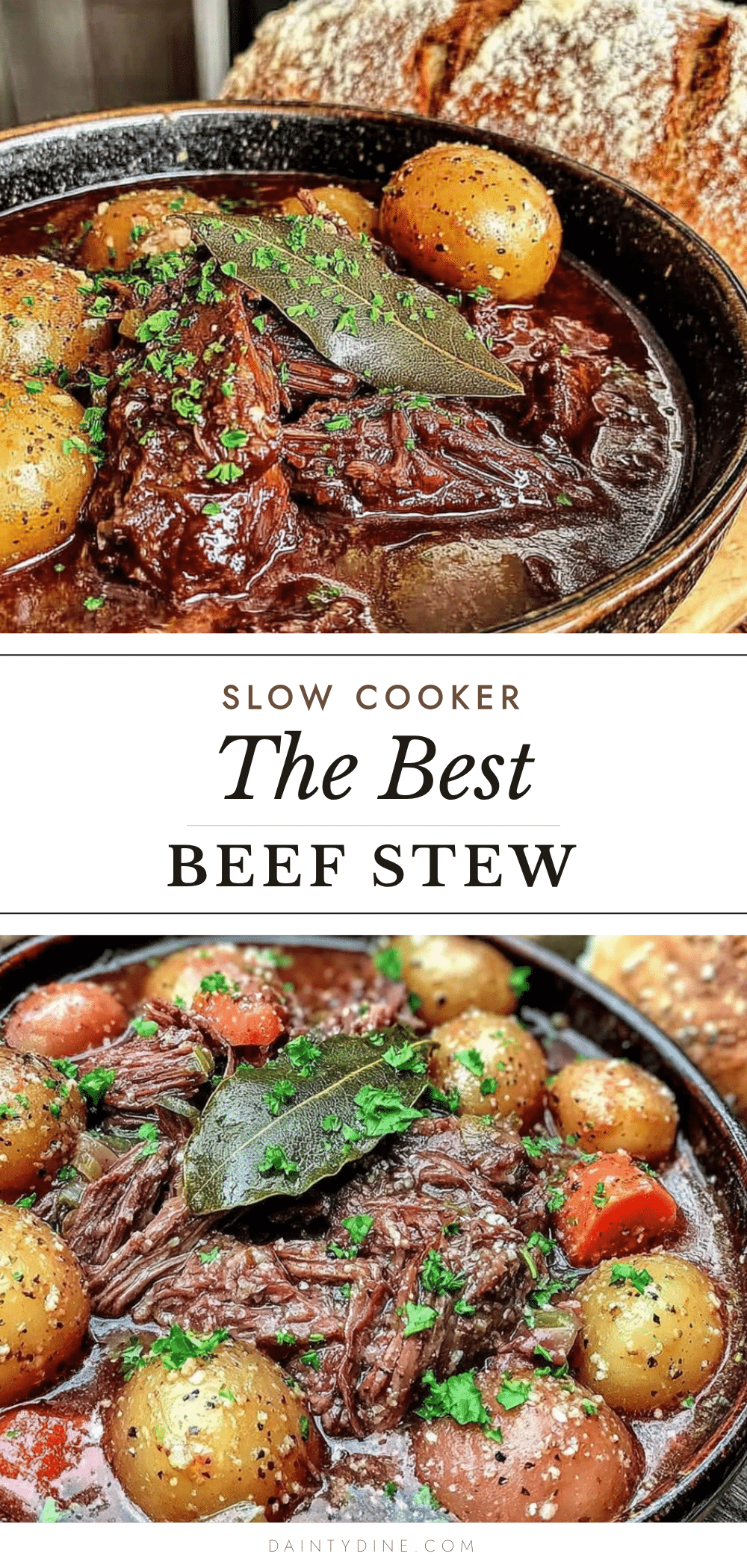
Best Easy Crockpot Beef Stew with Red Wine (No Browning)
This no-browning Crockpot beef stew uses red wine to create deep, savory flavor without any stovetop searing. Simply toss everything in the slow cooker raw and walk away for a tender, wine-infused stew that tastes like it simmered for hours in a French farmhouse kitchen.
- Prep Time: 15 minutes
- Cook Time: 6-8 hours
- Total Time: 6 hours 15 minutes to 8 hours 15 minutes
- Yield: 8 servings 1x
- Category: Main Course
- Cuisine: American
Ingredients
- 2 pounds beef chuck roast, cut into 1.5-inch cubes
- 1 cup dry red wine (Cabernet Sauvignon or Merlot)
- 1 cup low-sodium beef broth
- 4 medium carrots, peeled and cut into 1-inch chunks
- 3 medium Yukon Gold potatoes, peeled and cubed
- 1 large yellow onion, diced
- 3 cloves garlic, minced
- 2 tablespoons tomato paste
- 2 tablespoons all-purpose flour
- 2 bay leaves
- 1 teaspoon dried thyme
- 1 teaspoon smoked paprika
- 1/2 teaspoon black pepper
- 1 teaspoon salt, plus more to taste
- 2 tablespoons olive oil (optional)
- 1 cup frozen peas
- Fresh parsley, chopped for garnish
Instructions
- Prep the beef and vegetables (10 minutes): Pat the beef chuck cubes dry with paper towels. Cut carrots, potatoes, and onion, and mince the garlic. Keep potatoes in a bowl of cold water to prevent browning.
- Season and coat the meat (5 minutes): In a large bowl, toss beef cubes with salt, pepper, smoked paprika, and flour until lightly coated.
- Layer the vegetables (3 minutes): Place diced onion, carrots, and potatoes in the bottom of the slow cooker.
- Add the beef and aromatics (2 minutes): Arrange seasoned beef cubes on top of vegetables. Sprinkle minced garlic, dried thyme, and bay leaves over everything.
- Pour in the liquids (1 minute): Whisk together red wine, beef broth, and tomato paste until smooth. Pour evenly over beef and vegetables. Do not stir.
- Cook low and slow (6-8 hours): Cover and set slow cooker to LOW for 7-8 hours or HIGH for 4-5 hours. LOW is recommended for best texture.
- Check for doneness (at hour 6): Test a piece of beef with a fork; it should shred easily. If still firm, cook another hour.
- Add the peas and adjust seasoning (5 minutes): In the last 30 minutes, stir in frozen peas. Taste broth and add more salt or pepper if needed.
- Thicken if desired (5 minutes): For thicker stew, mix 1 tablespoon cornstarch with 2 tablespoons cold water and stir into stew during last 15 minutes.
- Rest and serve (10 minutes): Turn off slow cooker and let stew sit uncovered for 10 minutes. Remove bay leaves, ladle into bowls, and garnish with fresh parsley.
Notes
Resist opening the lid during cooking to maintain heat. For best results, use a wine you’d enjoy drinking. The stew tastes even better the next day. For gluten-free version, skip flour and use cornstarch slurry. For dairy-free, this recipe is naturally dairy-free as written.
Nutrition
- Serving Size: 1 bowl (approximatel
- Calories: 380
- Sugar: 6
- Sodium: 680
- Fat: 18
- Saturated Fat: 6
- Carbohydrates: 22
- Fiber: 5
- Protein: 28
Keywords: crockpot beef stew, slow cooker beef stew, no browning beef stew, red wine beef stew, easy beef stew, comfort food, winter recipe