Love this? Save it for later!
Share the inspiration with your friends
I was standing in the seafood aisle of my local grocery store last December, completely zoned out, when a guy next to me cracked open a bag of frozen shrimp. That smell—briny, cold, unmistakably of the ocean—hit me, and suddenly I was seven years old at my great-aunt Rosa’s kitchen table on Christmas Eve. The white tablecloth had those little wine stains that never quite washed out, and someone’s radio was playing “Tu Scendi dalle Stelle” way too loud. I remember watching her big hands, rough from years of work, carefully pull the shells off shrimp while she argued with my uncle about something I didn’t understand. She never measured anything. Not once. And somehow, every year, that seafood linguine was the best thing I’d ever eaten.
I haven’t seen Aunt Rosa in maybe fifteen years. She moved to Sicily after my great-uncle passed, and we lost touch the way families sometimes do. But that moment in the grocery store—honestly, it stopped me cold. I stood there holding a bag of shrimp like an idiot, trying to remember exactly how her kitchen smelled. Garlic and olive oil, sure. But also something else. Something warm and patient. So I bought way too much seafood, went home, and spent the next four hours trying to recreate a dish I hadn’t eaten since I was a kid. The first attempt was good. The second was better. By the third, I was crying over the stove—not from sadness, exactly, but from the shock of tasting something I thought I’d lost forever.
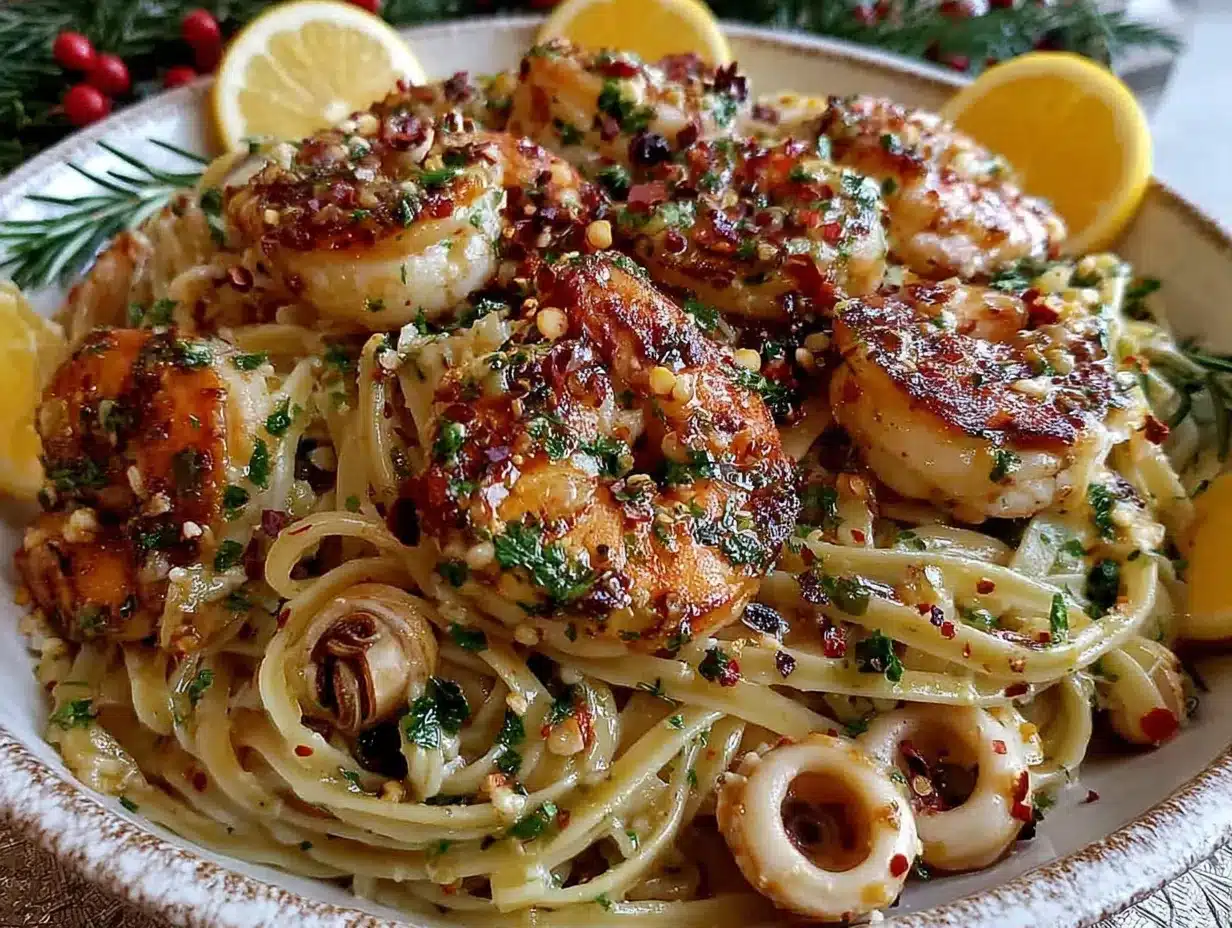
This is that recipe. The one I’ve been tweaking and testing for years now, trying to get every detail right. It’s not fancy, and it’s not complicated. It’s just the best Italian Christmas Eve seafood linguine you’ll ever make—the kind that makes people close their eyes when they take the first bite. Maybe you’ve had a moment like that, where a smell or a taste just pulls you back to someone you miss. That’s what this dish is for me. And I think it might become that for you too.
Why You’ll Love This Recipe
Let me tell you why this recipe has become my absolute go-to for Christmas Eve dinner. I’ve tested it at least a dozen times—sometimes with guests, sometimes just for myself on a random Tuesday when I needed comfort food. Every single time, it delivers.
- Quick & Easy : From start to finish, this comes together in about 45 minutes. That’s fast enough for a busy weeknight but special enough for the holidays.
- Simple Ingredients : No exotic seafood you have to special order. Just shrimp, clams, mussels, and scallops—all things you can find at any decent grocery store.
- Perfect for Christmas Eve : In Italian tradition, the Feast of the Seven Fishes is all about seafood, and this linguine is the star of the show. It’s festive without being fussy.
- Crowd-Pleaser : I’ve served this to picky eaters, seafood skeptics, and hardcore foodies. Everyone loves it. The sauce is so good people ask for the recipe before they finish eating.
- Unbelievably Delicious : The combination of white wine, garlic, fresh herbs, and a touch of red pepper flakes creates this sauce that’s light but incredibly flavorful. The seafood cooks right in it, so every bite tastes like the ocean.
What makes this different from other seafood linguine recipes? It’s the technique. Most recipes have you cook the seafood separately and then toss it with pasta. Not here. You build the sauce first, then add the seafood in stages so everything cooks perfectly. The clams and mussels steam open in the wine, releasing their briny juices right into the sauce. That’s the secret—that liquid gold that you can’t get any other way.
This isn’t just good. It’s the kind of dish that makes you close your eyes after the first bite. It’s comfort food reimagined—lighter than a heavy meat sauce, but with the same soul-soothing satisfaction. Perfect for impressing guests without stress, or turning a simple Christmas Eve dinner into something truly memorable.
What Ingredients You Will Need
This recipe uses simple, fresh ingredients to build layers of flavor. Nothing complicated here—just good quality seafood and a few pantry staples. Let me walk you through each one.
For the Seafood
- 1 pound large shrimp , peeled and deveined (I prefer wild-caught for better flavor)
- 1 pound fresh clams , scrubbed clean (littleneck or manila clams work great)
- 1 pound fresh mussels , scrubbed and debearded
- 1/2 pound sea scallops , side muscle removed
- 1/2 pound calamari rings and tentacles (optional, but Aunt Rosa always used them)
For the Sauce
- 1/2 cup extra virgin olive oil (use a good one—it matters here)
- 6 cloves garlic , thinly sliced (not minced—thin slices melt into the oil)
- 1/2 teaspoon red pepper flakes (adjust to your heat preference)
- 1 cup dry white wine (Pinot Grigio or Sauvignon Blanc—something you’d drink)
- 1 (28-ounce) can whole San Marzano tomatoes , crushed by hand (adds sweetness and acidity)
- 1/2 cup fresh parsley , finely chopped
- 1 tablespoon fresh oregano , chopped (or 1 teaspoon dried)
- Salt and black pepper to taste
For the Pasta
- 1 pound dried linguine (I recommend De Cecco or Barilla for the best texture)
- Reserved pasta water (about 1 cup—this is crucial for the sauce)
A few notes on ingredients. For the shrimp, look for ones that are raw and still have their tails on if possible—they look prettier and have more flavor. For the clams and mussels, make sure they’re alive before cooking. Give them a tap; if they don’t close, toss them. And please, please don’t skip the reserved pasta water. That starchy liquid is what makes the sauce cling to the linguine instead of pooling at the bottom of the bowl. It’s a little thing, but it makes a huge difference.
If you can’t find fresh seafood, frozen works in a pinch. Just thaw it completely in the fridge overnight and pat it dry before cooking. I’ve done it many times when fresh wasn’t available, and it still turns out great.
Equipment Needed
You don’t need a lot of fancy equipment for this recipe. Here’s what you’ll need:
- Large pot for boiling pasta (at least 6 quarts)
- Large skillet or Dutch oven with a lid (12-inch or larger—you need room for all that seafood)
- Colander for draining pasta
- Chef’s knife and cutting board
- Wooden spoon or tongs for stirring
- Measuring cups and spoons
- Large serving bowl or platter
If you don’t have a Dutch oven, a deep skillet works just fine. The key is having a lid that fits tightly so the clams and mussels steam properly. I’ve used my grandmother’s old enamel pot for years, and it’s perfect. For a budget-friendly option, any heavy-bottomed pot with a lid will do the job. Just make sure it’s big enough to hold all that seafood without crowding.
One tip: if you’re making this for a crowd, consider using two skillets instead of one. Overcrowding the pan means the seafood steams instead of sears, and you lose that lovely golden color on the scallops. I learned that the hard way after a particularly disappointing batch.
Preparation Method
Alright, let’s get cooking. I’ll walk you through every step so you can nail this on your first try.
Step 1: Prep Your Seafood (10 minutes)
Start by cleaning all your seafood. For the shrimp, peel and devein them, leaving the tails on if you like. For the clams and mussels, scrub them under cold running water with a stiff brush. Pull off the “beards” from the mussels—those fuzzy threads sticking out of the shell. For the scallops, remove the little side muscle if it’s still attached (it’s tough and chewy). Rinse the calamari if using. Pat everything dry with paper towels and keep refrigerated until you’re ready to cook.
Step 2: Start the Pasta Water (15 minutes before serving)
Fill your large pot with water—about 5 to 6 quarts—and bring it to a rolling boil. Add a generous tablespoon of salt. The water should taste like the sea. Trust me on this. Once it’s boiling, add the linguine and cook according to package directions until al dente. Usually about 8 to 10 minutes. Before draining, reserve at least 1 cup of the pasta water. Set it aside.
Step 3: Build the Sauce Base (10 minutes)
While the pasta cooks, heat the olive oil in your large skillet or Dutch oven over medium heat. Add the sliced garlic and red pepper flakes. Cook for about 1 to 2 minutes, stirring constantly, until the garlic is fragrant and just starting to turn golden. Don’t let it burn—burnt garlic tastes bitter and will ruin the whole dish. I’ve done it before, and trust me, you don’t want to start over.
Pour in the white wine and let it simmer for 2 to 3 minutes, scraping up any brown bits from the bottom of the pan. This is where the flavor lives. Add the crushed tomatoes, oregano, and a pinch of salt and pepper. Stir everything together and let it simmer for about 5 minutes, until the sauce thickens slightly.
Step 4: Cook the Seafood in Stages (10 minutes)
Now for the fun part. Start with the clams and mussels. Add them to the sauce, cover the pot, and let them steam for 3 to 4 minutes. Give the pot a shake halfway through. The shells should start opening up. Any that stay closed after cooking—toss them out. They were dead before they went in, and you don’t want to eat those.
Next, add the shrimp and scallops. Nestle them into the sauce, cover again, and cook for another 2 to 3 minutes. The shrimp should turn pink and curl slightly. The scallops should be opaque and firm to the touch. If you’re using calamari, add it now too—it only needs about a minute or it gets rubbery.
Step 5: Combine with Pasta (2 minutes)
By now, your pasta should be done. Drain it, but remember to save that pasta water! Add the drained linguine directly to the skillet with the seafood and sauce. Toss everything together gently—you don’t want to break up the seafood. If the sauce seems too thick, add a splash of the reserved pasta water. It should coat the noodles nicely without being soupy.
Step 6: Finish and Serve (2 minutes)
Remove from heat. Sprinkle the fresh parsley over the top and give it one more gentle toss. Taste and adjust seasoning—maybe a little more salt, maybe a squeeze of lemon if you like brightness. Serve immediately in warm bowls, making sure everyone gets a good mix of seafood.
Cooking Tips & Techniques
Over the years, I’ve made every mistake you can imagine with this dish. Let me save you some trouble.
Don’t overcook the seafood. This is the number one mistake people make. Seafood cooks fast, and it keeps cooking even after you take it off the heat. The moment the shrimp turn pink and the scallops are just firm, stop cooking. Overcooked shrimp get rubbery, and scallops turn into flavorless hockey pucks. I learned this after ruining a beautiful batch of scallops for a dinner party. My guests were polite, but I knew.
Use a light hand with the red pepper. You want warmth, not heat. A half teaspoon gives a gentle background kick that wakes up the other flavors. If you’re serving kids or spice-sensitive guests, start with a quarter teaspoon and let people add more at the table.
Don’t skip the pasta water. I know I said this already, but it’s worth repeating. The starch in that water is what binds the sauce to the pasta. Without it, you get a pool of sauce at the bottom of your bowl and dry noodles on top. Not a good look.
Time your steps carefully. Start the pasta water first, then build the sauce while the water heats up. Add the pasta to the boiling water right before you add the clams and mussels. That way, everything finishes at the same time. Multitasking is your friend here.
Keep extra wine on hand. Not just for the recipe—for yourself. Cooking should be enjoyable, not stressful. Pour yourself a glass while you work. Aunt Rosa always did, and her food was the best I’ve ever had.
Variations & Adaptations
This recipe is flexible, so feel free to make it your own. Here are some variations I’ve tried over the years.
Dietary Adjustments: For a gluten-free version, use gluten-free linguine or spaghetti. The sauce itself is naturally gluten-free, so it’s an easy swap. For a dairy-free option, this recipe is already dairy-free—just double-check your pasta.
Seasonal Variations: In the summer, I like to add a handful of cherry tomatoes, halved, along with the canned tomatoes. They add a fresh, bright flavor that’s perfect for warmer weather. In the winter, I sometimes add a pinch of saffron to the wine for a luxurious golden color and subtle floral notes. It’s not traditional, but it’s gorgeous.
Seafood Substitutions: Don’t like mussels? Leave them out and double up on clams. Can’t find scallops? Use more shrimp. This recipe is forgiving. I once made it with just shrimp and clams because that’s all the store had, and it was still fantastic. The key is to keep the total seafood weight around 3 to 4 pounds.
Spice It Up: If you like things hot, add a whole chopped fresh chili pepper along with the garlic. I tried this once when I was feeling adventurous, and it added a wonderful depth of heat that the flakes alone don’t provide.
My Personal Twist: Sometimes I add a splash of fish sauce along with the wine. I know it sounds weird, but it adds an umami depth that makes the seafood taste even more like itself. Just a teaspoon—you won’t taste it directly, but you’ll notice something is missing if you leave it out.
Serving & Storage Suggestions
This dish is best served immediately, while the seafood is still tender and the pasta is hot. But here’s how to handle leftovers if you have any.
Serving: Serve the linguine in large, shallow bowls with a generous ladle of sauce and seafood over the top. A sprinkle of fresh parsley and a lemon wedge on the side add color and brightness. A crusty loaf of Italian bread is essential for sopping up every last drop of that garlicky wine sauce. Trust me, you won’t want to waste any.
What to Pair: A crisp white wine like Pinot Grigio or Vermentino is perfect here. The acidity cuts through the richness of the seafood and complements the garlic and herbs. For a non-alcoholic option, sparkling water with a slice of lemon works beautifully.
Storage: Store leftovers in an airtight container in the refrigerator for up to 2 days. The flavors actually meld overnight, so it’s almost better the next day. But be warned—the seafood will continue to cook slightly as it sits, so it won’t be as tender as fresh.
Reheating: The best way to reheat is in a skillet over medium-low heat with a splash of water or white wine. Cover and let it steam gently for 2 to 3 minutes, stirring once. Don’t use the microwave—it makes the seafood rubbery and the pasta mushy. I learned that lesson the hard way after a disappointing lunch.
Freezing: I don’t recommend freezing this dish. The texture of the seafood and pasta will suffer significantly. If you absolutely must, freeze the sauce alone (without seafood or pasta) for up to 3 months, then add fresh seafood and pasta when you’re ready to serve.
Nutritional Information & Benefits
This dish is not just delicious—it’s also packed with nutrients. Here’s a rough estimate per serving (based on 6 servings):
- Calories: Approximately 550-600
- Protein: 35-40 grams
- Carbohydrates: 55-60 grams
- Fat: 15-20 grams
- Fiber: 4-5 grams
- Sodium: 800-1000 mg (varies based on salt added)
Health Benefits: Seafood is an excellent source of lean protein, omega-3 fatty acids, and essential minerals like selenium and zinc. Shrimp and scallops are particularly low in calories while being high in protein. The olive oil provides heart-healthy monounsaturated fats, and the garlic has anti-inflammatory properties. Plus, the tomatoes are rich in lycopene, an antioxidant linked to reduced risk of chronic disease.
Dietary Considerations: This recipe is naturally dairy-free and can be made gluten-free with appropriate pasta. It’s also relatively low in saturated fat compared to meat-based pasta dishes. However, it does contain shellfish and fish, so it’s not suitable for those with seafood allergies.
I like to think of this dish as indulgence that’s actually good for you. It’s the kind of meal that leaves you satisfied without feeling heavy—perfect for a holiday feast when you want to enjoy yourself without overdoing it.
Conclusion
This Italian Christmas Eve seafood linguine is more than just a recipe to me. It’s a connection to my past, a way of keeping Aunt Rosa’s memory alive in my kitchen. Every time I make it, I think of her standing at that stove, her hands moving with practiced ease, never needing a recipe because she had made it so many times it was part of her.
I hope this dish becomes something special for you too. Maybe it’s the centerpiece of your Christmas Eve dinner, or maybe it’s a weeknight meal that feels like a celebration. Either way, I encourage you to make it your own. Add more garlic if you love garlic. Use different seafood if that’s what you have. The beauty of this recipe is that it’s flexible—it bends to your tastes without losing its soul.
If you try this recipe, I’d love to hear about it. Leave a comment below and tell me how it turned out. Did you make any changes? Did your family love it? Did anyone cry over the stove like I did? Share your story—I read every single comment, and nothing makes me happier than knowing someone else is enjoying this dish.
Now go make some memories in your kitchen. And don’t forget the wine.
Frequently Asked Questions
Can I use frozen seafood for this recipe?
Yes, absolutely. Just make sure to thaw it completely in the refrigerator overnight and pat it very dry with paper towels before cooking. Frozen seafood tends to release more water, so you might need to let the sauce simmer an extra minute or two to thicken up.
What if I can’t find fresh clams or mussels?
You can substitute with canned clams or even just use extra shrimp and scallops. The dish won’t have quite the same briny depth, but it will still be delicious. If using canned clams, drain them and add them at the very end, just to heat through.
Can I make this dish ahead of time?
I don’t recommend making the entire dish ahead, but you can prep the seafood and chop the herbs a day in advance. You can also make the sauce base (without the seafood) up to 2 days ahead and refrigerate it. When you’re ready to serve, just reheat the sauce, add the seafood, and cook fresh pasta.
How do I know when the clams and mussels are done?
They’re done when their shells open up. This usually takes 3 to 4 minutes after adding them to the hot sauce. Any that remain closed after cooking should be discarded—they were dead before they went in and could be unsafe to eat.
Can I use a different type of pasta?
Absolutely. Spaghetti, fettuccine, or even angel hair work well with this sauce. I prefer linguine because its flat shape holds the sauce nicely, but use whatever you have on hand. Just adjust the cooking time according to the package directions.
Pin This Recipe!
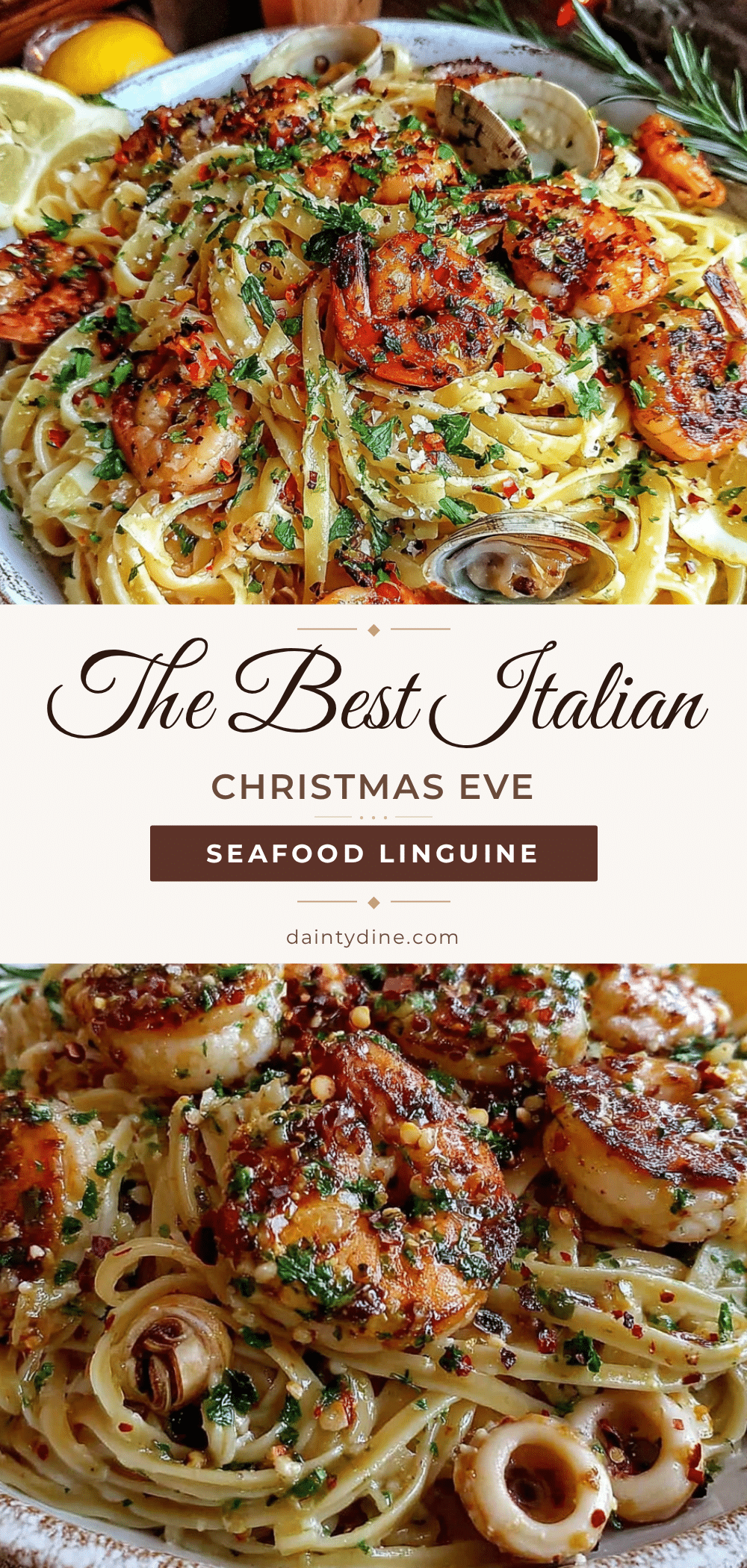
The Best Italian Christmas Eve Seafood Linguine Recipe
A heartwarming seafood linguine inspired by family tradition, featuring shrimp, clams, mussels, and scallops in a garlicky white wine tomato sauce. Perfect for Christmas Eve or any special occasion.
- Prep Time: 15 minutes
- Cook Time: 30 minutes
- Total Time: 45 minutes
- Yield: 6 servings 1x
- Category: Main Course
- Cuisine: Italian
Ingredients
- 1 pound large shrimp, peeled and deveined
- 1 pound fresh clams, scrubbed clean
- 1 pound fresh mussels, scrubbed and debearded
- 1/2 pound sea scallops, side muscle removed
- 1/2 pound calamari rings and tentacles (optional)
- 1/2 cup extra virgin olive oil
- 6 cloves garlic, thinly sliced
- 1/2 teaspoon red pepper flakes
- 1 cup dry white wine (Pinot Grigio or Sauvignon Blanc)
- 1 (28-ounce) can whole San Marzano tomatoes, crushed by hand
- 1/2 cup fresh parsley, finely chopped
- 1 tablespoon fresh oregano, chopped (or 1 teaspoon dried)
- Salt and black pepper to taste
- 1 pound dried linguine
- Reserved pasta water (about 1 cup)
Instructions
- Prep your seafood: Peel and devein shrimp, leaving tails on if desired. Scrub clams and mussels under cold water, remove beards from mussels. Remove side muscle from scallops. Rinse calamari if using. Pat everything dry and refrigerate until ready to cook.
- Start the pasta water: Fill a large pot with 5-6 quarts of water and bring to a rolling boil. Add a generous tablespoon of salt. Cook linguine according to package directions until al dente (about 8-10 minutes). Reserve at least 1 cup of pasta water before draining.
- Build the sauce base: While pasta cooks, heat olive oil in a large skillet or Dutch oven over medium heat. Add sliced garlic and red pepper flakes. Cook for 1-2 minutes, stirring constantly, until garlic is fragrant and just starting to turn golden. Pour in white wine and let simmer for 2-3 minutes, scraping up brown bits. Add crushed tomatoes, oregano, and a pinch of salt and pepper. Simmer for about 5 minutes until sauce thickens slightly.
- Cook the seafood in stages: Add clams and mussels to the sauce, cover, and steam for 3-4 minutes, shaking the pot halfway through. Discard any unopened shells. Add shrimp and scallops (and calamari if using), cover, and cook for another 2-3 minutes until shrimp are pink and scallops are opaque.
- Combine with pasta: Drain the linguine (reserving pasta water). Add the drained pasta directly to the skillet with seafood and sauce. Toss gently. If sauce is too thick, add a splash of reserved pasta water until it coats the noodles nicely.
- Finish and serve: Remove from heat. Sprinkle fresh parsley over the top and toss gently. Taste and adjust seasoning. Serve immediately in warm bowls.
Notes
Don’t overcook the seafood; it continues cooking off heat. Use a light hand with red pepper flakes. Don’t skip the reserved pasta water—it helps the sauce cling to the pasta. Time your steps so everything finishes together. Keep extra wine on hand for yourself while cooking.
Nutrition
- Serving Size: 1 serving (about 1/6
- Calories: 575
- Sugar: 6
- Sodium: 900
- Fat: 18
- Saturated Fat: 3
- Carbohydrates: 58
- Fiber: 5
- Protein: 38
Keywords: seafood linguine, Christmas Eve, Feast of the Seven Fishes, Italian seafood pasta, shrimp, clams, mussels, scallops, white wine sauce