Love this? Save it for later!
Share the inspiration with your friends
Laura wasn’t trying to impress anyone. I’d stopped by her place on a random Tuesday to drop off a book I’d borrowed, and the smell hit me before I even got through the front door. Something buttery, something bright, something that made my stomach actually growl right there on her welcome mat.
“Oh, that’s just salmon,” she said when I asked, waving her hand like she’d boiled an egg. She was wearing an old t-shirt and had flour on her jeans from something she’d baked earlier. There was a half-empty coffee mug on the counter. This was not a performance. This was just what Tuesday looked like at her house.
I watched her pull that salmon out of the oven, and honestly, I don’t think I’ve ever seen a piece of fish look that good without trying. The top was perfectly bronzed, the butter sauce was bubbling gently around the edges, and a few sprigs of dill were scattered on top like she’d just tossed them there without thinking. Which she had. That’s the thing—she wasn’t thinking about it. She was just making dinner.
She served me a piece on a slightly chipped plate, and I sat at her kitchen island while she told me about her neighbor’s dog getting into her garden. And I took one bite, and you know that feeling when something is so good you almost get annoyed? Like, how dare this be this good with this little effort? The salmon was flaky and tender, the lemon dill butter sauce was silky and bright, and the whole thing came together in what felt like no time at all.
I asked for the recipe, and she literally shrugged and said, “I don’t really have one. I just kind of do it.” So I watched her make it again the next week, took notes on my phone, and I’ve been making it ever since. It’s the kind of dish that makes you look like you tried way harder than you did. And honestly? That’s my favorite kind of recipe to have in my back pocket, especially when I’ve got people coming over.
Why You’ll Love This Recipe
Let me tell you why this perfect baked salmon with lemon dill butter sauce has become my absolute go-to for hosting. I’ve tested this recipe more times than I can count, and it never lets me down.
- Quick & Easy : Comes together in under 30 minutes, which means you’re not stuck in the kitchen while your guests are having fun. I’ve made this after work on a Tuesday and for a fancy birthday dinner—works every time.
- Simple Ingredients : No trips to a specialty store. You probably have most of these in your kitchen right now. Butter, lemons, dill, garlic, salmon. That’s it.
- Perfect for Hosting : This dish looks and tastes like you spent an hour on it. But between us? It’s almost laughably easy. Your guests will think you’re a culinary genius.
- Crowd-Pleaser : Even people who say they “don’t really like fish” have asked me for seconds. There’s something about that lemon dill butter sauce that wins everyone over.
- Unbelievably Delicious : The salmon comes out perfectly flaky every time, and the sauce is that perfect balance of rich and bright. It’s the kind of meal that makes people close their eyes when they take the first bite.
What makes this recipe different from all the other baked salmon recipes out there? It’s the technique. Instead of just throwing butter on top and hoping for the best, we’re creating a proper lemon dill butter sauce that bastes the salmon as it cooks. The result is salmon that’s moist and flavorful all the way through, not dry on the edges and raw in the middle. I’ve tested it with different oven temperatures, different thicknesses of salmon, and different amounts of butter. This version is the one that works every single time.
This is the recipe you make when you want to impress people without stressing yourself out. It’s comfort food that feels fancy, and honestly, that’s a pretty great combination.
What Ingredients You Will Need
This recipe uses simple, fresh ingredients to create something that tastes way more complex than it actually is. Here’s what you’ll need to grab:
For the Salmon
- 4 salmon fillets (6 ounces each, about 1.5 inches thick at the thickest part) – I prefer center-cut fillets for even cooking. Look for fillets that are similar in size so they finish at the same time.
- 1 tablespoon olive oil – Just a good quality everyday olive oil. You don’t need the fancy stuff here since it’s getting baked.
- Salt and black pepper – Kosher salt if you have it. I use Diamond Crystal brand personally.
- 1/2 teaspoon garlic powder – Not the same as garlic salt! Check your labels.
For the Lemon Dill Butter Sauce
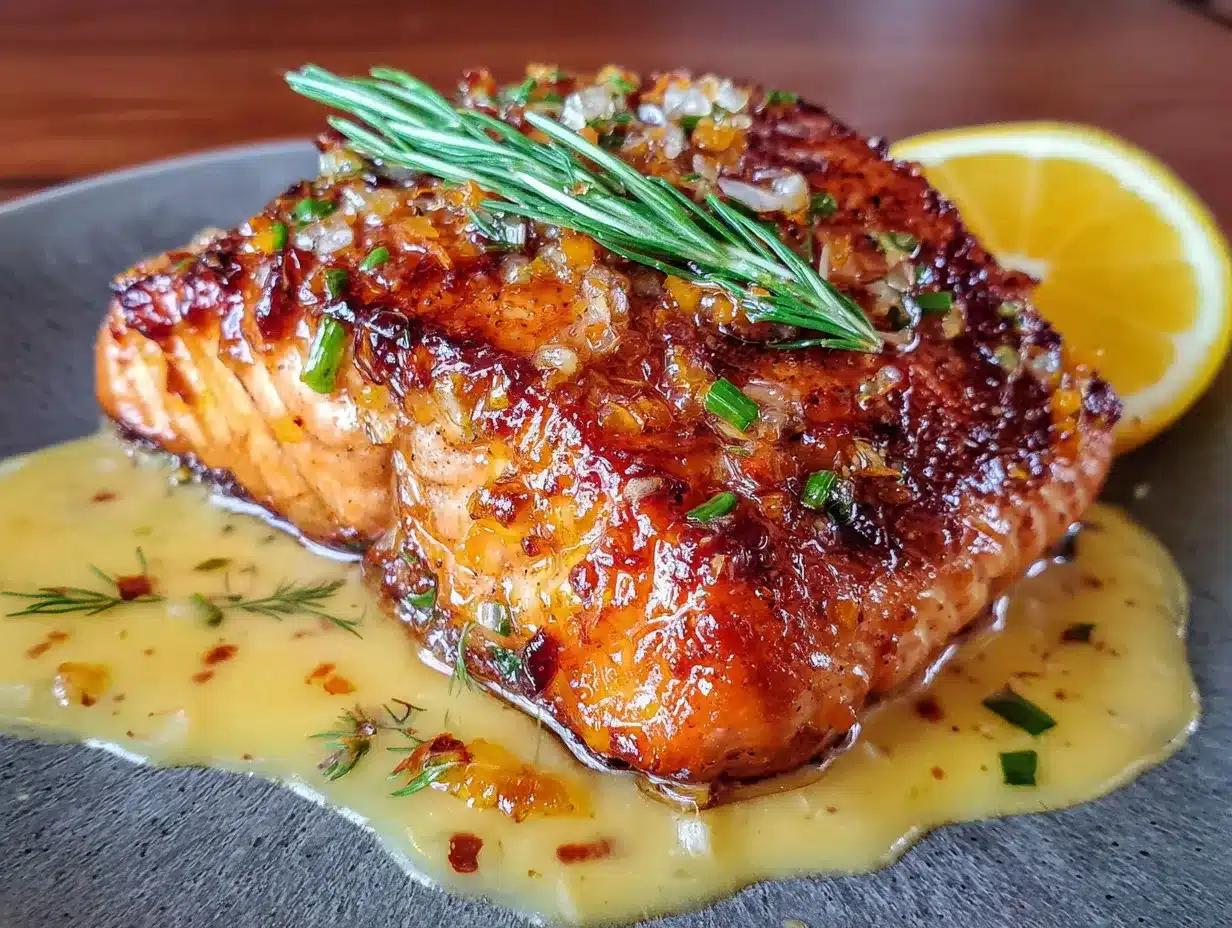
- 4 tablespoons unsalted butter – Cut into small pieces so it melts evenly. I use Kerrygold when I’m feeling fancy, but any good unsalted butter works.
- 2 cloves garlic – Minced finely. Don’t use the pre-minced stuff in a jar if you can help it—fresh garlic makes a real difference here.
- 2 tablespoons fresh dill – Chopped. Fresh is non-negotiable for this recipe. Dried dill just doesn’t have the same bright flavor.
- 1 lemon – You’ll need both the zest and the juice. Roll the lemon on the counter before cutting to get more juice out.
- 1 tablespoon capers – Optional, but I love the little bursts of saltiness they add. Rinse them if you’re sensitive to salt.
For Garnish
- Fresh dill sprigs – For that pretty finishing touch.
- Lemon slices – Thin rounds look beautiful on the plate.
- Flaky sea salt – Like Maldon. Just a pinch on top right before serving makes a difference.
A note on the salmon: I really recommend getting your salmon from a fish counter where you can see it, not the pre-packaged stuff if you can avoid it. Look for fillets that are bright in color and smell like the ocean, not fishy. If the salmon smells overly fishy, it’s past its prime. And here’s a little tip I learned the hard way—ask them to remove the pin bones for you. Most fish counters will do this for free, and it saves you the trouble of picking them out yourself.
If you can’t find fresh dill, you can substitute with 2 teaspoons of dried dill, but honestly, it’s worth making a special trip for fresh. The flavor is completely different—brighter, more aromatic, and it makes the sauce sing in a way dried dill just can’t.
Equipment Needed
You don’t need a lot of fancy equipment for this one, which is part of why I love it. Here’s what you’ll want to have on hand:
- Baking dish or sheet pan – A 9×13 inch baking dish works perfectly. I use my trusty Pyrex one that I’ve had for years. A rimmed baking sheet works too if that’s what you’ve got.
- Small saucepan – For making the lemon dill butter sauce. Any small pot will do.
- Chef’s knife – A sharp one! Dull knives are dangerous and they’ll smash your dill instead of cutting it cleanly.
- Cutting board – Wood or plastic, doesn’t matter.
- Microplane or zester – For getting that lemon zest without the bitter white pith. If you don’t have one, a vegetable peeler and a sharp knife can work in a pinch.
- Instant-read thermometer – This is the secret to perfect salmon every time. I use a Thermapen and it’s worth every penny. You can get a cheaper one though—just make sure it works.
- Tongs – For moving the salmon around without breaking it apart.
- Pastry brush – For brushing the sauce onto the salmon. A spoon works too.
If you don’t have an instant-read thermometer, honestly, you can still make this recipe. Just keep an eye on the salmon—it’s done when it flakes easily with a fork and looks opaque all the way through. But the thermometer takes all the guesswork out, and for a dish you’re serving to guests, that peace of mind is worth it.
Preparation Method
Alright, let’s get cooking! I’m going to walk you through this step by step, including all the little things I’ve learned from making this dozens of times.
- Preheat your oven to 400°F (200°C). Get this going first because you want the oven nice and hot when the salmon goes in. Position the rack in the middle of the oven.
- Take the salmon out of the fridge. About 15-20 minutes before you start cooking, pull the salmon out and let it sit at room temperature. This helps it cook more evenly. I learned this the hard way after serving salmon that was overcooked on the outside and still cool in the middle.
- Pat the salmon dry. Use paper towels to gently pat both sides of each fillet dry. This is important—wet salmon won’t brown properly and you’ll end up with steamed fish instead of baked salmon. Trust me on this one.
- Season the salmon. Place the fillets in your baking dish skin-side down (if your fillets have skin). Drizzle with the olive oil and rub it all over. Season generously with salt, pepper, and the garlic powder. Be more generous than you think you need to be—salmon can handle a good amount of seasoning.
- Make the lemon dill butter sauce. In your small saucepan over medium heat, melt the butter. Once it’s melted, add the minced garlic and cook for about 30 seconds until it’s fragrant. Don’t let the garlic brown—it gets bitter. Remove from heat and stir in the fresh dill, lemon zest, lemon juice, and capers if using. Give it a taste and adjust the salt and pepper.
- Spoon some sauce over the salmon. Pour about half of the lemon dill butter sauce over the salmon fillets, reserving the rest for serving. Use your pastry brush or a spoon to make sure each fillet gets coated evenly.
- Bake the salmon. Place the baking dish in the preheated oven and bake for 12-15 minutes, depending on the thickness of your fillets. For 1.5-inch thick fillets, 13 minutes is usually perfect. The salmon is done when it reaches 145°F (63°C) at the thickest part, or when it flakes easily with a fork and looks opaque.
- Broil for 1-2 minutes (optional but amazing). If you want that beautiful golden top, switch your oven to broil for the last 1-2 minutes of cooking. Watch it carefully—it can go from perfect to burned in seconds. I may have learned this the hard way.
- Let it rest. Take the salmon out of the oven and let it rest for 2-3 minutes. This lets the juices redistribute so you don’t end up with dry salmon.
- Serve with the reserved sauce. Spoon the remaining lemon dill butter sauce over the top. Garnish with fresh dill sprigs and lemon slices. Sprinkle a little flaky sea salt on top if you have it.
A quick note on timing—if you’re making this for a dinner party, you can prep everything ahead of time. Season the salmon and make the sauce up to a day in advance. Keep them in the fridge separately. When your guests arrive, just pour the sauce over and bake. It takes almost no active time, which means you can actually hang out with your people instead of being stuck in the kitchen.
Cooking Tips & Techniques
Over the years, I’ve made every mistake you can imagine with baked salmon. I’ve overcooked it until it was dry and sad. I’ve undercooked it and had to put it back in the oven while my guests waited. I’ve forgotten to take the pin bones out. Let me save you from my mistakes with these tips.
Don’t overcook the salmon. This is the number one mistake people make. Salmon continues to cook a little after you take it out of the oven, so pull it when it’s just barely done. If you’re using a thermometer, 145°F is the target, but honestly, I pull mine at 140-142°F and let it rest. The residual heat finishes the job. The result is salmon that’s perfectly flaky and moist, not dry and chalky.
Use room temperature ingredients. I mentioned this before, but it’s worth repeating. Cold salmon straight from the fridge will cook unevenly. And cold butter won’t melt properly into the sauce. Let everything come to room temperature for about 15-20 minutes before you start.
Watch the garlic. Garlic burns fast, and burned garlic is bitter and ruins the whole dish. When you’re making the lemon dill butter sauce, keep the heat at medium and only cook the garlic for about 30 seconds. You want it fragrant, not browned. If you’re nervous about it, you can even skip cooking the garlic and just stir it into the melted butter off the heat.
Don’t crowd the pan. If you’re making this for a crowd, use two baking dishes instead of trying to cram all the fillets into one. Crowded fillets will steam instead of bake, and you won’t get that nice golden exterior. Leave at least an inch of space between each fillet.
Use fresh dill. I know I’ve said this already, but it’s really important. Dried dill has its place, but it’s not here. Fresh dill has a bright, almost anise-like flavor that makes the sauce sing. Dried dill is more muted and can taste a little musty. If fresh dill isn’t available, you could substitute fresh parsley or chives instead.
Multitask like a pro. While the salmon is baking, you can get everything else ready. Set the table, make a quick salad, pour some wine. The salmon only takes about 15 minutes, so you’ve got time to pull everything together. I like to make a simple arugula salad with lemon vinaigrette to serve alongside—it takes about 5 minutes and complements the salmon perfectly.
Variations & Adaptations
One of the things I love about this recipe is how easy it is to adapt. Here are some variations I’ve tried and loved:
Herb Swap. Not a fan of dill? No problem. Swap it out for fresh parsley, chives, or tarragon. Tarragon especially is lovely with salmon—it has that slight licorice flavor that pairs beautifully with the lemon and butter. I’ve made this with a combination of parsley and chives when my dill plant wasn’t cooperating, and it was still fantastic.
Spicy Version. Add a pinch of red pepper flakes to the butter sauce for a little heat. Or slice a fresh chili and let it steep in the warm butter for a few minutes before removing it. The heat builds gradually and adds a nice complexity to the dish. My husband loves this version and requests it regularly.
Garlic Lover’s Version. If you’re like me and believe there’s no such thing as too much garlic, add an extra clove or two. You can also add a teaspoon of roasted garlic paste to the butter sauce for an even deeper flavor. Just be careful not to overpower the delicate salmon flavor.
Dairy-Free Adaptation. Use a good quality vegan butter or ghee if you can tolerate it. I’ve tested this with Miyoko’s vegan butter and it worked beautifully. The flavor is slightly different, but still delicious. Coconut oil works in a pinch but will add a subtle coconut flavor that might not be everyone’s favorite.
Honey Lemon Version. Add a teaspoon of honey to the butter sauce for a touch of sweetness that balances the lemon. This is especially good if you’re serving the salmon to kids or anyone who’s a little nervous about fish. The sweetness makes it more approachable.
Different Cooking Methods. You can also make this on the grill! Just use a grill-safe pan or a piece of foil with holes poked in it. Grill over medium heat for about 10-12 minutes, basting with the sauce halfway through. The smoky flavor from the grill adds a whole new dimension. I’ve also made this in an air fryer at 375°F for about 8-10 minutes, and it works great for smaller portions.
Serving & Storage Suggestions
This perfect baked salmon with lemon dill butter sauce is incredibly versatile when it comes to serving. Here’s how I like to do it:
Serving Temperature. Serve the salmon hot, right out of the oven, with the reserved lemon dill butter sauce spooned over the top. The sauce should be warm and silky. If it’s cooled down too much, just reheat it gently on the stove or in the microwave for a few seconds.
What to Serve With It. This salmon pairs beautifully with so many sides. I love it with a simple arugula salad with lemon vinaigrette—the peppery greens and bright dressing complement the rich salmon perfectly. Roasted asparagus or green beans are also fantastic. For something more substantial, try it with rice pilaf or herbed couscous. If you’re hosting a dinner party, roasted baby potatoes with fresh herbs make a gorgeous presentation.
Presentation Tips for Hosting. When I’m serving this to guests, I like to arrange the salmon fillets on a large platter with lemon slices and fresh dill sprigs scattered around. I pour the extra sauce into a small pitcher or gravy boat so people can add more if they want. It looks beautiful and feels special without being fussy.
Storage. Leftover salmon keeps in the refrigerator for up to 3 days in an airtight container. The flavor actually gets even better as it sits—the lemon dill butter sauce soaks into the salmon and everything gets more flavorful. Just keep in mind that the dill will lose some of its brightness over time.
Reheating. The best way to reheat leftover salmon is gently. I like to put it in a low oven (300°F) for about 10 minutes, covered with foil so it doesn’t dry out. You can also microwave it in 30-second bursts, but be careful not to overcook it. Another option is to flake the cold salmon over a salad for lunch the next day—honestly, this might be my favorite way to eat the leftovers.
Freezing. You can freeze the baked salmon for up to 2 months. Wrap each fillet individually in plastic wrap and then foil, or use a freezer-safe container. Thaw overnight in the refrigerator and reheat gently. The texture won’t be quite as perfect as fresh, but it’s still delicious.
Flavor Development. Here’s something interesting—the salmon actually tastes even better the next day. The lemon dill butter sauce continues to penetrate the fish, and the flavors meld together beautifully. I’ve been known to make extra on purpose just so I can have it for lunch the next day. Don’t tell anyone.
Nutritional Information & Benefits
This perfect baked salmon with lemon dill butter sauce isn’t just delicious—it’s also packed with nutrition. Here’s what you’re getting in each serving (based on 4 servings, with about 1 tablespoon of the butter sauce per fillet):
- Calories: Approximately 380-420 per serving
- Protein: 35-40 grams
- Fat: 24-28 grams (mostly healthy fats from the salmon and butter)
- Carbohydrates: 2-3 grams
- Omega-3 Fatty Acids: 2-3 grams
- Vitamin D: Significant amount from the salmon
- Vitamin B12: Excellent source
- Selenium: High content
Salmon is one of the best sources of omega-3 fatty acids, which are essential for brain health, reducing inflammation, and supporting heart health. The lemon adds a good dose of vitamin C, and the dill provides antioxidants and has been used traditionally for digestive health.
This recipe is naturally gluten-free and low-carb, making it suitable for a variety of dietary needs. If you’re watching your sodium, you can reduce the salt and skip the capers. The lemon and dill provide so much flavor that you won’t miss it.
From a personal perspective, I love that this dish feels indulgent but is actually really good for you. It’s the kind of meal that makes you feel satisfied and nourished, not heavy and sluggish. And honestly, that’s exactly what I want when I’m cooking for people I care about.
Conclusion
This perfect baked salmon with lemon dill butter sauce has become one of those recipes I just can’t stop making. It’s the dish I bring to potlucks, the one I make when I want to impress new friends, and the one I turn to on busy weeknights when I need something that feels special without a lot of effort.
What I love most about it is how forgiving it is. You can adjust the herbs, play with the amount of lemon, add capers or not—it always turns out delicious. It’s a recipe that builds confidence in the kitchen because it works every single time.
I hope you’ll give it a try, whether you’re cooking for a crowd or just for yourself on a random Tuesday. And when you do, I’d love to hear how it turned out. Did you add your own twist? Serve it with something unexpected? Drop a comment below and let me know—I read every single one and I love hearing about your kitchen adventures.
Happy cooking, friends. And remember—sometimes the best recipes come from the most casual moments. You never know when you’ll walk into someone’s house and find your new favorite dish.
Frequently Asked Questions
Can I use frozen salmon for this recipe?
Yes, you can! Just make sure to thaw it completely in the refrigerator overnight before cooking. Pat it very dry with paper towels before seasoning, because frozen salmon tends to release more water as it thaws. You might need to add an extra minute or two to the cooking time.
How do I know when the salmon is done without a thermometer?
Look for visual cues. The salmon will change from translucent to opaque all the way through. When you gently press the top with a fork, it should flake apart easily. The internal temperature should feel warm to the touch. If you’re unsure, it’s better to undercook slightly—you can always put it back in the oven for a minute.
Can I make the lemon dill butter sauce ahead of time?
Absolutely! You can make the sauce up to 2 days in advance and store it in the refrigerator. Just reheat it gently on the stove or in the microwave before using. The dill might lose a little of its brightness, so you can stir in a little fresh dill right before serving to freshen it up.
What if I don’t have fresh dill?
Fresh dill really is best for this recipe, but if you can’t find it, you have options. Fresh parsley or chives work beautifully as substitutes. You could also use a combination of dried dill and fresh parsley—the parsley adds freshness while the dried dill gives you that dill flavor. Just use about 1 teaspoon of dried dill instead of 2 tablespoons fresh.
How do I prevent the salmon from sticking to the baking dish?
Make sure your baking dish is well-greased or lined with parchment paper. I like to use a little butter or olive oil to grease the dish before adding the salmon. You can also line the dish with parchment paper for easy cleanup. Just make sure the paper is tucked in snugly so it doesn’t curl up around the salmon.
Pin This Recipe!
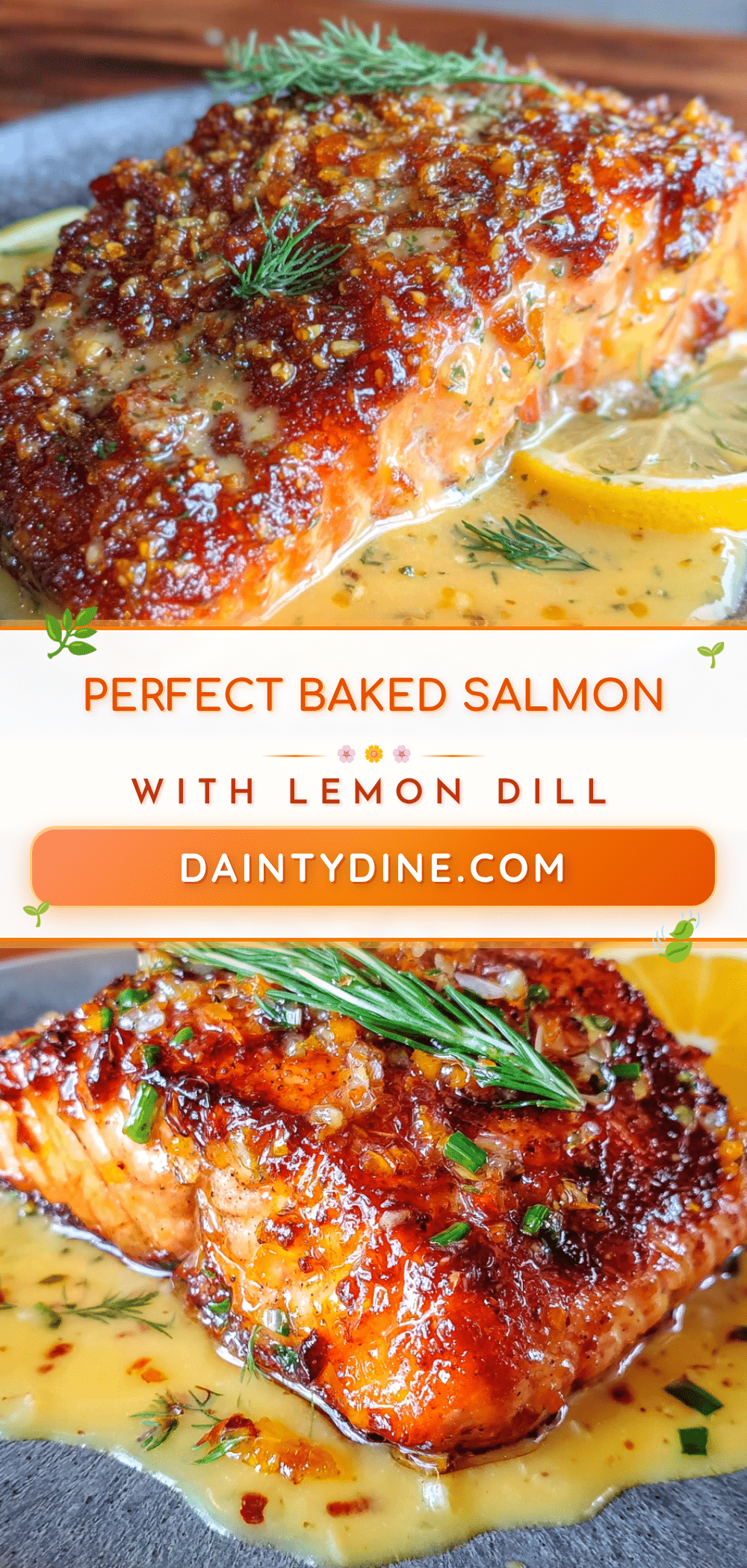
Best Perfect Baked Salmon with Lemon Dill Butter Sauce
This perfect baked salmon with lemon dill butter sauce is quick, easy, and incredibly delicious. It comes together in under 30 minutes with simple ingredients, making it perfect for both busy weeknights and impressive dinner parties.
- Prep Time: 10 minutes
- Cook Time: 15 minutes
- Total Time: 25 minutes
- Yield: 4 servings 1x
- Category: Main Course
- Cuisine: American
Ingredients
- 4 salmon fillets (6 ounces each, about 1.5 inches thick)
- 1 tablespoon olive oil
- Salt and black pepper to taste
- 1/2 teaspoon garlic powder
- 4 tablespoons unsalted butter, cut into small pieces
- 2 cloves garlic, minced
- 2 tablespoons fresh dill, chopped
- 1 lemon, zested and juiced
- 1 tablespoon capers (optional)
- Fresh dill sprigs for garnish
- Lemon slices for garnish
- Flaky sea salt for garnish
Instructions
- Preheat your oven to 400°F (200°C). Position the rack in the middle of the oven.
- Take the salmon out of the fridge about 15-20 minutes before cooking to let it come to room temperature.
- Pat the salmon dry with paper towels.
- Place the fillets in a baking dish skin-side down. Drizzle with olive oil and rub all over. Season generously with salt, pepper, and garlic powder.
- In a small saucepan over medium heat, melt the butter. Add the minced garlic and cook for about 30 seconds until fragrant. Remove from heat and stir in fresh dill, lemon zest, lemon juice, and capers if using. Adjust salt and pepper to taste.
- Spoon about half of the lemon dill butter sauce over the salmon fillets, reserving the rest for serving. Use a pastry brush or spoon to coat evenly.
- Bake for 12-15 minutes, depending on thickness. Salmon is done when it reaches 145°F (63°C) at the thickest part or flakes easily with a fork.
- Optional: Switch oven to broil for the last 1-2 minutes for a golden top. Watch carefully.
- Let the salmon rest for 2-3 minutes.
- Serve with the reserved lemon dill butter sauce spooned over the top. Garnish with fresh dill sprigs and lemon slices. Sprinkle with flaky sea salt if desired.
Notes
For best results, use fresh dill and center-cut salmon fillets of similar thickness. Let salmon come to room temperature before cooking for even cooking. Don’t overcook; salmon continues to cook after removal from oven. The sauce can be made up to 2 days ahead and reheated. Leftover salmon keeps in the refrigerator for up to 3 days.
Nutrition
- Serving Size: 1 fillet with sauce
- Calories: 400
- Sugar: 1
- Sodium: 350
- Fat: 26
- Saturated Fat: 10
- Carbohydrates: 2
- Protein: 37
Keywords: baked salmon, lemon dill butter sauce, easy salmon recipe, quick dinner, healthy salmon, salmon fillet, weeknight dinner, dinner party