Love this? Save it for later!
Share the inspiration with your friends
My neighbor across the hall, a guy named Leo who I’d only ever seen in running gear, asked me why I couldn’t just dump everything in the slow cooker and walk away. I was prepping a butternut squash soup the traditional way—peeling, cubing, sautéing—and he’d poked his head in when I had the door cracked for air. I started to explain why that wouldn’t work. Something about caramelization and depth of flavor. Then I stopped. Honestly, I had no good reason. I was just being stubborn about doing it the “right” way.
That Tuesday, I took his advice. I threw cubed squash, an onion, some garlic, and a few sage leaves into the slow cooker with broth and let it do its thing. No sautéing. No fussing. I went back to folding laundry and answering emails. And you know what? It worked. I mean, it really worked. The soup came out velvety, deeply savory, and somehow richer than my stovetop version that took twice the effort. I had to admit it to Leo the next day, feeling a little sheepish. He just laughed and said he’d been making it that way for years.
This easy slow cooker butternut squash soup with sage is now my go-to for those nights when I want real comfort food but have zero energy left to stand over a stove. It’s the kind of recipe that makes you wonder why you ever did it the hard way. And maybe you’ve been there too—sticking to a method just because that’s how you learned it. Let me tell you, letting go feels pretty good when the result is this good.
Why You’ll Love This Recipe
I’ve tested this recipe about seven times now, tweaking the sage ratio and playing with cooking times until it felt just right. Here’s why I keep coming back to it—and why I think you will too.
- Quick & Easy: This comes together in about 10 minutes of active prep. No chopping herbs finely, no standing over a hot pan. Just chop, dump, and go. Perfect for a busy weeknight when you’re already running late.
- Simple Ingredients: You probably have most of this in your kitchen right now. Butternut squash, onion, garlic, broth, and fresh sage. That’s it. No fancy grocery trips needed.
- Perfect for Cozy Nights: This soup is made for those chilly evenings when you want something warm and satisfying without much effort. It’s also great for meal prep—make it Sunday, eat it all week.
- Crowd-Pleaser: I’ve served this to my picky sister-in-law and my dad who “doesn’t like soup.” Both asked for seconds. It’s creamy without being heavy, and the sage adds this earthy warmth that feels like a hug in a bowl.
- Unbelievably Delicious: The texture is what gets me every time. It’s silky and smooth, almost like a bisque, but there’s no cream in it. The slow cooker just breaks down the squash until it’s naturally creamy.
What makes this recipe different from the dozens of other squash soup recipes out there? It’s the way the sage infuses gently over hours, mellowing out and becoming almost sweet. Most stovetop versions use sage as a finishing touch, but here it has time to marry with the squash. It’s not just another version—it’s the best version for anyone who values their time and still wants something that tastes like you spent hours on it.
This recipe is comfort food reimagined—healthier, faster, but with the same soul-soothing satisfaction. Perfect for impressing guests without stress, or turning a simple Tuesday night into something memorable.
What Ingredients You Will Need
This recipe uses simple, wholesome ingredients to deliver bold flavor and satisfying texture without the fuss. Most of these are pantry staples, and the ones that aren’t are easy to find at any grocery store.
- Butternut squash (1 large, about 3 pounds) — Peeled, seeded, and cut into 1-inch cubes. Look for a squash that feels heavy for its size with firm, unblemished skin. Pre-cut squash from the store works in a pinch, but whole squash is usually fresher and cheaper.
- Yellow onion (1 medium) — Roughly chopped. No need to be precise here since you’ll blend it all later. Sweet onions work too if you have them.
- Garlic cloves (4-5) — Smashed but left whole. The slow cooker mellows them out, so they become sweet and nutty instead of sharp.
- Fresh sage leaves (10-12 leaves) — This is where the magic happens. I recommend using fresh sage over dried here—the flavor is more delicate and less bitter. If you only have dried, use 1 tablespoon and add it halfway through cooking.
- Vegetable broth (4 cups) — Use low-sodium so you can control the salt. Chicken broth works too if you’re not keeping it vegetarian. I prefer Pacific Foods brand for its clean flavor.
- Unsalted butter (2 tablespoons) — Added at the end for richness. You can skip it or use olive oil for a dairy-free version.
- Salt (1 teaspoon, plus more to taste) — I use fine sea salt. Start with less and adjust at the end.
- Black pepper (½ teaspoon, freshly ground) — Freshly ground makes a difference here.
- Heavy cream or coconut milk (¼ cup, optional) — For extra creaminess. I often skip it and the soup is still velvety, but if you want that luscious finish, add it before blending.
A quick note on the squash: peeling a butternut squash can be a hassle. I’ve found that microwaving the whole squash for 2-3 minutes softens the skin just enough to make peeling easier. You can also use a Y-shaped peeler instead of a standard one—it handles the curves better. And honestly, if you’re short on time, the pre-cut cubes from the produce section are perfectly fine. No judgment here.
Equipment Needed
You don’t need much for this recipe, which is part of the appeal. Here’s what you’ll need:
- Slow cooker (4 to 6-quart) — Any brand works. I use a Cuisinart 6-quart model, but my mom’s old Crock-Pot does the same job. If yours runs hot, check the soup an hour early.
- Immersion blender — This is my preferred tool because you can blend right in the slow cooker. No transferring hot liquid. If you don’t have one, a regular blender works—just work in batches and let the soup cool slightly first.
- Cutting board and sharp knife — A chef’s knife makes quick work of the squash. A dull knife is dangerous with hard squash, so sharpen yours first.
- Vegetable peeler — As mentioned, a Y-shaped peeler is best for the curved squash.
- Wooden spoon or spatula — For stirring and scraping.
If you’re using a regular blender, here’s a tip: remove the center cap from the lid and cover it with a kitchen towel. This lets steam escape and prevents the lid from popping off. I learned that one the messy way.
Preparation Method

This method is almost embarrassingly simple, but I’ll walk you through every step so you get perfect results every time.
- Prep the squash (10 minutes): Cut off both ends of the butternut squash, then cut it in half where the narrow neck meets the bulbous bottom. Peel each section with your vegetable peeler. Cut the neck into rings, then cubes. Scoop out the seeds from the bulb section and cube that too. Aim for 1-inch cubes so they cook evenly. You should have about 6-7 cups of cubed squash.
- Layer in the slow cooker (5 minutes): Add the cubed squash to your slow cooker. Toss in the roughly chopped onion, the smashed garlic cloves, and the fresh sage leaves. Don’t worry about burying the sage—it’ll infuse just fine. Pour the vegetable broth over everything. The liquid should just about cover the squash. If it doesn’t, add a little water.
- Cook low and slow (6-7 hours on low, or 3-4 hours on high): Cover and cook on low for 6-7 hours, or on high for 3-4 hours. You’ll know it’s done when the squash is fork-tender—a knife should slide through with zero resistance. I prefer low and slow because the flavors meld better, but high works in a pinch.
- Add the butter and optional cream (2 minutes): Once the squash is tender, turn off the slow cooker. Add the 2 tablespoons of butter and let it melt for a minute. If you’re using heavy cream or coconut milk, add it now. This is also when you add the salt and pepper—start with 1 teaspoon salt and ½ teaspoon pepper.
- Blend until smooth (3-5 minutes): Use your immersion blender directly in the slow cooker. Start at low speed to avoid splashing, then increase to high. Blend until the soup is completely smooth and velvety. If using a regular blender, work in batches—fill the blender no more than halfway, hold the lid firmly, and blend until smooth. Pour each batch into a large bowl or pot.
- Taste and adjust (2 minutes): This is the most important step. Taste the soup and add more salt if needed—it really makes the flavors pop. You might want a pinch more pepper or an extra sage leaf blended in. Trust your palate here.
- Serve immediately or store: Ladle into bowls and garnish with a drizzle of cream, a few fried sage leaves, or a sprinkle of pumpkin seeds. Or just eat it straight up—it’s that good on its own.
A quick note: if your soup seems too thick after blending, stir in a little more broth or water until it reaches your preferred consistency. I like mine thick enough to coat a spoon, but you do you.
Cooking Tips & Techniques
I’ve made this soup enough times to know where things can go sideways. Here’s what I’ve learned—sometimes the hard way.
Don’t skip the salt adjustment at the end. Butternut squash varies in sweetness, and broth brands have different salt levels. I once used a salted broth and added the full teaspoon of salt—the soup was almost briney. Taste before you serve, every time.
Blend carefully with hot liquid. That first time I used a regular blender without venting it, the lid shot off and soup splattered across my counter. Not my finest moment. Always vent the blender or let the soup cool for 15 minutes before blending. The immersion blender is safer and easier—worth the investment if you make soups often.
Toast the sage for garnish. If you want to look fancy with minimal effort, fry a few sage leaves in a pan with butter for 30 seconds until they’re crispy. They add a beautiful texture and intensify the sage flavor. It takes one minute and makes the soup feel restaurant-worthy.
Multitask wisely. While the soup cooks, you can prep toppings like toasted pumpkin seeds or crusty bread. Or just relax—the slow cooker does all the work. I usually make this on Sunday afternoons while I’m doing other things around the house.
One mistake I made: I once used dried sage instead of fresh and added it at the beginning. The flavor turned slightly bitter and dusty. Fresh sage is worth seeking out here. If you only have dried, add it in the last hour of cooking to avoid that bitterness.
Variations & Adaptations
This recipe is forgiving, so feel free to play around. Here are some variations I’ve tried and loved.
- Dairy-Free Version: Skip the butter and use 2 tablespoons of olive oil instead. Use full-fat coconut milk in place of heavy cream. The coconut adds a subtle sweetness that works beautifully with the squash. My friend Sarah, who’s dairy-free, says this is her favorite version.
- Spicy Kick: Add a peeled and halved jalapeño (seeds removed if you want less heat) to the slow cooker with the squash. Or stir in ½ teaspoon of red pepper flakes at the end. I did this on a whim one cold January night, and the warmth from the spice was perfect.
- Apple Squash Combo: Swap one cup of squash for one peeled and chopped apple (Granny Smith or Honeycrisp). The apple adds a bright, fruity note that cuts through the richness. This is my favorite fall variation.
- Roasted Version: If you have more time, roast the cubed squash at 400°F for 25 minutes before adding it to the slow cooker. It adds caramelized depth that’s hard to beat. I do this on weekends when I’m not in a rush.
- Protein Boost: Stir in 1 cup of cooked white beans (cannellini or Great Northern) before blending. They make the soup even creamier and add protein without changing the flavor much. Great for a more filling meal.
For a completely different take, swap the butternut squash for a combination of carrots and sweet potato. The texture is similar, and the flavor is slightly sweeter. I tried this when I couldn’t find a decent squash at the store, and it was honestly just as good.
Serving & Storage Suggestions
This soup is best served hot, straight from the slow cooker. Ladle it into wide bowls and add your favorite toppings. I love a swirl of cream, a few crispy sage leaves, and a sprinkle of toasted pumpkin seeds for crunch. A slice of crusty sourdough or a grilled cheese sandwich on the side makes it a complete meal.
For storage, let the soup cool completely before transferring to airtight containers. It keeps in the refrigerator for up to 5 days. The flavors actually deepen overnight, so it might taste even better the next day. I often make a double batch on Sunday and eat it for lunches all week.
To freeze, portion the cooled soup into freezer-safe bags or containers. Leave a little room for expansion. It freezes beautifully for up to 3 months. Thaw overnight in the fridge before reheating.
To reheat, warm the soup gently on the stovetop over medium-low heat, stirring occasionally. Add a splash of broth or water if it’s too thick. You can also microwave individual portions in 30-second bursts, stirring between each. Don’t boil it—it can separate and lose that silky texture.
One thing I’ve noticed: the soup thickens as it sits in the fridge. Don’t be alarmed. Just thin it with a little broth or water when you reheat it.
Nutritional Information & Benefits
Here’s the estimated nutrition for one serving (about 1.5 cups, without optional cream):
| Nutrient | Amount |
|---|---|
| Calories | 185 |
| Total Fat | 6g |
| Saturated Fat | 3.5g |
| Carbohydrates | 32g |
| Fiber | 6g |
| Sugar | 8g |
| Protein | 4g |
| Sodium | 520mg (varies with broth) |
| Vitamin A | 350% DV |
| Vitamin C | 45% DV |
| Potassium | 820mg |
Butternut squash is packed with vitamin A (from beta-carotene), which supports eye health and immune function. It’s also a good source of fiber, which keeps you full and supports digestion. The sage in this recipe isn’t just for flavor—it has anti-inflammatory properties and is rich in antioxidants. This soup is naturally gluten-free and can easily be made vegan. The only potential allergen is dairy from the butter and optional cream, which are easily substituted.
I love that this soup feels indulgent but is actually pretty good for you. It’s the kind of meal that nourishes without weighing you down.
Conclusion
This easy slow cooker butternut squash soup with sage has become a staple in my kitchen for good reason. It’s simple, forgiving, and delivers flavor that tastes like you put in way more effort than you actually did. Whether you’re cooking for a crowd or just for yourself on a quiet evening, this recipe delivers comfort without the stress.
I hope you give it a try—and maybe even let yourself be surprised by a shortcut you didn’t think would work. Feel free to customize it with your favorite toppings or one of the variations I mentioned. I’d love to hear how it turns out for you. Drop a comment below and let me know what you added or changed. Did you try the apple version? Did you roast the squash first? Tell me about it.
Until next time, happy cooking—and don’t be afraid to take the easy route. Sometimes it’s the best one.
Frequently Asked Questions
Can I use frozen butternut squash for this recipe?
Yes, absolutely. Frozen cubed butternut squash works perfectly and saves you the peeling and chopping. No need to thaw it first—just add it directly to the slow cooker. The cooking time might be slightly shorter since frozen squash breaks down faster, so start checking at the 5-hour mark on low.
Can I make this soup in an Instant Pot instead of a slow cooker?
Yes, you can. Use the sauté function to cook the onion and garlic for 2 minutes, then add the squash, sage, and broth. Pressure cook on high for 10 minutes, then do a natural release for 10 minutes before venting. Blend as directed. The flavor is slightly different—less mellow—but still delicious.
How can I make this soup thicker or thinner?
For a thicker soup, use less broth (start with 3 cups) or add a peeled and cubed potato to the slow cooker—it breaks down and adds body. For a thinner soup, stir in extra broth or water after blending until it reaches your preferred consistency.
Can I leave out the sage?
You can, but the soup will be less flavorful. Sage is a key player here. If you don’t have it, try substituting with 1 teaspoon of dried thyme or rosemary, or even a pinch of ground nutmeg. Each will give a different but pleasant flavor profile.
How do I prevent the soup from being watery?
Make sure you’re not adding too much broth—4 cups is usually enough for a 3-pound squash. Also, don’t add extra water unless the squash isn’t covered. If your soup turns out watery, let it simmer on the stovetop uncovered for 10-15 minutes to reduce and thicken.
Pin This Recipe!
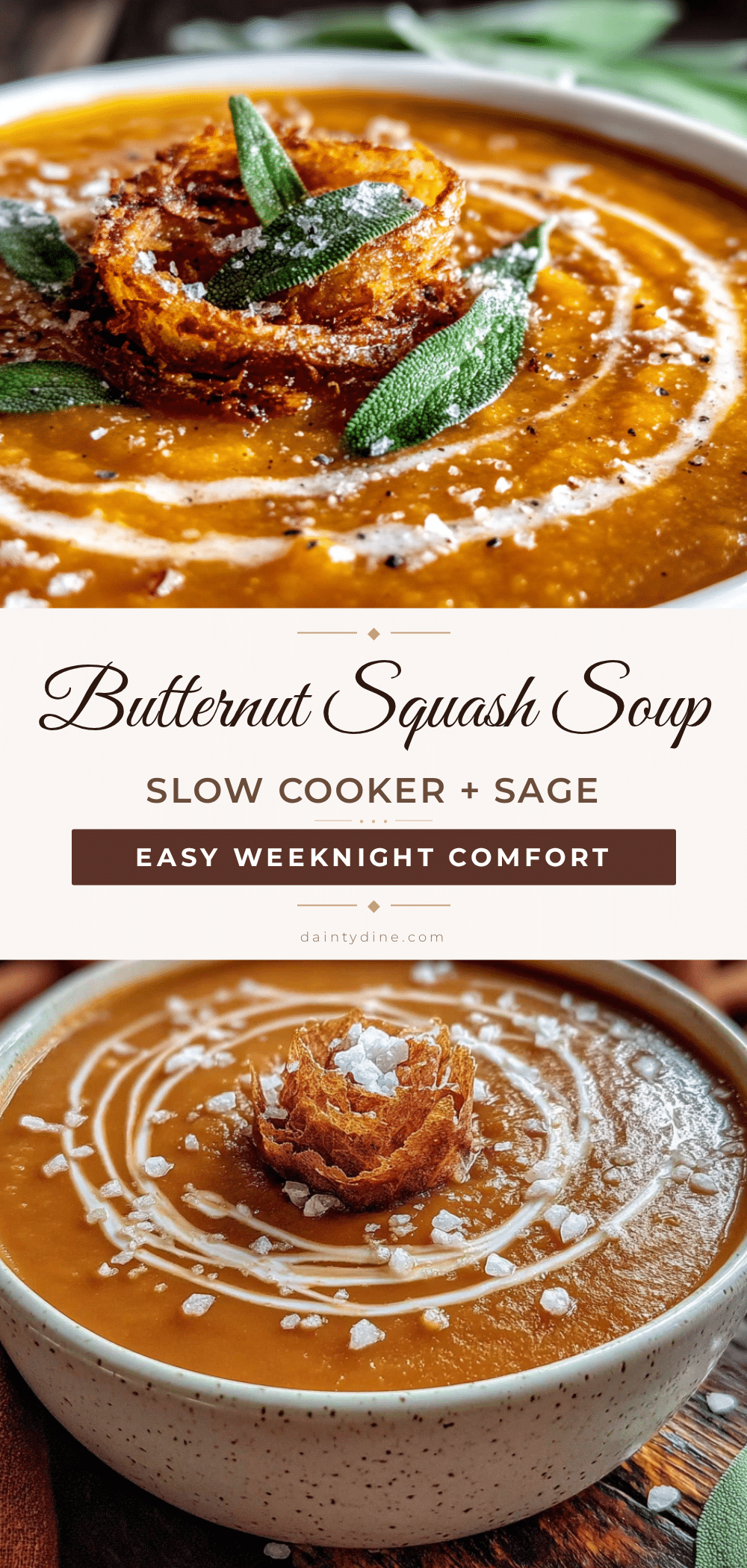
Easy Slow Cooker Butternut Squash Soup with Sage (Best Cozy Recipe)

This easy slow cooker butternut squash soup with sage is velvety, deeply savory, and richer than stovetop versions with half the effort. Perfect for cozy nights when you want real comfort food without standing over a stove.
- Prep Time: 10 minutes
- Cook Time: 6-7 hours (low) or 3-4 hours (high)
- Total Time: 6 hours 10 minutes to 7 hours 10 minutes
- Yield: 4 servings 1x
- Category: Soup
- Cuisine: American
Ingredients
- 1 large butternut squash (about 3 pounds), peeled, seeded, and cut into 1-inch cubes
- 1 medium yellow onion, roughly chopped
- 4–5 garlic cloves, smashed
- 10–12 fresh sage leaves
- 4 cups low-sodium vegetable broth (or chicken broth)
- 2 tablespoons unsalted butter
- 1 teaspoon fine sea salt, plus more to taste
- ½ teaspoon freshly ground black pepper
- ¼ cup heavy cream or coconut milk (optional, for extra creaminess)
Instructions
- Prep the squash: Cut off both ends of the butternut squash, then cut it in half where the narrow neck meets the bulbous bottom. Peel each section with a vegetable peeler. Cut the neck into rings, then cubes. Scoop out the seeds from the bulb section and cube that too. Aim for 1-inch cubes. You should have about 6-7 cups.
- Layer in the slow cooker: Add the cubed squash, roughly chopped onion, smashed garlic cloves, and fresh sage leaves to a 4-6 quart slow cooker. Pour the vegetable broth over everything. The liquid should just about cover the squash; if not, add a little water.
- Cook low and slow: Cover and cook on low for 6-7 hours or on high for 3-4 hours, until the squash is fork-tender.
- Add butter and optional cream: Turn off the slow cooker. Add the butter and let it melt for a minute. If using heavy cream or coconut milk, add it now. Season with salt and pepper.
- Blend until smooth: Use an immersion blender directly in the slow cooker, starting at low speed and increasing to high, until completely smooth and velvety. Alternatively, blend in batches in a regular blender, venting the lid to allow steam to escape.
- Taste and adjust: Taste the soup and add more salt or pepper if needed. If too thick, stir in a little more broth or water to reach desired consistency.
- Serve immediately or store: Ladle into bowls and garnish as desired. For storage, cool completely and refrigerate for up to 5 days or freeze for up to 3 months.
Notes
For easier peeling, microwave the whole squash for 2-3 minutes to soften the skin. If using dried sage instead of fresh, add 1 tablespoon during the last hour of cooking to avoid bitterness. The soup thickens as it sits; thin with broth when reheating. For a dairy-free version, substitute butter with olive oil and use coconut milk instead of cream.
Nutrition
- Serving Size: 1.5 cups
- Calories: 185
- Sugar: 8
- Sodium: 520
- Fat: 6
- Saturated Fat: 3.5
- Carbohydrates: 32
- Fiber: 6
- Protein: 4
Keywords: slow cooker butternut squash soup, easy butternut squash soup, sage butternut squash soup, creamy squash soup, fall soup recipe, healthy soup, gluten-free soup, vegetarian soup