Love this? Save it for later!
Share the inspiration with your friends
My sister asked why I couldn’t just roast the squash first and blend it into the cheese sauce. I started to explain why that wouldn’t work—then stopped. I had been standing there, arms crossed, ready to give her a whole lecture on the science of béchamel and how adding watery vegetable purees ruins the texture. Honestly, I was being a bit of a know-it-all. But something in her question made me pause. She wasn’t trying to complicate things; she just wanted to use the beautiful butternut squash sitting on the counter.
That was a Tuesday afternoon, three winters ago, and I was determined to prove myself right. I had this rigid idea of what “real” mac and cheese should be—sharp cheddar, a classic roux, maybe a breadcrumb topping if I was feeling fancy. The thought of sneaking vegetables into it felt like a betrayal. But my sister, who had just started cooking for herself, looked at me with that patient, slightly amused expression she gets. “What’s the worst that could happen?” she said. I didn’t have a good answer.
So, I caved. I roasted the butternut squash until it was caramelized and tender, let it cool, and then blended it into my cheese sauce. I was fully prepared to dump the whole pot down the sink. But let me tell you—the moment I stirred it into the pasta, the whole kitchen smelled like a warm hug. The sauce turned this incredible golden-orange color, and it was so creamy I almost dropped my spatula. The roasted squash didn’t water it down; it made it silkier. I stood there, spoon in hand, completely humbled.
That’s how this cozy roasted butternut squash mac and cheese was born. It wasn’t some grand recipe development session. It was my little sister asking a simple question that I was too stubborn to answer honestly. Maybe you’ve been there, too—thinking you know exactly how a dish should be made, only to have someone remind you that cooking is about trying things, not being right. This recipe stayed with me because it taught me to loosen up. It’s the kind of dish that makes you slow down, take a deep breath, and actually enjoy the process.
Why You’ll Love This Recipe
This isn’t your average boxed mac and cheese, and it’s not a complicated culinary project either. It’s the Goldilocks of comfort food—perfectly balanced between indulgent and wholesome. I’ve made this for picky kids, skeptical in-laws, and my own tired self on a Wednesday night, and it never fails. Here is why this recipe stands out:
- Quick & Easy: From start to finish, this comes together in about 45 minutes. Most of that time is hands-off while the squash roasts in the oven.
- Simple Ingredients: You likely have most of these items in your pantry right now. No need for a special trip to a fancy grocery store.
- Perfect for Cozy Season: This dish was made for chilly fall evenings, rainy Sundays, or those first crisp nights when you just want something warm and filling.
- Crowd-Pleaser: I have served this to kids who “don’t like vegetables” and adults who asked for the recipe. The squash blends in so smoothly that it just tastes like extra-creamy cheese.
- Unbelievably Delicious: The roasted flavor of the squash adds a subtle sweetness that pairs perfectly with sharp cheddar and a touch of nutmeg. It is next-level comfort food.
What makes this recipe different from the rest is the technique. By roasting the squash first, you concentrate its natural sugars and deepen its flavor. Blending it into the cheese sauce creates a velvety texture without needing heavy cream or a ton of butter. It is comfort food reimagined—healthier, faster, but with the same soul-soothing satisfaction. Perfect for impressing guests without stress, or turning a simple Tuesday into something memorable.
What Ingredients You Will Need
This recipe uses simple, wholesome ingredients to deliver bold flavor and satisfying texture without the fuss. Most of these are pantry staples, especially during the fall and winter months. Here is everything you will need:
For the Roasted Butternut Squash
- 1 medium butternut squash (about 2-3 pounds), peeled, seeded, and cut into 1-inch cubes (look for one that feels heavy for its size)
- 2 tablespoons olive oil (use a good quality one for roasting)
- 1/2 teaspoon salt
- 1/4 teaspoon black pepper
For the Pasta and Cheese Sauce
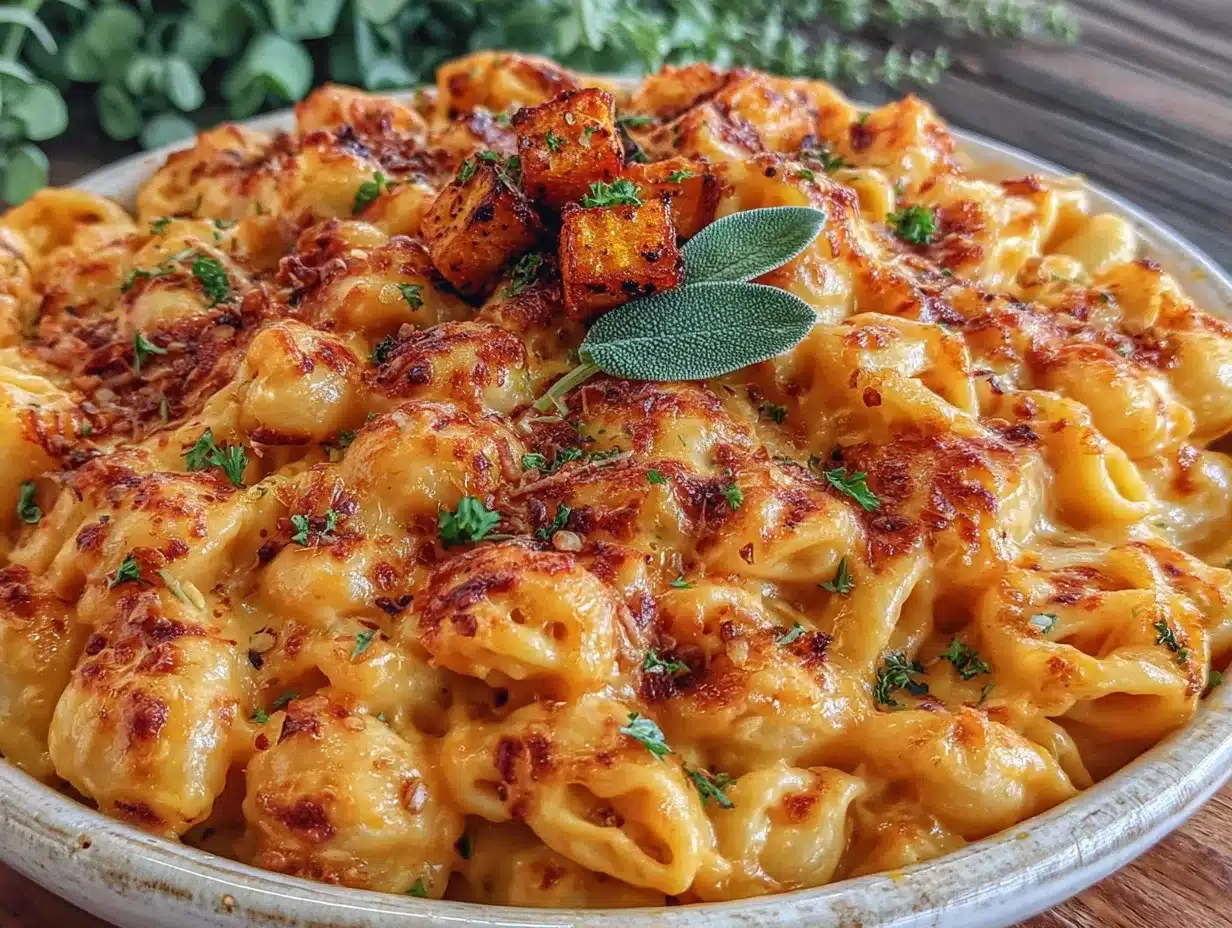
- 1 pound (16 oz) pasta (I recommend cavatappi, shells, or elbow macaroni for holding the sauce)
- 3 tablespoons unsalted butter
- 3 tablespoons all-purpose flour (use a gluten-free blend if needed)
- 2 cups whole milk (warm, for a smoother sauce)
- 1 cup reserved pasta water (this is key for adjusting consistency)
- 2 cups (8 oz) sharp cheddar cheese, shredded (I prefer Tillamook or Cabot for the best melt)
- 1 cup (4 oz) Gruyère or fontina cheese, shredded (adds incredible creaminess)
- 1/2 teaspoon garlic powder
- 1/4 teaspoon ground nutmeg (freshly grated is best)
- Salt and pepper to taste
For the Topping (Optional but Recommended)
- 1/2 cup panko breadcrumbs
- 2 tablespoons melted butter
- 1/4 cup grated Parmesan cheese
- Fresh thyme or sage leaves for garnish (optional)
For the butternut squash, look for one that is firm and has a matte skin—shiny ones are often underripe. If you are short on time, you can use pre-cut squash from the store, but the flavor won’t be quite as deep. For substitutions, use almond milk or oat milk for a dairy-free version, though the sauce will be slightly less rich. Sharp cheddar is non-negotiable for me; it gives the dish its backbone of flavor.
Equipment Needed
You don’t need a professional kitchen to make this recipe, but having the right tools makes the process smoother. Here is what you will need:
- Large baking sheet (for roasting the squash)
- Parchment paper (for easy cleanup)
- Large pot (for boiling pasta)
- Colander (for draining pasta)
- High-speed blender or food processor (an immersion blender works too, but a regular blender gives a smoother puree)
- Large saucepan or Dutch oven (for making the cheese sauce)
- Wooden spoon or silicone spatula
- Box grater (please shred your own cheese—pre-shredded has anti-caking agents that affect melting)
- 9×13-inch baking dish (if you want to bake it with a topping)
- Small bowl (for mixing the breadcrumb topping)
If you don’t have a high-speed blender, you can mash the roasted squash with a potato masher until very smooth. It won’t be as silky, but it still works wonderfully. I have made this in a cast-iron skillet for a rustic look, and it turned out great. Just be careful with the acidic tomatoes if you add any variations.
Preparation Method
Let’s get cooking. This recipe has a few steps, but I promise it is straightforward. Take your time with the roasting—it makes all the difference.
- Preheat and prep the squash: Preheat your oven to 400°F (200°C). Line a large baking sheet with parchment paper. Toss the cubed butternut squash with olive oil, salt, and pepper. Spread it in a single layer on the baking sheet. Roast for 25-30 minutes, flipping halfway through, until the squash is fork-tender and the edges are golden brown. The smell at this point is incredible—sweet and nutty.
- Cook the pasta: While the squash roasts, bring a large pot of salted water to a boil. Add your pasta and cook according to package directions until al dente. Reserve 1 cup of the pasta water before draining. Set the pasta aside. Do not rinse it—you want that starch to help the sauce cling.
- Blend the squash: Once the squash is done, let it cool for a few minutes. Transfer it to a blender or food processor. Add about 1/2 cup of the reserved pasta water and blend until completely smooth. You are looking for a consistency similar to baby food. Set aside.
- Make the roux: In a large saucepan or Dutch oven, melt the butter over medium heat. Whisk in the flour and cook for 1-2 minutes, stirring constantly. This cooks out the raw flour taste. The mixture will be thick and bubbly—that is exactly what you want.
- Build the sauce: Slowly pour in the warm milk while whisking continuously. Keep whisking until the mixture thickens, about 3-4 minutes. It should coat the back of a spoon. Reduce the heat to low.
- Add the cheese and squash: Add the shredded cheddar and Gruyère a handful at a time, stirring until melted before adding more. Stir in the garlic powder, nutmeg, and salt and pepper to taste. Now, pour in the butternut squash puree and stir until fully combined. The sauce will turn a gorgeous golden-orange color. If it seems too thick, add a splash of the remaining pasta water.
- Combine and serve: Add the cooked pasta to the sauce and stir gently until every piece is coated. Taste and adjust seasoning if needed. If you want a crunchy topping, transfer the mac and cheese to a greased 9×13-inch baking dish. Mix the panko, melted butter, and Parmesan in a small bowl, then sprinkle over the top. Broil for 2-3 minutes until golden and bubbly. Otherwise, serve immediately with fresh thyme or sage.
A quick note: if the sauce looks a little thin at first, don’t panic. It will thicken as it sits and as the pasta absorbs some of the liquid. Also, be careful not to over-broil the topping—it can go from golden to burnt in seconds.
Cooking Tips & Techniques
I have made this recipe more times than I can count, and I have definitely learned a few things along the way. Here are my best tips for getting it perfect every time:
- Don’t skip roasting the squash. I tried boiling it once to save time, and the sauce was watery and bland. Roasting concentrates the flavor and gives you that caramelized sweetness that makes this dish special.
- Shred your own cheese. I know it’s tempting to buy the pre-shredded bags, but they contain cellulose and other anti-caking agents that prevent smooth melting. Your sauce will be grainy. Take the extra five minutes to grate it yourself—your taste buds will thank you.
- Warm your milk. Adding cold milk to a hot roux can cause it to seize up and become lumpy. I just microwave it for 45 seconds before whisking it in. This little step saves a lot of frustration.
- Season in layers. Add a pinch of salt to the squash before roasting, a pinch to the pasta water, and then adjust the sauce at the end. This builds depth of flavor that you can’t get from salting only at the end.
- Trust the pasta water. That starchy water is liquid gold. If your sauce is too thick, a splash of pasta water will loosen it without making it greasy or thin. I always keep a full cup reserved, even if I don’t use it all.
One mistake I made early on was over-stirring the sauce after adding the cheese. You want to stir just until it melts—overworking it can make it stringy. Also, let the finished dish rest for 2-3 minutes before serving. It gives the sauce time to cling to the pasta and the flavors to meld.
Variations & Adaptations
This cozy roasted butternut squash mac and cheese is wonderfully adaptable. Here are some ways to make it your own:
- Make it gluten-free: Use your favorite gluten-free pasta and a 1:1 gluten-free flour blend for the roux. The rest of the ingredients are naturally gluten-free, so this is an easy swap.
- Add protein: Stir in leftover shredded rotisserie chicken, crispy bacon bits, or browned Italian sausage. I love adding crumbled sage sausage in the fall—it pairs perfectly with the squash.
- Boost the veggies: Sauté some finely chopped kale or spinach and stir it in at the end. You can also add roasted Brussels sprouts or caramelized onions for extra depth.
- Change the cheese: If you don’t have Gruyère, use fontina, Monterey Jack, or even a smoked gouda for a different flavor profile. Just keep the sharp cheddar as your base.
- Make it dairy-free: Use unsweetened oat milk or cashew milk, vegan butter, and your favorite dairy-free cheese shreds. The sauce won’t be as creamy, but it still tastes great.
- Spice it up: Add a pinch of cayenne pepper, smoked paprika, or red pepper flakes to the sauce for a little heat. A dash of Dijon mustard also adds a nice tang.
I once tried adding a spoonful of miso paste to the sauce, and it was surprisingly good—it added a savory umami depth that worked beautifully with the sweet squash. Don’t be afraid to experiment!
Serving & Storage Suggestions
This mac and cheese is best served hot, straight from the stovetop or oven. The texture is at its peak when the sauce is still creamy and the pasta is tender. Here is how to serve and store it:
- Serving temperature: Serve immediately after making it. If you baked it with a topping, let it rest for 5 minutes before scooping to let it set slightly.
- Presentation: Spoon into shallow bowls and garnish with fresh thyme leaves, a sprinkle of black pepper, and a tiny pinch of flaky sea salt. It looks beautiful against the golden sauce.
- Complementary dishes: Pair it with a simple green salad with a tangy vinaigrette to cut through the richness. Roasted broccoli or a side of sautéed green beans also work wonderfully.
- Storage: Store leftovers in an airtight container in the refrigerator for up to 4 days. The sauce will thicken as it cools, which is normal.
- Reheating: The best way to reheat is on the stovetop over low heat, adding a splash of milk or pasta water to loosen the sauce. You can also microwave it in 30-second bursts, stirring in between. Avoid high heat, as it can make the sauce grainy.
- Freezing: This recipe freezes well for up to 2 months. Let it cool completely, then transfer to a freezer-safe container. Thaw overnight in the refrigerator and reheat gently. The texture may be slightly softer, but the flavor remains delicious.
I find that the flavors actually deepen after a day in the fridge. The squash and cheese meld together into something even more comforting. Don’t be surprised if you like the leftovers more than the fresh batch!
Nutritional Information & Benefits
This cozy roasted butternut squash mac and cheese is a more nutritious take on a classic comfort food. Here is a general estimate per serving (based on 8 servings):
- Calories: Approximately 450-500
- Protein: 18-20g
- Fat: 22-25g
- Carbohydrates: 50-55g
- Fiber: 5-7g
- Vitamin A: Over 100% of the daily value (thanks to the butternut squash)
- Calcium: 30-35% of the daily value
Butternut squash is packed with vitamin A, vitamin C, and fiber, which supports eye health and digestion. The cheese provides calcium and protein, while the whole milk adds a dose of vitamin D. By using roasted squash as a base for the sauce, you are cutting down on the amount of butter and cream typically used in mac and cheese. It is still an indulgent dish, but one that offers real nutritional benefits. This recipe is also vegetarian and can be made gluten-free or dairy-free with simple swaps. If you have nut allergies, be sure to check your milk alternative if going dairy-free.
Conclusion
This cozy roasted butternut squash mac and cheese has become a staple in my kitchen, and I think it deserves a spot in yours, too. It started with a simple question from my sister and ended with me learning that the best recipes often come from letting go of what you think you know. The roasted squash adds a subtle sweetness and a velvety texture that makes this dish feel both familiar and new. It is comfort food that nourishes you—body and soul.
I encourage you to make this your own. Play with the cheese blend, add your favorite toppings, or sneak in some extra greens. Cooking should be flexible and fun, not rigid. If you try this recipe, I would love to hear how it turned out. Drop a comment below, share your twist on it, or tag me in your photos. And if you have a moment, share this with someone who needs a little comfort in their week. Happy cooking, friends!
Frequently Asked Questions
Can I use frozen butternut squash instead of fresh?
Yes, you can use frozen butternut squash, but I recommend thawing it first and patting it dry to remove excess moisture. Roast it a little longer to caramelize it, as frozen squash tends to release more water. The flavor won’t be quite as deep, but it still works in a pinch.
Why did my cheese sauce turn out grainy?
Grainy cheese sauce usually happens when the cheese is heated too quickly or at too high a temperature. Always melt cheese over low heat, and add it gradually while stirring. Using pre-shredded cheese can also cause graininess due to the anti-caking agents. Stick with freshly shredded cheese for the smoothest result.
Can I make this recipe ahead of time?
Absolutely! You can prepare the entire dish up to 24 hours in advance. Assemble the mac and cheese in the baking dish, cover it, and refrigerate. When you are ready to serve, bake it at 350°F (175°C) for 20-25 minutes until heated through, then add the breadcrumb topping and broil for 2-3 minutes.
How do I make this recipe vegan?
To make this vegan, use plant-based butter, unsweetened oat milk, and your favorite vegan cheese shreds. Nutritional yeast can also add a cheesy flavor. The sauce will be thinner, so you may need to add a little extra flour or a tablespoon of cornstarch slurry to thicken it. Roast the squash as directed—it adds natural creaminess.
What is the best pasta shape for this recipe?
I prefer cavatappi or shells because their curves and ridges hold the creamy sauce beautifully. Elbow macaroni is a classic choice and works perfectly. Avoid very long pasta like spaghetti, as the sauce tends to slide off. Short, sturdy shapes are your best bet for a hearty mac and cheese.
Pin This Recipe!
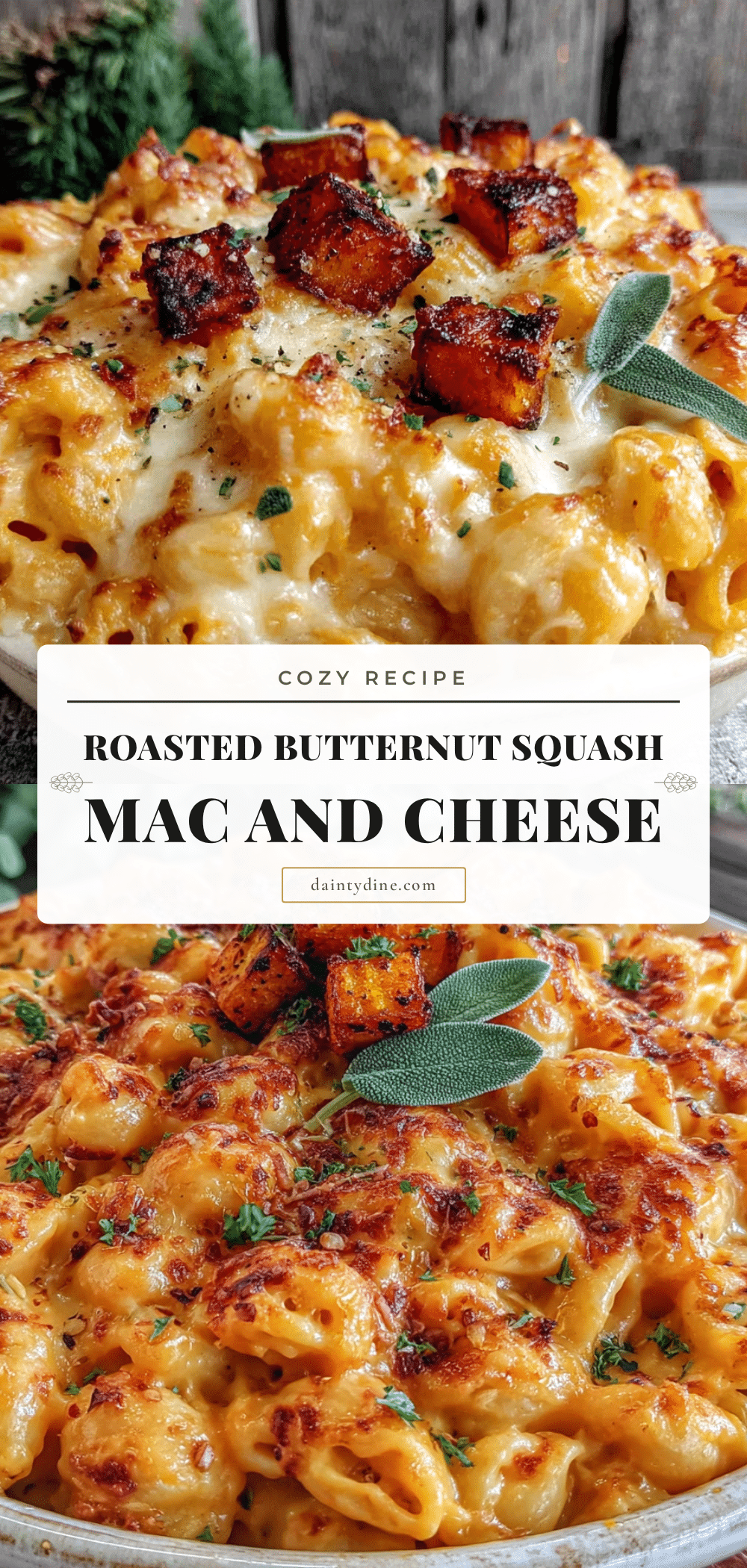
Cozy Roasted Butternut Squash Mac and Cheese

This creamy, comforting mac and cheese gets a healthy twist with roasted butternut squash blended into the cheese sauce. It’s quick, easy, and perfect for cozy fall evenings.
- Prep Time: 15 minutes
- Cook Time: 30 minutes
- Total Time: 45 minutes
- Yield: 8 servings 1x
- Category: Main Course
- Cuisine: American
Ingredients
- 1 medium butternut squash (about 2–3 pounds), peeled, seeded, and cut into 1-inch cubes
- 2 tablespoons olive oil
- 1/2 teaspoon salt
- 1/4 teaspoon black pepper
- 1 pound (16 oz) pasta (cavatappi, shells, or elbow macaroni)
- 3 tablespoons unsalted butter
- 3 tablespoons all-purpose flour
- 2 cups whole milk, warm
- 1 cup reserved pasta water
- 2 cups (8 oz) sharp cheddar cheese, shredded
- 1 cup (4 oz) Gruyère or fontina cheese, shredded
- 1/2 teaspoon garlic powder
- 1/4 teaspoon ground nutmeg
- Salt and pepper to taste
- 1/2 cup panko breadcrumbs (optional)
- 2 tablespoons melted butter (optional)
- 1/4 cup grated Parmesan cheese (optional)
- Fresh thyme or sage leaves for garnish (optional)
Instructions
- Preheat oven to 400°F (200°C). Line a large baking sheet with parchment paper. Toss cubed butternut squash with olive oil, salt, and pepper. Spread in a single layer on the baking sheet. Roast for 25-30 minutes, flipping halfway, until fork-tender and edges are golden brown.
- While squash roasts, bring a large pot of salted water to a boil. Cook pasta according to package directions until al dente. Reserve 1 cup of pasta water before draining. Do not rinse pasta.
- Let roasted squash cool for a few minutes. Transfer to a blender or food processor. Add about 1/2 cup reserved pasta water and blend until completely smooth.
- In a large saucepan or Dutch oven, melt butter over medium heat. Whisk in flour and cook for 1-2 minutes, stirring constantly.
- Slowly pour in warm milk while whisking continuously. Continue whisking until mixture thickens, about 3-4 minutes. Reduce heat to low.
- Add shredded cheddar and Gruyère a handful at a time, stirring until melted before adding more. Stir in garlic powder, nutmeg, and salt and pepper to taste. Pour in butternut squash puree and stir until fully combined. If sauce is too thick, add a splash of remaining pasta water.
- Add cooked pasta to the sauce and stir gently until coated. Taste and adjust seasoning. For a crunchy topping, transfer to a greased 9×13-inch baking dish. Mix panko, melted butter, and Parmesan in a small bowl, then sprinkle over the top. Broil for 2-3 minutes until golden and bubbly. Otherwise, serve immediately with fresh thyme or sage.
Notes
For best results, shred your own cheese and warm the milk before adding to the roux. The sauce will thicken as it sits. Leftovers can be stored in the refrigerator for up to 4 days and reheated on the stovetop with a splash of milk.
Nutrition
- Serving Size: 1 serving
- Calories: 475
- Sugar: 8
- Sodium: 580
- Fat: 23
- Saturated Fat: 12
- Carbohydrates: 52
- Fiber: 6
- Protein: 19
Keywords: butternut squash mac and cheese, roasted butternut squash, easy mac and cheese, healthy mac and cheese, fall comfort food, vegetarian mac and cheese