Love this? Save it for later!
Share the inspiration with your friends
I was standing in the frozen foods aisle last Tuesday, staring at a box of pre-seasoned salmon fillets that cost more than I wanted to admit, when the smell hit me. Not a real smell—a memory smell. Lemon. Butter. Something warm and savory. And suddenly I was eight years old, sitting at my aunt Carol’s tiny kitchen table in her apartment above the garage, watching her pull a baking dish out of the oven with a crumpled potholder she’d had since the 80s.
She wasn’t a fancy cook. Honestly, she wasn’t much of a cook at all. But she had this one thing she made when my mom worked late—salmon with lemon and butter, baked until it flaked apart with a fork. She’d serve it over instant rice with a bagged salad on the side, and I thought it was the most elegant dinner on earth. I mean, I was eight. What did I know? But I remember the way the butter pooled in the corners of the dish, soaking into the rice, and how the lemon made everything smell clean and bright even on a gray Tuesday night.
I walked right past that overpriced frozen box and grabbed a pack of fresh fillets instead. I had lemons at home. I had butter. I had maybe twenty minutes before I needed to feed myself and get back to work emails. And I thought—you know what? Let me just try to make that. Let me see if I can get even close to what I remember.
Turns out, you don’t need a fancy recipe or a lot of time. You just need good ingredients and a little bit of trust. This quick lemon butter baked salmon is the kind of dinner that feels special without being fussy—and honestly, that’s exactly what a busy weeknight needs.
Why You’ll Love This Recipe
Let me be real with you for a second. I’ve tested this recipe about seven times in the last month. I made it on a Tuesday when I was tired. I made it on a Sunday when I had more time. I even made it once with frozen salmon because that’s what I had, and it still worked. So when I say this recipe works, I mean it really works.
- Quick & Easy: From fridge to table in 15 minutes flat. No marinating, no complicated steps, no standing over a hot stove.
- Simple Ingredients: You probably have everything already—butter, lemon, garlic, salt, pepper. That’s it.
- Perfect for Weeknights: This is the dinner you make when you’re tired but still want something that feels like a real meal.
- Crowd-Pleaser: I’ve served this to picky eaters and seafood lovers, and both groups went back for seconds.
- Unbelievably Delicious: The butter bastes the salmon as it bakes, keeping it moist and tender while the lemon adds just enough brightness to cut through the richness.
What makes this different from other baked salmon recipes? It’s the timing and the technique. Most recipes tell you to bake salmon at 400°F for 12-15 minutes, but they don’t tell you to check for doneness by touch or to let it rest for a minute before serving. I’ll walk you through all of that. Plus, the butter-to-lemon ratio here is spot-on—not too greasy, not too tart.
This is the kind of recipe that makes you close your eyes after the first bite. It’s comfort food reimagined—healthier, faster, but with the same soul-soothing satisfaction. Perfect for impressing guests without stress, or turning a simple Tuesday into something memorable.
What Ingredients You Will Need
This recipe uses simple, wholesome ingredients to deliver bold flavor and satisfying texture without the fuss. Most of these are pantry staples, which makes this perfect for those nights when you didn’t plan ahead.
- Salmon fillets (4 pieces, about 6 oz / 170g each) – Look for fillets that are similar in thickness so they cook evenly. I prefer center-cut fillets for the best texture. If using frozen, thaw completely in the fridge overnight and pat dry before cooking.
- Unsalted butter (4 tablespoons / 56g), melted – I use unsalted so I can control the salt level. Salted butter works too—just reduce the added salt slightly. I really like Kerrygold for its rich flavor, but any good-quality butter will do.
- Fresh lemon juice (2 tablespoons / 30ml) – Fresh is non-negotiable here. Bottled lemon juice has a flat, almost metallic taste that just doesn’t work. Roll your lemon on the counter before cutting to get more juice out.
- Lemon zest (1 teaspoon) – This is where the real lemon flavor lives. Don’t skip it if you can help it. The zest adds a brightness that juice alone can’t provide.
- Garlic (3 cloves, minced) – Fresh garlic gives the best flavor. If you’re in a rush, you can use 1/2 teaspoon of garlic powder, but fresh really makes a difference here.
- Salt (1/2 teaspoon) – I use fine sea salt. If using kosher salt, you’ll need a bit more—about 3/4 teaspoon.
- Black pepper (1/4 teaspoon, freshly ground) – Freshly ground pepper adds a subtle heat that complements the lemon beautifully.
- Fresh parsley (2 tablespoons, chopped, optional) – For garnish. Adds a pop of color and freshness. Dried parsley works in a pinch but fresh is better.
- Lemon slices (optional, for topping) – These make the dish look gorgeous and add a bit more lemon flavor as they bake.
Ingredient Selection Tip: When buying salmon, look for fillets that are bright in color and smell clean—like the ocean, not fishy. The flesh should be firm to the touch and bounce back when pressed. If the edges look dried out or brown, skip it.
Substitution Guidance: Need a dairy-free option? Use ghee (which has the milk solids removed) or a high-quality olive oil. The flavor will be different but still delicious. For a lower-fat version, you can use half the butter and supplement with a splash of chicken or vegetable broth.
Equipment Needed
You don’t need much for this recipe, which is honestly one of the best things about it. Here’s what you’ll need:
- Baking dish or sheet pan – A 9×13-inch baking dish works perfectly. A rimmed baking sheet lined with foil or parchment paper also works great and makes cleanup even easier. I’ve used both and honestly prefer the sheet pan for the extra browning.
- Small bowl – For mixing the butter, lemon juice, zest, and garlic together.
- Whisk or fork – To combine the butter mixture. A fork works just fine if you don’t want to dirty another dish.
- Microplane or zester – For zesting the lemon. A vegetable peeler can work in a pinch, but you’ll want to mince the zest very finely afterward.
- Instant-read thermometer (optional but recommended) – Salmon is perfectly cooked at 125°F to 130°F (52°C to 54°C) for medium. If you cook salmon often, this is worth the investment—it takes the guesswork out completely.
- Basting brush (optional) – For brushing the butter mixture over the salmon. A spoon works just as well.
- Cutting board and knife – For mincing garlic and chopping parsley.
Budget-Friendly Tip: You don’t need to buy a fancy baking dish. A basic metal sheet pan from the grocery store will work beautifully. And if you don’t have a microplane, you can just slice the lemon very thinly and lay the slices on top of the salmon—the flavor will still infuse into the fish.
Preparation Method
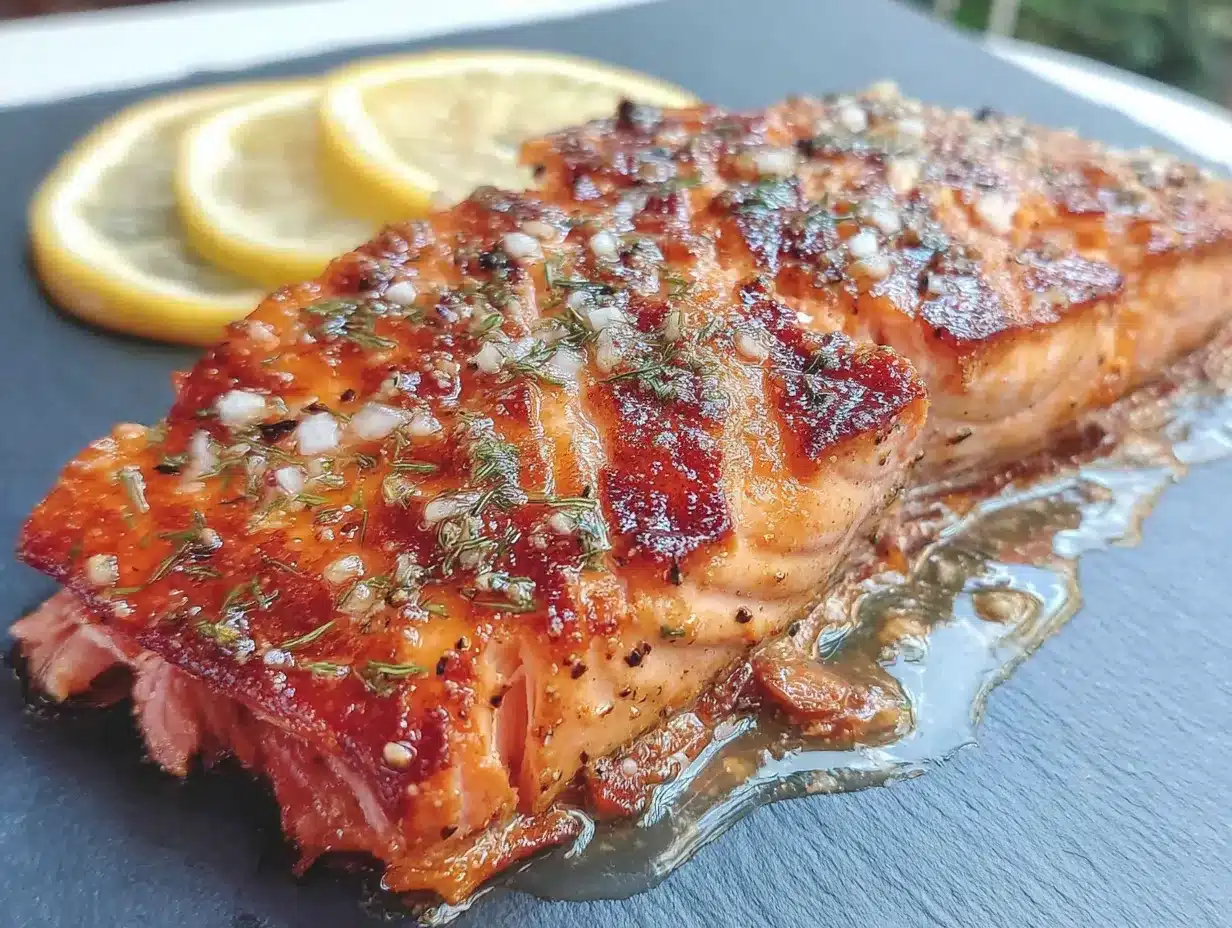
Alright, let’s get cooking. This comes together so fast, you’ll barely have time to make a side dish. Here’s how to do it:
- Preheat your oven to 400°F (200°C). Place your baking dish or sheet pan in the oven while it preheats. This helps the salmon start cooking immediately when it hits the pan, giving you better browning on the bottom.
- Prepare the salmon. Remove the salmon from the fridge about 10 minutes before cooking to take the chill off. Pat the fillets dry with paper towels—this is crucial for getting a nice surface instead of steamed, pale fish. Check for any pin bones by running your fingers along the fillet; if you feel any, pull them out with tweezers or clean pliers.
- Make the butter mixture. In a small bowl, combine the melted butter, lemon juice, lemon zest, minced garlic, salt, and pepper. Whisk or stir with a fork until everything is well combined. Taste it—it should be bright and savory, with the lemon coming through clearly.
- Prepare the baking dish. Carefully remove the hot baking dish from the oven. If using a sheet pan, you can line it with foil or parchment first for easy cleanup. Lightly grease the surface with a little butter or oil to prevent sticking.
- Arrange the salmon. Place the salmon fillets skin-side down (if they have skin) in the hot dish. They should sizzle slightly when they hit the surface. Space them out so they’re not touching—this ensures even cooking and better browning.
- Add the butter mixture. Brush or spoon the butter mixture evenly over each fillet. Don’t forget the sides! Reserve about a tablespoon of the mixture for basting halfway through. If you’re using lemon slices, place one or two on top of each fillet now.
- Bake for 10-12 minutes. The exact time depends on the thickness of your fillets. For 1-inch thick fillets, start checking at 10 minutes. At the 6-minute mark, open the oven and brush the reserved butter mixture over the salmon to keep it moist and flavorful.
- Check for doneness. The salmon is done when it flakes easily with a fork and the internal temperature reaches 125°F to 130°F (52°C to 54°C) for medium. The center should be slightly translucent and the edges opaque. If you prefer your salmon more well-done, cook to 135°F (57°C), but be careful not to overcook—it dries out fast.
- Let it rest. Remove the salmon from the oven and let it rest in the dish for 2-3 minutes. This allows the juices to redistribute throughout the fish, making it more tender. Don’t skip this step—I learned the hard way that cutting into it immediately leads to dry salmon.
- Garnish and serve. Sprinkle with fresh parsley if using. The butter mixture in the pan makes a delicious sauce—spoon it over the salmon or over your side dish. Serve immediately.
Sensory Cues: When the salmon is ready, you’ll see the butter mixture bubbling around the edges of the fillets. The fish will have turned from translucent to opaque about three-quarters of the way up the sides. The top should be golden and slightly caramelized in spots. The smell? Bright, buttery, and absolutely irresistible.
Cooking Tips & Techniques
I’ve made this recipe enough times to know where things can go wrong. Here are the tips I wish someone had told me sooner:
Don’t overcook the salmon. This is the number one mistake people make. Salmon continues to cook after you take it out of the oven (that’s called carryover cooking), so pull it out when it’s just slightly underdone in the center. I once left salmon in the oven while I answered a phone call—three extra minutes turned perfectly tender fish into dry, sad flakes. Learn from my mistake.
Pat the salmon dry. This is not optional. Wet salmon steams instead of bakes, and you’ll end up with pale, mushy fish instead of golden, slightly crisp edges. Use paper towels and really press them into the surface.
Use room temperature ingredients. Cold butter straight from the fridge won’t melt evenly in the oven, and cold salmon takes longer to cook. Let both sit on the counter for about 10 minutes before you start. Your butter should be soft enough to whisk easily.
Watch the garlic. Minced garlic can burn in a hot oven, turning bitter and acrid. If you’re worried about this, you can add the garlic halfway through cooking instead of at the beginning. Or use garlic powder—1/4 teaspoon mixed into the butter—for a more forgiving flavor.
Multitasking strategy. While the salmon bakes, you have 10-12 minutes to make a side dish. I like to start a pot of rice or quinoa right when the salmon goes in, and steam some broccoli or green beans in the microwave. Everything finishes at the same time—it’s beautiful when that happens.
Check thickness, not time. Salmon fillets vary in thickness, especially toward the tail end. If you have a thin piece and a thick piece, cut the thin piece into two smaller portions so it doesn’t overcook while the thick one finishes. Or fold the thin tail end under itself to create a more uniform thickness.
Variations & Adaptations
One of the best things about this recipe is how easy it is to change up. Here are some variations I’ve tried and loved:
Herb Butter Salmon: Add 1 tablespoon of fresh dill, thyme, or rosemary to the butter mixture. Dill is especially good with salmon—it’s a classic combination for a reason. I made this for Easter brunch once and it was gone in minutes.
Spicy Lemon Salmon: Add 1/2 teaspoon of red pepper flakes or a pinch of cayenne to the butter mixture. The heat cuts through the richness of the salmon and pairs beautifully with the lemon. My neighbor, who claims she doesn’t like spicy food, asked for this recipe after trying it.
Honey Garlic Salmon: Add 1 tablespoon of honey to the butter mixture and increase the garlic to 4 cloves. The honey caramelizes in the oven, creating a gorgeous glaze. This version is sweeter and more savory—perfect for when you want something a little indulgent.
Dairy-Free Version: Substitute the butter with olive oil or avocado oil. Use 3 tablespoons of oil instead of 4, since oil is thinner than butter. The flavor will be different but still delicious—more Mediterranean, less rich.
Air Fryer Adaptation: Cook the salmon at 375°F (190°C) for 8-10 minutes in an air fryer. The hot air circulates and creates an even crispier exterior. You don’t need to preheat the air fryer, and you’ll want to check at the 7-minute mark for thinner fillets.
Pesto Salmon: Skip the butter mixture entirely and spread 1-2 tablespoons of pesto over each fillet before baking. The basil and pine nuts complement the salmon beautifully, and it’s a completely different flavor profile with zero extra effort.
Serving & Storage Suggestions
This salmon is incredibly versatile when it comes to serving. Here’s how I like to do it:
Serving Temperature: Serve the salmon warm, right after it rests. The butter sauce should still be liquid and glossy. If it cools too much, the butter will start to solidify—just spoon a little of the hot pan sauce over each fillet before serving.
What to Serve With It: The classic pairing is rice or quinoa with a green vegetable. I love steamed asparagus or green beans with a squeeze of lemon. A simple arugula salad with shaved Parmesan and a lemon vinaigrette is also fantastic—the peppery greens stand up to the rich salmon. For something heartier, try roasted potatoes or a warm farro salad.
Beverage Pairing: A crisp white wine like Sauvignon Blanc or Pinot Grigio is perfect here. The acidity in the wine complements the lemon. For a non-alcoholic option, sparkling water with a slice of lemon or lime works beautifully.
Storage Instructions: Store leftover salmon in an airtight container in the refrigerator for up to 3 days. The fish will lose some of its moisture upon reheating, so it’s best enjoyed fresh. If you have leftover butter sauce, store it separately and drizzle it over the reheated salmon.
Reheating Tips: The best way to reheat salmon is in a low oven—300°F (150°C) for about 10 minutes, covered with foil to prevent drying out. You can also reheat it in a skillet over medium-low heat with a splash of water or broth, covered, for 3-4 minutes. Avoid the microwave if you can—it tends to make the fish rubbery and unevenly heated.
How Flavors Develop: The lemon flavor actually mellows and blends with the butter as the salmon sits. Leftover salmon is delicious cold, flaked over a salad or mixed into pasta the next day. I’ve been known to make extra on purpose just for lunch the next day.
Nutritional Information & Benefits
This recipe is not only delicious but also packed with nutrients. Here’s a rough breakdown per serving (one fillet with sauce):
| Nutrient | Amount Per Serving |
|---|---|
| Calories | 380-420 |
| Protein | 35-40g |
| Fat | 25-30g (mostly healthy fats) |
| Saturated Fat | 10-12g |
| Carbohydrates | 2-3g |
| Fiber | 0g |
| Sugar | 1g (natural from lemon) |
| Sodium | 350-400mg |
| Vitamin D | Significant source |
| Omega-3 Fatty Acids | Excellent source |
Health Benefits: Salmon is one of the best sources of omega-3 fatty acids, which are essential for brain health, reducing inflammation, and supporting heart health. It’s also rich in high-quality protein, B vitamins, selenium, and vitamin D. The lemon adds a boost of vitamin C, which helps with iron absorption from the fish.
Dietary Considerations: This recipe is naturally gluten-free, low-carb, and keto-friendly. It’s also suitable for paleo and Whole30 diets if you use ghee instead of butter. The main allergens are fish and dairy (butter).
My Wellness Perspective: I love that this recipe feels indulgent but is actually incredibly good for you. The butter adds richness, but the portion is modest—just one tablespoon per serving. It’s the kind of meal that satisfies without weighing you down, which is exactly what I need on a busy weeknight.
Conclusion
So here’s the thing—this quick lemon butter baked salmon isn’t just a recipe. It’s a reminder that you don’t need hours in the kitchen or a long list of ingredients to create something truly satisfying. It’s the dinner you turn to when you’re tired, when you’re short on time, but you still want to feed yourself (or your family) something that feels like care.
I’ve made this on good days and bad days, on nights when I had energy to spare and nights when I barely had energy to stand. And every single time, it delivers. The butter sizzles, the lemon brightens, the salmon flakes apart like it’s been waiting to be eaten. It’s simple, honest cooking—and honestly, that’s my favorite kind.
I’d love to hear how it goes for you. Did you try a variation? Serve it with something unexpected? Forget to set a timer and almost burn it? (Been there.) Drop a comment below and let me know—I read every single one, and your stories make this whole thing worth doing.
Now go make some salmon. You’ve got this.
Frequently Asked Questions
Can I use frozen salmon for this recipe?
Yes, you can! Just make sure to thaw the fillets completely in the refrigerator overnight. Pat them very dry before cooking, as frozen salmon tends to release more water. You may need to add 2-3 minutes to the baking time.
How do I know when the salmon is done without a thermometer?
Look for visual cues: the salmon will turn from translucent to opaque about three-quarters of the way up the sides. When you gently press the top with a fork, it should flake easily. The center should still be slightly translucent for medium doneness.
Can I make this recipe with other types of fish?
Absolutely! This butter-lemon-garlic combination works beautifully with cod, halibut, trout, or even thick white fish like sea bass. Adjust cooking time based on thickness—thinner fillets will cook faster.
Why did my salmon turn out dry?
The most common cause is overcooking. Check your salmon at the 10-minute mark and pull it out as soon as it flakes easily. Also, make sure you patted the salmon dry before adding the butter—excess moisture can cause steaming, which leads to dry fish.
Can I double this recipe for a crowd?
Definitely! Just make sure your baking dish is large enough to hold the fillets without crowding—they need space for hot air to circulate. If you’re cooking more than 4-6 fillets, use two baking dishes or cook in batches. The baking time stays the same as long as the fillets are similar in thickness.
Pin This Recipe!
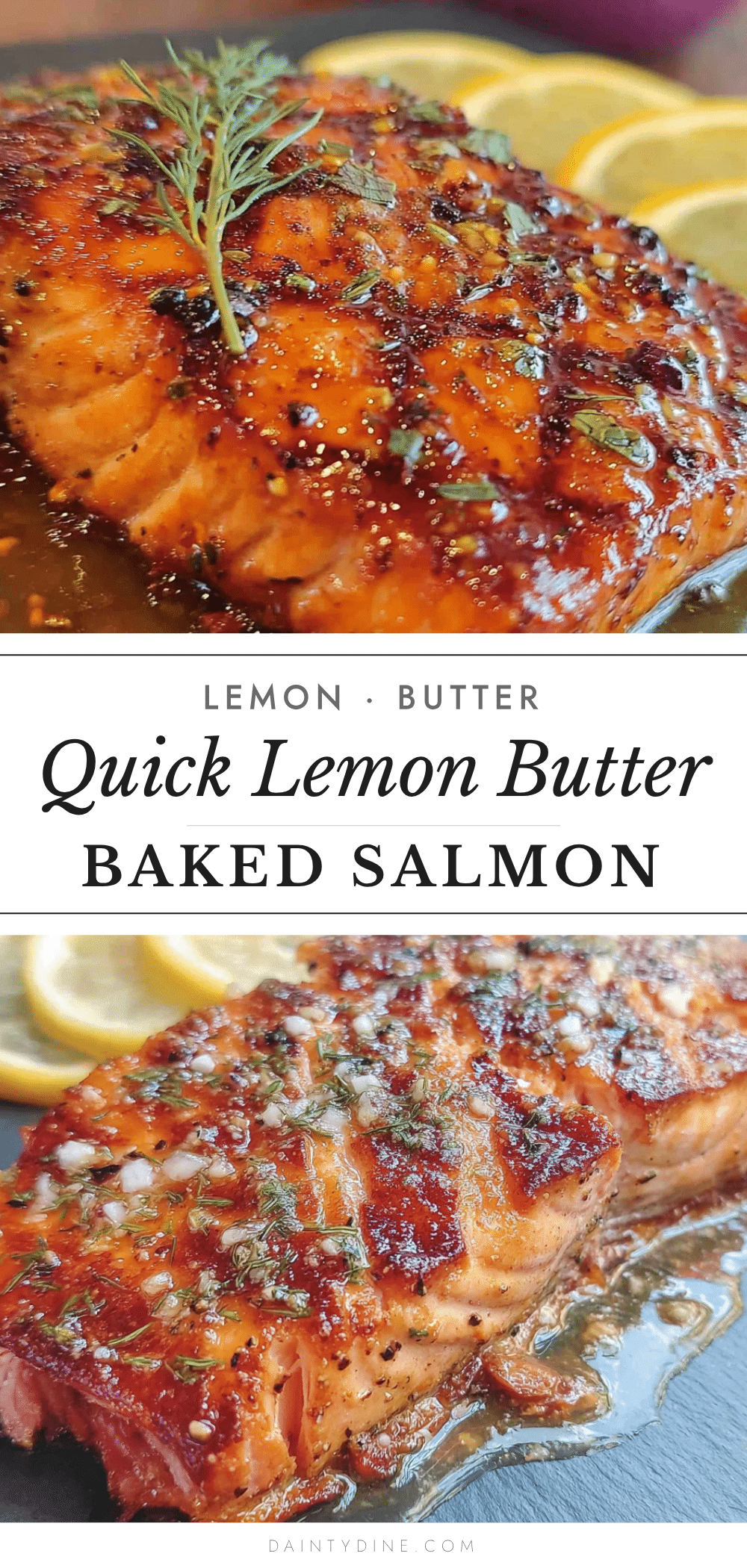
Easy Lemon Butter Baked Salmon: Best 15-Minute Dinner
This quick lemon butter baked salmon is the kind of dinner that feels special without being fussy—perfect for busy weeknights. With simple ingredients and ready in 15 minutes, it’s comfort food reimagined: healthier, faster, but with the same soul-soothing satisfaction.
- Prep Time: 5 minutes
- Cook Time: 10-12 minutes
- Total Time: 15 minutes
- Yield: 4 servings 1x
- Category: Main Course
- Cuisine: American
Ingredients
- 4 salmon fillets (about 6 oz / 170g each)
- 4 tablespoons unsalted butter, melted
- 2 tablespoons fresh lemon juice
- 1 teaspoon lemon zest
- 3 cloves garlic, minced
- 1/2 teaspoon fine sea salt
- 1/4 teaspoon freshly ground black pepper
- 2 tablespoons fresh parsley, chopped (optional, for garnish)
- Lemon slices (optional, for topping)
Instructions
- Preheat your oven to 400°F (200°C). Place your baking dish or sheet pan in the oven while it preheats.
- Remove the salmon from the fridge about 10 minutes before cooking. Pat the fillets dry with paper towels. Check for any pin bones and remove them if necessary.
- In a small bowl, combine the melted butter, lemon juice, lemon zest, minced garlic, salt, and pepper. Whisk until well combined.
- Carefully remove the hot baking dish from the oven. Lightly grease the surface with a little butter or oil.
- Place the salmon fillets skin-side down in the hot dish, spacing them out so they’re not touching.
- Brush or spoon the butter mixture evenly over each fillet, reserving about a tablespoon for basting. If using, place lemon slices on top.
- Bake for 10-12 minutes. At the 6-minute mark, brush the reserved butter mixture over the salmon.
- Check for doneness: the salmon should flake easily with a fork and reach an internal temperature of 125°F to 130°F (52°C to 54°C) for medium.
- Remove from the oven and let rest in the dish for 2-3 minutes.
- Garnish with fresh parsley if using. Spoon the pan sauce over the salmon and serve immediately.
Notes
Pat the salmon dry for best browning. Don’t overcook; salmon continues to cook after removal. For dairy-free, substitute butter with olive oil or avocado oil. For a spicier version, add 1/2 teaspoon red pepper flakes to the butter mixture.
Nutrition
- Serving Size: 1 fillet with sauce
- Calories: 380420
- Sugar: 1
- Sodium: 350400
- Fat: 2530
- Saturated Fat: 1012
- Carbohydrates: 23
- Protein: 3540
Keywords: lemon butter salmon, baked salmon, quick salmon recipe, 15-minute dinner, easy salmon, weeknight dinner, healthy salmon, salmon fillet