Love this? Save it for later!
Share the inspiration with your friends
My roommate asked why I couldn’t just throw the salmon in a cold pan and let the heat come up slowly. I started to explain why that wouldn’t work—something about searing and crust formation and how you always need screaming hot butter. Then I stopped. Honestly? I had no real reason except that’s how I’d always done it.
That Tuesday night, with a salmon fillet thawing on the counter and my roommate watching from the stool, I decided to try her method. I placed the fillet skin-side down in a cold stainless steel pan, added a pat of butter, some smashed garlic cloves, and thin lemon slices right there in the cold fat. Then I turned the heat to medium and waited. The butter melted slowly, the garlic started to perfume the whole kitchen, and the salmon began cooking gently from the bottom up. No splatter. No smoke alarm going off. No panicked flipping.
I was fully prepared to eat dry, sad salmon and admit she was right. But what came out of that pan was the most tender, flaky, garlic-buttery salmon I’d ever made in my life. The fat had rendered perfectly, the lemon had infused the butter without turning bitter, and the fish had cooked evenly from edge to center without that weird raw middle you sometimes get with high-heat searing. I mean, I actually laughed out loud standing at the stove.
Maybe you’ve been there—stubborn about some kitchen rule you learned years ago, convinced there’s only one way to get good results. This recipe for easy garlic butter salmon with lemon in 30 minutes became my go-to that night, not because it was fancy, but because it was so simple I almost missed it. It’s the kind of recipe that makes you question everything you thought you knew about cooking fish, and honestly, that’s a pretty good feeling.
Why You’ll Love This Recipe
This easy garlic butter salmon with lemon in 30 minutes isn’t just another fish recipe floating around the internet. I’ve tested this method at least a dozen times now, tweaking the butter temperature, the garlic quantity, and the lemon placement until everything clicked. Here’s why this version stands out from the rest.
- Quick & Easy: From fridge to plate in under 30 minutes, with only 5 minutes of active prep. Perfect for those evenings when you’re staring at the fridge wondering what to make.
- Simple Ingredients: Salmon, butter, garlic, lemon, salt, pepper. That’s it. No fancy grocery store trips, no obscure spices gathering dust in your cabinet.
- Perfect for Weeknight Dinners: This feels special enough for a Friday night but comes together on a busy Tuesday without stress.
- Crowd-Pleaser: Even my friend who “doesn’t like fish” asked for seconds. The garlic butter does something magical that wins over skeptics.
- Unbelievably Delicious: The texture is what gets people—buttery and tender on the inside with the most delicate garlic-lemon flavor throughout, not just on the surface.
What makes this recipe different is the cold-start method. Most salmon recipes tell you to crank the heat, get the pan screaming hot, and sear aggressively. This one takes the opposite approach, and the result is salmon that cooks evenly without that ring of overcooked gray around the edges. It’s not just another version—it’s the version that finally made me stop fearing cooking fish at home.
This recipe is the kind that makes you close your eyes after the first bite. It’s comfort food reimagined—lighter and fresher than a heavy pasta dish, but with the same soul-soothing satisfaction. Perfect for impressing a date without breaking a sweat, or turning a simple Wednesday into something worth remembering.
What Ingredients You Will Need
This recipe uses simple, wholesome ingredients to deliver bold flavor and satisfying texture without the fuss. Most of these are pantry staples or easy to find at any grocery store.
- Salmon fillets (4 pieces, about 6 ounces each, skin-on or skinless) — Look for fillets that are similar in thickness so they cook evenly. I prefer wild-caught when available, but farm-raised Atlantic salmon works beautifully here too. If using frozen, thaw completely in the refrigerator overnight and pat very dry with paper towels.
- Unsalted butter (4 tablespoons, cut into 4 pieces) — Unsalted lets you control the salt level. I’ve used salted butter in a pinch and just reduced the added salt, but unsalted gives cleaner flavor. Kerrygold or any European-style butter adds extra richness if you have it.
- Fresh garlic (6 cloves, smashed) — Smashing rather than mincing is key here. Smashed cloves release their flavor slowly into the butter without burning, and you get those lovely soft garlic pieces that spread onto the salmon. Pre-minced garlic from a jar won’t give the same result—trust me on this one.
- Fresh lemon (1 large lemon) — You’ll use both thin slices and a squeeze of juice. Look for lemons that feel heavy for their size, which means more juice. If your lemons are small, use 1½.
- Kosher salt (1 teaspoon, plus more for finishing) — Diamond Crystal is my go-to for its flaky texture and even seasoning. If using table salt, reduce to ½ teaspoon.
- Black pepper (½ teaspoon, freshly ground) — Freshly ground makes a noticeable difference here. Pre-ground pepper tends to be dusty and less aromatic.
- Fresh parsley or dill (2 tablespoons, chopped, for garnish) — Optional but highly recommended. The fresh herbs add a pop of color and freshness that balances the rich butter.
One ingredient selection tip: if you can find center-cut salmon fillets, grab those. The tail pieces are thinner and tend to cook faster, which throws off the timing. Center cuts give you that nice thick piece that stays juicy through the cooking process.
For substitutions, you can use ghee instead of butter for a dairy-free option, though the flavor will be slightly nuttier. If you don’t have fresh garlic, garlic powder won’t work the same way—better to skip the garlic altogether than use the jarred stuff.
Equipment Needed
You don’t need much for this recipe, which is part of the beauty. Here’s what you’ll want to have handy.
- 12-inch stainless steel or nonstick skillet — Stainless steel gives you better browning and those lovely browned butter bits, but nonstick works perfectly too and makes cleanup easier. I personally use a stainless steel pan because I like the fond that develops, but my roommate uses nonstick and her salmon comes out just as good.
- Fish spatula — The thin, slotted design makes flipping salmon without breaking it so much easier. If you don’t have one, a thin metal spatula works. Avoid thick turners that can crush the delicate flesh.
- Paper towels — For patting the salmon dry. This step matters more than you think—dry salmon browns better and doesn’t steam in the pan.
- Tongs — For handling the lemon slices and garlic cloves while they cook.
- Cutting board and sharp knife — For smashing garlic and slicing lemons. A chef’s knife or a sturdy paring knife works fine.
- Instant-read thermometer (optional but helpful) — Salmon is perfectly cooked at 125°F to 130°F in the thickest part. If you cook salmon often, this is worth the investment. I’ve seen them for under $15 at most kitchen stores.
Budget-friendly tip: you don’t need a fancy brand for any of this. My skillet is a basic stainless steel pan I found at a restaurant supply store for $25, and it’s been going strong for years. As long as the pan is heavy enough to hold heat evenly, you’re good.
Preparation Method
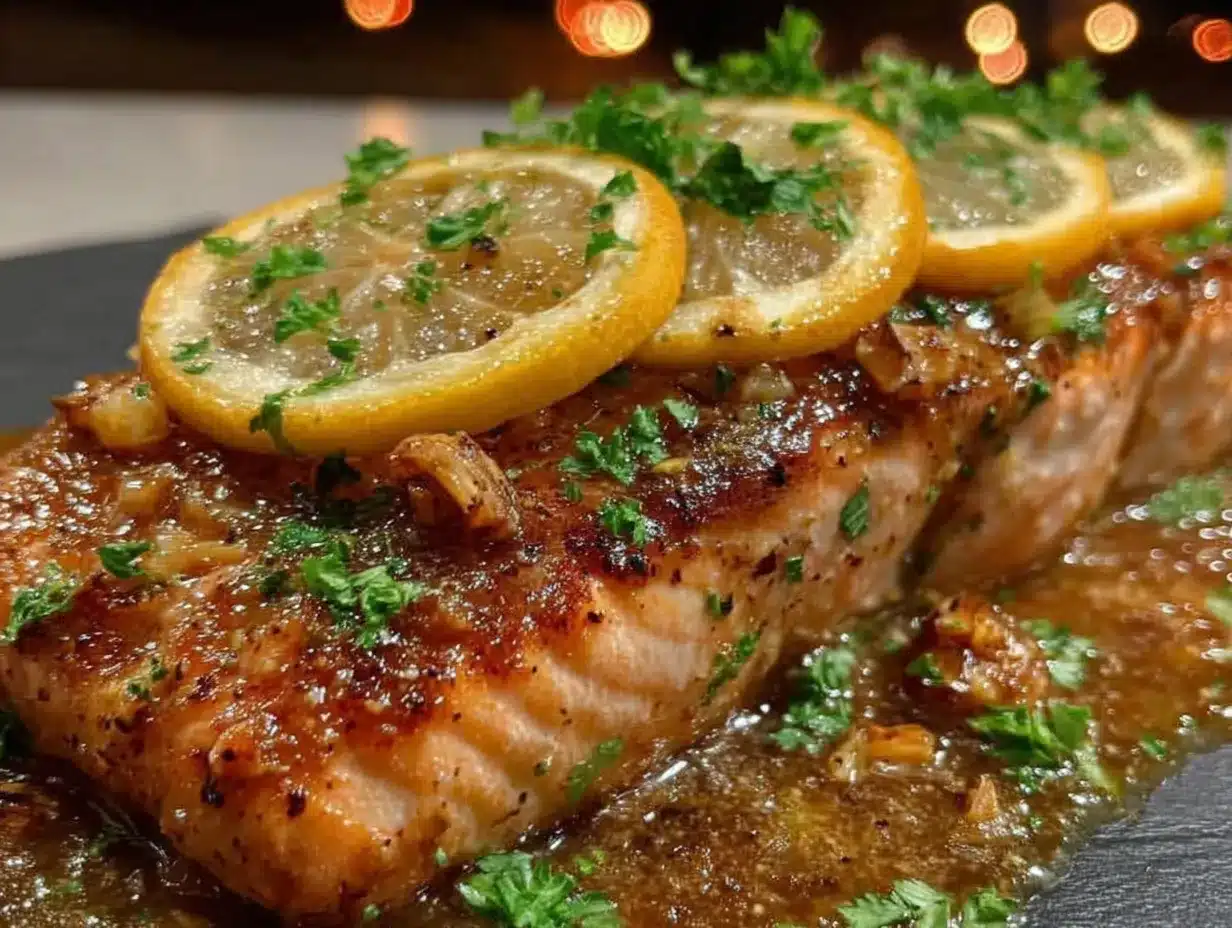
This method is deliberately simple, but each step has a reason. Follow this exactly the first time, then adjust to your taste once you see how it works.
- Prep the salmon (5 minutes) — Remove salmon from the refrigerator and let it sit at room temperature for 10 minutes. Pat each fillet very dry with paper towels—this is the most important prep step. Moisture is the enemy of good texture. Season both sides generously with kosher salt and freshly ground black pepper. Don’t skimp on the salt; salmon can handle it.
- Prep the aromatics (3 minutes) — Smash 6 garlic cloves with the flat side of your knife. The skin should split open, and the clove should flatten slightly. Remove the papery skins. Slice your lemon into thin rounds, about ⅛-inch thick. Cut the remaining lemon half into wedges for serving later.
- Set up the cold pan (1 minute) — Place your skillet on the stovetop but don’t turn on the heat yet. Place the salmon fillets skin-side down in the center of the pan, leaving a little space between each piece. Arrange the smashed garlic cloves around the salmon. Lay the lemon slices between the fillets, not on top of them. Place one tablespoon of butter on each fillet.
- Start cooking (12-15 minutes) — Turn the heat to medium. Don’t touch anything for at least 8 minutes. The butter will melt slowly, the garlic will start to sizzle gently, and the lemon slices will soften and release their juice into the butter. You’ll see the salmon turning opaque from the bottom up. After 8 minutes, gently lift the edge of one fillet with your fish spatula to check the color. It should be golden brown and crispy on the bottom.
- Flip and finish (4-5 minutes) — Carefully flip each fillet. The skin should release easily from the pan—if it sticks, give it another minute. Spoon the garlic butter and lemon juice from the pan over the cooked side of the salmon. Cook for another 3-4 minutes for medium, or until the thickest part reaches 125°F to 130°F. The flesh should flake easily with a fork but still look slightly translucent in the center.
- Rest and serve (2 minutes) — Transfer the salmon to serving plates. Spoon the remaining garlic butter and softened lemon slices from the pan over the top. Squeeze a fresh lemon wedge over everything. Sprinkle with chopped parsley or dill if using. Let it rest for 2 minutes before serving—this lets the juices redistribute.
A few sensory cues to watch for: the butter should be bubbling gently, not aggressively sputtering. If it’s smoking, your heat is too high—turn it down immediately. The garlic should smell sweet and toasty, not sharp or burnt. The lemon slices will turn translucent and slightly caramelized around the edges when they’re done.
One personal tip I learned the hard way: don’t crowd the pan. I tried cooking four large fillets in a 10-inch skillet once, and they steamed instead of searing. If your pan feels crowded, cook in batches and keep the first batch warm in a low oven.
Cooking Tips & Techniques
After making this recipe more times than I can count, I’ve picked up a few things that make the difference between good salmon and unforgettable salmon.
The cold-start trick works because of gentle heat transfer. When you start with a cold pan, the butter melts slowly and coats the entire bottom of the pan before the salmon starts cooking. This means the salmon cooks in butter from the very beginning, not just on the surface after it’s already seared. The result is more evenly flavored fish with no dry spots. I was skeptical too, but the science checks out.
Don’t flip too early. This is the most common mistake I see in comments on other salmon recipes. The salmon will tell you when it’s ready to flip—it will release from the pan naturally. If you try to force it and the skin sticks, you’ll tear the fillet and lose all those crispy bits. Just be patient. Set a timer for 8 minutes and don’t peek until it goes off.
Smash the garlic, don’t mince it. I learned this one after a batch where my minced garlic burned into bitter little specks while the salmon was still cooking. Smashed cloves are larger and more forgiving—they release their flavor slowly into the butter without scorching. Plus, you get these lovely soft garlic pieces that you can spread onto the salmon at the end. It’s like getting a little garlic confit as a bonus.
Use room-temperature salmon. Cold salmon straight from the fridge will cook unevenly, with the outside overcooking before the center warms up. Ten minutes on the counter makes a real difference. If you’re in a hurry, put the sealed salmon in a bowl of cool water for 5 minutes instead.
Watch the butter color. You want the butter to be golden and foamy, not brown. If it starts turning brown before the salmon is done, your heat is too high. Slide the pan off the burner for 30 seconds to let it cool slightly, then continue. Burnt butter tastes bitter and will ruin the whole dish.
One failure I’m not proud of: I once tried to speed things up by using high heat from the start. The butter burned, the garlic turned black, and the salmon was raw in the middle. My roommate watched the whole thing and very kindly didn’t say a word. But she didn’t have to—I learned my lesson.
Variations & Adaptations
This recipe is flexible, and I’ve tried several variations depending on what I have on hand or who I’m cooking for.
Herb-crusted variation: Before cooking, press a mixture of fresh dill, parsley, and chives onto the top of the salmon. The herbs toast gently in the butter as the salmon cooks, creating a fragrant crust. This works especially well in spring when fresh herbs are abundant.
Spicy garlic butter version: Add ½ teaspoon of red pepper flakes or one small sliced chili along with the garlic in the cold pan. The heat infuses the butter and gives the salmon a gentle warmth that doesn’t overpower the lemon. I made this for a friend who loves heat, and she’s requested it every time since.
Dairy-free adaptation: Substitute the butter with a high-quality olive oil or avocado oil. The flavor profile changes—more Mediterranean, less rich—but the cooking method still works perfectly. Add an extra squeeze of lemon at the end to brighten things up.
Maple-soy glaze twist: This one sounds weird but trust me—mix 1 tablespoon of maple syrup with 1 tablespoon of soy sauce and brush it onto the salmon after flipping. The sweetness balances the garlic and lemon beautifully, and it creates the most incredible glossy finish.
Sheet pan version: If you’re cooking for a crowd, arrange the salmon, garlic, lemon slices, and butter on a parchment-lined sheet pan and roast at 400°F for 12-15 minutes. You lose the crispy skin, but you gain the ability to cook six fillets at once without any fuss.
I’ve also tried this with arctic char and trout, and both worked beautifully. The cooking time stays roughly the same since the fillets are similar in thickness. Just keep an eye on the color and use the thermometer if you’re unsure.
Serving & Storage Suggestions
This salmon is best served warm, right after resting, when the butter is still glossy and the texture is at its peak. But here’s how to make the most of it no matter when you’re eating.
Serving temperature and presentation: Serve the salmon on warm plates—cold plates will make the butter seize up. Arrange each fillet with a few lemon slices and garlic cloves alongside. Spoon the pan butter over everything right before serving. A sprinkle of flaky sea salt and fresh herbs makes it look restaurant-quality with almost no effort.
What to serve with it: This salmon pairs beautifully with simple sides that soak up the garlic butter. I love it with roasted asparagus or green beans, a simple arugula salad with lemon vinaigrette, or fluffy rice or quinoa. Crusty bread is non-negotiable in my house—you’ll want something to mop up every drop of that butter.
Storage instructions: Leftover salmon keeps in an airtight container in the refrigerator for up to 3 days. The texture won’t be quite as perfect as fresh, but it’s still delicious. I don’t recommend freezing cooked salmon—the texture turns mealy and dry when thawed.
Reheating methods: The best way to reheat is gently. Place the salmon in a skillet with a splash of water or lemon juice, cover, and warm over low heat for 3-4 minutes. The steam will reheat the fish without drying it out. Microwave works in a pinch but will make the fish rubbery—only do this if you’re desperate.
Cold leftovers idea: Leftover salmon makes amazing salmon salad for lunch the next day. Flake it into a bowl, add a little mayo or Greek yogurt, some chopped celery and fresh dill, and serve on crackers or in a sandwich. The garlic butter flavor carries through beautifully.
One thing I’ve noticed: the flavors actually meld together more after a day in the fridge. The garlic mellows, the lemon brightens, and the butter soaks into the fish. Cold salmon straight from the fridge with a squeeze of lemon is honestly one of my favorite things.
Nutritional Information & Benefits
This recipe fits well into a balanced diet, especially if you’re looking for meals that feel indulgent without the guilt. Here’s the breakdown per serving (one fillet with butter and garlic).
| Nutrient | Amount per serving |
|---|---|
| Calories | 385 |
| Protein | 34g |
| Fat | 26g |
| Saturated Fat | 12g |
| Carbohydrates | 3g |
| Fiber | 0g |
| Sugar | 1g |
| Sodium | 520mg |
| Omega-3 Fatty Acids | 2.5g |
Salmon is one of the best sources of omega-3 fatty acids, which support heart health, brain function, and reduce inflammation. It’s also packed with high-quality protein, B vitamins, and selenium. The garlic adds allicin, a compound linked to immune support and heart health. Even the butter has its place—fat helps your body absorb the fat-soluble vitamins in the salmon.
Dietary considerations: This recipe is naturally gluten-free and low-carb. For dairy-free, substitute olive oil for butter. It’s also suitable for pescatarian and Mediterranean diet patterns.
Potential allergens: Fish (salmon) and dairy (butter). If you’re cooking for someone with allergies, the dairy-free version with olive oil is just as delicious.
From a wellness perspective, I love that this recipe proves healthy eating doesn’t mean boring eating. It’s whole foods, simple cooking, and honest flavor—no tricks, no weird ingredients, no sacrifice.
Conclusion
This easy garlic butter salmon with lemon in 30 minutes has become my go-to for so many reasons. It’s fast enough for a busy weeknight, impressive enough for company, and simple enough that you’ll memorize it after making it once. The cold-start method changed how I think about cooking fish, and I hope it does the same for you.
I’d love to hear how this works in your kitchen. Try it with different herbs, play with the spice level, or serve it with whatever vegetables you have in the fridge. Cooking should feel flexible and fun, not rigid and stressful.
If you make this garlic butter salmon, drop a comment below and let me know how it turned out. Did you try any variations? Did your roommate or partner suggest something that surprised you? I’m always looking for new ideas to test out.
Here’s to perfectly cooked salmon, buttery garlic, and the joy of being wrong about something in the kitchen. Happy cooking!
Frequently Asked Questions
Can I use frozen salmon for this recipe?
Yes, but thaw it completely in the refrigerator overnight first. Pat it very dry with paper towels before seasoning—frozen salmon holds more moisture, so drying is extra important. Never cook salmon straight from frozen for this method; the texture won’t be right.
How do I know when the salmon is done?
The most reliable way is an instant-read thermometer—125°F to 130°F in the thickest part for medium. Without a thermometer, look for the flesh to turn opaque and flake easily with a fork, but still look slightly translucent in the center. The salmon will continue cooking slightly after you remove it from the pan.
Can I make this recipe without the skin?
Absolutely. Skinless fillets work perfectly with this method. The cooking time might be slightly shorter since there’s no skin to render, so start checking at the 10-minute mark. The butter will still create a lovely golden crust on the outside.
What if I don’t have a fish spatula?
No problem. A thin metal spatula works almost as well. The key is using something thin and flexible that can slide under the delicate flesh without crushing it. Avoid thick turners or plastic spatulas—they’re too bulky and will break the salmon apart.
Can I double this recipe?
You can, but don’t crowd the pan. Cook in batches if you’re making more than 4 fillets. Keep the first batch warm on a plate in a 200°F oven while you cook the second batch. The extra butter and garlic from the first batch can be reused for the second, just add a little fresh butter if needed.
Pin This Recipe!
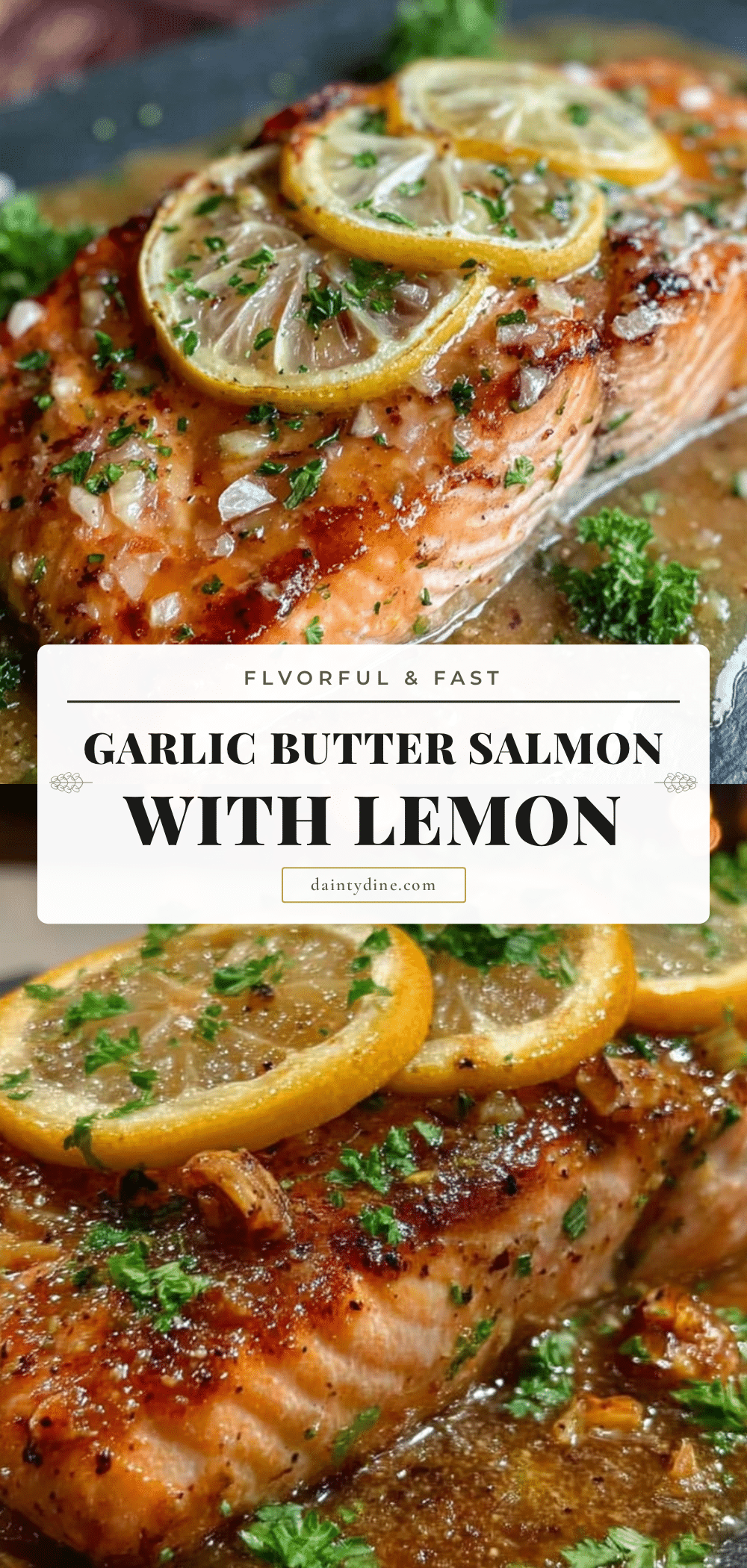
Easy Garlic Butter Salmon with Lemon in 30 Minutes
This easy garlic butter salmon with lemon in 30 minutes uses a cold-start method for perfectly tender, flaky fish with a rich garlic-lemon butter sauce. It’s a quick, simple weeknight dinner that feels special enough for company.
- Prep Time: 5 minutes
- Cook Time: 15 minutes
- Total Time: 20 minutes
- Yield: 4 servings 1x
- Category: Main Course
- Cuisine: American
Ingredients
- 4 salmon fillets (about 6 ounces each, skin-on or skinless)
- 4 tablespoons unsalted butter, cut into 4 pieces
- 6 cloves garlic, smashed
- 1 large lemon, thinly sliced (plus wedges for serving)
- 1 teaspoon kosher salt (plus more for finishing)
- ½ teaspoon freshly ground black pepper
- 2 tablespoons fresh parsley or dill, chopped (optional, for garnish)
Instructions
- Remove salmon from refrigerator and let sit at room temperature for 10 minutes. Pat each fillet very dry with paper towels. Season both sides generously with kosher salt and freshly ground black pepper.
- Smash 6 garlic cloves with the flat side of a knife; remove papery skins. Slice lemon into thin rounds (about ⅛-inch thick). Cut remaining lemon half into wedges for serving.
- Place a 12-inch skillet on the stovetop (do not turn on heat). Place salmon fillets skin-side down in the center of the pan, leaving space between each. Arrange smashed garlic cloves around the salmon and lay lemon slices between the fillets. Place 1 tablespoon of butter on each fillet.
- Turn heat to medium. Cook without touching for at least 8 minutes. The butter will melt slowly, garlic will sizzle gently, and lemon slices will soften. After 8 minutes, gently lift the edge of one fillet to check color—it should be golden brown and crispy on the bottom.
- Carefully flip each fillet. If skin sticks, give it another minute. Spoon garlic butter and lemon juice from the pan over the cooked side of the salmon. Cook for another 3-4 minutes for medium, or until thickest part reaches 125°F to 130°F. The flesh should flake easily but still look slightly translucent in the center.
- Transfer salmon to serving plates. Spoon remaining garlic butter and softened lemon slices from the pan over the top. Squeeze fresh lemon wedge over everything. Sprinkle with chopped parsley or dill if using. Let rest for 2 minutes before serving.
Notes
The cold-start method ensures even cooking and prevents burning. Don’t flip the salmon too early—it will release naturally when ready. Smash garlic cloves instead of mincing to avoid burning. Use room-temperature salmon for even cooking. If butter starts browning before salmon is done, reduce heat.
Nutrition
- Serving Size: 1 fillet with butter
- Calories: 385
- Sugar: 1
- Sodium: 520
- Fat: 26
- Saturated Fat: 12
- Carbohydrates: 3
- Protein: 34
Keywords: garlic butter salmon, lemon salmon, easy salmon recipe, 30 minute salmon, cold start salmon, weeknight dinner, healthy salmon