Love this? Save it for later!
Share the inspiration with your friends
I was standing in the middle of a grocery store aisle last November, staring at a jar of sauerkraut like it held the secrets to the universe. The fluorescent lights were humming that weird hum they do, and someone’s cart kept bumping into my heels. But none of that mattered — because the smell of that jar, just the faintest whiff of tangy cabbage, had punched a hole straight through time. Suddenly I was seven years old, sitting on a too-tall stool in my neighbor Frau Mueller’s tiny kitchen, watching her brown hands work a cast iron skillet like she was conducting an orchestra. She wasn’t my grandmother. She wasn’t even related to me. She was just this German lady two doors down who took pity on a kid whose parents worked late, and she fed me things I still dream about.
The thing is, I can’t quite remember her face anymore. Isn’t that strange? I can see her hands perfectly — the way she’d slice apples without looking, the flour dusted on her apron. But her face is gone, like a photograph left too long in the sun. What I do remember, with absolute clarity, is the first time she made this bratwurst skillet. The way the sausage sizzled when it hit the pan. The smell of apples cooking down with onions and caraway. The way she’d say “iss, ess” — eat, eat — while pushing a second helping toward me. I’ve spent years trying to recreate that exact feeling, that sense of being small and safe and completely cared for, all in one bite.
Maybe you’ve been there too. Maybe there’s a dish you chase, a flavor you’re trying to catch up to. For me, it’s this one. And honestly, after about twelve attempts (and one particularly disastrous batch where I confused cumin for caraway — don’t ask), I think I finally got it. This cozy German bratwurst skillet with sauerkraut and apples isn’t just dinner. It’s a time machine, and I’m handing you the keys.
Why You’ll Love This Recipe
Let me tell you why this one’s different. I’ve tested this recipe seven times — yes, seven — to get the balance just right. Not too sour from the sauerkraut, not too sweet from the apples, and with that perfect caramelization on the bratwurst that makes you close your eyes on the first bite. This isn’t just another skillet dinner thrown together on a Tuesday night. This is the kind of meal that makes you slow down.
- Quick & Easy: From fridge to table in about 40 minutes flat. That’s less time than it takes to decide what to order for delivery.
- Simple Ingredients: You probably already have the oil, salt, and pepper. Just grab some bratwurst, sauerkraut, an apple, and an onion — that’s it.
- Perfect for Cozy Nights: Cold weather, rainy afternoons, or those days when you just need something warm and grounding. This is your dish.
- Crowd-Pleaser: I’ve served this to picky eaters, to people who “don’t like sauerkraut,” and to my uncle who only eats beige food. Everyone went back for seconds.
- Unbelievably Delicious: The magic here is in the contrast — juicy, savory sausage against tangy, soft kraut and sweet, tender apples. It’s comfort food that actually feels comforting.
What makes this recipe different from the dozens of other bratwurst recipes out there? It’s the technique. I brown the bratwurst first to get that deep, crusty exterior, then I cook the apples and onions in the same pan so they soak up all those browned bits. The sauerkraut goes in last, just long enough to warm through without losing its bite. It’s a small thing, but it makes all the difference. You get layers of flavor instead of a muddled mess.
This recipe is for those evenings when you need a hug in food form. When the world feels loud and you just want something honest on your plate. It’s simple enough for a weeknight but special enough that you’d serve it to company without a second thought.
What Ingredients You Will Need
This recipe uses simple, honest ingredients that work together to create something greater than the sum of their parts. Most of these are pantry staples or easy to find at any grocery store. Here’s what you’ll need:
- Bratwurst: 4 links (about 450g / 1 lb). I prefer fresh bratwurst from the meat counter — Johnsonville is fine in a pinch, but if you have a German butcher nearby, go there. The flavor is noticeably better. Look for links that feel firm and plump.
- Sauerkraut: 1 can or jar (about 400g / 14 oz), drained but not rinsed. I like the refrigerated bags of sauerkraut in the deli section — they have a fresher, crisper texture than the canned stuff. If you only have canned, that works too. Just drain it well.
- Apple: 1 large (about 200g / 7 oz). Go with a firm, slightly tart apple like Granny Smith, Honeycrisp, or Braeburn. You want something that holds its shape when cooked. A soft apple like McIntosh will turn to mush.
- Onion: 1 medium (about 150g / 5 oz), yellow or sweet. Yellow onion has a good balance of sharpness and sweetness that mellows beautifully as it cooks.
- Butter: 2 tablespoons (30g / 1 oz), unsalted. Butter adds richness and helps with browning. You can use olive oil if you prefer, but honestly, butter is better here.
- Olive Oil: 1 tablespoon (15ml). Just enough to help the butter from burning and to get that nice sear on the sausage.
- Caraway Seeds: 1 teaspoon (about 3g). This is optional but highly recommended. Caraway has that slightly anise-like, earthy flavor that’s classic in German cooking. It ties the sauerkraut and apples together.
- Salt: ½ teaspoon (3g), or to taste. Go easy here — the bratwurst and sauerkraut are already salty.
- Black Pepper: ¼ teaspoon (1g), freshly ground.
- Chicken Broth or Apple Cider: ¼ cup (60ml). This deglazes the pan and creates a little bit of saucy goodness. Apple cider adds a touch more sweetness, while chicken broth keeps it savory. Both work.
- Fresh Parsley: 2 tablespoons, chopped (optional, for garnish). A little green on top makes it look pretty and adds a fresh pop of flavor.
Ingredient Selection Tips: When choosing bratwurst, look for links that are uniform in size so they cook evenly. If you’re using pre-cooked bratwurst, you’ll still want to brown them, but they won’t need as long in the pan. For the sauerkraut, I personally prefer the brand Bubbies — it’s fermented, not just pickled, so it has a livelier tang. But any brand will do.
Substitution Guidance: No bratwurst? Use any smoked sausage like kielbasa or andouille. The flavor profile changes, but it’s still delicious. Need it gluten-free? Most bratwurst is gluten-free, but always check the label. For a dairy-free version, swap the butter for olive oil or a plant-based butter.
Equipment Needed
You don’t need a fancy kitchen to make this. Here’s what you’ll need:
- Large Cast Iron Skillet or Heavy-Bottomed Pan: 12-inch (30cm) is ideal. Cast iron holds heat beautifully and gives you that perfect sear. I’ve used my grandmother’s old Lodge skillet for years, and it just gets better with age. If you don’t have cast iron, a stainless steel or non-stick pan works fine — just make sure it’s heavy enough to hold steady heat.
- Sharp Knife: For slicing the apples and onions. A chef’s knife or a santoku knife will do the job.
- Cutting Board: Wood or plastic, whatever you have.
- Wooden Spoon or Spatula: For stirring and scraping up those delicious browned bits from the bottom of the pan.
- Measuring Spoons and Cups: For the caraway seeds, broth, and butter.
- Tongs: For turning the bratwurst. Much easier than a fork, which can pierce the casing and let the juices escape.
- Small Bowl: For draining the sauerkraut.
Budget-Friendly Options: If you don’t have a cast iron skillet, a good non-stick pan from a discount store will cost you under $20 and work just fine. Don’t overthink the equipment — this recipe is forgiving.
Preparation Method

Alright, let’s cook. This comes together in about 40 minutes, and most of that is hands-off time while things sizzle and soften.
- Prep your ingredients (5 minutes): Start by draining the sauerkraut in a small bowl or colander. Give it a gentle press with a spoon to get rid of excess liquid — you want it moist, not swimming. Core the apple (no need to peel unless you want to) and slice it into ¼-inch (6mm) wedges. Peel the onion and slice it into thin half-rings. Chop the parsley if you’re using it. Set everything aside within arm’s reach of the stove.
- Brown the bratwurst (8-10 minutes): Place your skillet over medium-high heat and add the butter and olive oil. Let the butter melt and foam a bit — that foaming means the water is cooking off and you’re left with pure, browning fat. Carefully place the bratwurst links in the pan. Don’t crowd them; give each one some space. Let them cook undisturbed for about 4-5 minutes, until the bottoms are deep golden brown. Use your tongs to turn them and cook another 4-5 minutes on the other side. You’re looking for an even, dark brown crust all over. The sausages don’t need to be fully cooked through at this point — they’ll finish in the pan later. Transfer the browned bratwurst to a plate and set aside.
- Cook the aromatics (6-8 minutes): Reduce the heat to medium. In the same skillet (don’t wipe it out — all those browned bits are flavor gold), add the sliced onion and a pinch of salt. Cook, stirring occasionally with your wooden spoon, for about 4 minutes, until the onions soften and start to turn translucent. Scrape up any browned bits from the bottom of the pan as you stir. Add the sliced apples and the caraway seeds. Cook for another 3-4 minutes, stirring gently, until the apples start to soften at the edges and the onions are lightly caramelized. The kitchen will smell incredible at this point — sweet and savory and a little bit magical.
- Add the sauerkraut and liquid (2 minutes): Add the drained sauerkraut to the skillet and stir to combine with the onions and apples. Pour in the chicken broth or apple cider. Use your spoon to scrape up any last browned bits from the bottom of the pan — this is called deglazing, and it adds so much flavor. Let everything simmer together for about 2 minutes, just until the sauerkraut is warmed through.
- Finish cooking (10-12 minutes): Nestle the browned bratwurst back into the skillet, pushing them down into the sauerkraut mixture so they’re partially submerged. Reduce the heat to medium-low, cover the skillet with a lid (or a piece of foil if you don’t have a lid), and let everything cook together for 10-12 minutes. This allows the sausages to finish cooking through and absorb some of the flavors from the kraut and apples. The internal temperature of the bratwurst should reach 160°F (71°C) if you want to check with a meat thermometer.
- Rest and serve (5 minutes): Remove the skillet from the heat and let it rest, covered, for about 5 minutes. This resting time lets the juices redistribute. Sprinkle with fresh parsley if you’re using it. Serve the bratwurst with generous spoonfuls of the sauerkraut-apple mixture on top or alongside.
Sensory Cue: At each stage, pay attention. When the bratwurst hits the pan, you should hear a satisfying sizzle — if it’s quiet, your pan isn’t hot enough. The onions should smell sweet, not burned. The apples should be tender when pierced with a fork but still hold their shape. The final dish should look glossy and inviting, with deep brown sausages nestled in a bed of pale gold and green.
Cooking Tips & Techniques
I’ve made this recipe more times than I care to count, and I’ve learned a few things the hard way. Here’s what I wish someone had told me:
Don’t pierce the bratwurst. I know, I know — some people swear by pricking sausages to keep them from bursting. But here’s the thing: those little holes let all the juicy goodness escape into the pan. You want that fat and moisture inside the sausage, not in the skillet. Just let them cook gently and they’ll be fine. If one does burst, don’t panic — it’ll still taste great.
Get the pan hot before adding the sausages. This is the most important step for a good sear. If the pan isn’t hot enough, the bratwurst will steam instead of brown, and you’ll miss out on that deep, caramelized flavor. Test the heat by flicking a drop of water into the pan — if it sizzles and evaporates immediately, you’re ready.
Don’t rush the onions. I know you’re hungry. I get it. But those onions need time to soften and sweeten. If you crank the heat too high, they’ll burn on the outside while staying raw in the middle. Medium heat, patience, and a little bit of love — that’s the secret.
Use a wooden spoon for deglazing. Metal utensils can scratch your pan, especially if you’re using non-stick or enameled cast iron. A wooden spoon is gentle and effective at scraping up all those browned bits without damaging your cookware.
One mistake I made: The first time I made this, I added the sauerkraut straight from the jar without draining it. The result was a watery, sad mess that tasted more like boiled cabbage than the tangy, textured dish it was supposed to be. Drain it. Trust me.
Timing strategy: While the bratwurst is browning, you can prep the apples and onions. While the onions and apples are cooking, set the table or make a quick side salad. This recipe flows nicely if you stay ahead of the game.
Variations & Adaptations
This recipe is a beautiful canvas. Here are some ways to make it your own:
Dietary Adaptations:
- Low-Carb / Keto: Skip the apple (or use a small amount of a low-sugar variety like Granny Smith) and add an extra handful of sauerkraut. The dish is naturally low in carbs if you keep the apple minimal. Serve with cauliflower mash instead of potatoes.
- Dairy-Free: Swap the butter for olive oil or a plant-based butter. The flavor will be slightly different but still delicious.
- Gluten-Free: Most bratwurst is gluten-free, but always check the label. Some brands use breadcrumbs as a filler. Serve with mashed potatoes or a simple green salad to keep the meal gluten-free.
Flavor Variations:
- Spicy Version: Add ½ teaspoon of red pepper flakes along with the caraway seeds. Or use spicy Italian sausage instead of bratwurst for a completely different (but equally delicious) dish.
- Beer-Braised: Replace the chicken broth with ¼ cup of a German beer like a Hefeweizen or a Pilsner. The beer adds a malty depth that’s absolutely gorgeous with the sauerkraut. Just let it simmer for an extra minute or two to cook off the alcohol.
- Herb-Forward: Stir in a teaspoon of fresh thyme leaves along with the sauerkraut. Thyme and apples are a surprisingly lovely pairing.
Seasonal Twists:
- Fall: Add a handful of fresh cranberries along with the apples for a tart, festive pop of color.
- Winter: Toss in some sliced fennel bulb along with the onion. The mild licorice flavor is a natural partner for the caraway and pork.
- Summer: Swap the apple for a firm, ripe pear. The sweetness is more subtle, and it pairs beautifully with fresh herbs.
A personal variation I love: Sometimes I add a tablespoon of whole-grain mustard to the pan right before adding the sauerkraut. It adds a gentle heat and a little bit of texture that makes the dish feel even more substantial. Try it once — you might not go back.
Serving & Storage Suggestions
This dish is wonderfully versatile when it comes to serving. Here’s how to make the most of it:
Serving Temperature and Presentation: Serve the bratwurst skillet hot, straight from the stove. I like to place the whole skillet on a trivet in the center of the table — it’s rustic and inviting, and everyone can help themselves. Spoon the sauerkraut and apple mixture over the sausages, or serve it on the side. A sprinkle of fresh parsley adds a bright green contrast that makes the dish look as good as it tastes.
What to Serve With It:
- Classic Sides: Mashed potatoes, boiled potatoes, or spaetzle are all traditional and perfect for soaking up the pan juices.
- Light Options: A simple green salad with a tangy vinaigrette cuts through the richness beautifully. Roasted Brussels sprouts or green beans also work well.
- Bread: Crusty rye bread or a soft pretzel roll is ideal for mopping up every last bit of goodness from the plate.
- Beverage Pairings: A German Hefeweizen, a crisp Pilsner, or a dry Riesling are all excellent choices. For non-alcoholic options, sparkling apple cider or a tart ginger beer are lovely.
Storage Instructions: Leftovers keep well in an airtight container in the refrigerator for up to 4 days. The flavors actually meld and deepen overnight, so it might taste even better the next day. Store the bratwurst and the sauerkraut mixture together — they’ll continue to exchange flavors.
Reheating Methods:
- Stovetop (Best): Reheat in a skillet over medium-low heat, adding a splash of water or broth to loosen the mixture. Cover and cook for 5-7 minutes, stirring occasionally, until heated through.
- Microwave (Quick): Place in a microwave-safe dish, cover loosely, and heat in 1-minute intervals at 70% power until hot. The texture won’t be quite as good, but it’s fine for a quick lunch.
- Oven: Spread in a baking dish, cover with foil, and reheat at 350°F (175°C) for about 15 minutes.
Freezing: This dish freezes surprisingly well. Let it cool completely, then transfer to a freezer-safe container. It will keep for up to 3 months. Thaw overnight in the refrigerator before reheating.
How Flavors Develop: This is one of those dishes that gets better with time. The sauerkraut continues to mellow, the apples soften further, and the bratwurst infuses everything with its savory goodness. If you can make it a day ahead and reheat it, you’ll be rewarded with even deeper, more harmonious flavors.
Nutritional Information & Benefits
Here’s an approximate nutritional breakdown per serving (based on 4 servings, using one bratwurst link per serving):
| Nutrient | Amount per Serving |
|---|---|
| Calories | 410 |
| Total Fat | 32g |
| Saturated Fat | 13g |
| Cholesterol | 85mg |
| Sodium | 980mg |
| Total Carbohydrates | 14g |
| Dietary Fiber | 3g |
| Sugars | 9g |
| Protein | 18g |
Health Benefits of Key Ingredients: Sauerkraut is a fermented food, which means it’s packed with probiotics that support gut health. It’s also a good source of vitamin C and vitamin K. Apples provide fiber and antioxidants, particularly in the skin. Onions contain quercetin, a powerful anti-inflammatory compound. And while bratwurst isn’t exactly a health food, it does provide high-quality protein and essential B vitamins.
Dietary Considerations: This recipe is naturally gluten-free (check your bratwurst label) and can be made dairy-free by swapping the butter. It’s not low-fat, but it’s a satisfying, balanced meal that leaves you feeling nourished rather than stuffed. If you’re watching your sodium intake, look for low-sodium sauerkraut and bratwurst, and go easy on the added salt.
Potential Allergens: This recipe contains dairy (butter) and may contain gluten (check bratwurst). It does not contain nuts, eggs, or shellfish.
My Wellness Perspective: I’m not a nutritionist, and I don’t pretend to be. But I believe in eating real food, in moderation, with joy. This dish is rich and satisfying, and it’s the kind of meal that fills you up in more ways than one. Pair it with a simple green salad or some roasted vegetables, and you’ve got a balanced plate that’s as good for your soul as it is for your body.
Conclusion
This cozy German bratwurst skillet with sauerkraut and apples is more than just a recipe — it’s a little piece of warmth you can create in your own kitchen, anytime you need it. It’s the dish I turn to when the days get short and the air gets cold, when I need something that feels like a hug from the inside out. It’s simple enough for a Tuesday night but special enough that you’d serve it to people you love.
I hope you make this your own. Maybe you’ll add a little more caraway, or swap the apple for a pear, or serve it with a side of spaetzle that reminds you of your own Frau Mueller. That’s the beautiful thing about cooking — it’s never really about following the recipe perfectly. It’s about finding the flavors that speak to you and creating something that feels like home.
If you make this recipe, I’d love to hear about it. Leave a comment below and tell me how it turned out, what you changed, or what memory it brought back for you. Share a photo on Pinterest or Instagram — tag me so I can see your beautiful creation. And if you’re looking for more cozy, comforting meals, check out my easy one-pot sausage dinner or this creamy German potato salad that pairs perfectly with this skillet.
Until next time, happy cooking — and don’t forget to say “iss, ess” to yourself when you take that first bite. You deserve it.
Frequently Asked Questions
Can I use pre-cooked bratwurst for this recipe?
Yes, absolutely. Pre-cooked bratwurst will still benefit from browning — you’ll get that nice crust and deeper flavor. Just reduce the final covered cooking time to about 5-7 minutes, since the sausages only need to warm through, not cook through.
How do I keep the apples from turning into mush?
The key is to use a firm apple variety like Granny Smith or Honeycrisp, and to not overcook them. Add the apples to the pan after the onions have softened, and cook them just until they’re tender at the edges but still hold their shape. The final covered cooking time will finish them off perfectly.
Can I make this in a slow cooker or Instant Pot?
You can, but the texture will be different. For a slow cooker, brown the bratwurst first, then add everything to the slow cooker and cook on low for 4-6 hours. For an Instant Pot, use the sauté function to brown the sausages and cook the onions and apples, then pressure cook on high for 5 minutes with a quick release. The stovetop version gives you the best control over browning and texture, though.
What if I don’t like caraway seeds?
No problem at all. Caraway adds a traditional German flavor, but you can leave it out entirely, or substitute with fennel seeds, dill, or even a pinch of dried thyme. The dish will still be delicious without it.
How do I store and reheat leftovers?
Store leftovers in an airtight container in the refrigerator for up to 4 days. The flavors actually improve overnight. Reheat gently on the stovetop over medium-low heat with a splash of water or broth, or in the microwave in 1-minute intervals. You can also freeze the cooled dish for up to 3 months — just thaw overnight in the fridge before reheating.
Pin This Recipe!
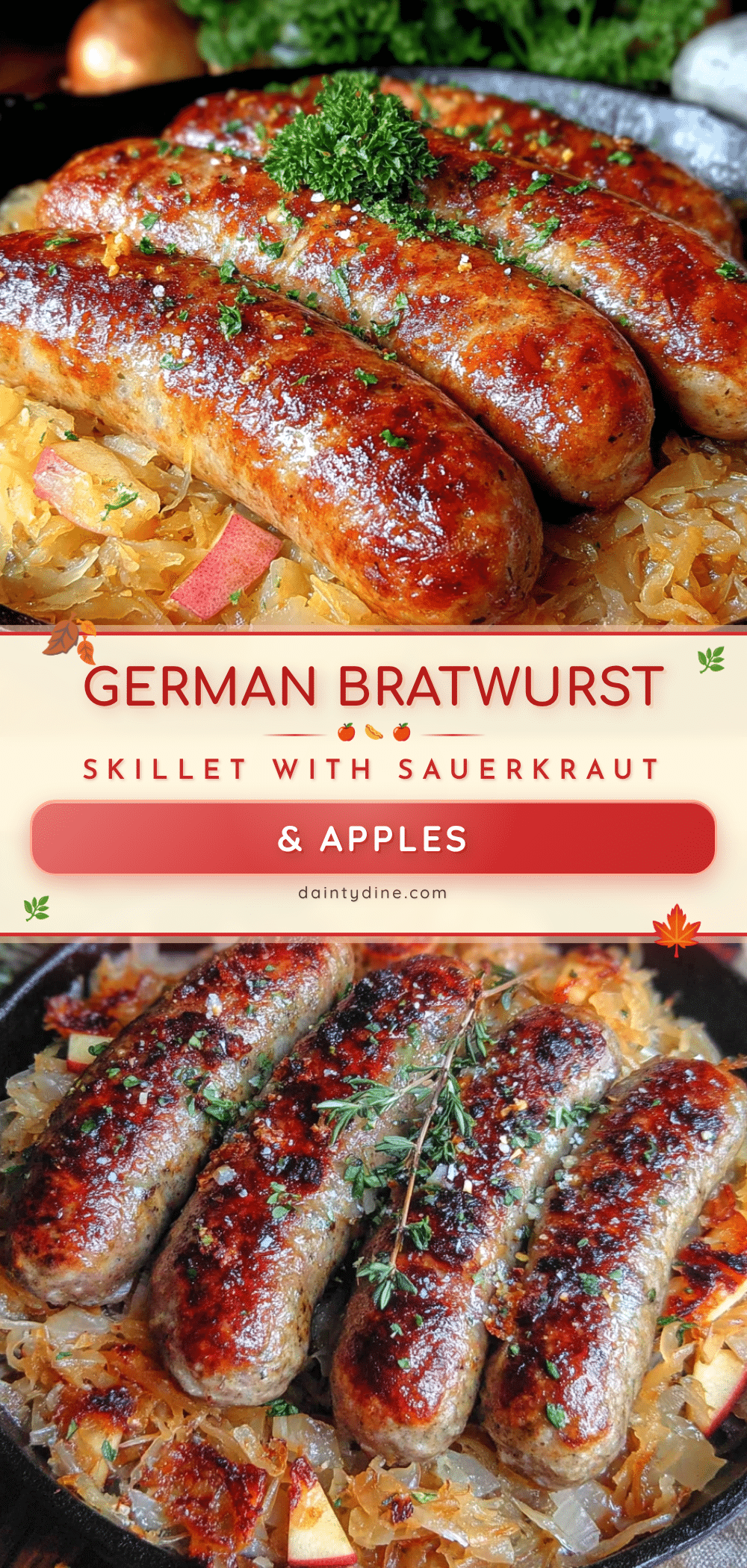
Easy German Bratwurst Skillet with Sauerkraut and Apples

A cozy, one-pan German bratwurst skillet with tangy sauerkraut and sweet apples. This quick and easy recipe delivers deep, caramelized flavor in about 40 minutes, perfect for a comforting weeknight dinner.
- Prep Time: 5 minutes
- Cook Time: 35 minutes
- Total Time: 40 minutes
- Yield: 4 servings 1x
- Category: Main Course
- Cuisine: German
Ingredients
- 4 links bratwurst (about 1 lb / 450g)
- 1 can or jar sauerkraut (about 14 oz / 400g), drained but not rinsed
- 1 large apple (about 7 oz / 200g), such as Granny Smith or Honeycrisp, cored and sliced into ¼-inch wedges
- 1 medium yellow or sweet onion (about 5 oz / 150g), sliced into thin half-rings
- 2 tablespoons unsalted butter (1 oz / 30g)
- 1 tablespoon olive oil (15ml)
- 1 teaspoon caraway seeds (about 3g), optional
- ½ teaspoon salt (3g), or to taste
- ¼ teaspoon black pepper (1g), freshly ground
- ¼ cup chicken broth or apple cider (60ml)
- 2 tablespoons fresh parsley, chopped (optional, for garnish)
Instructions
- Prep your ingredients (5 minutes): Drain the sauerkraut in a small bowl or colander, gently pressing with a spoon to remove excess liquid. Core the apple (no need to peel) and slice into ¼-inch (6mm) wedges. Peel the onion and slice into thin half-rings. Chop the parsley if using. Set everything aside within arm’s reach of the stove.
- Brown the bratwurst (8-10 minutes): Place a large cast iron skillet or heavy-bottomed pan over medium-high heat. Add the butter and olive oil. Let the butter melt and foam. Carefully place the bratwurst links in the pan, giving each space. Cook undisturbed for 4-5 minutes until the bottoms are deep golden brown. Use tongs to turn and cook another 4-5 minutes on the other side until evenly browned. The sausages don’t need to be fully cooked through. Transfer to a plate and set aside.
- Cook the aromatics (6-8 minutes): Reduce heat to medium. In the same skillet (don’t wipe it out), add the sliced onion and a pinch of salt. Cook, stirring occasionally with a wooden spoon, for about 4 minutes until the onions soften and turn translucent, scraping up any browned bits. Add the sliced apples and caraway seeds. Cook for another 3-4 minutes, stirring gently, until the apples start to soften at the edges and the onions are lightly caramelized.
- Add the sauerkraut and liquid (2 minutes): Add the drained sauerkraut to the skillet and stir to combine with the onions and apples. Pour in the chicken broth or apple cider. Use your spoon to scrape up any last browned bits from the bottom of the pan (deglazing). Let everything simmer together for about 2 minutes, just until the sauerkraut is warmed through.
- Finish cooking (10-12 minutes): Nestle the browned bratwurst back into the skillet, pushing them down into the sauerkraut mixture so they’re partially submerged. Reduce heat to medium-low, cover the skillet with a lid or foil, and let everything cook together for 10-12 minutes. The internal temperature of the bratwurst should reach 160°F (71°C) if using a meat thermometer.
- Rest and serve (5 minutes): Remove the skillet from the heat and let it rest, covered, for about 5 minutes. Sprinkle with fresh parsley if using. Serve the bratwurst with generous spoonfuls of the sauerkraut-apple mixture on top or alongside.
Notes
Don’t pierce the bratwurst to keep juices inside. Get the pan hot before adding sausages for a good sear. Don’t rush the onions—cook on medium heat. Drain sauerkraut well to avoid a watery dish. For a dairy-free version, swap butter for olive oil. For a low-carb version, skip the apple or use a small amount of Granny Smith. Leftovers keep in the fridge for up to 4 days and freeze for up to 3 months.
Nutrition
- Serving Size: 1 bratwurst link wit
- Calories: 410
- Sugar: 9
- Sodium: 980
- Fat: 32
- Saturated Fat: 13
- Carbohydrates: 14
- Fiber: 3
- Protein: 18
Keywords: bratwurst, sauerkraut, apples, German, skillet, one-pan, comfort food, quick dinner